
Global Procurement Masterclass: Anatomical 3D Hernia Mesh Engineering & Sourcing
Navigating Pore Architecture, Biomechanical Fit, TEP/TAPP Surgical Ergonomics, and Technical Registration Files for Global Hospital Sourcing Officers and Medical Device Importers.
Why Anatomical 3D Hernia Mesh is Overhauling Global Hernioplasty Procurement
Hospital purchasing committees, tender boards, and surgical department directors are increasingly transitioning from conventional flat mesh sheets to three-dimensional pre-shaped implants. Here is the technical and clinical rationale driving global demand.
The Limits of Two-Dimensional Flat Mesh
For decades, standard flat polypropylene mesh required intraoperative cutting, slitting, and extensive mechanical fixation (tacks, staples, or heavy suturing) to conform to the curved wall of the inguinal canal. In laparoscopic Transabdominal Preperitoneal (TAPP) and Total Extraperitoneal (TEP) repairs, flat meshes tend to wrinkle, fold, or bridge across anatomical hollows.
- ✕ Higher risk of mechanical tack irritation and nerve entrapment
- ✕ Intraoperative wrinkling causing localized mesh migration
- ✕ Extended operating room (OR) time due to manual tailoring
The Anatomical 3D Contour Advantage
Engineered directly from patient-derived anatomical data, Anatomical 3D Hernia Meshes incorporate an anatomical reflex angle, keyhole structures for spermatic cord structures, and a pre-formed contour matching the Myopectineal Orifice (MPO) of Fruchaud. Natural intra-abdominal pressure compresses the mesh smoothly against the posterior wall.
- ✓ Fixation-free or minimal-tack placement preserving neural structures
- ✓ Complete coverage of direct, indirect, and femoral defect spaces
- ✓ 15 to 22 minutes saved per procedure, maximizing OR efficiency
Biomechanical & Operational Comparison: Flat vs. 3D Anatomical Mesh
| Performance Attribute | Standard Flat Mesh Sheet | Suture Planet Anatomical 3D Mesh | Procurement Impact |
|---|---|---|---|
| Anatomical Conformance | Requires intraoperative slitting & creasing | Pre-shaped anatomical reflex curve | Reduces surgical variance across OR staff |
| Fixation Requirement | 4 to 8 mechanical tacks or helical anchors | Fixation-free / Zero-tack in TEP/TAPP | Eliminates $150–$350 tacker consumable cost |
| Chronic Pain Incidence | 3.8% – 6.2% (Nerve entrapment/tack injury) | < 0.7% (Preserves neural pathways) | Lowers hospital readmission & legal risk |
| Porosity Architecture | Micro-to-medium pore (< 1.0 mm) | Extra-large pore (> 1.8 mm to 3.2 mm) | Prevents fibrotic bridging & mesh stiffness |
| Post-Implant Shrinkage | 12% – 25% area contraction | < 4.2% structural contraction | Long-term recurrence prevention |
| OR Deployment Speed | 12 – 18 minutes positioning time | 2 – 4 minutes self-positioning | Higher patient throughput per surgical suite |
Suture Planet Anatomical 3D Mesh Portfolio
Manufactured using medical-grade extruded monofilament polypropylene, precision warp-knitted into macroporous structures, and thermo-formed to retain anatomical memory during laparoscopic trocar insertion.
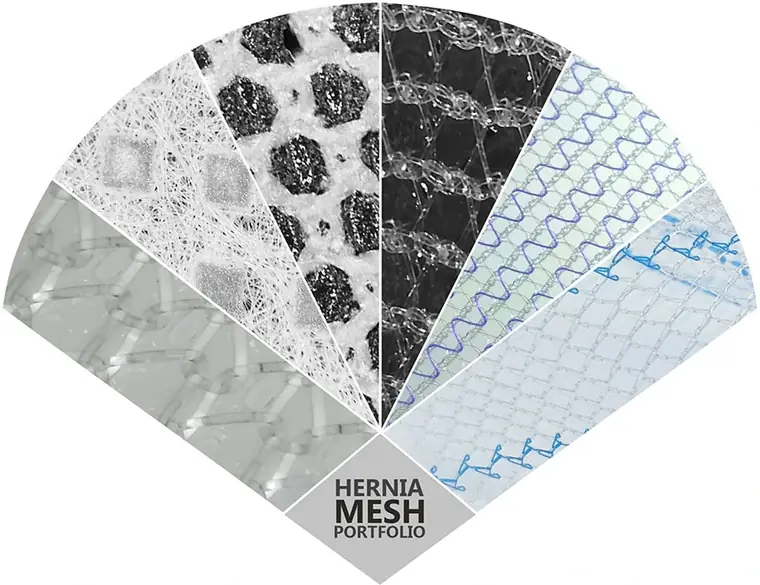
Netlene 3D Light™
Monofilament PP · 32 g/m² · Pore size >2.2 mm
Designed for laparoscopic TEP and TAPP inguinal repairs where minimal tissue sensation and ultra-low foreign body mass are prioritized. High flexibility with superior pore retention.
Netlene 3D Contour™
Monofilament PP · 60 g/m² · Pore size 1.8 mm
The global benchmark for complex direct/indirect inguinal hernias and large defect spaces. Provides high mechanical burst strength with sealed laser-cut edges that eliminate particle flaking.

Netlene 3D Open Plug & Patch
Pre-formed 3D Cone + Shaped Overlay
Tailored for anterior open Lichtenstein hernioplasty. Features an anatomically contoured plug combined with a pre-shaped reinforcement overlay for deep ring repair.
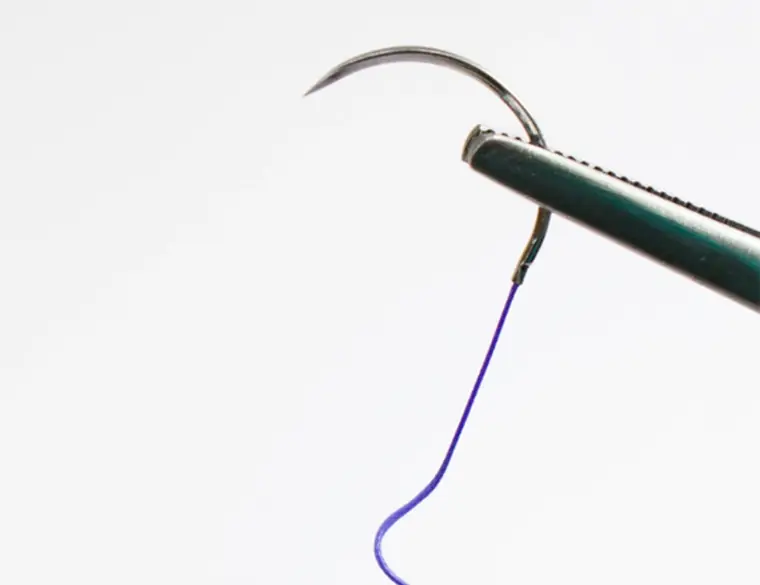
Netlene Polypropylene Suture
Monofilament Non-Absorbable · USP 6-0 to 2
Used when minimal peripheral mesh tacking or ligamentous anchorage is desired by the surgeon. Smooth tissue passage, zero capillarity, and permanent tensile strength retention.
Anatomical 3D Mesh Technical Data Sheet Summary
Detailed physical and mechanical parameters for hospital tender evaluations and regulatory registration dossiers.
| Parameter | Netlene 3D Light™ | Netlene 3D Contour™ | Standard Flat Mesh (Reference) |
|---|---|---|---|
| Raw Material Polymer | 100% Extruded Monofilament Polypropylene | 100% Extruded Monofilament Polypropylene | Polypropylene Monofilament |
| Structure & Knitting | Warp-knitted, macroporous 3D pre-formed | Warp-knitted, medium-macro 3D pre-formed | Flat warp-knitted mesh sheet |
| Areal Density (Weight) | 32 ± 3 g/m² (Lightweight) | 60 ± 4 g/m² (Standard Weight) | 80 – 110 g/m² (Heavyweight) |
| Pore Size (X & Y Dimensions) | 2.2 mm × 2.8 mm | 1.8 mm × 2.1 mm | 0.6 mm × 0.8 mm (Microporous) |
| Burst Strength (Ball Burst) | > 220 kPa | > 310 kPa | > 180 kPa |
| Tensile Strength (MD/CD) | > 45 N/cm / > 40 N/cm | > 65 N/cm / > 58 N/cm | > 35 N/cm / > 30 N/cm |
| Edge Sealed Finish | Ultrasonic laser-sealed (No loose fibers) | Ultrasonic laser-sealed (No loose fibers) | Mechanically cut (Risk of fraying) |
| Anatomical Sizing Available | Left & Right: M (10x15cm), L (12x16cm), XL (14x17cm) | Left & Right: M (10x15cm), L (12x16cm), XL (14x17cm) | Universal Flat Sheets (10x15cm, 15x15cm, 30x30cm) |
| Sterilization Method | Ethylene Oxide (EO), SAL 10⁻⁶ validated | Ethylene Oxide (EO), SAL 10⁻⁶ validated | Ethylene Oxide / Gamma |
| Primary Packaging | Medical-grade peelable pouch in box | Medical-grade peelable pouch in box | Single pouch |
Data validated under ISO 7198, EN ISO 13485, and USP monograph testing protocols. Batch release certificates include tensile testing, residual EO analysis (< 1 ppm), and sterility verification.
Future Sourcing & Technological Trends in 3D Hernia Repair (2025–2030)
As global healthcare systems shift toward value-based procurement, ambulatory surgical centers (ASCs), and robotic-assisted techniques, hospital purchasing officers must align inventory with these four key structural trends.
1. Transition to Robotic-Assisted Hernia Repair (R-TAPP/R-TEP)
The rapid adoption of robotic surgical platforms (DaVinci, Hugo RAS) demands implants with high structural memory and rollability. Anatomical 3D meshes can be rolled tightly to pass through 8mm robotic trocars and instantly spring back into shape in the retroperitoneal space without assistant manipulation, cutting robotic OR time by up to 14 minutes per case.
2. Total Cost of Care (TCC) & Fixation-Free Mandates
Health authorities across Europe (NHS, G-BA) and North America are auditing the financial burden of chronic post-operative inguinal pain (CPIP). Procurement criteria are favoring self-conforming 3D meshes that eliminate single-use mechanical tackers (saving $180–$400 per procedure) and lower long-term pain-management readmissions.
3. Next-Generation Hybrid & Resorbable 3D Architectures
Future iterations combining 50% non-absorbable monofilament polypropylene with 50% fast-absorbing Polyglycolic Acid (PGA) or Polycaprolactone (PCL) filaments will dominate premium tenders. The absorbable component provides temporary stiffness for easy placement before dissolving, leaving behind an ultra-lightweight permanent mesh scaffold.
4. Stringent EU MDR 2017/745 Trackability & UDI Compliance
Non-compliant medical device brands are facing market exclusion across Europe and the Middle East due to strict EU MDR Class IIb/Class III clinical data mandates. B2B buyers must partner with audited manufacturers supplying GS1-compliant Unique Device Identification (UDI-DI/UDI-PI) printed directly on primary packaging.
5. Supply Chain Resilience & Direct Factory OEM
Post-pandemic medical device supply chains favor single-site manufacturers that control the entire value chain from polymer synthesis to sterile packaging. Importers are bypassing multi-tiered trading agents in favor of direct ISO 13485 certified production facilities in India, ensuring guaranteed lead times and lower unit costs.
6. Environmental Sustainability in Sterile Packaging
Global hospital tenders now award score points for eco-friendly packaging. Modern 3D mesh suppliers are reducing secondary paperboard volume and adopting fully recyclable blister trays without compromising Ethylene Oxide (EO) gas permeability or 5-year sterile integrity.
Integrated 3D Thermo-Forming & Warp-Knitting Technology
At Suture Planet’s state-of-the-art medical device facility in Bengaluru, India, the manufacturing of Anatomical 3D Hernia Mesh is executed under Class 7 ISO 14644 cleanroom environments. Unlike standard textile conversion, our process integrates virgin medical-grade polypropylene monofilament extrusion with custom-built 3D thermal shaping molds.
Anatomical 3D Hernia Mesh Procurement FAQ
Comprehensive answers to the technical, clinical, and regulatory questions frequently raised by hospital tender committees, regulatory auditors, and medical device buyers.
What anatomical landmarks define a true Anatomical 3D Hernia Mesh, and how does it prevent mesh displacement without mechanical fixation?
How do pore architecture (>1.5 mm) and weight classification impact tissue integration and post-implant shrinkage in 3D mesh repair?
What technical compliance dossiers and certification files (ISO 13485, CE MDR, ISO 10993) are provided for hospital procurement registration?
What are the inventory and sizing strategies for Left vs. Right anatomical 3D hernia mesh configurations in hospital tender bids?
How does Suture Planet handle OEM and private-label manufacturing for global surgical device brands?
What are the validated storage protocols, sterilisation limits, and shelf-life ratings for Suture Planet 3D hernia implants?
Can an Anatomical 3D Hernia Mesh be trimmed intraoperatively, or does trimming compromise its structural integrity?
Why 50+ Countries Partner with Suture Planet
Combining engineering rigor, transparent regulatory files, and agile manufacturing capabilities to deliver uncompromised surgical wound closure solutions.
Single-Site Quality Control
From medical-grade polymer resin testing to warp knitting, 3D thermal shaping, EO sterilization, and release testing — 100% of manufacturing occurs inside our Bengaluru facility under one quality management system.
Fast-Track Regulatory Registration
Our regulatory team prepares complete CTD-format registration dossiers, Certificate of Free Sale (CFS), legalised documents, and ISO 10993 biocompatibility packages, accelerating ministry approvals from months to weeks.
Comprehensive Portfolio Integration
Consolidate your hospital wound closure supply chain. Source Anatomical 3D Mesh alongside absorbable polyglactin 910, PGA, PDS sutures, non-absorbable polypropylene, skin staplers, and absorbable hemostats in a single container shipment.
Ready to Elevate Your Surgical Mesh Sourcing?
Request technical specifications, sample kits, or private-label evaluation dossiers directly from our international export management team in Bengaluru.