
Polydioxanone (PDO) Sutures: Extended Wound Support & Technical Procurement Guide
An in-depth analysis of Polydioxanone (PDO/PDS) monofilament sutures — degradation kinetics, clinical applications, market trends, and tender procurement standards for global medical buyers.
The Chemistry and Degradation Kinetics of Polydioxanone (PDO)
Polydioxanone (PDO) is a synthetic, crystalline, absorbable polymer synthesized from the ring-opening polymerization of the monomer p-dioxanone. Engineered specifically for clinical scenarios requiring extended mechanical tensile support, PDO monofilament sutures bridge the critical performance gap between short-term synthetic absorbables (such as PGA and Polyglactin 910) and permanent non-absorbable polymers.
Hydrolytic Breakdown & In-Vivo Strength Retention Curve
Unlike natural catgut sutures that degrade unpredictably through enzymatic digestion and provoke significant inflammatory responses, Polydioxanone degrades strictly via passive non-enzymatic hydrolysis. Water molecules penetrate the amorphous regions of the polymer chain, cleavage of the ester bonds occurs, and the polymer reduces into its constituent monomer, hydroxyethoxyacetic acid. This monomer is further metabolized into carbon dioxide and water, which are harmlessly excreted through respiratory and renal pathways.
From a clinical perspective, the prolonged tensile strength retention profile of PDO makes it the material of choice for tissues with slow healing dynamics, such as abdominal fascia, tendons, orthopaedic attachments, and pediatric cardiovascular structures.

Targeted PDO Suture Specifications for Global Healthcare Demand
Suture Planet manufactures an extensive array of Polydioxanone PDO Suture configurations marketed under the Netsynth trademark, precisely customized to meet hospital procurement tenders, surgical specialty standards, and distributor OEM requirements.
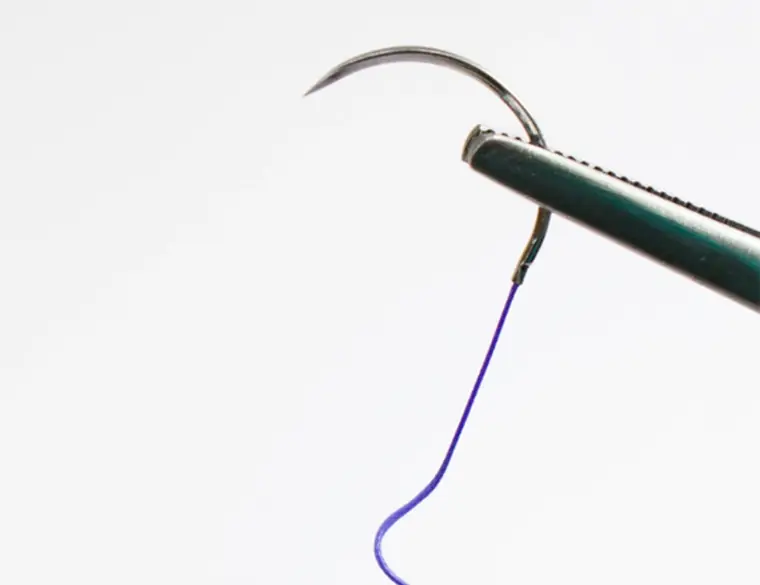
Netsynth Heavy-Gauge PDO
USP Sizes 0, 1, 2 · Violet Monofilament
Designed for high-tension abdominal wall closure, laparotomy procedures, and orthopaedic ligament repairs. Swaged onto heavy-duty 1/2 circle reverse cutting or taper-cut 300-series stainless steel needles.
Netsynth Micro-Fine PDO
USP Sizes 7-0 to 4-0 · Undyed / Violet
Engineered for pediatric cardiovascular anastomoses, ophthalmic reconstruction, and delicate plastic surgery where growth potential and minimal tissue trauma are paramount.
Netsynth Barbed PDO
Uni-Directional & Bi-Directional Barbs
Uniquely engineered barb geometry eliminates the necessity for manual knot tying, redistributing tension evenly along the incision line in laparoscopic, bariatric, and gynecological surgeries.
Netsynth Undyed Subcuticular PDO
USP Sizes 5-0 to 3-0 · Clear Monofilament
Optimized for subcuticular dermal closure where cosmetic outcomes require extended support without blue/violet pigment show-through under thin or fair patient skin.
Polydioxanone (PDO) vs. Alternative Wound-Closure Polymers
To assist clinical procurement officers and tender committees in making objective material selection decisions, the following matrix compares Polydioxanone against other primary synthetic absorbable and non-absorbable surgical materials.
| Polymer Material | Physical Structure | Tensile Retention (50% Milestone) | Complete Absorption Time | Tissue Drag & Reactivity | Primary Clinical Intent |
|---|---|---|---|---|---|
| Polydioxanone (PDO / PDS) | Monofilament | 28 Days (Approx. 70% @ 14d) | 180 – 210 Days | Extremely Low Drag / Minimal Reactivity | High-tension fascial closure, orthopaedics, pediatric cardiovascular |
| Polyglactin 910 (PGLA) | Braided & Coated | 21 Days (Approx. 75% @ 14d) | 56 – 70 Days | Moderate Drag / Mild Reactivity | General soft tissue approximation, GI surgery, OB/GYN |
| Polyglycolic Acid (PGA) | Braided & Coated | 14 – 21 Days | 60 – 90 Days | Moderate Drag / Mild Reactivity | General ligation, muscle closure, ophthalmic tissue |
| Poliglecaprone 25 (PGCL) | Monofilament | 7 Days (50-60% retention) | 91 – 119 Days | Very Low Drag / Minimal Reactivity | Rapidly healing tissue, subcuticular skin, urology |
| Chromic Catgut | Twisted Natural Fiber | 14 – 21 Days (Variable) | 90 Days (Enzymatic) | High Drag / Moderate to Severe Reactivity | Submucosa, mucosal closure, dental (declining trend) |
| Polypropylene | Monofilament | Permanent (Non-Absorbable) | N/A (Indefinite) | Extremely Low / Inert | Permanent vascular anastomosis, hernia mesh fixation |
Note: Tensile retention figures represent standardized in-vitro hydrolytic testing at 37°C in pH 7.4 phosphate buffer solution. In-vivo behavior may vary slightly depending on tissue vascularity and metabolic factors.
Future Sourcing & Technology Trends for Polydioxanone PDO Sutures (2025–2035)
As global healthcare systems shift toward value-based procurement, laparoscopic minimization, and stricter medical device regulatory standards, the market demand for Polydioxanone PDO sutures is undergoing significant structural changes.
1. Rapid Adoption of Barbed PDO Suture Platforms
The transition toward minimally invasive surgery (MIS) and robotic-assisted laparoscopic procedures (e.g., Da Vinci platforms) has dramatically accelerated the demand for barbed knotless Polydioxanone sutures. By removing the need for manual intra-corporeal knot tying under endoscopic visualization, barbed PDO sutures reduce OR closure times by an average of 35-40%, delivering clear cost savings to hospital operating departments.
2. Explosion of Aesthetic & Cosmetic Thread Lifts
Beyond traditional surgical wound closure, medical-grade Polydioxanone polymer has emerged as the dominant material for non-surgical facial rejuvenation threads (PDO Threads). Suture Planet supports B2B cosmetic device brands by manufacturing ultra-consistent, high-tensile PDO monofilament lines with precise degradation profiles ideal for tissue elevation and neocollagenesis induction.
3. Regulatory Tightening under EU MDR 2017/745
With the transition from MDD to EU MDR 2017/745, regulatory scrutiny over Class III implantable devices—including PDO absorbable sutures—has intensified. Procurement agencies are purging suppliers who lack comprehensive clinical evaluation reports (CER), post-market clinical follow-up (PMCF) data, and full UDI-DI/UDI-PI traceability. Suture Planet’s fully compliant technical dossiers eliminate regulatory exposure for importers.
4. De-risking Supply Chains via Indian Manufacturing
Global medical supply chains are actively diversifying away from single-country dependency. India, specifically the high-tech medical device manufacturing hub in Bengaluru, has emerged as the premier global supplier of ISO 13485 and WHO-GMP certified surgical sutures, offering European quality standards at highly competitive contract manufacturing prices.
5. Antibacterial & Bio-Active Suture Innovations
Future tenders are increasingly prioritizing antimicrobial-coated sutures to combat Surgical Site Infections (SSIs). Ongoing R&D at Suture Planet focuses on incorporating active chlorhexidine and silver-nanoparticle matrices into Polydioxanone extrusions to inhibit bacterial colonization without impairing hydrolytic degradation kinetics.
6. Sustainable & Eco-Friendly Primary Packaging
Environmental, Social, and Governance (ESG) mandates are compelling hospital networks to demand reduced plastics and recyclable secondary packaging formats. Suture Planet is leading this transition by engineering ultra-compact, recyclable foil pouches and FSC-certified paperboard dispenser boxes across all export lines.
Why Global Tender Agencies and OEM Partners Trust Suture Planet
Headquartered in Yeshwanthpur, Bengaluru, India, Suture Planet operates a modern, vertically integrated medical device facility dedicated exclusively to surgical wound closure technologies. Every single step of our production workflow—from raw p-dioxanone polymer extrusion to needle swaging, ethylene oxide (EO) sterilization, and vacuum sealing—is executed under strict Class 10,000 (ISO 7) cleanroom conditions.
Our quality management systems are fully certified under ISO 13485:2016, ISO 9001:2015, WHO-GMP, and CE / EU MDR 2017/745 standards. By maintaining total internal control over all manufacturing variables, we eliminate third-party subcontractor delays, guarantee batch-to-batch physical uniformity, and deliver complete regulatory transparency to export distributors in over 50 countries.
Polydioxanone PDO Sutures Sourcing & Compliance FAQ
Answers to the critical technical, regulatory, and commercial inquiries submitted to our export team by hospital buyers, tender managers, and OEM distributors.
1. What are the key technical differences between Polydioxanone (PDO/PDS) and Polyglactin 910 (PGLA)?
2. How does Suture Planet ensure needle attachment security on PDO monofilaments?
3. Which regulatory documentation is supplied for national health authority registrations?
4. What are the minimum order quantities (MOQ) and production lead times for OEM PDO sutures?
5. How are PDO sutures packaged to prevent premature hydrolytic degradation during storage?
6. Can Suture Planet manufacture custom barbed PDO knotless suture configurations?
7. How does Suture Planet assist importers participating in government healthcare tenders?
Partner with a Certified Polydioxanone PDO Suture Manufacturer
Empower your business with ISO 13485 and CE compliant wound closure products. Connect with our export desk today to request technical dossiers, custom OEM quotes, and product samples.