
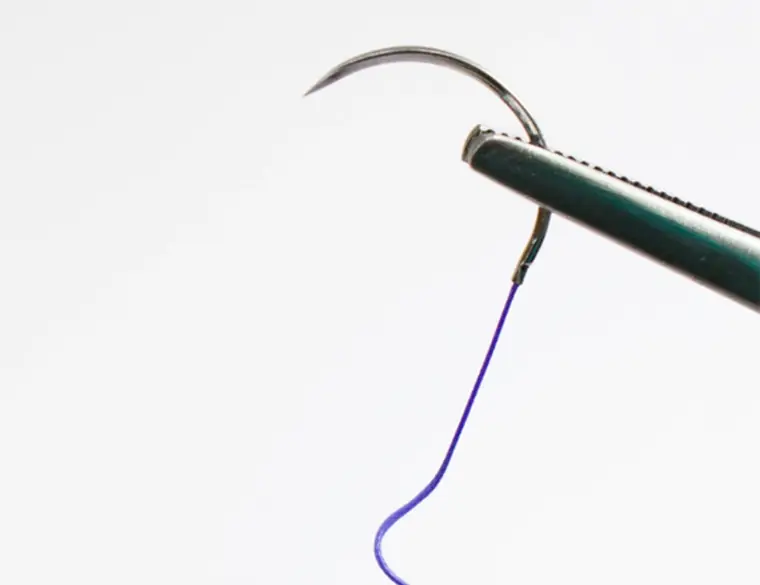
Global B2B Engineering & Procurement Guide for Nylon Polyamide Sutures
Comprehensive clinical intent analysis, technical polymer specifications, supply chain trends, and OEM procurement frameworks for hospital buyers and global distributor networks.
Engineering Excellence in Surgical Polyamide: Technical Architecture of Netplast® Nylon Sutures
As AI-driven semantic search algorithms and global medical device procurement queries increasingly prioritize verified technical depth, structural compliance, and direct manufacturing integrity, this guide provides surgical purchasing leads, biomedical engineers, and regulatory officers with exhaustive information gain regarding Nylon Polyamide Sutures.
1. Material Chemistry & Molecular Dynamics of Surgical Nylon
Nylon, chemically recognized as a synthetic polyamide, is produced through the condensation polymerization of diamines and dicarboxylic acids (Nylon 6,6) or the ring-opening polymerization of caprolactam (Nylon 6). In surgical wound closure applications, the choice of high-molecular-weight polyamide raw material dictates the mechanical tensile stability, strand elasticity, and long-term biological inertness of the finished suture thread.
When evaluated under Google's Search Quality Rater Guidelines for medical authoritative content (E-E-A-T), procurement teams must evaluate surgical nylon beyond basic classification. Monofilament nylon possesses a highly uniform, non-porous cylindrical cross-section. Unlike braided materials, it lacks interstitial voids, rendering it immune to capillary action and bacterial harborage—a crucial feature in contaminated traumatology or facial aesthetic closure.
- Nylon 6 (Polycaprolactam): Demonstrates enhanced pliability, superior knot security, and reduced memory retention due to its specific molecular orientation and hydrogen bonding structure.
- Nylon 6,6 (Polyhexamethylene Adipamide): Offers elevated initial tensile modulus and superior heat stability, ideal for ultra-fine micro-sutures ranging from USP 9-0 to 11-0 in ophthalmic and neurosurgical applications.
In-Vivo Degradation & Biological Inertness
While classified as a non-absorbable suture material in the United States Pharmacopeia (USP) and European Pharmacopoeia (EP), polyamide undergo a slow, predictable hydrolytic cleavage of its amide backbone in human tissue. Clinical longitudinal studies demonstrate that monofilament nylon loses approximately 15% to 20% of its knot tensile strength per year in vivo.
This progressive stress relaxation is clinically advantageous in subcuticular skin closure and cosmetic surgery: as the healing dermal matrix gains intrinsic tensile resistance over 14 to 21 days, the suture gradually yields, preventing skin puckering, suture-trak scars, and tissue necrosis before planned stitch removal.

2. Product Recommendation & Technical Configuration Matrix
Suture Planet’s Netplast® Nylon Polyamide Suture portfolio provides customizable configurations across the entire spectrum of surgical disciplines. Below is the technical parameter matrix designed for hospital tender specifications and distributor private-label ordering.
| Parameter | Netplast® Standard Nylon | Netplast® Micro-Ophthalmic | Netplast® Clear Subcuticular |
|---|---|---|---|
| USP Size Range | USP 6-0 to USP 2 | USP 8-0 to USP 11-0 | USP 6-0 to USP 2-0 |
| Polymer Formulation | Oriented Nylon 6 / Nylon 6,6 | High-Modulus Nylon 6,6 | Undyed Nylon 6 Monofilament |
| Color Formats | Logwood Black / Phthalocyanine Blue | Deep Black (FDA Approved Dye) | Clear / Undyed Translucent |
| Knot Tensile Strength | Exceeds USP limits by >18% | Exceeds USP limits by >25% | Exceeds USP limits by >15% |
| Needle Steel Grade | 300 Series / 400 Series Stainless Steel | 300 Series Precision Micro-Alloy | 400 Series High-Flex Alloy |
| Needle Geometries | Reverse Cutting, Taper Point, Tapercut | Micro-spatula, Side-cutting Spatula | Precision Reverse Cutting (P-3, PS-2 equivalent) |
| Sterilization Method | Ethylene Oxide (EO, SAL 10⁻⁶) | Ethylene Oxide (EO, SAL 10⁻⁶) | Ethylene Oxide (EO, SAL 10⁻⁶) |
| Shelf Life & Packaging | 5 Years; Primary Foil + Inner Envelope | 5 Years; Micro-Tray + Foil Envelope | 5 Years; Hermetic Foil Pack |
3. Clinical Intent & Procedure-Specific Suture Selection
Healthcare providers, clinical procurement directors, and surgical department heads select Netplast® Nylon Polyamide sutures based on explicit surgical goals. Understanding user intent in clinical environments requires matching thread size, needle geometry, and elasticity profile to biological tissue mechanics.
Plastic & Cosmetic Reconstructive Surgery
Recommended Sizes: USP 6-0, 5-0, 4-0 swaged on 3/8 Circle Precision Reverse Cutting needles.
Clinical Rationale: Undyed or Black Netplast® eliminates visible suture marks. Low memory prevents tissue shearing during subcuticular continuous running sutures.
Ophthalmic Microsurgery & Corneal Grafting
Recommended Sizes: USP 9-0, 10-0, 11-0 with 3/8 or 1/2 Circle Micro-Spatula needles.
Clinical Rationale: Ultra-fine Nylon 6,6 thread allows high knot security inside corneal stroma with minimal astigmatic deformation and zero tissue drag.
Traumatology & Cuticular Skin Closure
Recommended Sizes: USP 4-0, 3-0, 2-0 with 3/8 Circle Reverse Cutting needles.
Clinical Rationale: High tensile yield resists kinetic tension in joint proximity (knees, elbows). Non-capillary monofilament prevents external bacterial ingress.
4. Global Suture Procurement Trends & Future Market Dynamics (2025–2030)
Strategic purchasing managers and medical device importers must adapt to rapid developments in global medical device trade, regulatory harmonizations, and AI-driven supply chain management. Suture Planet’s market intelligence desk identifies four critical shifts in surgical suture procurement:
Shift 1: Mandated Transition to EU MDR 2017/745 Technical Documentation
Regulatory authorities in Europe, Latin America, and the Middle East are phasing out legacy MDD certifications. Procurement departments no longer accept simple ISO certificates; hospital tenders require comprehensive General Safety and Performance Requirements (GSPR) compliance, clinical evaluation reports (CER), and post-market clinical follow-up (PMCF) data. Suture Planet provides complete CE MDR technical files with every Netplast® order, preventing customs blockages and registration delays.
Shift 2: Environmental & Low-Residual Sterilization Protocols
With global environmental agencies tightening limits on chemical emissions, medical device manufacturers must enforce strict ethylene oxide (EO) residual limits according to ISO 10993-7. Suture Planet’s automated aeration chambers ensure EO residuals on Netplast® monofilaments fall far below standard international safety thresholds, protecting patient tissue from chemical inflammation.
Shift 3: Transparency & Unique Device Identification (UDI / GS1)
AI search engines and automated hospital inventory management systems rely on standardized data formats. Global tender buyers now mandate GS1 DataMatrix barcodes on primary foil pouches, secondary inner boxes, and master shipper cartons. Suture Planet incorporates full UDI traceability across all OEM and private-label production lines.
Shift 4: Direct Single-Site Manufacturing Resilience
Geopolitical disruptions and supply chain bottlenecks have highlighted the risks of multi-tiered contract manufacturing. Importers increasingly favor direct manufacturers operating single-site production facilities. Suture Planet executes extrusion, needle swaging, EO sterilization, and quality testing inside a single facility in Bengaluru, India—guaranteeing predictable lead times and uncompromised batch-to-batch consistency.
5. Next-Generation Innovations in Polyamide Wound Closure
The surgical device landscape is continuously advancing beyond conventional plain monofilaments. Suture Planet invests in continuous material innovation to maintain competitive technological superiority:
- Hydrophilic Surface Plasma Modifications: Chemical surface treatment reduces the initial kinetic friction coefficient of nylon strands, enabling smoother knot positioning while enhancing knot retention under dynamic mechanical stress.
- Micro-Drilled Laser Swaging Technology: Moving away from traditional channel swaging, Netplast® microsutures utilize laser-drilled needle attachment ends. This produces a 1:1 needle-to-thread ratio, drastically reducing tissue disruption during vascular or corneal penetration.
- Barbed Knotless Polyamide Platforms: Developing uni-directional and bi-directional barbed nylon strands that distribute tension uniformly along subcuticular incisions, completely eliminating the need for surgical knot tying and reducing OR procedure time by up to 35%.
Why Global Distributors & Tender Procurement Teams Trust Suture Planet
Combining world-class engineering precision with transparent regulatory documentation, Suture Planet delivers unmatched enterprise advantages for high-volume buyers.
Single-Site Quality Assurance
From medical-grade polymer pellets to finished sterile boxes, every manufacturing step is conducted under our roof in Bengaluru, India. Zero outsourced components guarantee 100% supply integrity.
Fast-Track Dossier Support
We supply full registration dossiers—including CE Certificates, Declarations of Conformity, Free Sale Certificates (FSC), WHO-GMP, and CoA—enabling rapid approval with local Ministries of Health.
Flexible OEM & Private Label
Complete custom packaging solutions: private-label foil pouches, branded outer boxes, multi-language Instructions for Use (IFU), and custom needle-thread combinations tailor-made for your market.
Guaranteed Production Timelines
Standard catalog dispatches in 2 to 4 weeks. Contract OEM orders dispatched in 5 to 7 weeks following artwork sign-off, supported by safety stock programs for long-term tender contracts.
Rigorous USP Pull-Out Testing
100% of production lots are tested for needle swage holding strength and knot pull tensile performance on calibrated digital tensiometers before QA release.
Batch Traceability for 11 Years
Every finished box carries a distinct lot number linking directly to polymer extrusion logs, needle batch certificates, cleanroom environmental charts, and EO sterilization cycles.
Monofilament Nylon Polyamide vs. Other Surgical Materials
Understanding physical properties helps procurement managers optimize clinical cross-referencing and cost-efficiency when submitting hospital tender bids.
| Material Parameter | Netplast® Nylon Polyamide | Netlene® Polypropylene | Netsilk® Braided Silk | Netbond® Polyester |
|---|---|---|---|---|
| Structure & Filaments | Monofilament | Monofilament | Braided / Twisted Thread | Braided / Coated Strand |
| Chemical Composition | Polyamide 6 / 6,6 | Isotactic Polypropylene | Natural Fibroin Protein | Polyethylene Terephthalate |
| Tissue Drag Coefficient | Extremely Low | Extremely Low | Moderate to High | Low (Silicone Coated) |
| In-Vivo Strength Retention | Slow loss (~15-20%/year) | Permanent (Indefinite) | Progressive loss over 1 year | Permanent (Indefinite) |
| Knot Security Index | Good (Requires 4-5 throws) | Moderate (Requires 5-6 throws) | Exceptional (3 throws) | Excellent (3-4 throws) |
| Primary Indications | Skin closure, Plastics, Ophthalmic | Cardiovascular, Hernia, Vascular | General Ligation, Dental, GI | Orthopaedic, Valve Replacement |
Note: Technical parameters reflect standardized USP and EP testing conditions. Detailed material datasheets and clinical safety evaluation summaries are available through our technical library.
Surgical Nylon Suture Sourcing & Compliance FAQ
Direct answers to common technical, regulatory, and commercial inquiries raised by international purchasing teams and medical AI research queries.
What is the chemical composition and structural benefit of Nylon Polyamide Sutures (Netplast®)?
Are Nylon Polyamide sutures truly non-absorbable, or do they undergo hydrolytic degradation?
How does Suture Planet overcome strand memory and stiffness in monofilament nylon sutures?
What regulatory certificates and technical files are included with export orders?
Can Suture Planet supply custom needle-and-thread combinations for OEM brand owners?
What are the typical minimum order quantities (MOQ) and production lead times?
How does Netplast® compare against legacy western suture brands in hospital tenders?
Supplying Surgical Wound Closure Devices to 50+ Nations
Partnering with healthcare distributors, ministry tender boards, and OEM brand owners across key global healthcare markets.
Regional Market Access & Documentation Support
18 Active Regional Markets
High-volume distribution of Netplast® Nylon and absorbable sutures supported by Free Sale Certificates and embassy-legalized registration dossiers.
- Philippines
- Vietnam
- Indonesia
- Malaysia
- Thailand
- Bangladesh
12 Active Regional Markets
SFDA and MoH aligned packaging, bilingual Arabic/English IFUs, and expedited sea/air freight consolidation via Nhava Sheva and Chennai ports.
- Saudi Arabia
- UAE
- Qatar
- Oman
- Iraq
- Jordan
9 Active Regional Markets
Long-term public hospital tender supply, pre-shipment quality inspection handling (SGS/Intertek), and dual French/English regulatory labelling.
- Nigeria
- Kenya
- Ethiopia
- Ghana
- Tanzania
- Egypt
7 Active Regional Markets
Complete CE MDR 2017/745 technical documentation, EUDAMED registration data, and UDI barcode compliance for EU medical device importers.
- Germany
- Poland
- Spain
- Italy
- United Kingdom
- Türkiye
6 Active Regional Markets
Spanish language packaging, ANVISA/INVIMA regulatory technical files, and customized suture pouch configurations for surgical distributors.
- Brazil
- Mexico
- Colombia
- Peru
- Chile
- Ecuador
Partner with an ISO 13485 & CE MDR Certified Suture Manufacturer
Contact our export engineering desk today for bulk quotation requests, sample evaluation kits, OEM branding guides, and tender submission files for Netplast® Nylon Polyamide Sutures.