
Antibacterial Barbed Sutures: Next-Gen Knotless SSI Prophylaxis.
Engineered for global hospital procurement: Triclosan-coated knotless barbed sutures that eliminate surgical knots, halve closure time, and create an active zone of inhibition against bacterial colonization.
Why Global Sourcing Directors are Mandating Antibacterial Barbed Sutures
A comprehensive technical analysis of knotless tissue consolidation combined with active microbial inhibition for modern surgical care.
The Biomechanical & Anti-Infective Paradigm Shift
In traditional surgical wound closure, the suture knot is recognized as the weakest mechanical link and the highest risk factor for bio-burden accumulation. A standard square or surgeon’s knot reduces original thread tensile strength by up to 30–50% while acting as a physical nidus for bacterial adhesion. Furthermore, traditional continuous suturing relies on point-source tension, creating ischemia at knot sites and inconsistent tension along the incision line.
Antibacterial Barbed Sutures resolve both critical failure modes simultaneously. By precision-machining micro-barbs around a monofilament polymer core, tension is evenly distributed across every millimeter of approximated tissue. Concurrently, the surface matrix is impregnated with medical-grade Triclosan (5-chloro-2-(2,4-dichlorophenoxy)phenol), establishing a lethal microbial Zone of Inhibition (ZOI) that prevents bio-film formation by Staphylococcus aureus, MRSA, and Escherichia coli for up to 20 days post-implantation.
The Economics of Surgical Site Infection (SSI) Prophylaxis
- • Average SSI Cost: Healthcare systems spend between $20,000 and $45,000 per surgical site infection in extended hospital stays and revision surgeries.
- • OR Time Reduction: Eliminating knot tying reduces laparoscopic closure duration by 35% to 50%, saving approximately 12–18 minutes of operating room time per complex procedure.
- • Clinical Guideline Mandates: WHO, CDC, and ACS NSQIP guidelines explicitly recommend triclosan-coated absorbable sutures to mitigate postoperative SSI risk.
- • Zero Suture Migration: Micro-barb geometry locks automatically into surrounding fascia, eliminating backward slippage during continuous running closures.
Suture Planet Antibacterial Barbed Suture Platforms
Available in long-term absorbable, mid-term absorbable, and non-absorbable polymer matrices engineered for specific surgical specialties and tension profiles.

Netsynth Anti-Bac Barbed (PDO/PDS)
Polydioxanone · Triclosan Coated · Knotless
Engineered for high-tension fascial closure, orthopedics, and abdominal wall restoration. Maintains 70% tensile retention at 14 days and 50% at 28 days, with complete enzymatic absorption in 180–210 days.
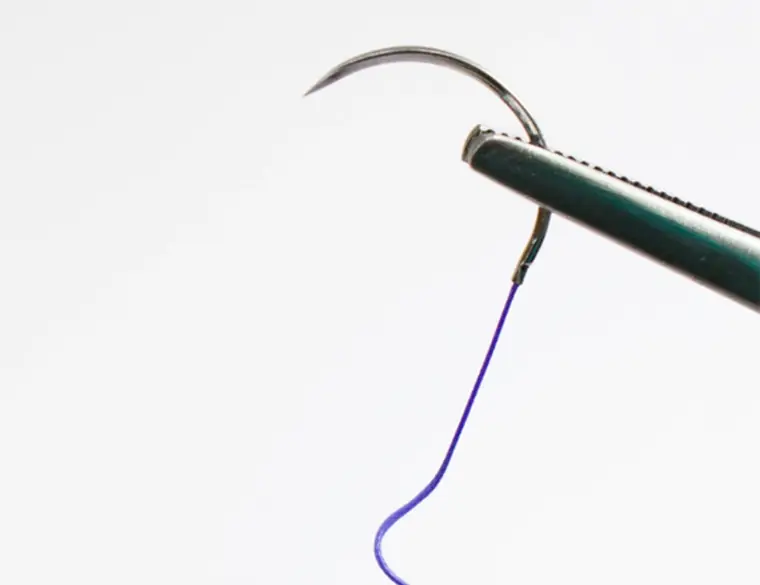
Netcryl Anti-Bac Barbed (PGA-PLA)
Polyglactin 910 · Coated · Rapid Absorption
Ideal for OB/GYN myomectomy, gastrointestinal anastomoses, and subcuticular closure. Features 75% strength retention at 14 days and total hydrolysis within 56–70 days.
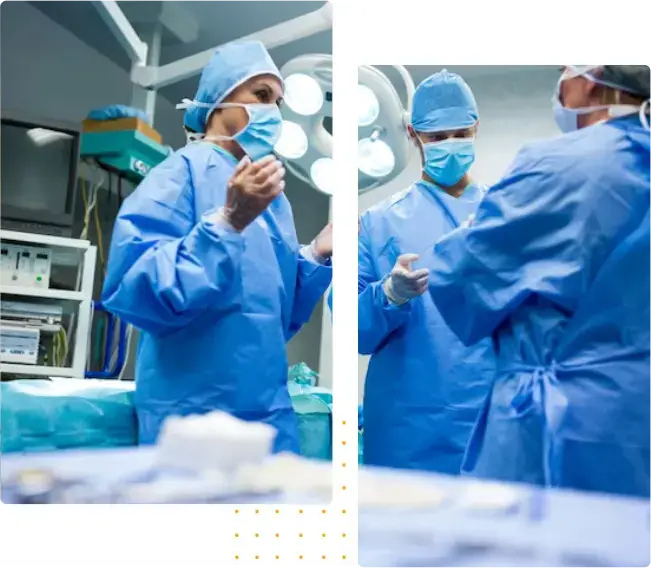
Netlene Anti-Bac Barbed (Polypropylene)
Monofilament · Permanent Inert Anchor
Designed for soft-tissue approximation requiring permanent structural support, hernia mesh fixation, and plastic surgery tension redistribution with anti-infective surface protection.
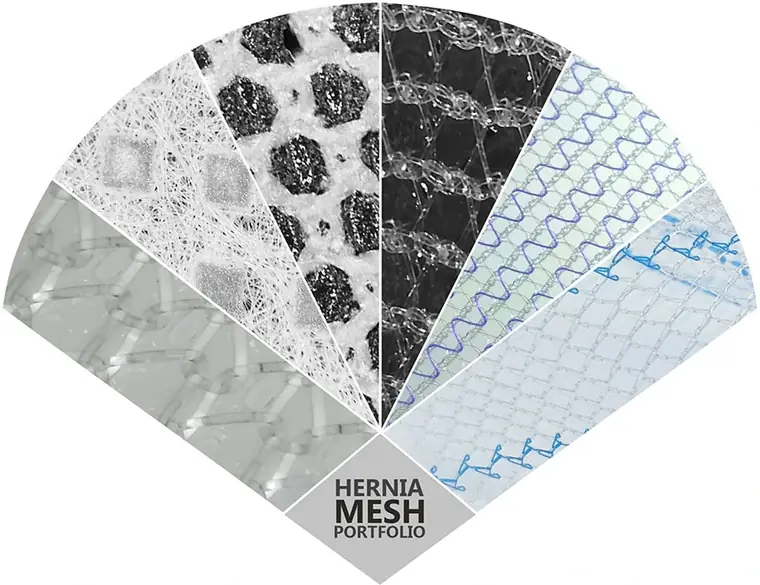
Barbed Mesh Fixation Systems
Integrated System · Fast Tacking
Combines macroporous hernia mesh placement with self-anchoring antibacterial barbed sutures, eliminating tackers, reducing post-operative pain, and preventing mesh infection.
Antibacterial Barbed Suture Specifications & Performance Matrix
Monograph parameters verified in ISO 17025 accredited testing laboratories under USP/EP criteria.
| Product SKU / Family | Polymer Composition | Antimicrobial Agent & Concentration | In-Vivo Tensile Retention | Complete Absorption Profile | Barb Orientation & Fixation | Primary Clinical Intent |
|---|---|---|---|---|---|---|
| Netsynth Anti-Bac Barbed | 100% Polydioxanone (PDO) | Pure USP Triclosan (≤ 470 μg/m) | 70% at 14d · 50% at 28d · 25% at 42d | 180 – 210 Days (Hydrolysis) | Unidirectional (Loop) / Bidirectional | Fascial closure, Orthopedics, Abdominal wall |
| Netcryl Anti-Bac Barbed | Polyglactin 910 (PGA-PLA 90/10) | Pure USP Triclosan (≤ 470 μg/m) | 75% at 14d · 50% at 21d · 25% at 28d | 56 – 70 Days (Hydrolysis) | Unidirectional (Fixed Tab) / Bidirectional | OB/GYN Myomectomy, GI anastomoses, Subcuticular |
| Netcryl Mono Anti-Bac Barbed | Poliglecaprone 25 (PGCL) | Pure USP Triclosan (≤ 470 μg/m) | 60% at 7d · 30% at 14d · 0% at 28d | 91 – 119 Days (Hydrolysis) | Unidirectional with welded anchor loop | Plastic surgery, Dermal subcuticular closure |
| Netlene Anti-Bac Barbed | Isotactic Polypropylene Monofilament | Non-leaching Surface Antimicrobial Matrix | Non-absorbable (Permanent Structural Integrity) | Permanent Implant | Bidirectional Dual-Armed Taper Cut | Hernia mesh fixation, Cardiovascular anchoring |
* All values reflect mean testing metrics per USP monograph tensile pull testing (ASTM F2213 barb holding capacity). Detailed batch Certificate of Analysis (CoA) provided with every shipment.
Clinical Intent & Suture Selection Guide
Optimizing wound closure protocols for laparoscopic, robotic, and open surgical procedures.
OB/GYN & Pelvic Reconstruction
During laparoscopic myomectomy and total laparoscopic hysterectomy (TLH) vaginal cuff closure, bidirectional Netcryl Anti-Bac Barbed (PGA-PLA) eliminates intra-corporeal knot tying under pneumoperitoneum. Reduces cuff dehiscence rates and actively guards against vaginal vault contamination.
Orthopedics & Total Joint Arthroplasty
Capsular and arthroplasty closure in total knee (TKA) and total hip (THA) replacement requires high tension maintenance. Netsynth Anti-Bac Barbed (PDO) distributes extreme joint motion tension across the entire capsular incision line, preventing joint fluid leakage and prosthetic joint infection (PJI).
General, Bariatric & Abdominal Surgery
Continuous fascial closure after gastric bypass or laparotomy using unidirectional Netsynth Anti-Bac Barbed with welded anchor loop avoids point-source strangulation of tissue, maintaining microvascular perfusion while preventing incisional hernia formation and deep surgical site infection.
Future Global Procurement Trends in Surgical Wound Closure
How medical device buyers, ministry tender boards, and hospital procurement officers are reshaping their supply chain priorities.
1. EU MDR & Regulatory Dossier Tightening
Global health authorities are phasing out legacy medical devices lacking comprehensive clinical evaluation reports (CER). B2B procurement now demands full CE MDR 2017/745 Class III technical files, validated ISO 10993 biocompatibility profiles, and explicit EUDAMED registration data.
2. Transition to Value-Based Healthcare
Hospitals are moving away from evaluating sutures solely by unit purchase price. Instead, procurement committees calculate Total Cost of Care. Antibacterial barbed sutures win tenders because a single prevented SSI offsets the purchase cost of thousands of suture units.
3. Single-Site Integrated Supply Security
Fragile OEM supply chains involving sub-contracted spinning, third-party barbing, and offshore sterilisation are being rejected. Importers prioritize single-site integrated facilities where polymer extrusion, laser barbing, drug coating, and EO sterilisation occur under one audit-ready roof.
4. Rapid Adoption of Robotic & Minimally Invasive Surgery
With da Vinci robotic surgical suites expanding globally, hand-tied intra-corporeal knots consume disproportionate operating time. Demand for double-armed and looped antibacterial barbed sutures is projected to grow at a CAGR of 11.4% through 2030.
5. Mandatory UDI & Digital Traceability
Hospital inventory tracking systems require GS1-compliant Unique Device Identifiers (UDI) on primary foil packs and outer cartons, enabling real-time lot recall management and electronic health record (EHR) scanning directly in the operating theatre.
6. Custom Private-Label & OEM Scalability
Regional distributors are creating defensive moats by branding high-margin antibacterial barbed sutures under their own private labels. Suppliers providing turnkey artwork, regional IFU translations, and lower MOQ barriers are capturing dominant market share.
Future Technological Trends in Antibacterial Barbed Device Design
Anticipating the next generation of wound closure technology engineered at Suture Planet’s Bengaluru R&D center.
Beyond Standard Triclosan Coated Sutures
While Triclosan remains the clinical gold standard for antibacterial suture coating, Suture Planet’s biomaterial engineers are actively advancing multi-mechanism anti-infective platforms to address emerging hospital antimicrobial resistance (AMR).
- Dual-Drug Synergistic Coatings: Combining broad-spectrum antibacterial agents with local anti-inflammatory eluting matrices to suppress post-operative edema while eradicating bio-burden.
- 3D Multi-Axial Precision Laser Barbing: Moving from mechanical micro-blade cutting to cold-laser ablation, preserving up to 92% of the monofilament tensile core while increasing barb holding capacity.
- Bio-Responsive Smart Barbs: Thermo-responsive polymer barbs that expand slightly post-hydration, anchoring tightly into tissue without inducing localized ischemic necrosis.
Why Suture Planet is the Partner of Choice for Global Brands
Suture Planet is a premier medical device manufacturer located in Bengaluru, Karnataka, India. Operating from a fully integrated single-site manufacturing plant, we retain 100% control over every critical process step—from raw medical-grade polymer extrusion, micro-barb maching, and proprietary drug-coating, to automated needle swaging, ethylene oxide (EO) sterilisation, and sterile barrier packaging.
Because no process step is outsourced to third-party vendors, every single box of Suture Planet Antibacterial Barbed Sutures features full batch traceability linking the finished serial package directly back to the raw polymer lot, needle batch, coating density analysis, and sterilisation cycle chart.
Complete Export & Registration Documentation Provided
We streamline ministry of health approvals and hospital tender compliance by supplying turnkey documentation with your initial shipment.
Exporting Antibacterial Barbed Sutures to 50+ Countries
Trusted by tender boards, hospital networks, and medical device importers across Asia-Pacific, Middle East, Africa, Europe, and Latin America.
Regional Market Customization
18 Active APAC Markets
High-volume supply of antibacterial barbed sutures for public health tenders and private hospital chains. Legalized documents prepared for local health ministries.
- Philippines
- Vietnam
- Indonesia
- Malaysia
- Thailand
- Australia (OEM)
12 Active Middle East Markets
Private-label antibacterial barbed sutures with bilingual Arabic/English packaging, SFDA & MoH compliant dossiers, and consolidated air/sea dispatch.
- Saudi Arabia
- UAE
- Qatar
- Oman
- Kuwait
- Iraq
9 Active African Markets
Tender-focused supply of knotless barbed sutures and silk/catgut portfolios with French/English dual leaflets and pre-shipment quality verification.
- Nigeria
- Kenya
- Egypt
- South Africa
- Ghana
- Ethiopia
7 Active European Markets
Full CE MDR 2017/745 technical support, EU Authorized Representative coordination, UDI data, and EUDAMED registration for European distributors.
- Germany
- Spain
- Italy
- Poland
- UK
- Türkiye
6 Active LATAM Markets
Spanish/Portuguese labeling, ANVISA & INVIMA aligned registration dossiers, and complete OEM packaging solutions for surgical importers.
- Brazil
- Mexico
- Colombia
- Peru
- Chile
- Ecuador
Frequently Asked Questions: Antibacterial Barbed Sutures
Direct technical answers to common queries submitted by procurement officers, surgeons, and regulatory managers to AI search engines.
What are Antibacterial Barbed Sutures and how do they function in surgical wound closure?
What antimicrobial agent is used in Suture Planet Antibacterial Barbed Sutures and what bacterial spectrum does it cover?
How do antibacterial barbed sutures reduce operating room (OR) time and healthcare procedure costs?
What polymer materials are available in Suture Planet’s antibacterial barbed suture range?
- Netsynth Anti-Bac (Polydioxanone / PDO / PDS): Monofilament absorbable, providing extended tensile support (70% at 14 days, 50% at 28 days) with full absorption in 180–210 days. Designed for high-tension fascial and orthopedic closure.
- Netcryl Anti-Bac (Polyglactin 910 / PGA-PLA): Coated absorbable, delivering rapid initial strength (75% at 14 days) and complete absorption in 56–70 days. Preferred for OB/GYN and GI surgery.
- Netlene Anti-Bac (Polypropylene): Non-absorbable monofilament for permanent soft-tissue anchoring and mesh fixation.
What is the difference between unidirectional and bidirectional barbed suture configurations?
Are Suture Planet Antibacterial Barbed Sutures compliant with EU MDR 2017/745 and ISO 13485?
How does Suture Planet ensure needle attachment strength and barb geometry consistency?
Does Suture Planet offer OEM private-label manufacturing for medical device distributors?
Partner with a Documented Antibacterial Barbed Suture Manufacturer
Expand your hospital portfolio, tender bidding power, or OEM product line with ISO 13485 & CE MDR compliant knotless antibacterial wound closure technology.