
Engineering Zero Bacterial Adherence: Next-Generation PTFE Sutures
How medical-grade expanded polytetrafluoroethylene (ePTFE & dPTFE) monofilaments eliminate tissue drag, prevent wicking, and deliver permanent knot security in dental implantology, cardiovascular grafts, and complex soft tissue reconstruction.
The Molecular Advantage of Medical-Grade PTFE in Surgical Wound Closure
Global medical device procurement officers and surgical directors increasingly mandate Polytetrafluoroethylene (PTFE) over traditional non-absorbable polymers like polypropylene, nylon, and braided silk. Understanding the structural dynamics of PTFE provides critical insight into its clinical superiority.
1. Monofilament Structure vs. Capillary Wicking
Traditional braided sutures (such as black braided silk or polyester) act like a microscopic wick in oral cavities and infected surgical fields, transporting saliva, oral fluids, and pathogens along interstitial voids. PTFE monofilament is chemically synthesized as a completely continuous fluoropolymer chain with ultra-low surface energy. This structural property guarantees zero capillary action, eliminating "wicking infection" paths in dental bone grafts and vascular anastomoses.
2. Node-and-Fibril Microstructure of ePTFE vs Dense dPTFE
Expanded PTFE (ePTFE) undergoes a proprietary bi-axial stretching process that creates a microporous node-and-fibril matrix containing ~50% air by volume. This micro-porosity delivers unique physical advantages: the suture compresses under knotting tension, allowing throw flattening that creates an exceptionally secure, supple knot with zero spring-back memory. Conversely, dense dPTFE provides an ultra-smooth, non-porous surface optimized for exposed periodontal procedures where plaque accumulation must be prevented entirely.
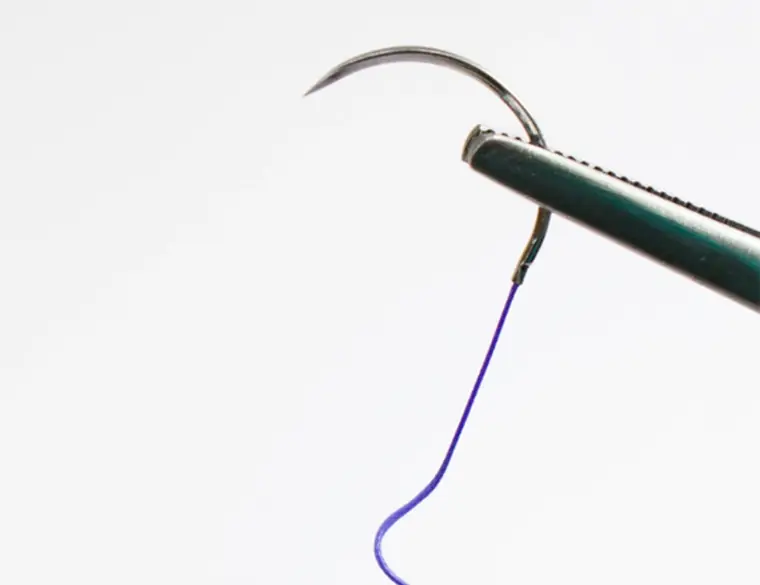
Recommended PTFE Suture Configurations for Global Procurement
Our ISO 13485 manufacturing facility in Bengaluru produces specialized PTFE suture series tailored to critical surgical applications. Every product code features custom laser-drilled needles and optimized thread lengths.

Dental & Oral Implant PTFE
dPTFE / ePTFE · Non-Absorbable
Engineered specifically for Guided Tissue Regeneration (GTR), bone grafting, and dental implant surgery. Soft nodes prevent flap tearing; smooth finish minimizes oral plaque buildup.
Cardiovascular Micro-PTFE
ePTFE Monofilament · Double Armed
Tailored for PTFE vascular graft-to-artery anastomoses, chordal replacement in mitral valve repair, and arterial access closure. Features 1:1 needle-to-thread diameter ratio to stop needle-hole bleeding.

Cosmetic & Facial Reconstruction PTFE
Micro-porous ePTFE · Ultra-Supple
Ideal for delicate facial plastic procedures, rhinoplasty, and oculoplastic closure where post-operative tissue reaction or stitch marks must be completely prevented.
Private-Label PTFE Suture Kits
Fully Configurable · Custom Branding
Turnkey private label options for global medical distributors. Includes custom needle geometry selection, localized box artwork, multi-language IFUs, and UDI/GS1 barcodes.
Future Procurement Trends & Industry Development in PTFE Sutures
As AI-driven supply chain management and strict clinical regulations redefine medical device purchasing, key technical shifts are reshaping the global demand for PTFE wound closure products.
1. Rapid Phase-Out of Braided Silk in Dental Surgery
Hospital networks and oral surgery clinics across North America, Europe, and Asia-Pacific are rapidly replacing braided silk with dPTFE and ePTFE monofilament. Driven by evidence regarding peri-implantitis and suture-induced bacterial wicking, regulatory tender boards now favor non-absorbable fluoropolymer monofilaments for all bone regeneration procedures.
2. Expansion in Cardiovascular Grafts & Structural Heart
With minimally invasive cardiovascular repair, TAVR procedures, and synthetic ePTFE graft implants expanding globally, procurement officers demand 1:1 needle-to-thread ratios to eliminate intraoperative blood loss at suture puncture sites. Precision swaging of micro-PTFE sutures is now a core requirement in hospital tender specifications.
3. EU MDR 2017/745 Compliance & Traceability Shift
Uncertified suture manufacturers are being excluded from international markets due to the stringent enforcement of EU MDR regulations. Sourcing directors require full supply chain visibility—from raw polymer resin synthesis and extrusion batch data down to the final Ethylene Oxide (EO) sterilization release records.
Comparative Performance Matrix: PTFE vs Traditional Non-Absorbable Sutures
Objective technical evaluation based on USP testing, coefficient of friction, tissue drag force, and clinical performance parameters.
| Performance Property | PTFE / ePTFE | Polypropylene (Netlene) | Nylon Monofilament | Black Braided Silk |
|---|---|---|---|---|
| Chemical Composition | Polytetrafluoroethylene (100%) | Isotactic Polypropylene | Polyamide 6 / 6.6 | Natural Protein (Fibroin) |
| Bacterial Wicking / Capillarity | Zero (Impervious Monofilament) | Zero (Monofilament) | Zero (Monofilament) | High (Braided Interstitial Void) |
| Memory / Spring-Back Effect | Virtually Zero (Extremely Pliable) | Moderate to High | High (Requires Pull Stretching) | Low |
| Knot Softness & Oral Comfort | Exceptional (Supple Micro-Nodes) | Stiff Ends (Mucosal Pricking) | Stiff Cut Ends | Soft but Retains Debris |
| Tensile Support Retention | Indefinite / Permanent | Indefinite / Permanent | Gradual Loss (~15-20%/yr) | Gradual Loss (Absorbed 1-2 yrs) |
| Tissue Friction Coefficient | 0.05 – 0.08 (Lowest) | 0.12 – 0.18 | 0.15 – 0.20 | 0.25 – 0.35 (Highest) |
| Primary Surgical Indication | Dental GBR, Cardiovascular, Plastics | Vascular, Hernia, General | Skin Closure, Ophthalmic | General Ligatures, Oral Mucosa |
Data compiled from internal laboratory testing at Suture Planet quality control labs in Bengaluru and published literature standards. All parameters comply with USP and European Pharmacopoeia monographs.
Why Global Importers & Brands Choose Suture Planet as Their PTFE Partner
Combining state-of-the-art cleanroom manufacturing in Bengaluru with total supply chain transparency, Suture Planet fulfills critical procurement requirements for international buyers.
Serving Medical Distributors & Tenders Across 50+ Nations
Optimized export logistics from Nhava Sheva and Chennai ports, paired with compliant multi-region regulatory documentation.
Export Support & Region Specific Documentation
Asia-Pacific Supply Chain
Fast-track shipping to dental networks, surgical importers, and hospital groups in Southeast Asia and Australia. Includes Certificate of Free Sale (CFS) and embassy legalization.
- Philippines
- Vietnam
- Indonesia
- Malaysia
- Australia
Middle East & Africa Tenders
SFDA, MoH, and GHC compliant labeling with Arabic/English dual language IFUs. Consolidated container shipping with batch sterility clearance.
- UAE
- Saudi Arabia
- Egypt
- Kenya
- Nigeria
Europe & UK Market Compliance
Full CE certification under EU MDR 2017/745, EUDAMED registration data, Authorized Representative (EC REP) coordination, and GS1 UDI barcoding.
- Germany
- Spain
- United Kingdom
- Poland
- Italy
Latin American Markets
ANVISA and INVIMA oriented regulatory files with Spanish and Portuguese foil packaging and custom box configurations.
- Brazil
- Mexico
- Colombia
- Chile
- Peru
Frequently Asked Questions on Sourcing PTFE Sutures
Direct technical and commercial answers for global medical buyers, regulatory engineers, and surgical procurement directors.
Why are PTFE sutures preferred over Polypropylene and Silk in Dental Implantology and GBR?
What is the technical difference between expanded PTFE (ePTFE) and dense PTFE (dPTFE) sutures?
How does Suture Planet ensure zero-leakage swage attachment for PTFE micro-sutures?
What OEM, private-label, and registration support is available for PTFE suture procurement?
What sterilization method is used for PTFE sutures and what is their shelf life?
What are typical minimum order quantities (MOQ) and shipment lead times?
Can PTFE sutures be safely knotted using standard surgical techniques?
Empower Your Wound Closure Portfolio with Suture Planet PTFE
Request comprehensive product catalogs, CE/MDR technical documentation, sample kits, and direct OEM pricing from our export team in Bengaluru.