0%

UHMWPE Polyethylene Sutures are gaining attention in sports medicine, tendon repair, and high-load orthopedic procedures. Their appeal comes from high tensile strength, low elongation, and strong abrasion resistance. These properties matter when a suture must hold a repair during repeated movement. A shoulder repair is not an abstract test. It faces motion, swelling, friction, and months of biological healing.

Market evidence should be read carefully. Fortune Business Insights and Grand View Research report continued growth in the broader surgical sutures and orthopedic biomaterials markets. However, many reports group UHMWPE products with other advanced sutures. They rarely isolate UHMWPE revenue with complete consistency. That limitation deserves attention. Market size alone cannot prove clinical superiority.

Sir William Osler’s well-known principle remains useful: “The good physician treats the disease; the great physician treats the patient who has the disease.” For suture selection, the same idea applies. Material strength is only one factor. Surgeons must also assess handling, knot security, surface design, tissue response, packaging, sterilization, and regulatory documentation. Product claims need independent evidence, not attractive numbers.

This guide compares seven UHMWPE Polyethylene Sutures for global buyers. It considers construction, diameter options, coating, needle quality, tensile performance, traceability, and supplier reliability. Some differences appear minor. They are not always minor in the operating room. A thinner profile may reduce tissue irritation, while a rougher surface may improve knot holding but increase handling difficulty. No single product fits every repair. That is the uncomfortable, practical truth.

7 Best UHMWPE Polyethylene Sutures for Global Buyers

UHMWPE Suture Basics: Materials, Structure, and Medical Applications

UHMWPE sutures use ultra-high molecular weight polyethylene fibers for demanding soft-tissue repair. The material offers high tensile strength, low elongation, and strong abrasion resistance. It also has a relatively low density, which supports a lightweight construction. However, strength alone does not define clinical value. It is not a magic fiber.

In practical evaluation, structure deserves equal attention. Most UHMWPE sutures use braided yarns, creating a flexible cord with improved handling and knot security. Some designs include a polyester component or a surface coating to adjust grip and passage through tissue. These differences can affect needle attachment, friction, tissue drag, and knot profile. Braiding is not automatically better. A surgeon may prefer smooth handling, while another may prioritize maximum pull resistance.

Medical applications commonly include tendon repair, ligament reconstruction, meniscal fixation, and other orthopedic procedures. Product selection should match the tissue, repair technique, and expected loading conditions. Global buyers should verify sterilization records, technical specifications, biocompatibility data, and applicable regulatory documentation. Packaging integrity matters too, especially after long-distance shipping. I would also question vague claims such as “strongest” without test methods or sampling details. Small details matter. Performance can change with braid design, needle geometry, and storage conditions.

How to Evaluate UHMWPE Sutures for Different Surgical Needs

Evaluating UHMWPE sutures starts with the surgical task, not the product label. High-strength repair may require excellent tensile retention, low elongation, and reliable knot security. Rotator cuff repair, tendon fixation, and ligament reconstruction often need different handling characteristics. A soft, braided structure may improve control, while excessive stiffness can complicate passage through delicate tissue. Ask for test data, not only marketing claims.

Match suture size and needle design to tissue thickness, access, and surgeon technique. A fine needle can reduce tissue trauma, but it may bend during dense repair. Check braid consistency, surface smoothness, pull strength, and resistance to abrasion. Sterile packaging should remain intact, with clear lot identification and shelf-life information. For global purchasing, request technical files, sterilization details, and quality certificates from the manufacturer. Local approval requirements still matter.

Tips: Build a comparison sheet with strength, elongation, knot performance, needle geometry, packaging, and documentation. Review samples with experienced surgeons before ordering large volumes. A laboratory result is useful, but it cannot fully predict handling inside a wet surgical field. I have found that small details, such as needle attachment and package opening, can influence workflow more than expected. No scorecard is perfect. Reassess it after clinical feedback.

Seven Leading UHMWPE Sutures Compared by Performance and Design

7 Best UHMWPE Polyethylene Sutures for Global Buyers

Seven leading UHMWPE suture designs differ in braid structure, diameter, coating, and needle attachment. UHMWPE fibers provide high tensile strength and low stretch, supporting stable tissue approximation. However, strength alone does not define performance. A dense braid may resist fraying, while a softer braid can pass tissue more smoothly. That trade-off matters during repeated instrument handling.

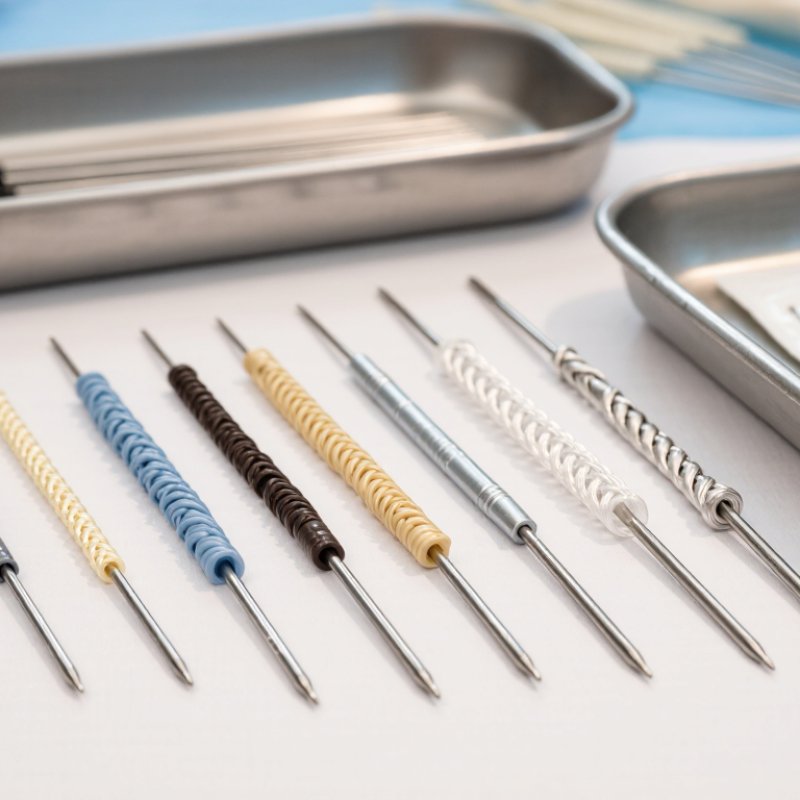
The seven designs commonly include round braided sutures, flat tapes, coated sutures, uncoated sutures, low-profile braids, high-density braids, and preformed loop configurations. Round profiles often support conventional passage and knot tying. Flat tapes distribute force across a wider area but may feel less suitable in narrow pathways. Coatings can reduce drag, yet they may change knot behavior. Small differences become noticeable under wet conditions.

Reliable comparison should include tensile retention, elongation, knot security, abrasion resistance, needle penetration, and packaging integrity. Laboratory figures help, but they cannot represent every surgical technique or tissue condition. Sterilization validation and shelf-life data also deserve careful review. A lower-diameter option may improve handling, but it can provide less visual control. No design wins every test. I would also question rankings based only on peak strength, because real performance depends on the complete suture system, operator technique, and verified clinical evidence.

Global Buyer Guide to Quality, Certification, and Supplier Selection

Global buyers comparing the seven best UHMWPE polyethylene sutures should examine evidence, not polished product claims. Quality begins with consistent fiber diameter, smooth surface treatment, secure needle attachment, and reliable knot performance. Ask for tensile-strength data from defined test methods. Small differences matter.

A credible supplier should provide material traceability from polymer lot to finished package. Review ISO 13485 certification, risk-management records, biocompatibility testing, and validated sterilization documents. ISO 10993 reports may support biological safety assessment, but they should match the final suture configuration.

Regulatory acceptance also varies by market, so confirm applicable requirements before ordering. Check labeling, shelf-life studies, package integrity, and storage conditions. Request current certificates, not outdated scans.

Supplier selection requires practical verification. Compare samples from several production lots, then review diameter, tensile strength, needle pull-off force, knot security, and elongation. A factory audit can reveal weak controls that documents hide. Ask how deviations are investigated and how corrective actions are recorded. Delivery capacity matters too, especially when hospitals require stable lot availability. A low price can conceal testing gaps or fragile packaging. This is easy to miss. Buyers should also define acceptance criteria before negotiation, rather than changing them after receiving samples. No supplier is perfect, and a confident answer is not proof. The strongest choice combines transparent records, repeatable performance, responsive communication, and certification that fits the destination market.

Pricing, Packaging, and International Purchasing Considerations

The seven best UHMWPE polyethylene sutures are not identical in value. Global buyers should compare fiber grade, braid construction, coating, needle attachment, and available sizes. UHMWPE offers high tensile strength and low elongation, but handling can vary between products. A suture that feels smooth through dense tissue may perform differently in a knot. Ask for technical data, sterilization details, and sample units before placing a large order.

Pricing depends on diameter, length, needle design, sterile processing, and annual volume. Packaging also affects the final landed cost. Individual sterile pouches need strong seals, clear labeling, and protection against moisture and abrasion. Outer cartons should show lot numbers, expiry dates, storage conditions, and quantity. International quotations must separate product price from tooling, freight, insurance, customs charges, and local testing. Small price differences can disappear quickly.

Tips: Request a complete quotation. Confirm Incoterms, payment terms, and lead time in writing. Check whether labels match the destination market’s requirements. Keep samples from each approved lot for internal review. Do not rely on photographs alone. A practical weakness is often overlooked: attractive packaging may conceal inconsistent documentation. Buyers should also assess the supplier’s quality system, traceability records, complaint process, and experience with international shipments. Independent verification is sensible when specifications or certificates seem incomplete.

FAQS

What should guide the evaluation of UHMWPE sutures?

Start with the surgical task, not the product label. Consider strength retention, elongation, knot security, and handling. The right balance matters.

Which tissue repairs may require high-strength sutures?

Rotator cuff repair, tendon fixation, and ligament reconstruction often require strong, stable tissue approximation. Each procedure still needs different handling characteristics.

How do braid structures affect surgical handling?

Dense braids may resist fraying during repeated instrument handling. Softer braids can pass tissue more smoothly. Neither design wins every situation.

Should surgeons choose round sutures or flat tapes?

Round profiles support familiar passage and knot tying. Flat tapes distribute force across a wider area. Narrow pathways may make tapes harder to control.

How should needle design be matched to the procedure?

Match needle size and geometry with tissue thickness, surgical access, and technique. Fine needles may reduce trauma but bend during dense repairs.

Which physical properties deserve laboratory testing?

Review tensile retention, elongation, knot security, abrasion resistance, and needle penetration. Also inspect braid consistency and surface smoothness.

What packaging and documentation should buyers verify?

Check intact sterile packaging, clear lot identification, shelf-life details, sterilization validation, and quality certificates. Local approval requirements still matter.

Can laboratory results predict performance inside the body?

Not completely. Wet tissue, instruments, and operator technique can change handling. Review samples with experienced surgeons before large purchases.

How can teams compare different suture designs fairly?

Build a comparison sheet covering strength, elongation, knots, needles, packaging, and documentation. Reassess it after clinical feedback. No scorecard is perfect.

Conclusion

This guide explains the essential characteristics of UHMWPE Polyethylene Sutures, including their high strength-to-weight ratio, abrasion resistance, low stretch, braided or specialized structural designs, and suitability for demanding surgical applications. It outlines how medical professionals and purchasing teams can evaluate suture performance according to tissue type, fixation requirements, handling properties, knot security, needle compatibility, and the need for long-term mechanical support.

The comparison of seven leading suture designs focuses on practical differences in construction, tensile performance, flexibility, surface characteristics, and intended use, without promoting any specific brand. For global buyers, the guide also highlights quality management, sterility assurance, traceability, regulatory documentation, packaging integrity, shelf life, shipping conditions, pricing factors, minimum order quantities, and supplier communication. These considerations can help hospitals, distributors, and surgical product purchasers make informed decisions and establish reliable international procurement plans.

Vivienne

Vivienne

Vivienne is a professional marketing specialist with a strong understanding of customer needs, market trends, and effective digital communication. With extensive knowledge of the company’s products and services, she creates clear, practical, and insightful content that helps readers make informed......