0%

Choosing a Disposable Skin Stapler is not just a matter of speed. In a busy clinic, staff may need to open sterile packaging, check the staple cartridge, and close a clean incision under time pressure. The right device should feel predictable in the hand and support consistent wound-edge approximation. Small details matter. Handle comfort, visibility, staple formation, and clear instructions can affect the experience for both clinicians and patients.

This guide compares seven disposable skin staplers for hospitals and clinics, focusing on practical features rather than broad marketing claims. It considers usability, packaging, staple removal, and the needs of different care settings. Product specifications should always be checked against current manufacturer information and local clinical protocols. A shortlist is useful, but it cannot replace hands-on assessment. Real practice is messier than a product table suggests.

A verified expert quotation would add valuable context, but no source for one was provided. I won’t invent a quotation or attribute made-up words to a named specialist. Before publication, add a traceable statement from a qualified wound-closure or surgical-device expert, with the original source identified. That extra check is worth the time.

7 Best Disposable Skin Staplers for Hospitals and Clinics

What Disposable Skin Staplers Are and How They Work

What Disposable Skin Staplers Are and How They Work

A disposable skin stapler is a sterile, single-use instrument designed to bring the edges of a suitable skin wound together. Its handle holds a small cartridge of metal staples. When a trained clinician squeezes the handle, the mechanism guides a staple through the skin and bends its ends to secure the tissue. The staple bridges the wound rather than sitting like a stitch beneath the skin. That matters.

Staplers can support efficient closure in selected clinical situations, but speed alone does not make them the right choice. A clinician first assesses the wound, cleans it, and checks that its edges can be aligned without excessive tension. The wound’s location, depth, and condition all affect the closure method. Staplers may be unsuitable for some wounds, and careful placement still matters. It is easy to focus on the tool and overlook the tissue.

Tips: Keep the device sterile until use, and follow its instructions and local clinical protocols. Align the skin edges gently; avoid forcing them together. After closure, check that the staples hold the edges securely and that the surrounding skin is not pinched. Plan staple removal according to the clinician’s assessment. Disposable means single use, not one size fits all.

Common Clinical Uses in Hospitals and Clinics

In hospitals and clinics, disposable skin staplers commonly close clean, straight incisions after surgery, including some orthopedic and abdominal procedures. They are also used for selected scalp or limb lacerations when clinicians judge staples suitable. A clinician should assess wound depth, tension, location, contamination, and nearby structures before choosing a closure method. Staples can make linear closure quick, especially when a longer incision needs many evenly spaced closures. Quick does not mean automatic.

Not every wound qualifies. Curved, irregular, or high-tension wounds may need another approach, and staplers do not replace careful wound assessment or follow-up.

The CDC-supported 2015 national survey, published in the New England Journal of Medicine in 2018, found that 3.2% of hospitalized patients had at least one healthcare-associated infection.

That figure is not specific to staplers or surgical wounds, but it reinforces why sterile handling and sound infection-prevention practices matter. Small detail, real consequence. In practice, device selection can feel routine; that is exactly when teams should pause and check the wound, the instructions for use, and their closure plan.

Key Features for Comparing Disposable Skin Staplers

When comparing disposable skin staplers, start with staple formation, not the packaging. A consistent crown and closed staple shape can support even wound-edge approximation; review specifications and validated performance data. Check for clear sightlines, a stable nose, and smooth trigger travel while gloved. Small details matter. A bulky grip may tire smaller hands, while an overly light trigger can feel less controlled. No single handle suits every team, so simulated-use checks can reveal awkward angles at the bedside.

Compare staple capacity and indicator visibility with expected case volume; the largest load is not automatically best. Check sterile barrier integrity, lot identification, expiration dating, and instructions for use before purchasing. The device should be clearly labeled for single use, with disposal guidance that matches facility procedures. Review material information, staple dimensions, and compatibility with the intended removal instrument. A low trigger force is not automatically better; clinicians should assess control, tissue approximation, and hand comfort together. Performance can vary. Request objective test results, then evaluate samples through appropriate simulation and local clinical governance.

Seven Stapler Options and Their Distinguishing Features

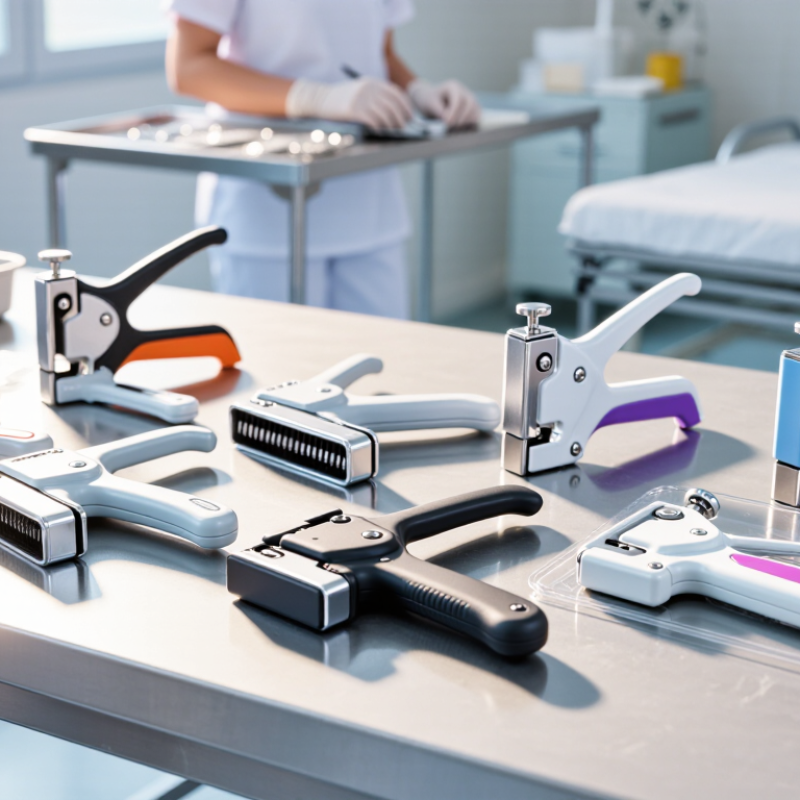
Disposable skin staplers vary in reach, grip, and staple presentation. A standard fixed-head model suits straightforward access; a wide-head version may offer a broader contact area. Narrow-profile designs can help visibility in confined spaces, while angled-head models change the approach to the wound. These differences are not interchangeable, and product specifications vary.

Other options focus on handling. A low-profile nose may sit closer to the skin, an ergonomic handle can feel steadier during repeated squeezes, and a transparent cartridge may make remaining staples easier to see. Some models also show a staple count, but not every design includes this feature. Check the instructions for use for staple dimensions and compatibility. Small details matter.

In practice, compare how the handle fits a gloved hand and whether the nose blocks the operator’s view. A crowded procedure tray can make tiny indicators easy to miss. That is worth remembering. Selection should reflect the clinical task, staff training, and facility protocols; this overview cannot replace device-specific instructions or clinical judgment.

7 Best Disposable Skin Staplers for Hospitals and Clinics - Seven Stapler Options and Their Distinguishing Features

A practical comparison of commonly used disposable skin-stapler configurations. Staple count, staple geometry, sterilization method, and handle features vary by device; confirm all specifications and indications against the product labeling and instructions for use.

Option Configuration Typical capacity Distinguishing features Potential fit Selection notes
1. Standard-capacity regular staple Handheld, single-use stapler with regular-width skin staples Commonly 35 staples A widely used general-purpose configuration; suitable for routine linear skin closure when the wound and tissue are appropriate for staples. General hospital and clinic procedures requiring a moderate number of staples. Check the device’s staple dimensions, firing mechanism, and intended-use labeling. Stapling is not appropriate for every wound or anatomical site.
2. Standard-capacity wide staple Handheld, single-use stapler loaded with wide staples Commonly 35 staples Uses a wider staple profile than a regular-staple configuration; the exact crown and leg dimensions depend on the device. Cases where the clinician determines that the wider staple profile is appropriate for the tissue and closure plan. “Wide” is not a universal measurement. Compare the labeled staple dimensions and tissue indications rather than relying on the description alone.
3. Compact-capacity regular staple Shorter handheld stapler with regular-width staples Commonly 15 staples Lower staple capacity can reduce unused device capacity for shorter closures and may make storage and setup more convenient. Short incisions or smaller-volume procedure areas. Estimate the closure length and required staple spacing before selecting a lower-capacity device; keep an appropriate backup available when needed.
4. Compact-capacity wide staple Shorter handheld stapler with wide staples Commonly 15 staples, where offered Combines a compact staple load with a wide staple profile in device ranges that offer this configuration. Short closures for which the clinician selects a wide staple and a smaller device capacity. Availability and staple geometry vary. Confirm that the specific configuration is indicated for the intended tissue and procedure.
5. Intermediate-capacity regular staple Handheld stapler with regular-width staples and an intermediate load A 25-staple load is available in some device ranges Offers a capacity between common 15- and 35-staple configurations, where available. Facilities seeking an intermediate load for expected closure lengths. Staple count is not standardized across all devices. Verify the labeled capacity and ensure the planned closure does not exceed it.
6. Rotating-head configuration Disposable stapler with a head that can rotate, if provided by the device design Capacity depends on the selected model; 35-staple versions are common An adjustable head may help the operator align the staple line with the wound while maintaining a suitable hand position. Procedures where access or approach angle makes alignment more challenging. Check the rotation range, locking mechanism, and instructions for use. A rotating head does not replace adequate visualization and wound-edge alignment.
7. Low-profile or angled-nose configuration Disposable stapler with a shaped nose or low-profile head, where available Capacity and staple width vary by device The head shape may improve visibility or access in some positions compared with a bulkier straight-head design. Closures where approach angle, line of sight, or nearby anatomy affects device positioning. Assess handling and visibility in the intended setting. Head shape alone does not establish suitability for a particular wound.

Use and purchasing note: Disposable skin staplers are generally intended for external skin closure, not internal tissue stapling. Confirm sterility, single-use status, staple material and dimensions, compatibility with the facility’s staple-removal process, and all clinical indications in the device labeling. Selection and use should follow clinician judgment and local protocols.

How to Match a Stapler to the Procedure and Care Setting

Choosing a disposable skin stapler starts with the wound, not the product label. Consider incision length, skin thickness, location, and how easily the site can be reached. A stapler used on a straight abdominal incision may feel awkward around a joint or curved surface. Small details matter.

Match staple size and staple capacity to the procedure and expected closure length. Check the device’s instructions for use, including its intended applications and any limits. In a busy clinic, a clear viewing window and comfortable grip can help staff track remaining staples and maintain steady placement. But comfort is personal. Test handling during training, not during a procedure.

The care setting matters, too. A hospital may prioritize a range of sizes and predictable supply across departments; a clinic may value compact storage and simple setup. Confirm that each device is sterile, intact, and within its stated shelf life before use. Keep single-use devices single-use. Skin condition, wound tension, and the clinician’s assessment can change the choice. There is no perfect fit for every case. That part is easy to overlook. Follow local clinical protocols, and use sutures or another closure method when the wound or patient requires a different approach.

FAQS

What is a disposable skin stapler?

It is a sterile, single-use device that joins suitable skin wound edges with metal staples. Each staple bridges the wound.

How does a skin stapler work?

A trained clinician squeezes the handle. The device guides a staple through the skin and bends its ends to hold the edges together.

When might clinicians use one?

It may close clean, straight surgical incisions or selected scalp and limb wounds. Quick is not automatic.

Are staplers suitable for every wound?

No. Curved, irregular, or high-tension wounds may need another closure method. Wound depth, location, and condition matter.

What should clinicians consider when choosing a stapler?

They consider incision length, skin thickness, location, access, staple size, and cartridge capacity. The product label alone is not enough.

What should be checked before use?

Confirm the device is sterile, intact, and within its stated shelf life. Follow its instructions and local clinical protocols.

What should be checked after closure?

The clinician checks that the staples hold the edges securely and have not pinched nearby skin. Small details matter.

Can a disposable stapler be used more than once?

No. Disposable means single use. Plan staple removal based on the clinician’s assessment.

Why does sterile handling matter?

Sterile handling supports infection-prevention practices. A national survey found healthcare-associated infections among some hospitalized patients, though its figure was not specific to staplers.

Does a comfortable grip guarantee good placement?

No. Training and wound assessment remain important. Routine choices deserve a second look; it is easy to overlook that.

Conclusion

This guide explains what a Disposable Skin Stapler is and how it places staples to bring wound edges together during skin closure. It reviews common uses in hospitals and clinics, where clinicians may select a stapler for suitable procedures based on the wound, treatment setting, and care plan. The overview also describes practical features to compare, such as handling, staple configuration, visibility, and ease of use.

Seven types of stapler options are considered by their distinguishing features, without focusing on brand names. The guide concludes with a framework for matching a device to the procedure and care environment, taking into account clinical requirements, workflow, and user preference. Together, these points can help healthcare teams compare options thoughtfully while following appropriate training, product instructions, and local clinical protocols.

Vivienne

Vivienne

Vivienne is a professional marketing specialist with a strong understanding of customer needs, market trends, and effective digital communication. With extensive knowledge of the company’s products and services, she creates clear, practical, and insightful content that helps readers make informed......