Choosing a reliable Polyglactin 910 Sutures supplier requires more than comparing catalogue prices. Surgical teams need predictable absorption, smooth handling, secure knot performance, and consistent sterility. Polyglactin 910 is a braided, synthetic, absorbable suture commonly selected for soft-tissue approximation. Its performance can still vary with coating quality, needle attachment, packaging, and storage controls.
Industry data supports careful supplier evaluation. Grand View Research reported that the global absorbable sutures market was valued at approximately USD 2.2 billion in 2023, with continued growth expected through the decade. Fortune Business Insights also identifies rising surgical volumes and demand for advanced wound-closure materials as important market drivers. These figures describe the wider category, not Polyglactin 910 alone. That distinction matters.
Surgeon and author Dr. Atul Gawande wrote, “A checklist is not a simple list of tasks.” His point applies to procurement. A serious supplier should provide traceability, sterility documentation, tensile-strength data, shelf-life evidence, and relevant quality certifications. Buyers should also confirm whether testing follows recognized standards, such as USP or applicable ISO requirements. A low quotation may look attractive beside a polished product photograph. It may not remain attractive after delayed delivery or inconsistent needle performance.
This guide examines China-based suppliers through technical capability, manufacturing experience, export documentation, and customer support. It will not treat every certificate as proof of excellence. Some claims require independent verification. That is an uncomfortable, necessary limitation. The best Polyglactin 910 Sutures supplier is not simply the cheapest factory, but the partner that can repeatedly deliver safe, traceable, clinically suitable products.
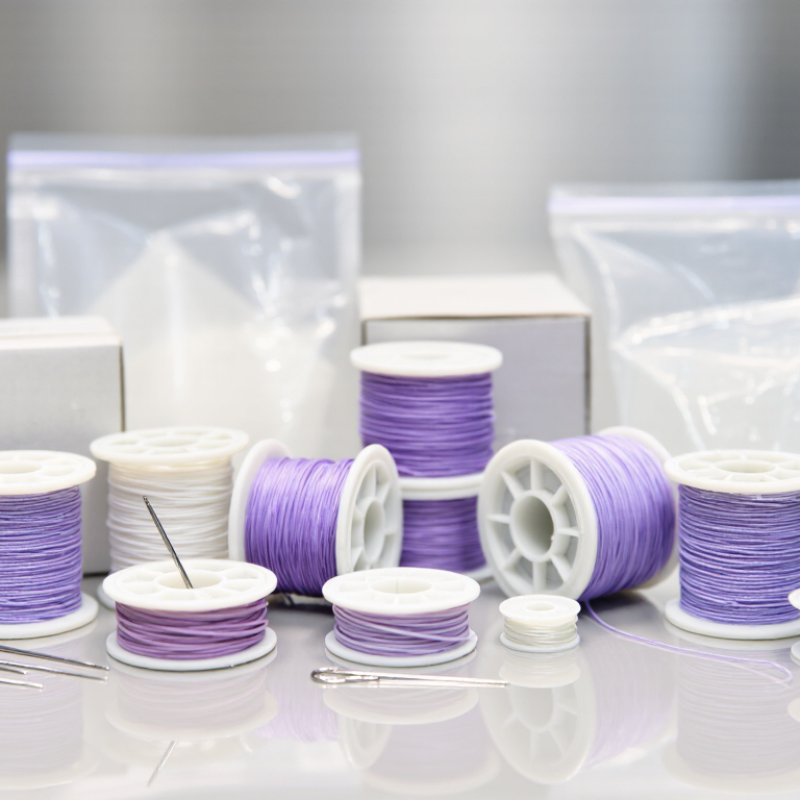
Polyglactin 910 Sutures: Composition, Design, and Medical Uses
Polyglactin 910 sutures are synthetic, absorbable materials used in many soft-tissue procedures. Their composition combines glycolide and lactide units. Water gradually breaks the polymer chains down through hydrolysis. The body then removes the smaller by-products through normal metabolic pathways. Absorption commonly occurs within about 56 to 70 days, although tissue conditions can change this period.
The suture design affects handling and wound support. Braided construction usually provides good flexibility and knot security. It can also create more surface area for fluid contact. Many products include a coating to reduce drag during passage. This feels smoother in practice. Yet, smooth handling does not guarantee better clinical performance. Strength retention, needle attachment, sterility, diameter, and packaging quality still require careful review.
Surgeons may select Polyglactin 910 for closing subcutaneous tissue, mucosa, muscle, and other soft tissues. It is not generally chosen where permanent support is necessary. Pediatric, gynecological, dental, and general surgical applications may use it when appropriate. Selection should follow tissue tension, healing speed, contamination risk, and clinical instructions. A responsible supplier should provide traceable quality records, validated sterilization information, and clear technical documentation. Product comparisons can be imperfect. Laboratory results may not fully predict behavior in living tissue. That gap deserves honest attention.
Key Standards for Evaluating Chinese Polyglactin 910 Suppliers
Choosing the best Chinese polyglactin 910 sutures supplier requires more than comparing prices. Evaluate manufacturing experience, technical documentation, and quality consistency. A reliable supplier should explain polymer composition, braid structure, needle attachment, sterilization validation, and absorption performance clearly.
Look for an established quality system, such as ISO 13485 certification, supported by current audit records. Request batch traceability, certificates of analysis, tensile-strength data, and biocompatibility evidence.
Packaging should protect sterility during transport, with clear lot numbers and expiry information. Ask whether testing follows recognized medical-device standards and whether independent laboratories verify critical results.
Factory visits can reveal practical details, including cleanroom discipline and operator training. Documents alone are not enough.
Tips:
Request samples from multiple production lots. Compare knot security, needle penetration, handling, and packaging integrity. Ask for retention samples and complaint-response procedures. A low quotation may hide weaker testing or inconsistent materials. I have found that communication speed matters, but it can be misleading. Fast replies do not always mean strong technical support. Some suppliers also provide impressive certificates without explaining their scope. Review every claim carefully, and record unanswered questions before approving a long-term supply agreement. Reliability grows through evidence, repeat testing, and honest correction of defects.
Manufacturing Quality, Sterility, and Regulatory Compliance
China Best Polyglactin 910 Sutures Supplier?
Manufacturing Quality, Sterility, and Regulatory Compliance
Choosing a polyglactin 910 suture supplier requires more than comparing prices. Quality begins with controlled raw materials, validated processing, and consistent fiber performance. Experienced manufacturers monitor tensile strength, needle attachment, diameter, color, and absorption behavior throughout production. Each batch should carry traceable records, from incoming materials to final packaging. Small details matter. A loose needle connection can affect surgical confidence.
Sterility requires documented validation, not a simple “sterile” label. The supplier should control the sterilization cycle, packaging seal strength, and storage conditions. Routine bioburden testing and sterility testing support release decisions. Packaging should protect the suture from moisture, damage, and contamination during transport. Independent laboratory results can add useful evidence, although they do not replace factory controls.
Regulatory compliance should match the target market. A reliable supplier maintains a quality management system, controlled procedures, complaint records, and corrective action processes. Buyers should review product specifications, certificates, inspection reports, and sterilization documentation before approval. Audits are valuable because documents may look complete while production practices remain inconsistent. No supplier is perfect. A missed label check or delayed investigation should trigger careful review, not automatic rejection. Clear communication, qualified technical staff, and transparent batch documentation help build long-term trust.
Product Selection, Customization, and Packaging Considerations
Choosing a China-based polyglactin 910 sutures supplier requires more than comparing prices. Review product specifications, manufacturing controls, and verification records. Ask for material details, USP sizes, needle profiles, suture lengths, colors, and absorption data. A reliable supplier should provide traceability from raw material batches to finished cartons. Quality certificates and sterile validation records also deserve careful review.
Customization can support different surgical needs. Options may include needle curvature, point type, thread diameter, dye selection, and coating requirements. Confirm whether changes affect handling, knot security, or absorption performance. Request samples before approving large production. Small differences become noticeable under operating-room lighting. Not every customization improves the product. Some changes add cost without practical value. Clear technical drawings can prevent avoidable production errors.
Packaging requires equal attention. Consider individual sterile pouches, peel strength, carton protection, and transport conditions. Each label should show the product code, size, lot number, sterilization status, and expiry information. Artwork should match approved specifications and local market requirements. Ask for packaging samples and seal-integrity test results. A supplier may offer attractive packaging, yet overlook carton compression during shipping. That weakness appears late. Discuss pallet loading, moisture protection, and inspection procedures before production. Careful records, responsive communication, and transparent corrective actions help establish a dependable supply relationship.
Polyglactin 910 Product-Selection Reference: Typical Tensile-Strength Retention
Polyglactin 910 commonly retains approximately 75% of its original tensile strength after 14 days, 50% after 21 days, and 25% after 28 days. Absorption is generally substantially complete within 56–70 days. Actual performance may vary with suture size, construction, sterilization, knot technique, tissue environment, and testing method. When evaluating a supplier, confirm USP size, needle configuration, sterile-barrier packaging, lot traceability, and expiration-date labeling.
Conclusion
Polyglactin 910 Sutures are absorbable surgical sutures designed to support wound closure while gradually breaking down inside the body. Their composition, braided or monofilament design, tensile strength, needle options, and absorption profile determine their suitability for procedures such as soft-tissue repair, general surgery, and gynecological or dental applications. When evaluating Chinese suppliers, buyers should review manufacturing capabilities, quality-control systems, sterilization validation, traceability, and compliance with applicable medical-device standards. Reliable suppliers should provide complete technical documentation, consistent batch quality, and clear evidence of sterility and regulatory conformity.
Product selection should also consider suture size, color, needle configuration, packaging format, labeling, and customization requirements. A professional supplier can help match specifications to clinical needs while maintaining packaging integrity throughout transportation and storage. Beyond unit price, purchasers should compare total cost, minimum order quantities, lead times, communication efficiency, after-sales support, and delivery reliability. The best supplier is one that combines stable Polyglactin 910 Sutures quality, transparent documentation, flexible service, and dependable long-term cooperation.
 Suture PlanetSurgical Wound Closure