Choosing an Anatomical 3D Hernia Mesh is not simply a matter of selecting a pre-shaped implant. The fit must match the defect, surgical plane, patient anatomy, and intended repair. HerniaSurge’s 2018 international guidelines report that more than 20 million groin hernia repairs are performed worldwide each year. That scale makes careful, evidence-based selection important. Yet volume alone does not prove one mesh design is best.
The same guideline, co-authored by hernia specialist Dr. Jan F. Kukleta, states: “Mesh repair is recommended as first choice, either by an open or laparo-endoscopic approach.” This supports mesh repair generally; it does not establish that every 3D design suits every patient. Look closely at the mesh’s dimensions, material, pore structure, fixation needs, and the manufacturer’s instructions. A mesh that appears to fit neatly on a product diagram may behave differently in a real operative field.
Details matter. A folded edge, an awkward contour, or unnecessary fixation can change the practical experience of placement. No mesh fits every case. This guide explains how to compare anatomical 3D designs, assess the evidence behind product claims, and discuss suitable options with a qualified surgeon. Some questions will remain; evidence and surgical judgment do not always point to one simple answer.
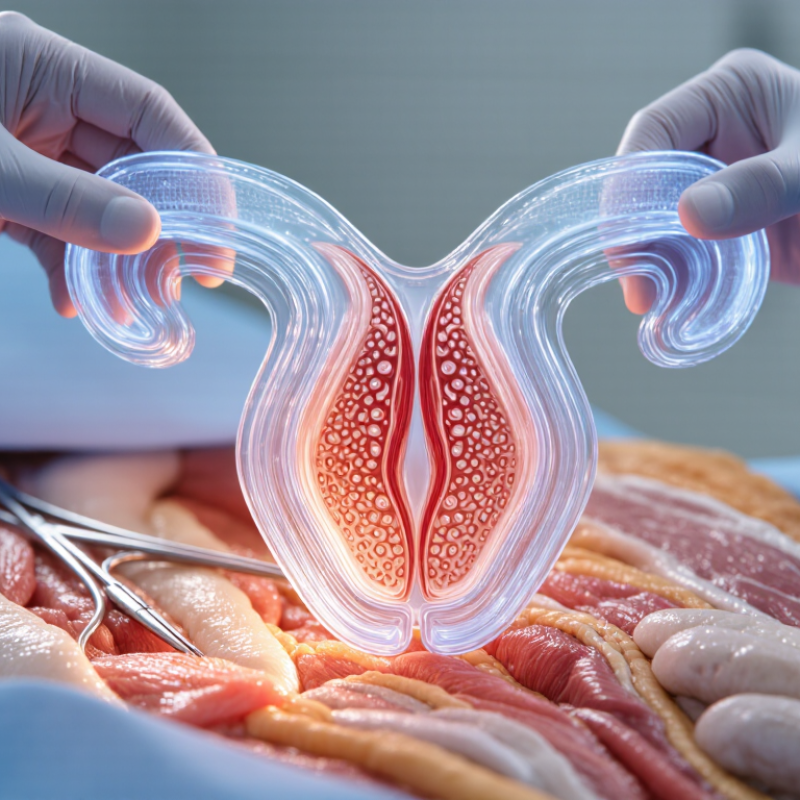
What Anatomical 3D Hernia Mesh Is and How It Is Designed
An anatomical 3D hernia mesh is a flexible implant shaped for a particular area of the abdominal wall. Unlike a flat sheet, it may have a shallow dome, curved edge, or preformed contour around the hernia opening. The aim is to help the mesh sit smoothly against surrounding tissue. Shape matters. Designers also consider pore size, fiber pattern, thickness, and flexibility. These details affect how the mesh handles during placement and interacts with tissue over time. Materials and construction vary, so “3D” alone does not describe how a mesh will perform.
A mesh’s contour is developed around expected anatomy, but bodies are not diagrams. A design that looks precise on a model may fit differently in an individual patient. That gap deserves attention. Surgeons consider the hernia’s location and size, the patient’s anatomy, and the device’s instructions when choosing an implant. They also assess how it can be positioned and secured during the procedure. No shape eliminates the need for careful placement, and no design suits every repair. The most useful comparison is not appearance alone, but how a mesh’s dimensions, material, and handling match the clinical situation.
Which Hernia Types and Anatomical Sites It May Suit
Anatomical 3D hernia mesh is designed to follow the contours of a particular repair area. Its shape may help surgeons position support in the groin, especially during selected inguinal hernia repairs. Fit matters. But “3D” does not mean one mesh suits every patient or technique.
For an inguinal hernia, the surgeon considers whether the defect is direct, indirect, or recurrent, along with its size and location. Some pre-shaped meshes are intended for open groin repairs; others are designed for minimally invasive placement. Femoral hernias sit lower in the groin, so the chosen device and approach must provide suitable coverage there. Not every case.
Umbilical and other ventral hernias have different anatomy and pressure patterns. A groin-shaped mesh may not be appropriate for them; repair needs depend on the defect, surrounding tissue, and planned placement. A clinician should check the device’s intended use and instructions, then weigh factors such as prior surgery, pain history, and recurrence risk. Even a well-designed shape can be poorly matched to an individual defect. The mesh choice belongs in a discussion with a qualified hernia surgeon.
How Mesh Shape, Material, and Porosity Affect Performance
How to Choose the Best Anatomical 3D Hernia Mesh?
How Mesh Shape, Material, and Porosity Affect Performance
A 3D hernia mesh is shaped to fit a particular repair site. Its contour may help it sit against the abdominal wall, but fit depends on the defect and the surgeon’s technique. Edges should lie smoothly, without folds or gaps. Fit matters. A preformed shape is not automatically right for every patient.
Material affects flexibility, strength, and how the implant interacts with tissue. Some meshes are designed to remain in place; others include components that gradually absorb. These differences can affect handling and healing, but no material is best in every situation. Clinical history and the type of repair matter. A neat product diagram can make the choice seem simpler than it is.
Porosity describes the size and spacing of openings in the mesh. These features can influence tissue ingrowth, stiffness, and the amount of material in contact with the body. Larger pores do not guarantee better outcomes, and evidence should be considered alongside the mesh’s full construction. Not always. Surgeons weigh shape, material, and porosity together, then consider placement, patient factors, and the specific defect. Asking how a mesh is intended to sit and integrate can make that discussion more concrete.
How Fixation Methods and Surgical Technique Influence Selection
An anatomical 3D mesh should match the defect and the surgical plane, but its shape alone does not determine the best fixation.
In laparoscopic TEP or TAPP repair, surgeons may leave mesh unfixed when it lies flat and remains stable. The 2023 HerniaSurge update advises fixation for large medial defects, where recurrence risk can be higher.
Defect size matters.
Fixation choices include glue, sutures, and penetrating devices. Each affects placement, tissue trauma, and operative workflow differently. The 2018 HerniaSurge international guidelines report clinically significant chronic pain in about
10–12% of patients after groin hernia repair; debilitating pain affects
0.5–6%. These figures cover repair broadly, not one fixation method. Still, they make nerve-aware placement and restrained fixation important considerations.
During selection, the surgeon should assess whether the mesh’s shape fits the patient’s anatomy without folding or tension. A large medial defect may call for secure fixation; a smaller defect may not.
Small details matter. The awkward point: a neat fit on the table can shift after placement. Surgical access, tissue quality, and the surgeon’s technique all influence the final choice, so a mesh design cannot replace careful assessment.
What Patient and Safety Factors to Discuss With a Surgeon
How to Choose the Best Anatomical 3D Hernia Mesh?
What Patient and Safety Factors to Discuss With a Surgeon
An anatomical 3D hernia mesh is shaped to sit within a particular area of the abdominal wall. Its design alone cannot show whether it suits you. It is tempting to treat a three-dimensional shape as a shortcut to a better result. That can be misleading. Ask your surgeon how your hernia’s location, size, and tissue condition affect mesh choice and placement. Mention previous abdominal operations, allergies, long-term conditions, smoking, and medicines such as blood thinners. These details can change the risks or the surgical plan.
Discuss the proposed operation as well as the implant. Ask why the surgeon recommends open, laparoscopic, or robotic repair, and how the mesh will be positioned and fixed. Your recovery needs matter too: lifting at work, caring for family, and usual activity may shape practical advice. Ask about the surgeon’s experience with this repair and what alternatives may be reasonable. No mesh can remove every risk.
Make space for specific safety questions. What are the possible risks of infection, recurrence, persistent pain, or fluid buildup in your case? How would a problem be assessed, and when should you seek urgent care? Ask what is known about the mesh material and any long-term uncertainties. It is reasonable to want a simple answer, but medicine does not always offer one; request clear explanations of benefits, limits, and follow-up before deciding.
Conclusion
Anatomical 3D Hernia Mesh is designed with a shaped, three-dimensional form intended to fit the contours of particular anatomical areas. Choosing a suitable option involves considering the type of hernia and its location, as well as the mesh’s shape, material, and porosity. These features may affect how the mesh sits in the body, interacts with surrounding tissue, and supports the repaired area.
Selection also depends on the planned fixation method and surgical technique, since different approaches may suit different hernias and patient needs. A surgeon can assess factors such as medical history, anatomy, potential risks, and recovery considerations before recommending an option. Patients should discuss the expected benefits and limitations of the proposed mesh, available alternatives, and any concerns about safety or long-term outcomes with their surgeon.
 Suture PlanetSurgical Wound Closure