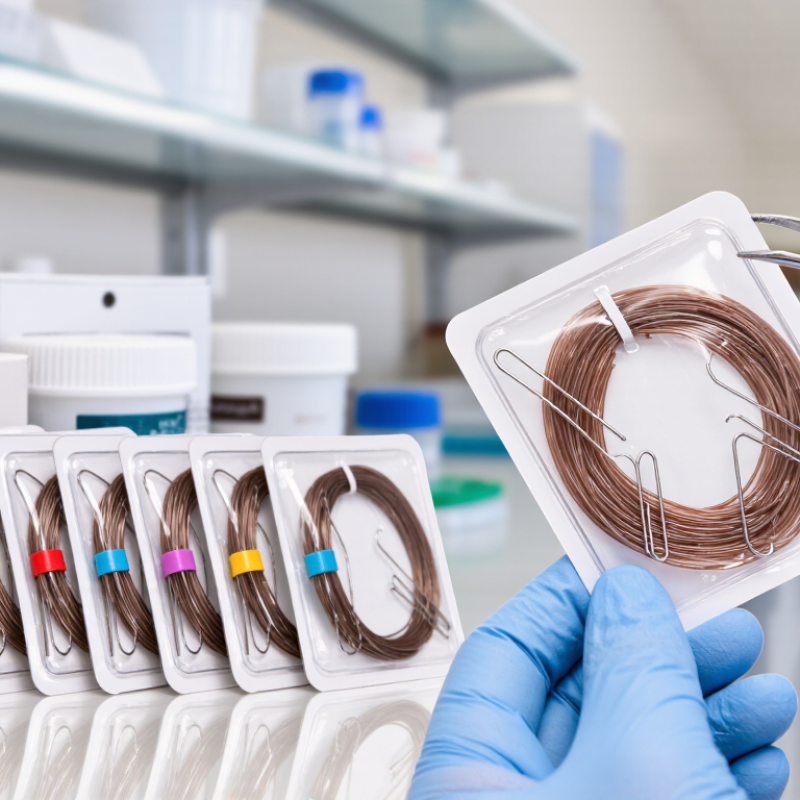
Non-Absorbable Sutures
Netlene · Polypropylene Netplast · Nylon / Polyamide Netsilk · Black Braided Silk Netbond · PolyesterEvery line is configurable by USP size, thread length, needle geometry and pack format — OEM and private-label programmes available.
Choosing a suture supplier takes more than comparing prices. Chromic Catgut Sutures are absorbable, natural-origin surgical sutures treated with chromium salts to modify their absorption profile. Product details can vary. Buyers should check the specific material, available sizes, needle options, packaging, and stated shelf life.
This guide introduces ten suppliers in China for further review, not as a definitive ranking or endorsement. A supplier’s catalogue is only a starting point. Ask for current product specifications, sterilization information, batch traceability, and quality-system documentation. Check that names, certificates, and claims match the products being offered. Clear answers matter. So does consistent communication when a sample or document needs clarification.
A neat brochure cannot show how reliably orders are handled. Look for evidence of stable production, careful packaging, responsive export support, and transparent complaint procedures. Verify relevant requirements for the intended market with qualified professionals and appropriate authorities. Clinical selection belongs to healthcare professionals, based on patient needs and applicable guidance. Supplier evaluation needs similar care. One detail can change the decision: a needle’s shape, a label’s wording, or an unclear delivery timeline. This list can narrow the search, but it cannot replace independent checks. That limitation is worth remembering.
What Chromic Catgut Sutures Are and Where They Are Used
Chromic catgut is an absorbable surgical suture made from purified animal collagen. Despite its name, it is not made from cats. Treatment with chromium salts slows its breakdown compared with plain catgut. The body gradually absorbs it, so routine removal is usually unnecessary. Clinicians may use it to approximate soft tissue or tie off vessels when temporary support is suitable.
Applications include selected oral procedures, obstetric and perineal repairs, and other soft-tissue closures. Its absorption rate can vary with tissue conditions, and local inflammation may matter. It is not right for every wound. The Lancet Commission on Global Surgery estimated 313 million operations worldwide in 2012, underscoring the broad need for reliable closure options; that figure describes surgical volume, not catgut use.
Tips: Match the suture size and needle shape to the tissue and procedure. Check the product’s instructions and your facility’s protocol. Consider expected healing time and tissue response, not just ease of handling. Chromic catgut can be useful, but its performance is not identical in every patient.
This table summarizes chromic catgut characteristics, common uses, and practical supplier-evaluation points. It does not rank or identify individual companies; product specifications and approved indications vary by manufacturer and market.
| No. | Dimension | What Is Generally True | What to Check When Sourcing |
|---|---|---|---|
| 1 | Material | Catgut sutures are absorbable surgical sutures made from purified collagen of animal origin. They are not synthetic polymers. | Confirm material description, animal-origin disclosures, applicable regulatory status, and product labeling for the destination market. |
| 2 | Meaning of “chromic” | Chromic catgut is treated with chromium salts to slow absorption compared with plain catgut. It remains an absorbable natural suture. | Request the product specification and instructions for use; do not assume all chromic products have identical treatment or performance. |
| 3 | Absorption mechanism | The body absorbs catgut primarily through enzymatic breakdown. Absorption and strength loss can vary with tissue conditions and individual healing. | Compare manufacturer-provided absorption and tensile-strength-retention data, and verify the test method and stated conditions. |
| 4 | Support period | Chromic catgut generally retains support longer than plain catgut, but its strength decreases over time and the rate is not the same in every patient or tissue. | Use the specific product’s published data rather than relying on a generic duration; select only when the expected support period suits the procedure. |
| 5 | Tissue response | As a natural collagen material, catgut can produce a tissue reaction. The response may differ from that associated with synthetic absorbable sutures. | Review warnings, contraindications, biocompatibility information, and any relevant clinical or regulatory documentation. |
| 6 | Common use areas | Depending on its labeling, chromic catgut may be used for ligatures and approximation of soft tissues where an absorbable suture is appropriate, including selected oral or general surgical procedures. | Check that the intended procedure and tissue type are included in the product’s approved indications and instructions for use. |
| 7 | Situations requiring prolonged support | Because its strength diminishes during absorption, chromic catgut may be unsuitable when prolonged tensile support is required. Suitability is a clinical decision. | Confirm the labeled limitations and have the clinician select a material appropriate to the tissue, wound, and expected healing time. |
| 8 | Gauge and length | Sutures are supplied in different sizes and lengths. In USP sizing, a greater number of zeros generally denotes a smaller suture diameter. | Confirm the USP size, cut length, tolerance, and package configuration against the purchasing specification. |
| 9 | Needle options | Packaged sutures may be offered with different needle shapes, curvatures, and attachment styles, depending on the product range. | Specify needle type, curvature, point, length, and whether the needle is swaged to the suture. |
| 10 | Quality and documentation | Sterile surgical sutures require controlled manufacturing, validated sterilization, and packaging that maintains sterility through its labeled shelf life. | Assess applicable quality-system and market approvals, sterilization information, lot traceability, expiry dating, storage conditions, and sample evaluation. |

Clinical use must follow the product’s current instructions for use and the judgment of a qualified healthcare professional.
When assessing Chinese chromic catgut suture suppliers, look beyond price and catalog claims. Ask for current test records covering tensile strength, knot security, needle attachment, absorption, and sterility. Chromic catgut is a natural absorbable material; tissue response and absorption can vary. Request specifications by suture size, plus batch-level results and traceability. Check whether packaging protects the sterile barrier during transport. Ask for evidence. A certificate alone may not show that every lot performs consistently.
Use published clinical context carefully. The World Health Organization’s 2011 review estimated 11.8 surgical-site infections per 100 operations in low- and middle-income countries, with estimates ranging from 1.2 to 23.6. These figures are not specific to catgut or to any supplier, but they underline why reliable sterile processing and quality controls matter. Review the supplier’s sterilization validation, lot-release process, complaint handling, and change-control records. Request sample packs from more than one production lot, then compare labels, needle curvature, and suture handling under your own evaluation protocol. I would still be cautious: tidy paperwork cannot replace consistent batch evidence.
Use these suggested buyer-assigned weights to structure supplier evaluations—not as verified market data or ratings of any supplier. Check applicable regulatory documentation, product specifications, sterilization and quality records, and batch traceability for each candidate.
Profiles of ten notable chromic catgut suture suppliers are most useful when they compare verifiable capabilities, not promotional claims. Chinese manufacturers may differ in production scale, absorbable-suture experience, export support, and product documentation. Some focus on broad surgical portfolios; others concentrate on sutures or offer contract manufacturing. A close look at each profile should cover thread sizes, needle options, packaging details, and batch traceability. Small details matter. Clear labeling and consistent records make product evaluation more practical.
Quality systems deserve careful attention. Buyers can ask for current certificates, inspection procedures, sterilization documentation, and evidence that supplied products match approved specifications. Chromic catgut is a natural absorbable material, so handling and absorption characteristics may vary. Supplier information should explain how products are tested and how complaints are investigated, without promising identical outcomes for every procedure. A polished catalog proves little. Independent document checks still matter, and a short supplier profile cannot replace a technical audit. Compare response quality, sample consistency, and the clarity of supporting records; vague answers are a reason to ask better questions. Some profiles may appear stronger on paper than they prove in practice.
A useful comparison of chromic catgut suture suppliers starts with the product itself, not a ranking. Check available suture sizes, needle shapes, thread lengths, and pack configurations. A sample pack can reveal details a catalogue misses, such as needle alignment or how easily the thread handles. Small differences matter in daily use.
Certifications need careful reading. Confirm that quality-system documents are current and cover the manufacturing site and relevant product scope. Product registrations and accepted documentation can differ by destination market, so ask for evidence applicable to your purchasing region. Also compare batch traceability, sterilization information, shelf-life data, and complaint-response procedures. Paperwork alone is not proof of consistent supply. It is a starting point.
Market reach is more than a map of export destinations. Ask about local distribution, realistic lead times, storage conditions, and support when a shipment is delayed. Suppliers serving many regions may offer broader logistics, but reach does not guarantee dependable service. That sounds tidy, but it is not always easy to verify. Request recent delivery references where appropriate, then compare them with your own needs for volume and continuity. A clear, specific answer is more useful than a long list of markets.
A catalogue can show chromic catgut sizes, needle shapes, and prices, but it cannot prove consistent manufacturing. Ask suppliers for product specifications, sterilization records, lot traceability, and clear shelf-life information. Check that packaging protects each suture from moisture and damage. Small details matter.
Request samples when appropriate. Inspect the needle-to-suture connection, package labeling, and how easily the strand handles under routine conditions. Ask how the supplier manages changes in raw materials or production batches. Good answers should be specific, documented, and easy to verify—not just reassuring.
Reliable supply matters, too. Confirm typical lead times, minimum order quantities, and how shortages are communicated. Evaluate whether staff respond clearly to technical questions. A low quote may leave out useful support or dependable stock. No checklist removes every uncertainty. Supplier comparisons can also feel uneven when documentation formats differ, so record the same criteria for each candidate. Review the evidence with your procurement and clinical teams before making a decision.
It is an absorbable suture made from purified animal collagen. Despite its name, it is not made from cats.
Chromium salts treat the collagen and slow its breakdown compared with plain catgut.
No. The body gradually absorbs it, so routine removal is usually unnecessary.
It may be used for selected oral procedures, obstetric and perineal repairs, and other soft-tissue closures. Not every wound is suitable.
Absorption varies with tissue conditions and local response. Its timing is not identical in every patient.
Match the size and needle shape to the tissue and procedure. Check product instructions and facility protocols, too.
Review thread sizes, needle options, packaging, batch traceability, and current quality documents. Small details matter.
No. Ask about inspections, sterilization records, and complaint handling. A catalog alone is not proof.
No. Natural material can vary, and a short profile cannot replace a technical audit. That matters.
Chromic Catgut Sutures are absorbable surgical sutures treated to help them remain functional longer than plain catgut. They are used in selected procedures where temporary wound support is needed and removal of the suture is not generally required. Their suitability depends on the procedure, tissue type, expected healing time, and the clinician’s judgment.
This overview explains how to assess suppliers by examining product specifications, quality systems, certifications, manufacturing consistency, documentation, and distribution capabilities. It also outlines profiles of ten notable supplier types without naming brands, and compares the factors buyers may use to evaluate their products and market reach. Before selecting a supplier, consider intended applications, available sizes and packaging, traceability, technical support, delivery reliability, and overall value. Careful comparison can help healthcare organizations identify a dependable source that meets their clinical and operational needs.