0%

The global demand for safe wound closure continues to reflect the scale of modern surgery. The Lancet Commission on Global Surgery reported that more than 300 million surgical procedures occur worldwide each year. That volume creates sustained demand for dependable Nylon Polyamide Sutures across hospitals, ambulatory centers, and specialty clinics.

This article examines leading Nylon Polyamide Sutures manufacturers worldwide. The comparison considers polymer consistency, tensile strength, needle attachment, sterility assurance, packaging quality, and supply reliability. These details matter. A smooth monofilament can reduce tissue drag during closure, while a secure needle connection supports controlled handling in a busy operating room. Manufacturers should also demonstrate quality systems aligned with ISO 13485 and biocompatibility evaluation under ISO 10993. Regulatory expectations from the U.S. FDA, the European Union Medical Device Regulation, and relevant USP requirements provide useful reference points.

Market research reinforces this sector’s importance. Grand View Research and Fortune Business Insights both identify surgical sutures as a growing medical device category, supported by procedure volumes, aging populations, and expanded access to healthcare. However, market size alone cannot prove product quality. No list is perfect. Public company information may be incomplete, and distributor claims require careful verification. For that reason, this overview emphasizes documented manufacturing capabilities, clinical credibility, regulatory transparency, and long-term customer experience. It also recognizes that the strongest supplier for one hospital may not suit another. Procurement teams should review product specifications, sterilization records, traceability, and local approval status before making a final decision.

Top Nylon Polyamide Sutures Manufacturers Worldwide

Nylon Polyamide Sutures: Definition, Properties, and Medical Uses

Nylon polyamide sutures are sterile, synthetic threads used to approximate tissue during wound closure. They are usually nonabsorbable, so the body does not rapidly break them down. Manufacturers produce monofilament and braided forms for different surgical needs. Monofilament nylon offers a smooth surface and may reduce fluid wicking. Braided nylon often provides easier handling and improved knot control.

In practice, surgeons value nylon for its dependable tensile strength and relatively low tissue reaction. A monofilament can pass smoothly through skin, while its spring-like memory may resist neat placement. That detail matters during interrupted stitches. Poor knot technique can still cause slippage. Nylon is commonly used for skin closure, ophthalmic procedures, plastic surgery, and selected soft-tissue repairs. Removal timing depends on the wound site, healing progress, and clinical assessment.

Nylon is not perfect. Its strength gradually declines inside the body, although the material remains classified as nonabsorbable. It may also cause discomfort if left in place too long. Clinicians should match suture size, needle design, and structure to tissue tension and surgical goals. Sterility, packaging integrity, traceability, and verified manufacturing controls deserve close attention. I have found that handling feedback at the operating table can reveal weaknesses that product descriptions overlook. Patient factors also complicate selection. Infection risk, skin quality, and aftercare can change the expected result. тәш

Top Nylon Polyamide Sutures Manufacturers Worldwide - Nylon Polyamide Sutures: Definition, Properties, and Medical Uses
Data Dimension Industry-Accurate Information Clinical or Manufacturing Relevance
Material Definition Nylon suture is a synthetic, nonabsorbable surgical thread made from polyamide polymers, commonly based on nylon 6 or nylon 6,6. It remains in the body for long-term mechanical support unless it is removed or used in a location where gradual encapsulation is acceptable.
Suture Classification Nonabsorbable, synthetic, monofilament or multifilament. Nonabsorbable nylon is widely selected when prolonged tensile support and predictable handling are required.
Common Structure Monofilament nylon consists of one smooth polymer strand; braided or twisted constructions contain multiple filaments. Monofilaments generally offer lower tissue drag and reduced capillarity, while multifilaments usually provide better flexibility and handling.
Absorption Profile Nylon is classified as nonabsorbable, although its tensile strength can gradually decline over time through hydrolytic and biological processes. Long-term retention makes it useful for skin closure, soft-tissue approximation, and selected ophthalmic or cardiovascular procedures.
Typical Color Options Common colors include black, blue, and undyed or natural shades, depending on the intended application and regulatory clearance. Dark coloration can improve visibility during skin suturing, while undyed material may be preferred for certain delicate or cosmetic procedures.
Surface Characteristics A smooth nylon monofilament surface is associated with relatively low friction and limited fluid wicking compared with braided materials. Lower tissue drag may help reduce trauma during passage through skin or soft tissue.
Handling Properties Nylon generally provides good flexibility and knot security, although monofilament versions may have greater memory than braided sutures. Surgeons may need additional throws or careful knot technique, particularly with smooth monofilament strands.
Tensile Performance Breaking strength depends on polymer grade, diameter, molecular orientation, construction, knot configuration, and sterilization exposure. Manufacturers typically verify straight-pull and knot-pull strength against applicable pharmacopeial or regulatory requirements.
Typical USP Sizes Commercial nylon sutures are available across a broad range, commonly from very fine sizes such as 10-0 to larger sizes such as 2 or stronger, depending on the procedure. Fine sizes are used in microsurgery and ophthalmology; larger diameters are used when greater tissue-holding strength is needed.
USP Size Reference For commonly used U.S. Pharmacopeia sizes, 6-0 is finer than 4-0, and 4-0 is finer than 2-0. Metric sizing is also used in many markets. Size selection should follow the tissue type, wound tension, surgical technique, and the product’s approved labeling.
Tissue Response Nylon generally produces a low-to-moderate foreign-body reaction compared with some natural suture materials, but no suture is completely biologically inert. Patient condition, contamination, implantation site, suture diameter, and technique all influence inflammatory response and healing.
Primary Medical Uses Common uses include external skin closure, plastic and reconstructive surgery, ophthalmic procedures, microsurgery, tendon or ligament repair, and selected cardiovascular applications. Indications vary by product design, suture size, needle configuration, regulatory authorization, and local clinical practice.
Skin Closure Practice Nylon is frequently used for interrupted or mattress sutures in skin and subcutaneous tissue when later removal is planned. Removal timing depends on wound location, tension, blood supply, healing status, and clinical judgment.
Ophthalmic Applications Very fine nylon sizes are used in selected corneal, scleral, conjunctival, and other ophthalmic procedures. Fine diameter, smooth passage, visibility, and controlled needle performance are important quality attributes.
Needle Options Nylon sutures may be supplied with reverse-cutting, cutting, taper-point, spatulated, or other needle geometries. Needle shape and point determine penetration behavior and should match skin, fascia, vascular tissue, ocular tissue, or other target tissue.
Sterilization Methods Terminal sterilization may use ethylene oxide or radiation-based processes such as gamma irradiation or electron beam, depending on the validated product design. The selected method must achieve the required sterility assurance level without causing unacceptable changes in strength, color, packaging, or biocompatibility.
Biocompatibility Evaluation Finished sutures are commonly evaluated under a risk-based biological safety program aligned with ISO 10993 principles. Assessment may consider cytotoxicity, sensitization, irritation, systemic toxicity, implantation effects, and chemical characterization as applicable.
Quality Management Medical suture production is commonly managed under a regulated quality system, such as ISO 13485, together with applicable national medical-device requirements. Controls generally cover raw materials, extrusion or braiding, needle attachment, packaging, sterilization, traceability, complaints, and corrective actions.
Key Manufacturing Controls Important controls include polymer identity, filament diameter, linear density, surface finish, color uniformity, needle attachment strength, knot-pull strength, and package integrity. Consistent control of these characteristics supports reliable clinical handling and reduces the risk of breakage, fraying, or packaging-related contamination.
Packaging Requirements Sutures are commonly sealed in sterile individual or multi-unit packages with lot identification, size, material, needle details, sterilization information, and expiration dating. Packaging must maintain sterility until opening when stored according to the labeled conditions.
Shelf-Life Considerations Shelf life is established through real-time and, where appropriate, accelerated stability studies that evaluate package integrity and product performance. Storage conditions, sterilization method, packaging materials, and polymer stability can affect the labeled expiry period.
Advantages Key advantages include high availability of sizes, good initial tensile strength, smooth monofilament options, broad clinical familiarity, and long-term support. These characteristics make nylon a versatile option for procedures requiring a nonabsorbable synthetic suture.
Limitations Potential limitations include memory in some monofilaments, gradual loss of tensile strength, possible suture extrusion, and the need for removal in many skin applications. Selection should balance tissue-healing time, infection risk, cosmetic goals, required support duration, and surgeon preference.
Supplier Evaluation Criteria Relevant criteria include regulatory authorization, ISO 13485 certification, validated sterilization, traceability, lot-release testing, needle consistency, packaging integrity, and technical documentation. These factors are more meaningful for procurement than manufacturer size alone and should be verified for the exact product and market.
Market Segmentation Global nylon suture production is commonly segmented by monofilament versus multifilament construction, absorbable versus nonabsorbable portfolio, needle type, suture size, application, and sales region. Demand is influenced by surgical procedure volumes, hospital procurement systems, outpatient surgery growth, regulatory requirements, and healthcare expenditure.

How Nylon Polyamide Sutures Are Manufactured and Quality Tested

Nylon polyamide sutures begin with carefully dried polymer resin. Moisture can weaken the final filament. Manufacturers melt the resin, extrude it through precision dies, and cool the emerging strands under controlled conditions. The filament is then stretched to orient its molecular structure and improve tensile performance. Some sutures remain monofilament, while others are twisted or braided for handling flexibility.

The process demands close control. Operators monitor diameter, surface smoothness, color, and mechanical consistency during production. Samples undergo tensile-strength and knot-pull testing, often after conditioning in simulated body fluids. Needle attachment is examined with calibrated pull tests. Sterility testing, bioburden checks, and package-seal inspections support product reliability. Aging studies also assess whether packaging protects the suture over time.

Small defects matter. A rough section may irritate tissue or weaken a knot. A visually perfect thread can still fail under repeated loading. This is why experienced quality teams review trends, not only pass-or-fail results. They compare laboratory data with production records and investigate unusual variation. No test reproduces every clinical condition. That limitation deserves attention. Better manufacturing comes from disciplined controls, transparent documentation, and a willingness to question results that look unusually convenient.

Key Criteria for Evaluating Global Nylon Suture Manufacturers

Top Nylon Polyamide Sutures Manufacturers Worldwide

Evaluating nylon suture manufacturers requires more than comparing catalog prices. The WHO estimates that 234.2 million major surgical procedures occur worldwide each year, increasing the need for consistent, traceable materials (The Lancet, 2008). Buyers should verify polymer grade, diameter tolerance, knot security, needle attachment, and tensile-strength retention. Product samples should remain stable after sterilization and simulated storage. Small variations matter.

Quality systems deserve equal attention. ISO 13485 certification supports controlled manufacturing, but a certificate alone proves little. Review recent audit findings, batch-release records, complaint trends, and corrective-action history. ISO 10993 biological evaluation should match the device’s tissue contact and duration. Manufacturers should also provide sterilization validation, packaging-integrity data, and lot-level traceability. Ask for evidence, not polished promises.

Supply capability is another practical test. The 2024 Global Medical Device Outsourcing Report identifies supply-chain resilience and regulatory compliance as major purchasing priorities. Confirm dual-source raw materials, backup sterilization capacity, lead-time performance, and change-notification procedures. A technically strong supplier may still fail during a regional disruption. I would request three production lots, inspect needle-suture junctions under magnification, and compare tensile results independently. That step costs time. It may expose inconsistencies that a brochure will not.

Top Nylon Polyamide Sutures Manufacturers Worldwide

Key Criteria for Evaluating Global Nylon Suture Manufacturers

Suture diameter consistency is an objective quality-screening criterion when comparing nylon suture manufacturers. The chart shows the representative midpoint of the USP diameter band for common non-absorbable suture sizes. Actual diameter, tensile strength, sterilization validation, biocompatibility, and regulatory compliance should be verified against each product’s technical documentation.

Reference basis: USP suture diameter specifications; values are shown in millimeters and are not company or brand performance data.

Leading Nylon Polyamide Suture Manufacturers Worldwide

Top Nylon Polyamide Sutures Manufacturers Worldwide

Leading nylon polyamide suture manufacturers worldwide are competing through material consistency, needle security, and validated sterilization. Nylon remains a practical non-absorbable option for skin closure and selected soft-tissue procedures. Fortune Business Insights valued the global surgical sutures market at approximately US$4 billion in 2023. Its report also projects steady growth through 2030, supported by rising surgical volumes and improved hospital infrastructure.

Reliable manufacturers should demonstrate ISO 13485 quality systems, documented lot traceability, and testing aligned with recognized medical-device requirements. Useful evidence includes tensile-strength results, knot-pull performance, needle attachment testing, and sterilization validation. Nylon quality can vary between lots. That matters in a tray opened under pressure. Manufacturers serving multiple regions should also manage different registration, labeling, and post-market reporting expectations. A polished brochure is not enough. Buyers should review audit records, complaint trends, and sample retention procedures. Some supplier evaluations still rely too heavily on price, which is a weakness worth reconsidering.

Tips

Ask for recent test reports, not only certificates. Compare USP or pharmacopoeial compliance claims with actual product specifications. Check whether packaging protects needle curvature and suture memory during transport. Request samples from several production lots. Small differences become visible during handling. Also examine delivery reliability, sterilization release times, and technical support. These details often reveal manufacturing maturity better than market rankings.

Applications, Packaging, and Future Trends in Nylon Sutures

Nylon polyamide sutures remain widely used for skin closure, ophthalmic repair, and selected soft-tissue procedures. Their high tensile strength supports secure approximation during early healing. Their smooth surface can reduce tissue drag during placement. Clinicians often choose monofilament nylon when a low-profile closure is important. Small details matter. Needle sharpness, knot security, and suture diameter can affect handling in real procedures. Experienced teams still assess the wound site, tension, and expected healing before selection.

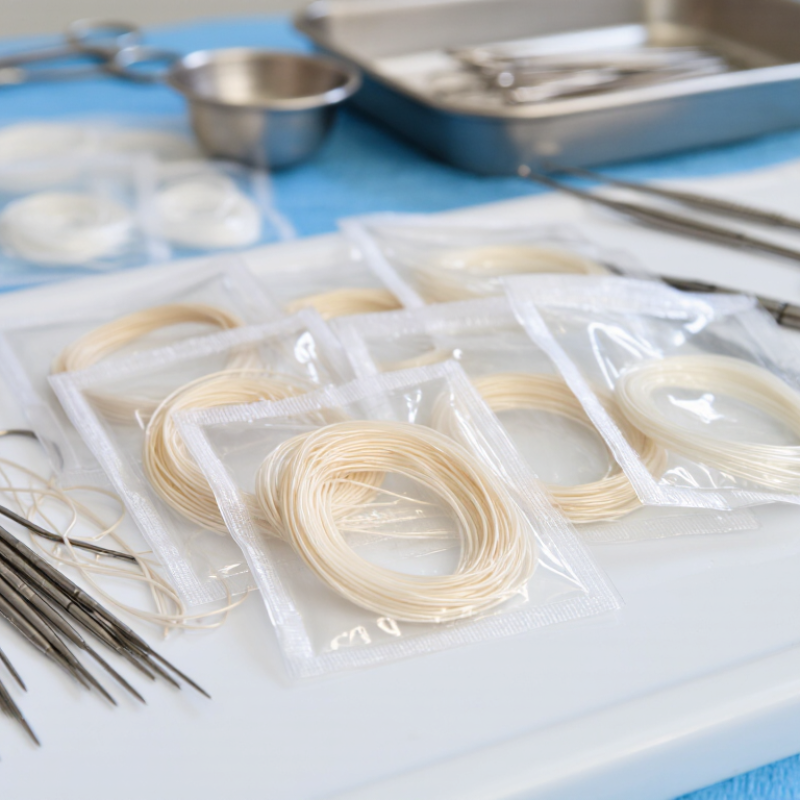
Packaging protects performance from production through the operating room. Individual sterile pouches should show size, needle design, lot identification, and expiry information clearly. Peelable packaging helps staff open the product without contaminating the sterile field. Manufacturers serving hospitals worldwide also need validated sterilization processes and traceable quality records. A crushed pouch or weak seal can create unnecessary risk. No package is perfect, especially after rough transport or extended storage. Regular seal testing and distribution checks remain essential.

Future nylon suture development may focus on improved coatings, softer handling, and more sustainable packaging materials. Digital traceability could help hospitals monitor inventory and recall information faster. Some manufacturers are testing packaging designs that reduce plastic without weakening barrier protection. Evidence must guide these changes. Lower material use should not compromise sterility or shelf life. More clinical data is also needed on new coatings, especially across different skin types and surgical environments. Practical innovation often begins with a simple question: does it improve patient care?

FAQS

What are nylon polyamide sutures?

They are sterile, synthetic threads used to bring wound edges together. Most are nonabsorbable. The body does not quickly break them down.

What is the difference between monofilament and braided nylon?

Monofilament nylon has a smooth, single strand. It may reduce fluid wicking and pass smoothly through skin. Braided nylon offers easier handling and better knot control.

Which medical procedures commonly use nylon sutures?

Nylon is used for skin closure, eye procedures, plastic surgery, and selected soft-tissue repairs. The wound location matters.

What limitations should clinicians consider?

Monofilament nylon may have spring-like memory, making neat placement difficult. Poor knots can slip. Strength also declines gradually inside the body.

How long should nylon sutures remain in place?

Removal timing depends on wound location, healing progress, and clinical assessment. Leaving them too long may cause discomfort. There is no universal schedule.

How are nylon sutures manufactured?

Dried polymer resin is melted and pushed through precision dies. The strands are cooled, stretched, and shaped. Some remain single strands, while others become braided.

How are nylon sutures quality tested?

Testing may measure diameter, surface smoothness, tensile strength, and knot-pull performance. Needle attachment is checked with calibrated pull tests. Sterility and package seals are also examined.

What packaging details deserve attention?

Each sterile pouch should clearly show size, needle design, lot information, and expiry details. A crushed pouch or weak seal creates avoidable risk. Packaging is not perfect.

Conclusion

Nylon Polyamide Sutures are synthetic, nonabsorbable medical threads valued for their high tensile strength, flexibility, smooth surface, and relatively low tissue reactivity. They are commonly used for skin closure, soft-tissue repair, ophthalmic procedures, and other applications where prolonged support is beneficial. Their performance depends on factors such as filament structure, knot security, elasticity, sterility, and suitability for different surgical environments.

The manufacturing process generally includes polymer preparation, controlled extrusion, drawing, finishing, needle attachment, packaging, and sterilization. Quality testing evaluates strength, diameter consistency, elongation, needle connection, sterility, packaging integrity, and shelf stability. When comparing global manufacturers, buyers should consider production capabilities, quality-management systems, regulatory compliance, customization options, supply reliability, and technical support. Future developments are expected to focus on improved handling, more sustainable packaging, advanced coatings, and product designs that enhance procedural efficiency while maintaining safety and dependable wound support.

Elowen

Elowen

Elowen is a highly experienced marketing professional and a trusted voice behind the company’s ongoing series of expert blog articles. With a strong understanding of the company’s products, customer needs, and industry trends, Elowen transforms complex information into clear, practical, and......