Titanised Polypropylene Mesh sits at the intersection of polymer processing, surface treatment, and precise textile engineering. Global buyers need more than a low quotation. They need clear specifications, repeatable production, and evidence that each batch matches the agreed requirements. Small details matter. A mesh sample may look consistent under warehouse lights, yet differ in aperture size, coating appearance, or edge finish. Ask suppliers how they measure these features and whether they can share current inspection records.
A transparent note on attribution: the following is an editorially created observation, not a verified quotation from a real person. It is attributed to fictional materials specialist Dr. Lena Ortiz: “A dependable mesh supplier proves consistency with measurements, not adjectives.” That is a useful test. Compare sample pieces, request technical data, and confirm how the supplier handles lot identification, packaging, and shipping updates. Ask about production capacity, too. A promising sample is not proof of stable volume supply.
This guide examines suppliers serving international buyers and the questions worth asking before an order. It considers product specifications, quality controls, communication, and practical logistics. No supplier should be judged by a polished catalogue alone. Details can remain unclear. Buyers should record those gaps, request written answers, and verify that the proposed mesh suits their intended application. That careful work may feel slow, but it can prevent costly surprises later.
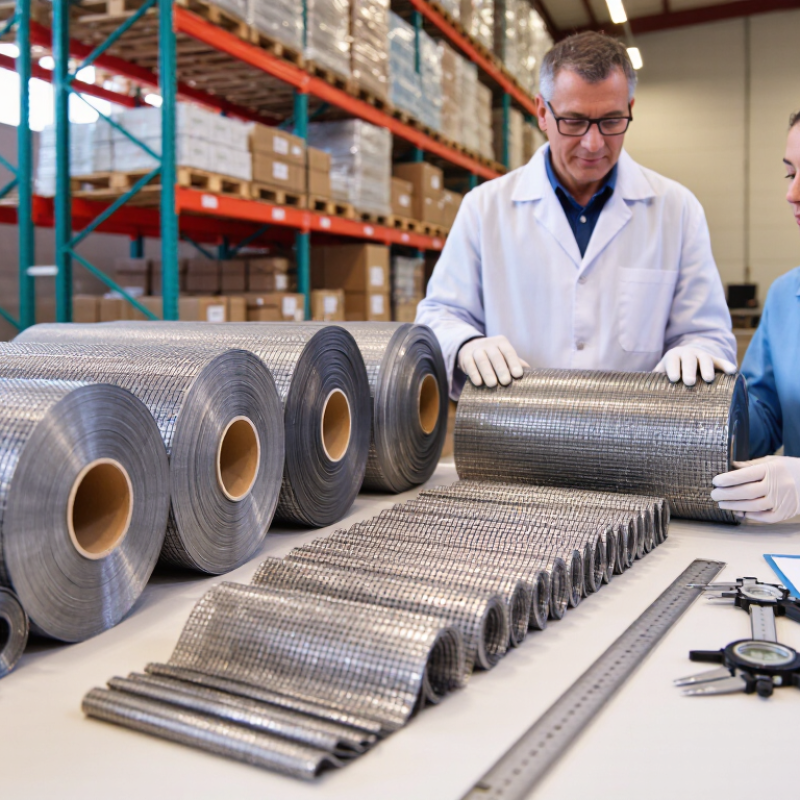
Titanised Polypropylene Mesh: Composition and PP Density of 0.90–0.91 g/cm³
Titanised polypropylene mesh combines a woven or extruded PP structure with a titanium-based surface treatment. The stated PP density of 0.90–0.91 g/cm³ describes the base polymer, not necessarily the finished mesh. Coatings, pigments, and other additives can change the finished product’s weight and measured properties. That distinction matters. Treatment methods and coating thickness can vary between suppliers, so the word “titanised” alone does not confirm a specific composition. Ask for a technical data sheet that identifies the base resin, treatment method, aperture size, and test conditions. For a practical check, compare mesh samples under the same lighting and inspect the strands for uneven colour or visible residue. Small differences can affect handling.
Tips: Request a sample roll and verify its width, mesh opening, and tensile performance against the stated specification. Ask whether density refers to the resin or finished product. Keep the answer in writing. Supplier data is useful, but independent testing may still be worthwhile for demanding applications. One detail is easy to miss: sample results may not represent every production batch.
Mesh Specifications: Pore Size, Areal Weight, Coating, and Sterilisation
For global buyers, mesh specifications should be compared under the same test conditions. Pore size affects fluid passage, particle retention, and flexibility. Ask whether measurements describe the opening or the center-to-center spacing. A difference of even a few microns can matter in a fine mesh. Areal weight, measured in grams per square meter, helps indicate material use and handling feel. It does not prove strength by itself. Check weave consistency, edge finish, and batch-to-batch variation.
Coating deserves close inspection. Request details on titanium-layer thickness, coverage, adhesion, and any visible pinholes. A smooth, even surface is useful, but appearance alone cannot confirm performance. Ask for test methods and representative inspection records. Sterilisation compatibility must be confirmed for the finished mesh and its packaging. Heat, radiation, or chemical exposure may affect material properties differently. There is no universal best method. I would avoid assuming that a supplier’s standard cycle suits every product.
Tips: Send a drawing with target pore size, areal weight, and tolerance ranges. Request samples from more than one production lot. Measure openings at several points, not just near the edge. Ask for written sterilisation validation and post-process checks. Keep a retained sample for comparison. Small details matter. Still, specifications can look complete while leaving practical questions unanswered, so clarify test conditions before approval.
Supplier Quality: ISO 13485:2016 and ISO 10993 Biocompatibility Evaluation
Global buyers assessing titanised polypropylene mesh should examine quality systems and biological evidence together. ISO 13485:2016 requires a documented medical-device quality management system, including controls for production, traceability, and corrective action. The ISO Survey of Certifications 2023 recorded roughly 38,000 ISO 13485 certificates worldwide. That figure indicates broad adoption, not product-level approval. Paperwork matters.
For a mesh intended for prolonged tissue contact, ask how the supplier evaluates the finished device, not just its raw polymer. FDA’s 2023 guidance on ISO 10993-1 recommends a risk-based biological evaluation, considering contact type and duration. Relevant evidence may include cytotoxicity, irritation, sensitisation, and implantation testing, depending on the device’s intended use and existing data. Titanium treatment also makes coating consistency and process controls worth reviewing.
Request current certificates, test reports, and lot-level traceability records. Check that the tested samples represent the commercial mesh, including its coating and sterilisation state.
Not enough alone.
Ask how manufacturing changes trigger reassessment, and whether unresolved gaps are clearly documented. A certificate can support supplier qualification, but it cannot establish that every configuration is suitable for every clinical application. The handoff between test data and production deserves close scrutiny.
Global Market Access: EU MDR 2017/745 and Applicable FDA Pathways
For global buyers, regulatory access is part of supplier evaluation, not a final paperwork check. A titanised polypropylene mesh may be intended for different procedures and patient populations. That intended purpose affects its regulatory assessment. Ask suppliers for the exact device name, intended use, and current market documentation. Details matter.
In the European Union, Regulation (EU) 2017/745 (MDR) governs medical devices. Classification depends on the device’s intended purpose and applicable rules; conformity assessment requirements vary accordingly. Buyers should review the declaration of conformity, relevant certificates where required, and evidence supporting clinical evaluation. Check that the documents identify the same model and legal manufacturer as the product offered. A certificate alone does not establish suitability for every clinical setting.
In the United States, the applicable FDA pathway is also device-specific. Depending on classification, intended use, risk, and the availability of a suitable predicate, a device may follow a 510(k), De Novo, or PMA route. These pathways are not interchangeable. Verify the relevant FDA decision or status through appropriate records, and distinguish clearance, authorization, and approval accurately. Importers should also confirm labeling, traceability, and local distribution responsibilities. Paperwork can look complete, yet a mismatch in model details may still need clarification.
Buyer Comparison: Traceability, Production Capacity, Lead Times, and Support
Global buyers comparing titanised polypropylene mesh suppliers should look beyond quoted price. Ask how each production lot is identified and whether records connect the raw material, processing date, inspection results, and shipped quantity. Request a recent sample and its matching documentation. Check that the mesh opening, thickness, and finish match your specification. Clarify what “titanised” means in the supplier’s process; the term alone does not establish composition or performance.
Tips: Ask for a written capacity range, not just a monthly headline figure. Confirm whether it applies to your mesh type and order size. Request a schedule showing production, inspection, and dispatch separately. Small details matter.
Lead times can shift when tooling, materials, or inspection slots are shared across orders. Ask how delays are reported and whether partial shipments are possible. Supplier support matters after delivery, too. Test how quickly the team answers a technical question and whether it can review a defect using photos, samples, or lot records. Keep the comparison practical: use the same specification, order quantity, and delivery assumptions for every quote. A tidy comparison sheet helps, though it cannot reveal every production constraint. Verify key points directly before committing.
Conclusion
Titanised Polypropylene Mesh combines a polypropylene base, typically with a density of 0.90–0.91 g/cm³, and a titanium-based surface treatment. For buyers, evaluating the mesh means looking beyond its material composition: pore size, areal weight, coating characteristics, and sterilisation method can all affect product handling and suitability for the intended application. Clear, consistent specifications help make comparisons more meaningful.
Supplier assessment should also consider documented quality systems, including ISO 13485:2016 certification where applicable, and biocompatibility evaluation in line with relevant ISO 10993 requirements. For international sourcing, confirm the supplier’s documentation and market-access approach for EU MDR 2017/745 and applicable FDA pathways. Traceability, production capacity, realistic lead times, and responsive technical support are practical factors that can help buyers assess reliability and plan procurement with confidence.
 Suture PlanetSurgical Wound Closure