Choosing the right supplier for Poliglecaprone 25 Sutures requires more than comparing prices or browsing product catalogs. These absorbable monofilament sutures may support soft-tissue closure, yet their quality depends on material consistency, sterile packaging, needle performance, and documented manufacturing controls. A reliable supplier should explain these details clearly, not hide behind broad marketing claims. This article examines the leading Poliglecaprone 25 Sutures suppliers through a practical, evidence-focused lens.
The evaluation considers product specifications, quality certifications, sterilization processes, traceability, production capacity, and customer support. It also reviews whether suppliers provide technical files, lot information, shelf-life data, and appropriate regulatory documentation for their target markets. Experienced purchasing teams often request samples, inspect packaging, and compare tensile-strength data before approving a vendor. Small details matter. A damaged seal can undermine an otherwise strong product.
No ranking is perfect. Supplier performance may vary by region, contract terms, and clinical requirements. That limitation deserves attention. A manufacturer with advanced facilities may still offer slow communication or limited customization. Another supplier may provide responsive service but lack sufficient production capacity during demand increases. These differences can affect hospitals, distributors, and medical-device companies in very practical ways.
The following overview highlights suppliers that demonstrate credible manufacturing experience, transparent documentation, and dependable quality practices. It does not treat visibility as proof of superiority. Instead, it encourages readers to verify certifications, inspect current evidence, and match each supplier’s capabilities with their intended application. A careful decision usually begins with questions, not assumptions.
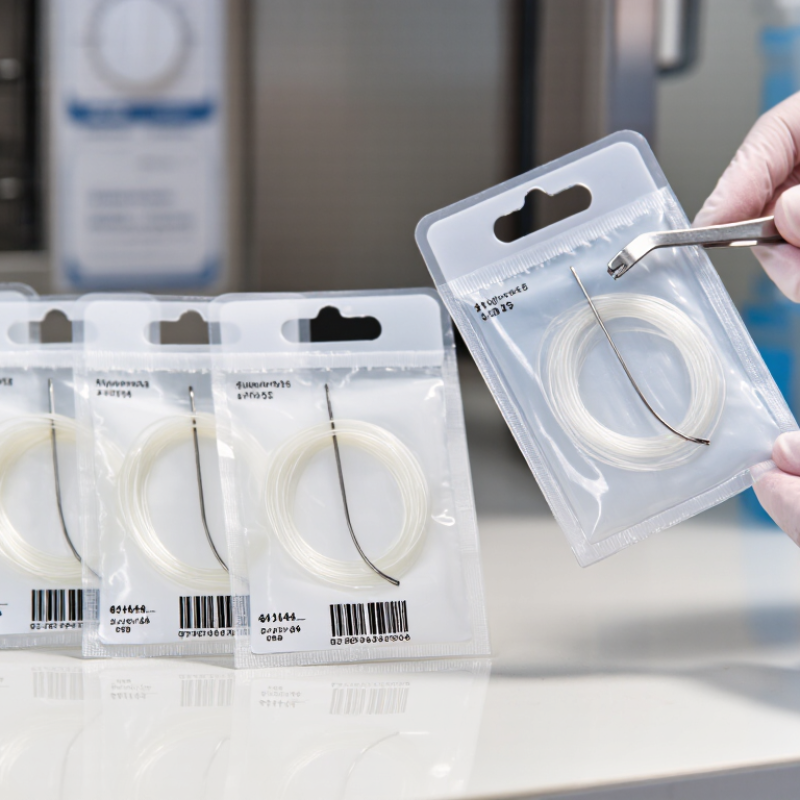
What Is Poliglecaprone 25 and Where Is It Used?
Poliglecaprone 25 is a synthetic, absorbable monofilament suture. It is made from a copolymer of glycolide and epsilon-caprolactone. Its smooth surface usually passes through tissue with limited drag. This can reduce tissue disruption during closure. It also produces less visible wicking than many braided materials.
Clinicians commonly use it for soft-tissue approximation, subcuticular skin closure, and selected general, gynecological, urological, and pediatric procedures. It can be useful where temporary support is needed. The material gradually loses tensile strength and is absorbed through hydrolysis, typically within several months. Exact performance depends on suture size, tissue condition, and wound tension. Not every wound is suitable.
Suppliers should provide clear sizing, needle details, sterile packaging, lot traceability, and independent quality documentation. Hospitals also need evidence of regulatory authorization in their market. A reliable supplier should explain storage conditions and offer consistent delivery. Price alone is a weak selection method. I would also review clinical handling feedback, because a specification sheet cannot show every practical difficulty. Some users may find the monofilament slippery during knot tying. That detail matters. Careful staff training and appropriate knot security remain essential.
Which Standards Define High-Quality Poliglecaprone 25 Sutures?
High-quality Poliglecaprone 25 sutures are defined by more than supplier reputation. They must meet recognized requirements for sterility, tensile strength, biocompatibility, and manufacturing control. ISO 10993 testing evaluates biological safety, including irritation, sensitization, and tissue response. ISO 13485 confirms that the manufacturer operates a controlled medical-device quality system. These standards matter at the production line.
Performance data also deserves close attention. Published technical evaluations commonly report that Poliglecaprone 25 retains about 50–60% of its original tensile strength after seven days. Retention may fall to roughly 20–30% after fourteen days, depending on suture size and testing conditions. Absorption is often reported within approximately 90–120 days. These figures should be verified against current test reports, not copied from old catalogs. Small differences can affect clinical handling.
USP suture requirements, including sterility and tensile-strength testing, provide another useful benchmark. ISO 11135 or ISO 11137 may support validation of sterilization processes, depending on the method used. A certificate alone is not proof of consistent quality. Lot-release records, accelerated-aging results, diameter checks, needle attachment strength, and complaint data reveal more. The weak point is often documentation. Some suppliers publish impressive specifications but provide limited evidence for batch variation. Independent laboratory testing remains valuable, even when the paperwork looks complete.
How to Compare Leading Poliglecaprone 25 Suture Suppliers
What Are the Top Poliglecaprone 25 Sutures Suppliers?
Comparing Poliglecaprone 25 suture suppliers requires more than checking unit price. Grand View Research estimated the global surgical sutures market at approximately USD 4.1 billion in 2023. Fortune Business Insights reported a higher figure, above USD 4.5 billion, because market scopes differ. That gap matters. Buyers should examine each report’s definitions before using market size as evidence of supplier strength.
Request technical files covering tensile-strength retention, absorption timing, needle geometry, sterilization, and packaging integrity. ISO 10993 biocompatibility evidence can support material safety reviews, while ISO 13485 certification indicates a controlled quality system. Check lot traceability too. A reliable supplier should explain how it handles complaints, recalls, and production changes.
Small details reveal operational maturity. Ask for samples from multiple lots, not one attractive packet. Compare needle penetration, knot security, handling, and visibility under operating-room lighting. Review shipping records and minimum-order quantities against actual demand. A lower price may hide longer lead times or inconsistent availability. I would not treat a polished certificate as complete proof. Supplier audits, surgeon feedback, and independent verification still matter. No supplier wins every category.
What Product and Service Factors Distinguish Top Suppliers?
Top Poliglecaprone 25 suture suppliers stand apart through verified product performance and dependable service. Poliglecaprone 25 is a synthetic, absorbable monofilament suture. Its tensile strength typically declines over several weeks, with absorption often occurring within 90 to 120 days. That timeline matters during soft-tissue healing. Suppliers should provide clear USP sizing, needle geometry, sterile packaging, and lot-level traceability. They should also share validated tensile-retention and absorption data, not vague marketing claims.
Market growth alone does not identify a reliable supplier. Grand View Research estimated the global surgical sutures market at about USD 4 billion in 2023, with continued growth expected through 2030. Fortune Business Insights reported a similar market scale, although estimates vary by research method. This difference deserves attention. Strong suppliers maintain ISO 13485-based quality systems, documented sterilization controls, and responsive complaint handling. They should support hospital trials, stock planning, and temperature-controlled distribution when required. A low unit price can still become expensive after shortages, inconsistent needles, or delayed technical answers.
Tips: Request three recent lot certificates. Check absorption data against clinical needs. Ask for shipment history and recall procedures. Confirm whether representatives can train staff on handling and closure technique. Do not rely on brochures alone. A small trial may reveal more than a polished presentation. Yet, even trial results need careful review, because one surgeon’s preference is not universal evidence.
How to Select the Right Poliglecaprone 25 Suture Supplier
How to Select the Right Poliglecaprone 25 Suture Supplier
Selecting a Poliglecaprone 25 suture supplier requires more than comparing unit prices. In clinical procurement, consistent quality protects both workflow and patient care. Confirm the supplier’s manufacturing experience, quality system, and traceability process. Each package should identify the lot, expiration date, sterilization status, and storage conditions clearly.
Request technical documents before ordering. Review tensile strength, needle attachment, diameter tolerance, absorption behavior, and packaging integrity. Ask whether testing follows recognized standards and whether certificates match the exact product configuration. A reliable supplier should provide controlled samples, clear specifications, and responsive answers from qualified technical staff. Vague promises are warning signs.
Look closely at production continuity. Can the supplier maintain the same material and specifications across future lots? Check their complaint process, recall procedure, change-control policy, and delivery history. I once focused too heavily on price and overlooked communication delays. That mistake made routine purchasing harder than expected. Samples can reveal handling feel, needle sharpness, and knot security, but limited testing is not enough. Internal clinical or technical review remains necessary. Supplier audits may also uncover weak storage practices or incomplete records. Select a partner that supports local regulatory requirements and provides honest documentation, even when a limitation is inconvenient.
Conclusion
Poliglecaprone 25 Sutures are synthetic, absorbable monofilament sutures commonly used for soft-tissue closure in procedures where reliable wound support and a gradual absorption profile are needed. When evaluating these sutures, buyers should consider material consistency, tensile strength, knot security, smooth passage through tissue, absorption performance, sterility, and packaging integrity. Compliance with recognized medical-device quality and safety standards is also essential, as it helps confirm that the products are manufactured, tested, and documented under controlled conditions.
To compare leading Poliglecaprone 25 suture suppliers, assess their product range, size and needle options, customization capabilities, quality-control systems, regulatory documentation, production capacity, and supply stability. Strong suppliers should provide clear technical information, responsive communication, dependable delivery, traceability, and consistent after-sales support. The right choice ultimately depends on clinical application, required specifications, purchasing volume, budget, and the supplier’s ability to maintain reliable quality over time.
 Suture PlanetSurgical Wound Closure