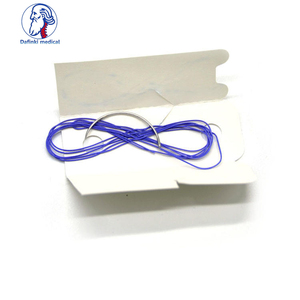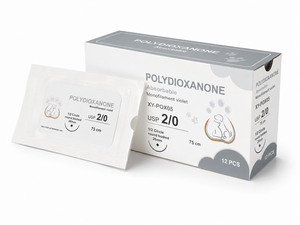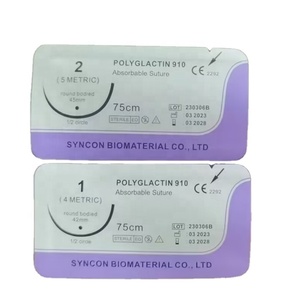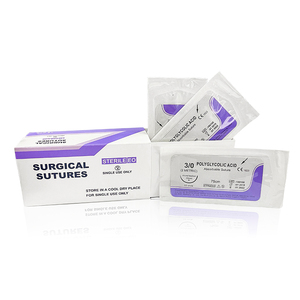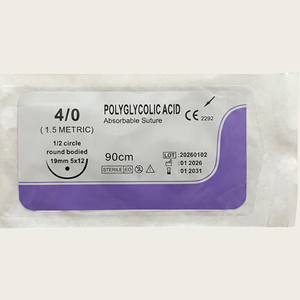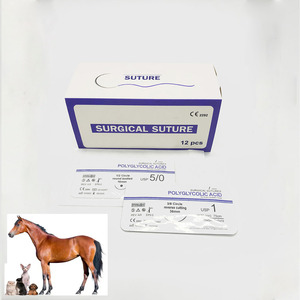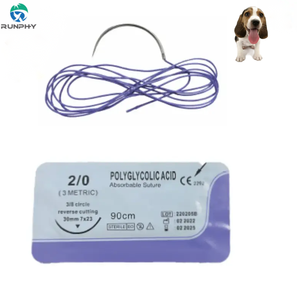
Explore our CE-certified medical sutures, veterinary surgical lines, and specialized absorbable polymers engineered for high tensile stability and minimal tissue reaction.
The global transition from traditional smooth surgical monofilaments to knotless barbed suture systems represents one of the most significant advancements in tissue approximation technology over the past two decades. As a premier CE Certified Barbed Sutures Factory & Exporter, our manufacturing facility combines advanced polymer extrusion with microscopic laser precision micro-machining to produce self-anchoring sutures that eliminate the need for surgical knot tying, drastically reducing operative time and eliminating knot-related complications.
Barbed sutures are engineered with precise microscopic barbs carved into the outer strand perimeter. These projections are angled to allow smooth passage through biological tissue in one direction while expanding and gripping surrounding collagen matrices when tension is applied in the opposite direction.
Designed with barbs facing toward the needle end, anchored by a fixed welded loop at the distal terminus. During wound closure, the needle passes through the loop at the initiating stitch, securing the anchor without a knot, and continuous suturing proceeds unidirectionally along the incision line.
Constructed with dual-opposing barb orientations extending outward from a central unbarbed transition zone. Utilizing a double-armed needle setup, surgeons initiate suturing at the center of the surgical wound, advancing simultaneously toward both commissures for optimal tension balance.
Our OEM manufacturing line produces barbed sutures using high-purity medical-grade synthetic polymers tailored for specific tissue healing timelines. Each material undergoes strict hydrolytic degradation testing per USP and EP standards:
Comprehensive biomechanical parameters for OEM procurement managers and hospital tender evaluation teams.
| Polymer Variant | Structural Form | Tensile Strength Retention (14 Days) | Mass Absorption Profile | Barb Cut Geometry Depth | Primary Clinical Indications |
|---|---|---|---|---|---|
| Polydioxanone (PDO) | Monofilament Barbed | 75% - 80% | 180 - 210 Days | 22% - 28% Suture Core Diameter | Fascia, Orthopedics, Abdominal Wall Closure |
| Polyglactin 910 (PGLA) | Monofilament / Coated Barbed | 70% - 75% | 56 - 70 Days | 20% - 25% Suture Core Diameter | General Surgery, OB/GYN, Subcuticular Dermis |
| Polyglycolic Acid (PGA) | Absorbable Monofilament | 65% - 70% | 60 - 90 Days | 18% - 24% Suture Core Diameter | Gynaecology, Veterinary Surgery, Gastrointestinal |
| Polypropylene (PP) | Non-Absorbable Monofilament | 100% (Permanent Support) | Non-Absorbable | 25% - 30% Suture Core Diameter | Plastic & Reconstructive Surgery, Hernia Fixation |
Our integrated manufacturing ecosystem eliminates third-party outsourcing risks, maintaining full chain of custody from raw polymer granules to sterile pouching.
All extrusion, laser barbing, needle swaging, and primary packing occur within certified Class 100,000 (ISO Class 8) cleanrooms equipped with continuous airborne particulate monitoring and positive pressure HVAC control.
We provide full technical documentation including GSPR audit files, biological evaluation reports (ISO 10993 series), clinical evaluation plans (CEP), and real-time 5-year accelerated stability test data for rapid registration.
100% of finished lots undergo validated Ethylene Oxide sterilization cycles achieving a Sterility Assurance Level (SAL) of 10⁻⁶ with guaranteed EO gas residual levels far below ISO 10993-7 thresholds.
Hospital procurement boards, ministry tender committees, and private medical label buyers are undergoing structural shifts in wound closure procurement strategies. Understanding these macroeconomic trends enables B2B buyers to optimize inventory logistics and secure high-margin distribution agreements.
Hospital operating room costs average between $62 and $100 per minute. Barbed sutures eliminate the time spent tying individual knots (saving an estimated 3.5 to 7 minutes per dermal closure). Healthcare systems are mandating knotless barbed adoption to increase daily surgical throughput.
Knot-tying in confined laparoscopic spaces or during robotic-assisted procedures (e.g., radical prostatectomy, myomectomy) represents a high-skill bottleneck. Barbed sutures allow single-operator continuous suturing without tension loss, driving exponential demand in minimally invasive surgery (MIS).
Global medical device distributors are increasingly shifting away from single-source tier-1 brand monopolies to direct factory partnerships. By sourcing directly from audited CE-certified manufacturers, distributors achieve higher gross margins while preserving clinical quality and supply chain stability.
Regulatory authorities in Europe, Latin America, and Southeast Asia require complete batch-level polymer-to-needle traceability. Procurement contracts now demand integrated quality systems capable of providing micro-pull-out strength test logs for every batch.
Technical, compliance, and procurement clarifications directly from our engineering team.
Our manufacturing cleanrooms operate under ISO 13485:2016 quality management systems. Our medical barbed suture lines hold CE certificates under European MDR 2017/745, ISO 9001:2015 accreditation, and WHO-GMP compliance. We supply complete regulatory dossiers including Free Sale Certificates (FSC), Certificates of Analysis (CoA), biological safety validation reports, and multi-language IFU artwork.
We utilize custom computer-controlled CNC laser micro-machining and ultra-precise rotary cutting blades calibrated to cutting depth tolerances of ±2 microns. Barb cut depths are maintained within 20% to 28% of the core diameter, ensuring high tissue anchoring force while preserving core tensile yield strength exceeding USP requirements.
Yes. We specialize in contract OEM manufacturing. Buyers can specify needle curvature (1/2 circle, 3/8 circle, compound curve), point geometries (taper-cut, reverse cutting, precision spatula), strand lengths from 15cm to 150cm, and custom primary foil pouch printing with brand logos, GS1 DataMatrix barcodes, and UDI data.
Standard catalog inventory dispatches within 2 to 3 weeks upon order confirmation. Initial private-label packaging production requires approximately 4 to 6 weeks for packaging plate design, approval, and EO sterilization validation. Repeat OEM orders dispatch on streamlined 3-week schedules.
Sutures are hermetically sealed inside high-barrier aluminum foil pouches flushed with inert nitrogen to prevent ambient moisture hydrolysis. Real-time and accelerated stability testing confirms a 5-year shelf life when stored below 25°C. Every batch undergoes seal integrity bubble testing and vacuum leak validation prior to release.
Request evaluation samples, technical dossiers, or OEM pricing directly from our international export desk. Fast global shipping, full registration assistance, and dedicated account engineering support.