Whitepaper Analysis: Polymer Science & In-Vivo Dynamics of Polydioxanone (PDO) Sutures
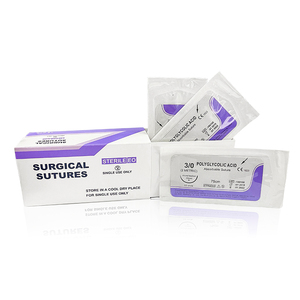
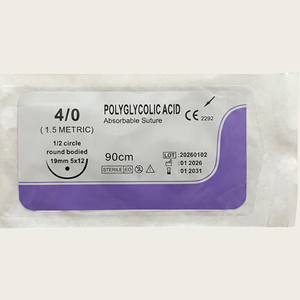
Polydioxanone (PDO / PDS) represents the benchmark in synthetic, monofilament, absorbable surgical suture technology. Derived from the ring-opening polymerisation of the monomer p-dioxanone, PDO exhibits a linear, crystalline polymer structure that imparts unique physical and biological properties. As leading CE Certified PDO Sutures Suppliers & Exporters, our manufacturing process maintains rigorous control over molecular weight distribution, intrinsic viscosity, and crystallinity ratios to ensure absolute consistency across every production batch.
1. Hydrolytic Degradation & Metabolic Pathway
Unlike natural collagen or chromic catgut sutures that degrade via unpredictable enzymatic digestion (often causing acute tissue reactions), Polydioxanone undergoes progressive hydrolysis. Water molecules penetrate the monofilament matrix, cleaving ester linkages within the polymer chain in a predictable, controlled manner. The polymer degrades into 2-hydroxyethoxyacetic acid, which subsequently converts to monomeric glycolic acid and is ultimately metabolized by the liver into carbon dioxide ($CO_2$) and water ($H_2O$).
Clinical Information Gain: Hydrolytic absorption minimizes cellular tissue response to negligible levels, making PDO sutures the preferred choice for pediatric cardiovascular surgery, fascial closure, orthopedics, and oncological resections where prolonged wound support is imperative.
2. Breaking Strength Retention (BSR) Profile Comparison
The defining clinical advantage of PDO over other absorbable synthetic polymers—such as Polyglactin 910 (PGLA) or Polyglycolic Acid (PGA)—is its extended tensile strength retention. Critical deep tissue structures like the abdominal fascia require up to 6 weeks to regain sufficient intrinsic tensile strength. PDO provides an extended safety margin:
- 2 Weeks (14 Days) Post-Implantation: Retains approximately 75% to 80% of original tensile strength.
- 4 Weeks (28 Days) Post-Implantation: Retains approximately 60% to 70% of original tensile strength.
- 6 Weeks (42 Days) Post-Implantation: Retains approximately 40% to 50% of original tensile strength.
- Complete Hydrolytic Mass Absorption: Achieved within 180 to 210 days, leaving minimal residual scarring or foreign-body trace.
Global Suture Procurement Trends & Strategic Outlook (2025–2030)
The global market for surgical wound closure devices is undergoing a structural shift driven by stringent regulatory frameworks, modern surgical techniques, and cost-containment strategies in healthcare procurement. As qualified CE Certified PDO Sutures Suppliers & Exporters, we observe three major macro trends shaping international procurement specifications:
1. Shift Toward Monofilament & Barbed PDO Technology
Braided sutures are increasingly scrutinized due to the risk of bacterial capillarity (nidus for surgical site infections - SSIs). Surgeons across Europe, North America, and APAC are transitioning to monofilament Polydioxanone and bidirectional knotless barbed PDO sutures. Barbed PDO sutures eliminate the need for manual knot tying, significantly reducing intraoperative time, distributing wound tension evenly across the incision line, and minimizing tissue ischemia.
2. Consolidation Under EU MDR (2017/745) Requirements
The transition from the legacy Medical Device Directive (MDD 93/42/EEC) to the rigorous European Medical Device Regulation (EU MDR 2017/745) has forced non-compliant manufacturers out of the market. Global tenders now mandate full clinical evaluation reports (CER), post-market clinical follow-up (PMCF) protocols, and raw material traceability back to monomer extrusion. Importers must align with suppliers possessing accredited ISO 13485 quality systems and verified CE certificates to avoid customs blockages or market recalls.
3. Rise of Dual-Market Demand: Human Health & Veterinary Surgery
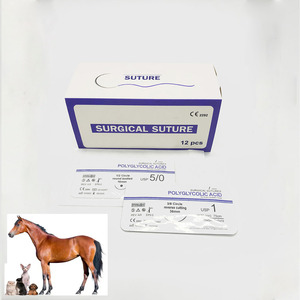
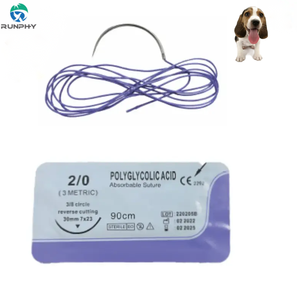
The veterinary surgical sector—encompassing small animal pet care, equine procedures, and livestock livestock surgery—is demanding medical-grade absorbable sutures. Veterinary surgeons are replacing legacy chromic catgut with high-tensile PGA and PDO monofilaments due to superior knot holding capacity, reduced inflammatory response, and standardized EO sterilization validation.
Procurement Strategy Tip: Consolidating human-grade and veterinary-grade suture procurement under a single certified manufacturer reduces audit overhead, maximizes container volume discounts, and streamlines regulatory approval across multi-national markets.
 Suture PlanetSurgical Wound Closure