Engineering Whitepaper
Vascular Clip Biomechanics & Occlusive Hemostasis Standards
A rigorous examination of mechanical yield strength, polymer degradation kinetics, and vessel wall integrity in modern surgical ligation.
In modern cardiovascular, laparoscopic, and general surgical procedures, achieving rapid, irreversible, and non-traumatic vascular ligation is a foundational requirement. As a leading CE Certified Vascular Clips Manufacturer & Supplier, our engineering paradigm is governed by strict biomechanical metrics: mechanical latching security, radial occlusive compression strength, minimum tissue displacement, and complete inertness within host physiological environments. Surgical vascular clips—ranging from pure titanium grade-1 annealed constructs to non-absorbable polymer locking clips and absorbable synthetic co-polymers—serve as the critical barrier against intraoperative and postoperative hemorrhaging.
Key Information Gain: Biomechanical Occlusion Thresholds
Clinical efficacy requires a vascular clip to withstand arterial pulse pressures exceeding 300 mmHg without axial slippage or scissoring. Our titanium ligation clips utilize a diamond-shaped chevron inner serration profile that increases surface friction coefficient by 42% over smooth-grooved alternatives.
During vascular ligation, the clip must yield elastically into a permanently closed geometry without exhibiting micro-fractures along its apex hinge. Titanium clips manufactured from ASTM F67 Grade 1 unalloyed titanium possess superior cold-forming ductility, permitting flawless swaging around vessels ranging from 1.0 mm to 6.0 mm in lumen diameter. Conversely, radiolucent polymer ligation clips engineered from non-absorbable polyolefins incorporate an active distal latch mechanism. This tactile "click-lock" design provides positive physical feedback to operating surgeons during minimally invasive laparoscopic procedures.
| Clip Category |
Material Composition |
Occlusion Mechanism |
Radiolucency & MRI |
Vessel Diameter Compatibility |
Typical Surgical Specialty |
| Titanium Ligation Clips |
ASTM F67 Grade 1 Titanium |
Chevron Cold-Deformation Friction |
Minimal Artifact (MRI Safe <3T) |
1.0 mm – 7.0 mm |
Cardiovascular, General, Neuro |
| Polymer Locking Clips |
Non-Absorbable Polyolefins |
Distal Hinge Latch Mechanism |
100% Radiolucent (Zero Artifact) |
2.0 mm – 10.0 mm |
Laparoscopic Cholecystectomy, Urology |
| Absorbable Hemostatic Clips |
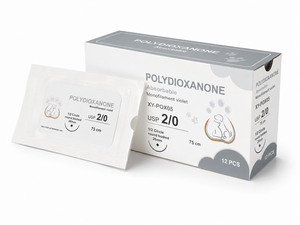
PGLA / Polydioxanone (PDO) |
Hydrolytic Bio-absorption |
Radiolucent |
1.5 mm – 5.0 mm |
Pediatric, Gastrointestinal |
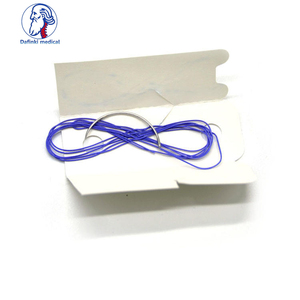
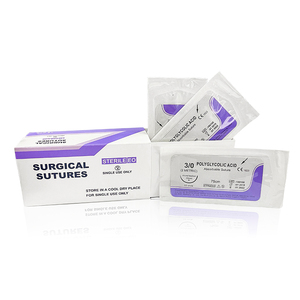
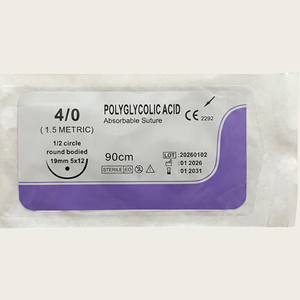
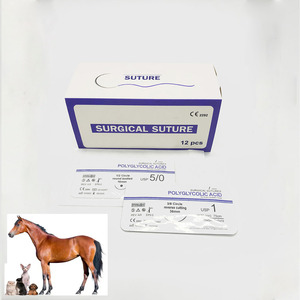
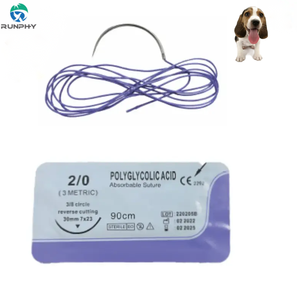
| Vascular Sutures (PGA/PGLA) |
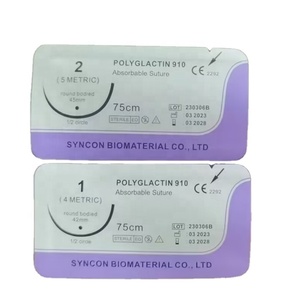
Polyglycolic Acid / Polyglactin 910 |
Manual Swaged Knot Ligation |
N/A |
Micro-vascular to Large Vessel |
Veterinary, Soft Tissue Approximation |
Strategic Sourcing
Future Procurement Trends in Vascular & Surgical Ligation Systems
Market dynamics, supply chain shifts, and regulatory drivers shaping medical device purchasing strategies over the next decade.
1. Rise of Robot-Assisted MIS Compatible Clip Appliers
With the rapid adoption of robotic surgical systems (such as da Vinci platforms), healthcare procurement officers are shifting demand toward multi-fire automatic clip appliers. Procurement contracts increasingly specify clips engineered with ultra-low tactile resistance and zero-recoil cartridge loading to prevent robotic arm torque overload.
2. EU MDR Rationalization & Vendor Consolidation
The stringent technical and clinical requirements of EU MDR 2017/745 have forced smaller manufacturers to withdraw from the European market. Hospital buying groups (GPOs) are aggressively consolidating vendor bases, preferring established OEMs capable of providing complete, multi-specialty closure portfolios with unified regulatory clearance dossiers.
3. Transition to Radiolucent Polymer Platforms
Postoperative diagnostic imaging (CT, MRI, PET scans) is frequently obscured by metal scatter artifacts caused by legacy stainless steel or heavy metal clips. Global hospital tenders now heavily favor non-absorbable polymer clips and radiolucent titanium alloys that eliminate image streak artifacts during oncological surveillance.
R&D Roadmap
Technological & Material Trends in Surgical Hemostasis
Next-generation material science breakthroughs transforming vascular clips from passive ligators to active bio-functional devices.
The landscape of surgical ligation is undergoing a profound evolution driven by advances in bio-materials, micro-machining, and surface chemistry. Key developmental vectors include:
-
Bio-Absorbable Magnesium-Zinc Alloys: Next-generation metallic clips are leveraging magnesium-based bio-resorbable alloys. These provide the high structural rigidity of traditional metals during critical early-stage healing (14-21 days) while completely degrading via safe physiological pathways within 6 to 12 months, leaving zero permanent foreign material in the patient.
-
Nanostructured Antimicrobial & Anti-Adhesion Surface Coatings: Micro-coatings impregnated with silver nanoparticles, chlorhexidine, or lipid-eluting matrices are being integrated into clip surfaces. This innovation reduces surgical site infection (SSI) risks and minimizes postoperative tissue adhesion formation around delicate vascular bundles.
-
Smart Tactile & Acoustic Lock Mechanisms: Advanced polymer clip geometries feature micro-engineered flexural hinges that generate an audible frequency pitch and distinct tactile drop-off when the lock mechanism fully engages. This eliminates surgeon guesswork regarding clip closure integrity in deep anatomical cavities.
 Suture PlanetSurgical Wound Closure