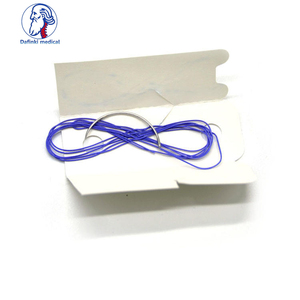
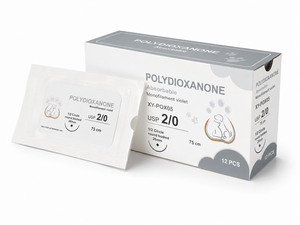
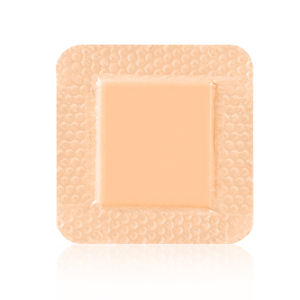
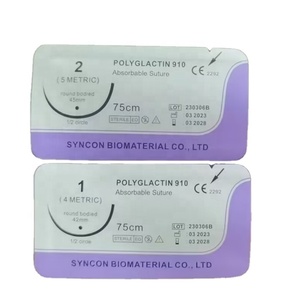
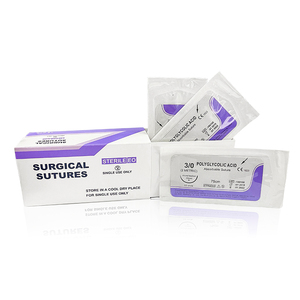
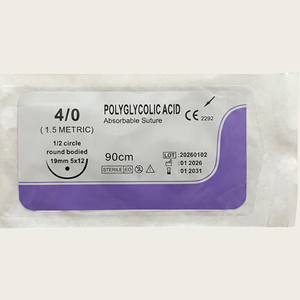
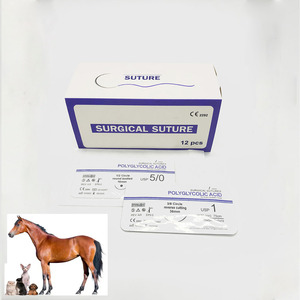
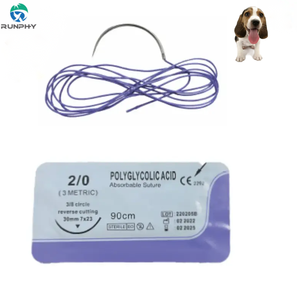
Explore our CE / ISO certified absorbable surgical sutures and advanced wound-closure products engineered under strict ISO 13485:2016 standards for veterinary and human surgical applications.
Executive Whitepaper: The Evolution of ORC Hemostats in Modern Surgery
In the rapidly evolving landscape of advanced wound management and surgical hemostasis, Oxidized Regenerated Cellulose (ORC) absorbable hemostats represent a pinnacle of biomaterial engineering. As surgical procedures increasingly pivot toward minimally invasive techniques and complex vascular reconstructions, the demand for high-efficacy, rapidly absorbable, and biochemically inert hemostatic agents has escalated globally. China has emerged as a primary hub for state-of-the-art medical device manufacturing, bringing together sophisticated chemical oxidation protocols, cleanroom automation, and rigorous international quality compliance.
This industry whitepaper explores the chemical mechanisms, clinical advantages, manufacturing compliance standards, and procurement dynamics of ORC hemostats alongside synthetic absorbable sutures such as Polyglactin 910 (PGLA), Polyglycolic Acid (PGA), Polydioxanone (PDO), and Poliglecaprone 25. Designed for medical device procurement directors, surgical product distributors, and hospital tender commissions, this analysis provides an authoritative overview of key technical parameters and selection metrics.
1. Chemical Mechanism of Action & Hemostasis Kinetics
ORC is manufactured by controlled oxidation of pure plant-derived regenerated cellulose. The process introduces carboxylic acid groups (-COOH) along the polymer backbone, converting the insoluble cellulose matrix into a bio-absorbable polyuronide structure. Upon contact with whole blood, ORC initiates a dual-action therapeutic response:
Physical Gel Matrix
Absorbs blood components rapidly, expanding into a dark brownish-black gelatinous mass that physically seals capillary and small venous bleeders within 2 to 8 minutes.
Biochemical Acidification
Dissociation of carboxylic groups lowers local tissue pH to approximately 2.0–3.0. This low pH denatures hemoglobin into acid hematin, facilitating rapid clot stabilization.
Inherent Antimicrobial Barrier
The acidic microenvironment creates an inhospitable zone for pathogenic bacteria, demonstrating proven in-vitro bactericidal action against MRSA, VRE, and E. coli.
Full tissue absorption typically occurs between 7 to 14 days via enzymatic hydrolysis and macrophage phagocytosis without eliciting persistent foreign-body reactions or tissue granulomas. This renders ORC superior to non-absorbable bone waxes or collagen matrices in delicate neurological, cardiothoracic, and gynecological surgical applications.
Comparative Hemostatic Agents Matrix
Understanding the differences between primary operative hemostatic technologies is crucial for hospital procurement managers when establishing standardized surgical inventory:
| Biomaterial Type |
Mechanism of Action |
Absorption Time |
Antimicrobial Activity |
Tissue Reaction |
| Oxidized Regenerated Cellulose (ORC) |
Low pH Hematin Formation + Physical Seal |
7 – 14 Days |
High (Inherent Acidic pH) |
Minimal to Negligible |
| Absorbable Gelatin Sponge |
Porous Matrix Clot Trapping |
4 – 6 Weeks |
None |
Moderate Cellular Response |
| Microfibrillar Collagen |
Platelet Aggregation Stimulation |
8 – 12 Weeks |
None |
Moderate Foreign-Body Risk |
| Thrombin-Based Sealants |
Direct Enzymatic Fibrin Conversion |
Rapid (Variable) |
None |
Immunogenicity Risks |
2. Enterprise Manufacturing Excellence & Quality Assurance Protocols
Leading Chinese ORC hemostat manufacturers operate state-of-the-art chemical synthesis facilities combined with ISO Class 7 (Class 10,000) cleanrooms. Producing pharmaceutical-grade ORC demands tight control over degree of oxidation, carboxyl content (typically 16% to 22%), tensile strength, and mass density.
Full Single-Site Traceability
Every finished box links directly to raw cellulose fiber batches, oxidation reactor logs, needle-swaging pull tests, and Ethylene Oxide (EO) sterilization chamber records.
Global Regulatory Compliance
Products carry CE Marks under EU MDR 2017/745, ISO 13485:2016 Quality Management System certification, WHO-GMP alignment, and full technical documentation for local MoH registration.
OEM & Private Label Solutions
Comprehensive customization including specialized pad dimensions (1x1, 2x4, 4x8 inches), knitted versus non-woven formats, multi-language packaging, and UDI barcode compliance.
Future Procurement Trends & Market Forecast (2025–2030)
As healthcare organizations push toward value-based procurement models, surgical directors and medical device importers are shifting their criteria from pure unit-cost purchasing to overall clinical economic value. Key trends reshaping the ORC hemostat and surgical suture procurement landscape over the next decade include:
A. Rise of Hybrid & Bio-Active Hemostatic Structures
First-generation ORC cloths are giving way to multi-layered non-woven materials and hybrid composite matrices combining ORC with collagen or synthetic polymers. These advanced formulations deliver enhanced fluid handling capacity, structural conformability during laparoscopic procedures, and faster hemostasis times (under 90 seconds) without compromising resorption speed.
B. Integration with Minimally Invasive Surgery (MIS) & Robotic Platforms
With robotic-assisted surgeries (e.g., da Vinci systems) becoming standard across urology, gynecology, and general surgery, hemostats must fit through standard 5mm and 12mm trocars without tearing or fraying. China’s leading manufacturers are deploying precision laser-cutting technologies to produce pre-shaped, highly flexible fibrillar ORC formats customized for laparoscopic deployment tools.
C. Supply Chain Consolidation & Factory-Direct Purchasing
Global hospital networks are reducing supplier risks by consolidating wound closure procurement with integrated manufacturers offering full product portfolios—from absorbable sutures (PGA, PGLA 910, PDO) to non-absorbable lines (Polypropylene, Silk, Nylon) and hemostatic materials. Sourcing directly from verified Chinese factories guarantees batch consistency, eliminates middleman margins, and ensures robust regulatory dossier maintenance.
Sourcing & Regulatory FAQ
Clear answers to technical, regulatory, and purchasing queries frequently raised by medical device buyers and regulatory officers.
What is the shelf life and storage requirement for ORC Hemostats?
+
ORC hemostats sealed in primary aluminum foil moisture-barrier packaging typically carry a validated 3-year to 5-year shelf life when stored below 25°C in dry conditions away from direct heat. Exposure to ambient moisture must be avoided prior to surgical placement to preserve structural stability and carboxyl content.
How does ORC compare to Polyglactin 910 (PGLA) and PGA sutures in wound management?
+
While PGLA 910 and PGA sutures provide physical tissue approximation by holding wound margins together mechanically over 14 to 28 days, ORC hemostats function as intraoperative bleeding control matrices that absorb within 7 to 14 days. They are complementary surgical technologies used together during tissue dissection and wound closure.
Which regulatory documentation is provided for Ministry of Health registrations?
+
Full registration dossiers include the ISO 13485 Certificate, CE Certificate under EU MDR, Free Sale Certificate (FSC), WHO-GMP Certificate, Certificate of Analysis (CoA) per production lot, Biocompatibility Test Reports (ISO 10993 series), Sterilization Validation Protocols (ISO 11135 / ISO 11137), Instructions for Use (IFU), and artwork packaging proofs.
Can ORC hemostats be trimmed to size during surgery without fraying?
+
Yes. Modern woven and non-woven ORC hemostatic pads are engineered with interlocking knit structures. Surgeons can cut pads to match exact anatomical sites or micro-bleeding areas without shedding loose threads or compromising matrix integrity.
What are the lead times for custom OEM and private-label orders?
+
Standard catalog items dispatch in approximately 2 to 4 weeks. Custom OEM and private-label orders require 4 to 6 weeks for initial production, which includes packaging artwork approval, plate setup, UDI generation, and ethylene oxide sterilization validation. Repeat orders follow streamlined fast-track dispatch schedules.
Is ORC safe for use in neurological or spinal surgeries?
+
Yes, ORC is widely utilized in neurosurgery. However, per standard surgical guidelines, once hemostasis is achieved, excess hemostat should be gently irrigated and removed from confined bony canals or foramina to prevent potential pressure displacement on nerve tissue.
 Suture PlanetSurgical Wound Closure