
Technical Whitepaper: Evaluating China’s Leading Surgical Glue & Wound Closure Manufacturers
In modern surgical procedures, wound closure technology has experienced a paradigm shift from traditional mechanical fixations (such as surgical staples and heavy non-absorbable sutures) toward advanced bio-adhesives, tissue glues, and synthetic absorbable polymer matrices. China has emerged as a primary global hub for high-precision medical device manufacturing, housing certified China Best Surgical Glue Factories that operate cleanroom environments complying with ISO 13485:2016, EU MDR 2017/745, and US FDA requirements.
1. Chemical Formulations & Biocompatibility Spectrum of Surgical Glue
Surgical glues and topical skin adhesives developed by top tier Chinese factories primarily leverage cyanoacrylate ester derivatives, fibrin sealants, and polyurethane prepolymers. Understanding the molecular variations is essential for B2B procurement managers, hospital buyers, and medical device importers:
- 2-Octyl Cyanoacrylate (2-OCA): Designed for external epidermal closure. The longer alkyl chain provides dynamic flexibility, lower localized exothermic reactions during polymerization, and high tensile shear strength. It forms a waterproof microbial barrier over incision sites.
- n-Butyl Cyanoacrylate (n-BCA): Characterized by rapid polymerization (typically 3 to 10 seconds upon contact with tissue moisture). Excellent for trauma care, emergency room lacerations, endoscopic mucosa sealing, and micro-vascular hemostasis.
- Fibrin & Hydrogel Sealants: Composed of human or synthetic plasma proteins (thrombin and fibrinogen), used internally for hemostasis, pulmonary parenchymal sealing, and neurosurgical dura repair.
E-E-A-T Quality Assurance Standard: LAL Endotoxin & Viscosity Calibration
Leading Chinese surgical glue and suture cleanrooms enforce strict lot-by-lot bacterial endotoxin testing (Limulus Amebocyte Lysate assay < 0.25 EU/mL) and rotational viscometry checks. Stabilizers are added to prevent premature monomer polymerization, maintaining a consistent 5-year shelf life under controlled cold chain or ambient storage.
2. Integrated Cleanroom Infrastructure (ISO Class 5 & Class 8)
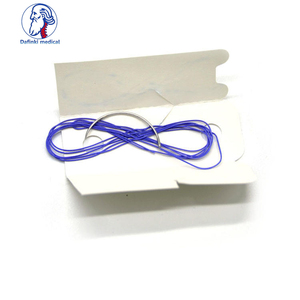
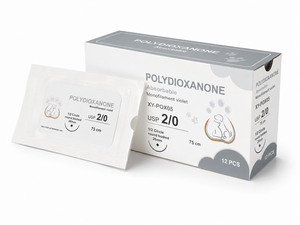
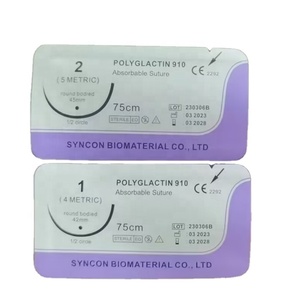
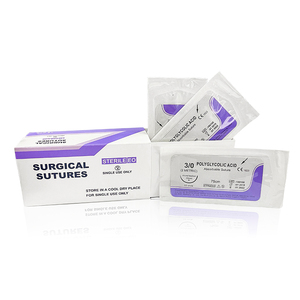
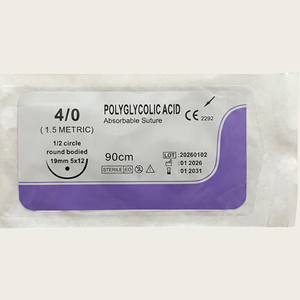
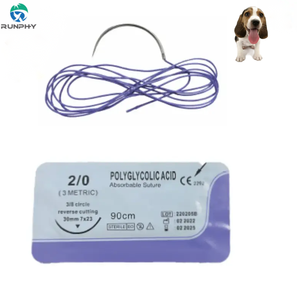
The manufacturing of tissue adhesives and absorbable sutures (such as PGA, PGLA 910, PDO) requires zero biological contamination. Premium China factories deploy automated Class 100,000 (ISO Class 8) cleanroom suites for component preparation and Class 100 (ISO Class 5) laminar flow workstations for monomer filling, swaging, and primary aseptic pouch sealing.
Ethylene Oxide (EO) sterilization cycles are validated according to ISO 11135 standards. Residual EO gas concentration is maintained strictly below 10 ppm, guaranteeing zero cytotoxic risk upon contact with human fascia, subcuticular tissue, or mucous membranes.