Industry Whitepaper: The Evolution, Material Science, and Procurement Dynamics of Modern Surgical Hemostats
Executive Insight
In modern surgical practice, operative efficiency and intraoperative patient safety heavily depend on rapid, reliable intraoperative hemostasis. As surgical procedures transition toward minimally invasive surgery (MIS), robotic-assisted interventions, and shortened recovery cycles, traditional mechanical hemostats are rapidly giving way to advanced bio-absorbable topical hemostatic agents and synthetic polymer sutures.
1. Clinical Intent & Intent Mining: Why Intraoperative Hemostasis Is Critical
Surgical bleeding control is governed by a complex cascade of mechanical, thermal, and chemical interactions. When tissue incision occurs, disruption of microvascular architecture triggers blood loss, which, if unmanaged, leads to visualization impairment, operative delay, hypothermia, hemodilution, and increased transfusion requirements. Modern surgeons evaluate hemostatic agents based on three primary operational metrics:
- Time to Hemostasis (TTH): The duration required to arrest active capillary, venous, or arteriolar oozing following topical application. High-performance bio-absorbable matrices achieve TTH in under 2 minutes.
- Biocompatibility & Resorption Profile: The physical structure must invoke minimal foreign-body response and undergo complete enzymatic or hydrolytic degradation within 7 to 28 days without leaving calcifications or fibrous granulomas.
- Ease of Delivery in Restricted Surgical Fields: Flexibility, wet-adhesion strength, and compatibility with laparoscopic trocars, robotic graspers, and fluid-rich surgical beds.
2. Technical Taxonomy of Topical Surgical Hemostats & Bio-Absorbable Polymers
Understanding the material differences among available surgical hemostats is critical for procurement officers, medical device distributors, and hospital purchasing committees. China’s manufacturing ecosystem has evolved into a global center for high-purity medical-grade polymer synthesis and bio-matrix processing.
| Hemostat Type |
Primary Material Base |
Mechanism of Action |
Absorption Time |
Primary Surgical Application |
| Oxidized Regenerated Cellulose (ORC) |
Alpha-cellulose / Rayon backbone |
Forms a dark gelatinous mass that binds platelets and acts as a mechanical matrix; intrinsically bactericidal due to low pH. |
7 – 14 Days |
General surgery, neurosurgery, vascular procedures, trauma center emergency care. |
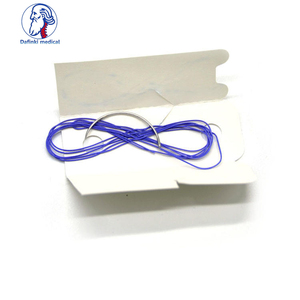
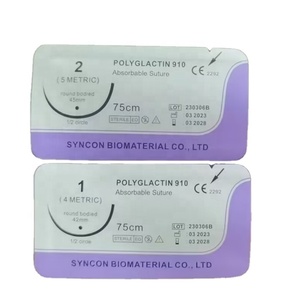
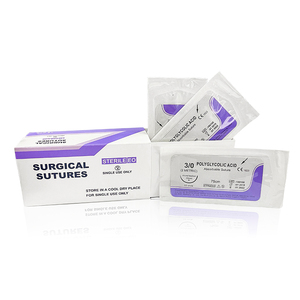
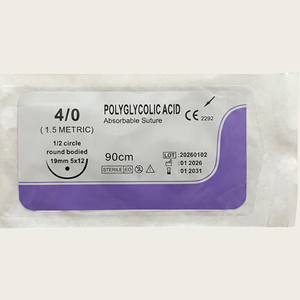
| Absorbable PGA / PGLA Sutures |
Polyglycolic Acid / Polyglactin 910 |
Mechanical ligation of severed blood vessels; hydrolytic breakdown into non-toxic glycolic and lactic acid metabolites. |
56 – 70 Days |
Soft tissue approximation, muscle layer closure, gastrointestinal anastomosis, veterinary surgery. |
| Gelatin Sponge / Matrix |
Porcine / Bovine Collagen Hydrolysate |
Absorbs blood and fluid up to 45 times its weight; induces platelet rupture and physical clot stabilization. |
4 – 6 Weeks |
Dental surgery, orthopedic cavity packing, ENT bleeding control. |
| Collagen-Based Hemostatic Pads |
Native Fibrillar Microfibrillar Collagen |
Directly activates native coagulation cascade by binding platelet membrane glycoprotein receptors. |
8 – 12 Weeks |
Solid organ parenchymal bleeding (liver, kidney), cardiovascular surgery. |
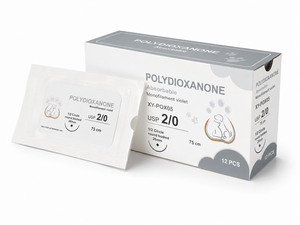
| Polydioxanone (PDO / PDS) |
Polyester Monofilament |
Extended tensile support monofilament ligation for high-tension anatomical structures. |
180 – 210 Days |
Fascia closure, abdominal wall repair, pediatric cardiovascular surgery. |
3. Strategic Procurement Trends in Global Hemostat & Wound Closure Supply Chains
As international healthcare networks attempt to balance cost control with clinical efficacy, global procurement trends in surgical wound closure reveal key structural shifts:
-
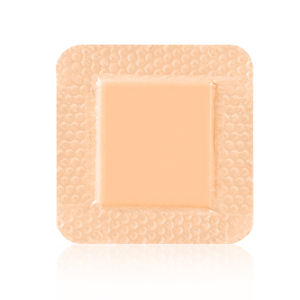
Shift Toward Integrated Wound Closure Platforms: Hospitals are consolidating vendors by procuring complete wound closure packages—combining bio-absorbable topical hemostats, absorbable PGA/PGLA braided sutures, non-absorbable polypropylene monofilaments, skin staplers, and silicone foam dressings from a single ISO 13485 certified manufacturer.
-
Democratization of OEM Private Label Manufacturing: Leading distributors in Latin America, Southeast Asia, and the Middle East are shifting from high-margin multinational brand distribution to private-label medical consumables manufactured in China. This yields gross margins exceeding 50% while delivering equivalent clinical performance.
-
Regulatory Tightening (EU MDR & Technical Transparency): The implementation of the European Union Medical Device Regulation (EU MDR 2017/745) has elevated technical file requirements. Global buyers now demand comprehensive clinical evaluation reports (CER), biocompatibility data (ISO 10993 series), and validated ethylene oxide residue analysis prior to contract signing.
-
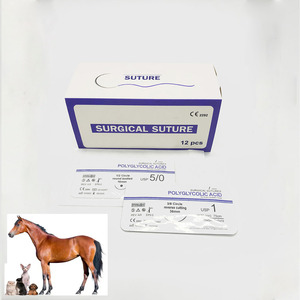
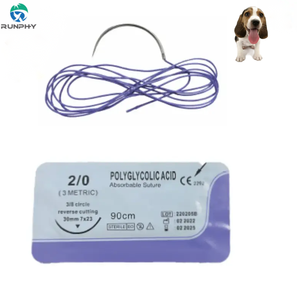
Rise of Veterinary Surgical Consumable Demand: The global companion animal care market is undergoing rapid expansion. High-tensile, cost-effective PGA, PGLA 910, and chromic catgut sutures designed for veterinary surgery represent a major growth vector for international tenders.
4. Manufacturing Precision & Quality Assurance Framework in China
Top-tier Chinese medical manufacturers utilize state-of-the-art automation across cleanroom environments rated Class 100,000 (ISO Class 8) and Class 10,000 (ISO Class 7). Key production stages include:
- Polymer Synthesis & Filament Extrusion: High-molecular-weight glycolide and lactide monomers are polymerized under vacuum to create uniform PGA/PGLA filaments with controlled degradation kinetics.
- Precision Braiding & Surface Coating: Multi-filament strands are braided using computerized spindle machines, followed by coating with calcium stearate and poly(glycolide-co-L-lactide) to achieve smooth tissue passage and minimal drag.
- Laser Needle Drilling & Swaging: Stainless steel needles (300 and 400 series grade) are drilled using micro-laser optics. Automated robotic arms insert the suture thread into the needle shank, swaging it under calibrated pressure to ensure attachment pull-out strength exceeds USP and European Pharmacopoeia (EP) standards.
- Ethylene Oxide (EO) Sterilization Validation: Complete product batches undergo validated EO sterilization cycles according to ISO 11135 standards. Physical indicators, biological spore indicators (Bacillus atrophaeus), and gas chromatography residual testing confirm a Sterility Assurance Level (SAL) of 10⁻⁶.
 Suture PlanetSurgical Wound Closure