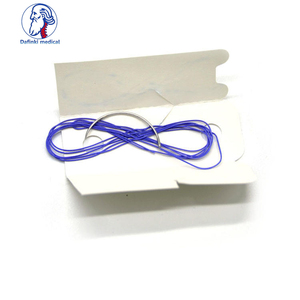
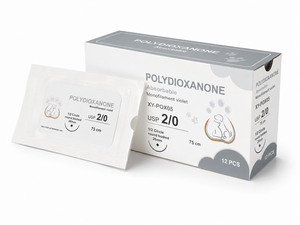
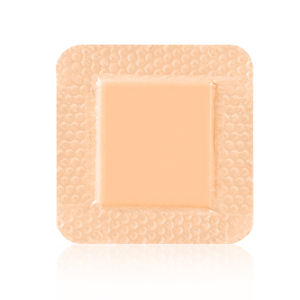
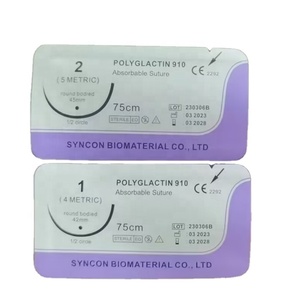
Medical Device Portfolio
Flagship Tissue Adhesives & Surgical Closure Products
High-tensile strength, biocompatible surgical formulations engineered for operating theatre accuracy and fast wound coaptation.
Executive Industry Whitepaper
The Definitive Sourcing Guide: China Medical Tissue Adhesive & Surgical Closure Systems
Modern surgical practice has undergone a paradigm shift from traditional mechanical wound closure (staples and heavy suturing) toward advanced biomedical sealants, bio-adhesives, and hybrid suture-glue protocols. Surgical tissue adhesives—primarily formulation-engineered cyanoacrylates, fibrin glues, and synthetic polyethylene glycol (PEG) hydrogels—provide rapid wound closure, immediate microbial barrier establishment, reduced operative time, and superior cosmetic outcomes. For global medical procurement teams, hospital supply networks, and OEM brand distributors, selecting a tier-one manufacturer in China requires an exhaustive understanding of monomer chemistry, degradation kinetics, biocompatibility standards, and international regulatory compliance.
Key Procurement Insight: The global medical tissue adhesive market is expanding at a CAGR of 8.4%. China's advanced chemical synthesis cleanrooms and biomedical device clusters offer unparalleled cost-performance ratios, provided buyers evaluate ISO 10993 cytotoxicity, monomer purity (>99.5%), and single-site lot traceability.
1. Monomer Chemistry & Polymerization Kinetics of Tissue Glues
Medical-grade tissue adhesives are chemically distinct from industrial adhesives. The efficacy and biological safety of tissue glues depend directly on the alkyl ester chain length of the cyanoacrylate monomer. China's leading medical device manufacturers specialize in synthesizing pure formulations tailored for specific surgical indications:
- n-Butyl Cyanoacrylate (n-BCA): Characterized by rapid polymerization (3 to 5 seconds upon contact with tissue moisture). n-BCA exhibits high lap shear strength and is widely utilized in internal surgical hemostasis, vascular embolization, and GI tract mucosal sealing. Its shorter alkyl chain delivers robust rigid bonding but slightly higher exothermic energy during setting.
- 2-Octyl Cyanoacrylate (2-OCA): Featuring a longer octyl chain, 2-OCA produces a flexible, pliable film with lower exothermic heat generation. It provides superior flexural fatigue resistance, making it the international gold standard for topical skin closure in pediatric surgery, plastic surgery, and incision sealing following laparoscopic procedures.
- Synthetic Polyethylene Glycol (PEG) & Fibrin Sealants: Used primarily as dual-component hydrogel matrix sealants for dural sealing, pulmonary parenchyma leak prevention, and vascular anastomosis reinforcement, offering complete hydrolytic resorption within 14 to 28 days.
During tissue application, the liquid monomer undergoes an anionic polymerization reaction initiated by hydroxyl ions (OH⁻) present in blood and cellular moisture. Within seconds, the monomer converts into a solid, flexible polymeric chain that cross-links with dermal proteins, forming an airtight and watertight structural seal.
Biomedical Benchmarking: Tissue Adhesives vs. Traditional Closure
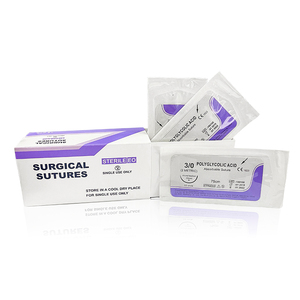
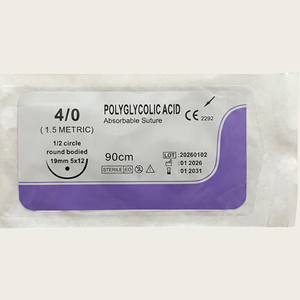
To assist procurement managers and clinical evaluators, the table below provides empirical technical metrics comparing primary tissue glues with absorbable synthetic sutures (PGA / PGLA 910):
| Adhesive / Closure Material |
Polymer Composition |
Setting / Closure Time |
Lap Shear Strength (ASTM F2255) |
In-Vivo Degradation Rate |
Primary Clinical Application |
| 2-Octyl Cyanoacrylate |
Long-chain Monomer |
30 – 60 Seconds |
High (Flex-Resistant) |
Shedding in 7 – 10 Days |
Topical Skin Closure, Incision Protection |
| n-Butyl Cyanoacrylate |
Short-chain Monomer |
3 – 10 Seconds |
Very High (Rigid) |
Sloughing in 10 – 14 Days |
Endoscopic Hemostasis, Deep Tissue Sealing |
| PEG Hydrogel Sealant |
Polyethylene Glycol Crosslink |
15 – 30 Seconds |
Moderate (Elastic) |
Resorbed in 14 – 28 Days |
Dural Sealing, Pulmonary Parenchyma Leaks |
| PGLA 910 Sutures |
Polyglactin 910 Braided |
Manual Suture Time |
Tensile: 75% @ 14 Days |
Hydrolysis in 56 – 70 Days |
Deep Fascia Support, Subcuticular Approximation |
| PGA Sutures |
Polyglycolic Acid Braided |
Manual Suture Time |
Tensile: 70% @ 14 Days |
Hydrolysis in 60 – 90 Days |
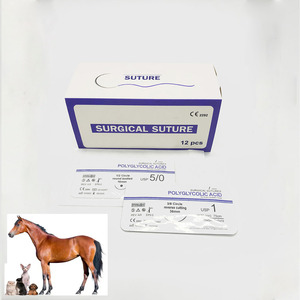
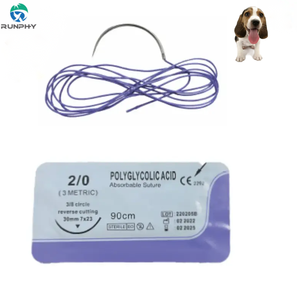
General Soft Tissue Ligation & Vet Surgery |
2. Quality Assurance & Regulatory Compliance Standards (E-E-A-T)
When sourcing surgical consumables and tissue bio-glues from China, regulatory compliance and cleanroom manufacturing controls are non-negotiable parameters. Leading Chinese manufacturers operate under integrated ISO 13485:2016 quality management systems alongside WHO-GMP cleanroom standards (Class 10,000 / ISO Class 7 filling lines).
Key technical documentation required for hospital registration and international distributor import approval includes:
- ISO 10993 Biocompatibility Testing: Complete safety dossiers covering Cytotoxicity (ISO 10993-5), Sensitization (ISO 10993-10), Systemic Toxicity (ISO 10993-11), and Hemocompatibility (ISO 10993-4).
- Sterilization Validation: Ethylene Oxide (EO) or Gamma Irradiation validation according to ISO 11135 / ISO 11137, guaranteeing a Sterility Assurance Level (SAL) of 10⁻⁶ with strictly controlled EO residue limits (<1 ppm per ISO 10993-7).
- EU MDR 2017/745 & CE Certification: Comprehensive Technical Files including General Safety and Performance Requirements (GSPR) compliance, Clinical Evaluation Reports (CER), and Post-Market Surveillance (PMS) protocols.
- Single-Site Batch Traceability: Complete end-to-end chain of custody linking raw monomer distillation lots, precision ampoule filling, outer sterile packaging, and EO cycle data to every individual box.
3. Future Sourcing & Technology Trends (2025–2030)
The surgical wound closure industry is undergoing rapid technological evolution. Global buyers must align with manufacturers investing in next-generation biomedical research:
Bio-Active & Anti-Microbial Formulations
Integration of broad-spectrum antibacterial agents (such as Chlorhexidine, Triclosan, or Silver Nanoparticles) directly into cyanoacrylate monomers to eliminate Surgical Site Infections (SSIs).
Controlled In-Vivo Hydrolytic Degradation
Novel copolymerization techniques enabling pre-programmed degradation rates (from 7 days up to 180 days) matching dynamic internal tissue healing schedules.
Smart Color-Changing Polymerization Indicators
Visual diagnostic monomer formulations that change color upon full polymer curing, providing surgeons real-time visual confirmation of seal integrity in the OR.
Factory Excellence
Why Partner With Our China Manufacturing Facility?
Combining world-class chemical synthesis with precision biomedical engineering, our integrated manufacturing plant delivers competitive advantages for international healthcare brands, procurement agencies, and private label partners:
Complete Registration Dossiers
We supply complete, ready-to-submit technical files (CE MDR, ISO 13485, Declaration of Conformity, Free Sale Certificates, and Biocompatibility Reports) with every first order to accelerate your local Ministry of Health registration.
Full OEM & Private Label Customization
From custom monomer viscosity and needle curvature geometries (over 120 needle options) to brand-specific aluminum foil sealing, box printing, UDI barcodes, and multi-language IFUs.
Rapid Production & Tender Delivery
Standard catalog SKUs dispatch in 2 to 4 weeks. Custom private label orders complete in 5 to 7 weeks, supported by safety buffer stock programs for high-volume government hospital tenders.
Procurement Knowledge Base
Frequently Asked Questions (FAQ)
Direct technical and logistical answers for medical device buyers, hospital tender committees, and brand managers.
What are the primary differences between 2-Octyl and n-Butyl Cyanoacrylate tissue glues?
2-Octyl Cyanoacrylate (2-OCA) features a longer alkyl ester chain, providing greater flexibility, lower exothermic heat during polymerization, and high resistance to flexural stress. It is ideal for topical skin incision closure. n-Butyl Cyanoacrylate (n-BCA) sets much faster (3–5 seconds) into a rigid polymer structure, making it superior for fast internal hemostasis, vascular sealing, and mucosal application.
How are sterility assurance levels (SAL) verified for medical tissue glues?
Our products undergo validated Ethylene Oxide (EO) sterilization or aseptic micro-filtration filling depending on formulation chemistry. Sterilization processes are validated to achieve a Sterility Assurance Level (SAL) of 10⁻⁶ in accordance with ISO 11135. Batch certificates of analysis include residual EO testing (<1 ppm per ISO 10993-7) and bioburden testing.
Can your facility support private-label OEM packaging for hospital tenders?
Yes. We offer turnkey OEM/ODM manufacturing. We configure needle-thread combinations, custom ampoule dosages (e.g., 0.25ml, 0.5ml, 1.0ml), foil pouch branding, GS1/UDI compliant barcoding, packaging inner cartons, and multi-lingual Instructions for Use (IFUs) tailored to your region's regulatory requirements.
What regulatory documents are provided to support market registration?
We provide full registration dossiers including ISO 13485:2016 certificates, CE Certificates under EU MDR 2017/745, Declaration of Conformity (DoC), Free Sale Certificates (FSC), WHO-GMP certificates, ISO 10993 Biocompatibility test suites, stability study reports (accelerated and real-time for 5-year shelf-life), and Certificate of Analysis (CoA) for each batch.
What is the shelf life and recommended storage condition for tissue adhesives?
Medical cyanoacrylate tissue adhesives typically have a shelf life of 2 years to 3 years when stored under recommended controlled room temperature conditions (<25°C) away from direct moisture and light. Refrigerated storage (2°C–8°C) prior to distribution extends monomer stability.
What are the typical lead times for sample evaluation and bulk production?
Evaluation samples and standard catalog SKUs ship within 3 to 7 working days via express courier. Initial OEM private-label production runs take approximately 4 to 6 weeks following artwork approval and packaging plate sign-off. Repeat orders dispatch within 2 to 3 weeks.
 Suture PlanetSurgical Wound Closure