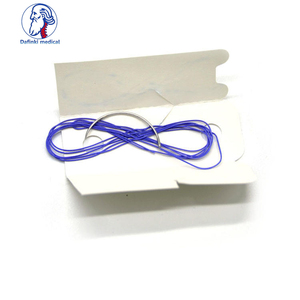
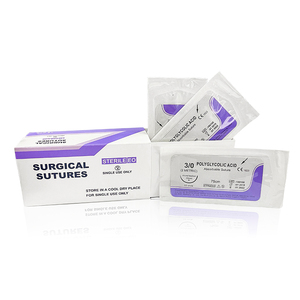
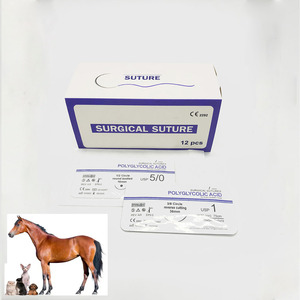
Veterinary Surgical Suture Absorbable PGA PGLA 910 Sterile Animal Suture
High tensile synthetic absorbable braided suture with predictable 56-70 day hydrolytic breakdown, ideal for soft tissue approximation.
Contact Us
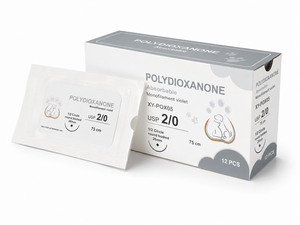
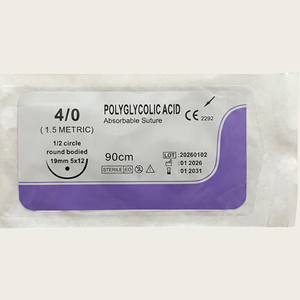
Polyglycolic Acid Absorbable Braided Surgical Suture XY-POX05 EO Sterilized
Precision coated PGA suture providing ultra-smooth tissue passage, minimal inflammatory reaction, and optimal knot security.
Contact Us
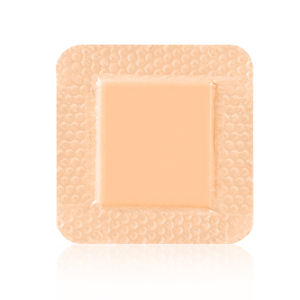
Medical Absorbent Wound Suture & Breathable Waterproof Silicone Foam Dressing
Advanced post-operative wound management kit integrating absorbable closure with exudate-absorbing silicone foam barriers.
Contact Us
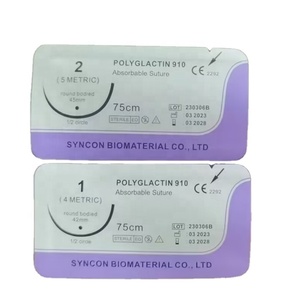
Absorbable 3-0 4-0 Polyglactin 910 & Chromic Catgut Surgical Suture with Needle
Engineered stainless steel needle swaged with high-purity Polyglactin 910 or purified bovine collagen catgut threads.
Contact Us
Risenmed Medical Consumables Absorbable Surgical Sutures Kit (PGLA910)
Complete OEM surgical pack containing pre-configured USP-sized PGLA sutures tailored for hospital operating theatre efficiency.
Contact Us
High Tensile Strength Absorbable PGA Suture Thread CE Certified
CE-marked PGA suture line offering superior initial tensile holding force, essential for high-stress fascial and muscle layer closure.
Contact Us
China Factory Medical Absorbable POLYGLYCOLIC ACID PGA Surgical Suture
Direct factory-supplied sterile PGA suture bundles with micro-point cutting needles, optimized for tender bids and clinical procurement.
Contact Us
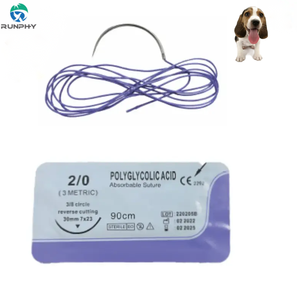
RUNPHY HC002 Medical Suture Absorbable Polyglycolic Acid PGA Disposable
EO-sterilized single-use surgical suture units providing verified sterility assurance level (SAL 10⁻⁶) and 5-year shelf life integrity.
Contact Us
50+
Global Export Markets
100%
In-House Quality Audited
SAL 10⁻⁶
Validated EO Sterilization
ISO 13485
CE MDR Compliant Plant
Industry Whitepaper
Executive Summary: The Evolution of Endoscopic Tacker Manufacturing & Laparoscopic Fixation
In modern minimally invasive surgery (MIS), particularly in laparoscopic inguinal and ventral hernia repair routines—such as Transabdominal Preperitoneal (TAPP) and Total Extraperitoneal (TEP) procedures—the clinical outcome relies directly on the integrity of prosthetic mesh fixation. As a leading China Top Endoscopic Tacker Factory & Supplier, our manufacturing facility stands at the intersection of bio-engineering precision, metallurgical control, and clinical usability.
Historical mechanical fixation methods relied heavily on heavy-gauge permanent titanium staples or complex manual suturing. However, modern surgical procurement trends demand high-performance endoscopic tackers that balance high burst pressure resistance with minimal tissue trauma, reduced post-operative chronic pain (chronic groin pain after hernia surgery), and optimized cost-to-performance ratios for healthcare systems worldwide.
Engineering Architecture & Technical Mechanics of Endoscopic Tackers
An endoscopic tacker is a highly complex, single-use or reusable-handle multi-fire mechanical instrument engineered to deliver helical or hollow-core fasteners into soft tissue and synthetic mesh matrices under endoscopic visualization. The mechanical architecture encompasses four core sub-systems:
1. Helical vs. Hollow Fastener Geometry
Our titanium helical fasteners are cold-forged from implant-grade Titanium Alloy (Ti-6Al-4V ELI), ensuring maximum shear strength and pull-out resistance exceeding 14.5 N per tack. The spring-like geometry allows tissue ingrowth while locking prosthetic polypropylene mesh firmly against the abdominal wall.
2. Bioabsorbable Polymer Formulation
For absorbable tack variants, we polymerize high-purity Poly-L-Lactic Acid (PLLA) and Polyglycolic Acid (PGA) co-polymers. The fastener retains over 80% of its initial mechanical tensile strength at 4 weeks post-implantation, undergoing complete hydrolytic degradation within 12 months without leaving metallic foreign bodies.
3. Articulated Shaft Dynamics
Standard 5mm endoscopic shafts feature a 360-degree continuous rotation knob with optional 30-degree bilateral articulation. This allows surgeons optimal perpendicular tack insertion even when navigating steep anatomical curves near the Cooper's ligament or the inferior epigastric vessels.
Comparative Performance Matrix: Fixation Technologies
Providing genuine Information Gain for clinical buyers and medical procurement directors, the data visualization table below compares physical, clinical, and economic parameters across four primary hernia fixation modalities:
| Fixation Parameter |
Titanium Helical Tacker |
Absorbable PLLA/PGA Tacker |
Fibrin / Cyanoacrylate Glue |
Laparoscopic Suturing (PGA) |
| Mean Pull-Out Force (N) |
14.8 N ± 1.2 |
12.2 N ± 0.9 |
3.1 N ± 0.4 |
16.5 N ± 1.5 |
| Fixation Speed per Site |
< 2 seconds |
< 2 seconds |
15–30 seconds |
90–180 seconds |
| Tissue Degradation Profile |
Permanent metallic implant |
Hydrolytic (100% at 12 mos) |
Enzymatic (4–8 weeks) |
Hydrolytic (56–70 days) |
| Post-Op Neuropathic Risk |
Moderate (requires anatomical care) |
Low (transient tactile pressure) |
Negligible |
Moderate to High |
| Procurement TCO / Unit Cost |
Optimized OEM Scale Value |
Premium Bio-Polymer Value |
High Biologics Cost |
Low Material / High OR Time Cost |
Market Intelligence
Future Sourcing Trends for Endoscopic Tacker Procurement (2026–2032)
Hospital Group Purchasing Organizations (GPOs), regional importers, and tender authorities are shifting their procurement strategies in response to evolving regulatory demands and cost-containment mandates. As a premier China factory partner, we highlight four dominant macro trends:
1. Direct OEM Cleanroom Manufacturing
Distributors are bypassing intermediary trading entities to partner directly with certified Chinese manufacturing facilities operating ISO Class 7 and Class 8 cleanrooms, securing transparent batch traceability and up to 40% margin improvements.
2. Harmonized EU MDR & FDA Regulatory Dossiers
Regulatory barriers have raised the compliance baseline. B2B buyers now demand complete technical files (GSPR checklists, clinical evaluation reports, ISO 10993 biocompatibility testing, and EO sterilization validation) alongside physical products.
3. Hybrid & Articulating Fastener Systems
Clinical demand is accelerating towards articulating 5mm shaft designs that reduce surgeon wrist fatigue and enable ergonomically superior placement, minimizing operative time in complex ventral and incisional hernia cases.
Enterprise Advantage
Why Global Healthcare Importers Choose Our Manufacturing Platform
Building on our established legacy in wound closure, surgical sutures, and surgical meshes, our manufacturing ecosystem provides turnkey OEM/ODM solutions tailored for global market registration and tender execution.
End-to-End In-House Supply Chain
From raw titanium bar wire drawing and micro-machining to cleanroom assembly, pouch sealing, and Ethylene Oxide (EO) sterilization—100% of production runs under one quality management system, guaranteeing lot-to-lot consistency.
Rigorous Quality Assurance & Testing
Every lot undergoes 100% visual micro-inspection, actuation force torque testing, and pull-out force validation against USP and ISO standards. Batch documentation is archived for 11 years to ensure full post-market surveillance (PMS) compliance.
Turnkey OEM & Private-Label Branding
We provide full customization of shaft lengths (280mm to 360mm), trigger handle ergonomics, customized primary blister packaging, multi-language Instructions for Use (IFUs), and UDI/GS1 barcode integration for national registration.
Procurement FAQ
Frequently Asked Questions (Sourcing & Technical Compliance)
Addressing core technical and logistics queries from surgical device buyers, hospital tender officers, and regulatory specialists.
What certifications and documentation are supplied with OEM endoscopic tacker orders?
Every shipment is accompanied by a comprehensive technical pack including ISO 13485:2016 certification, CE / EU MDR Declaration of Conformity, Certificate of Analysis (CoA), Free Sale Certificate (FSC), ISO 11135 EO Sterilization Validation reports, and ISO 10993 Biocompatibility dossiers for rapid ministry of health registration.
What fastener capacity choices are available in your endoscopic tacker series?
We manufacture pre-loaded single-use endoscopic tackers containing 12, 15, 20, or 30 fasteners per instrument. Customized fastener counts can be configured under OEM private-label programs to align with local surgical procedure protocols.
How do your titanium tackers compare with absorbable tackers in terms of pull-out strength?
Our Titanium Helical Tacks achieve an average initial pull-out force of 14.8 N in synthetic muscle tissue models. Our Bioabsorbable PLLA/PGA tacks deliver an initial pull-out force of 12.2 N, maintaining structural strength during the critical 4-week tissue integration phase before gradual hydrolysis begins.
What are typical manufacturing lead times and minimum order quantities (MOQs)?
Standard catalog configurations ship within 2 to 4 weeks. Custom private-label OEM orders requiring bespoke packaging plates and multi-language IFU printing typically carry a 4 to 6 week lead time for the initial batch, with shortened lead times for contract repeat orders.
How is sterile barrier integrity maintained over the product shelf life?
Instruments are sealed in medical-grade Tyvek-polyethylene peel pouches within Class 100,000 cleanrooms. Following validated ethylene oxide sterilization, accelerated and real-time stability testing validates a 5-year sterile shelf life when stored under standard warehouse conditions.
Can your plant support custom shaft lengths for bariatric laparoscopic surgery?
Yes, in addition to standard 340mm laparoscopic shafts, we manufacture extended 420mm shafts specifically designed for bariatric surgical procedures where patient abdominal wall thickness requires enhanced reach.
Partner with China's Premier Endoscopic Tacker Factory
Connect directly with our engineering team and international export desk to request technical dossiers, product samples, or factory audit schedules.
 Suture PlanetSurgical Wound Closure