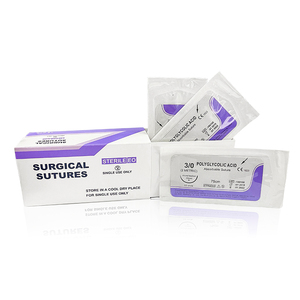
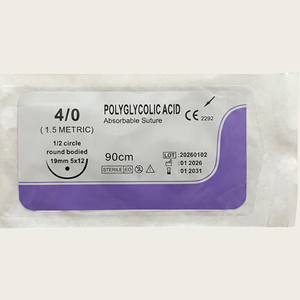
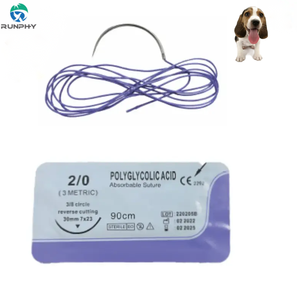
Explore our medical-grade absorbable and non-absorbable surgical sutures, manufactured with superior tensile strength, low tissue drag, and biological inertness for human and veterinary surgeries.
In modern surgical science, selecting the appropriate wound closure interface is critical to achieving tissue approximation, minimizing tissue reaction, and eliminating surgical site infections (SSIs). As a leading China Monofilament Sutures Manufacturer and Global OEM Supplier, our extrusion and needle-swaging technology operates at the intersection of bio-polymer chemistry and micro-mechanical precision.
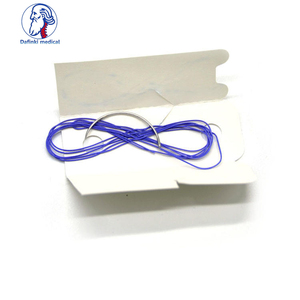
Monofilament surgical sutures consist of a single structural strand of synthetic or natural polymer. Unlike braided multifilament sutures, monofilaments present a smooth, non-porous exterior surface that lacks interstitial voids. This fundamental physical architecture completely eliminates capillary action (wicking effect), preventing bacteria, exudate, and micro-pathogens from colonizing along the suture line.
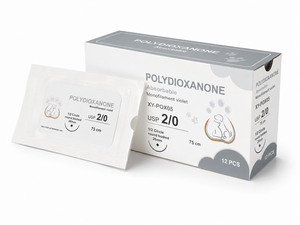
Our manufacturing matrix specializes in synthetic absorbable monofilaments (Polydioxanone/PDO, Poliglecaprone 25/PGCL) and non-absorbable monofilaments (Polypropylene/PP, Nylon/Polyamide, PTFE, UHMWPE):
The table below highlights empirical physical properties and clinically evaluated performance data across our core monofilament product lines:
| Polymer Compound | Monofilament Type | Tensile Strength Retention Profile | Absorption / In-Vivo Retention | Tissue Reaction Index | Primary Clinical Intent |
|---|---|---|---|---|---|
| Polydioxanone (PDO) | Synthetic Absorbable | 75% at 14 days / 50% at 28 days | 180 – 210 Days (Hydrolysis) | Extremely Low | Abdominal wall fascia, orthopedics, pediatric cardiac |
| Poliglecaprone 25 | Synthetic Absorbable | 60% at 7 days / 20% at 14 days | 91 – 119 Days (Hydrolysis) | Negligible | Subcuticular closure, plastic surgery, urology |
| Polypropylene | Non-Absorbable | 100% Permanent Retention | Non-Absorbable (Permanent) | Inert / Zero Reaction | Cardiovascular anastomosis, hernia fixation, ophthalmic |
| Polyamide (Nylon) | Non-Absorbable | Loses ~10-15% strength per year | Slow Hydrolytic Degradation | Very Low | Cutaneous skin closure, microsurgery, neurosurgery |
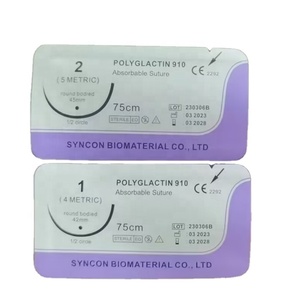
| Polyglycolic Acid (PGA) | Synthetic Absorbable | 65% at 14 days / 30% at 21 days | 60 – 90 Days (Hydrolysis) | Low | General soft tissue ligation, GI surgery, veterinary |
From raw medical-grade polymer resin to automated needle laser drilling and sterile packaging, our unified single-site facility delivers end-to-end quality control and complete regulatory compliance.
Extrusion, precision braiding, coating, automated needle swaging, and Class 100,000 cleanroom packaging are integrated inside one facility, ensuring 100% process control without sub-contracting risk.
Our complete technical files (ISO 13485:2016, CE MDR 2017/745, WHO-GMP) include FSC, Declaration of Conformity, and ISO 10993 biocompatibility testing to accelerate regional MoH registrations.
Every batch undergoes automated pull-out tensile testing to guarantee needle-to-thread attachment forces strictly exceed United States Pharmacopeia (USP) and European Pharmacopoeia (EP) standards.
Sterilization processes are computerized and validated under EN ISO 11135, guaranteeing a Sterility Assurance Level (SAL) of 10⁻⁶ with residual Ethylene Oxide levels well below strict international thresholds.
Customized foil printing, box configurations, UDI/GS1 compliant barcode generation, and multi-language IFU creation specifically customized for hospital groups and distributor brands.
Every box carries unique batch coding linked to polymer resin synthesis lots, needle extrusion heats, cleanroom environmental monitoring logs, and final inspection certificates.
As healthcare procurement shifts from cost-per-unit models to total-value-driven surgical outcomes, the medical device manufacturing landscape in China is undergoing a massive technological transformation. Hospital procurement officers, tender agents, and brand owners must adapt to key emerging trends:
Knotless tissue control devices featuring helical micro-barbs cut into monofilament stems (PDO and PGCL) represent the fastest-growing segment in surgical closure. Barbed monofilaments distribute tension evenly along the entire length of the incision, eliminating knot-related foreign body reactions and cutting operative closure times by up to 50% in laparoscopic and robotic surgeries.
Surgical Site Infections (SSIs) cost global health systems billions annually. The market is increasingly demanding monofilament sutures impregnated or coated with broad-spectrum antimicrobial agents such as Triclosan or chlorhexidine. Procurement strategies are prioritizing certified suppliers capable of executing stabilized coating formulations without compromising tensile retention curves.
With the implementation of the European Union Medical Device Regulation (EU MDR 2017/745) and global FDA UDI mandate enforcement, legacy suppliers without robust clinical evaluation reports (CER) and automated Unique Device Identification (UDI) matrix printing are being phased out. Procurement teams require direct digital integration from manufacturer to hospital inventory.
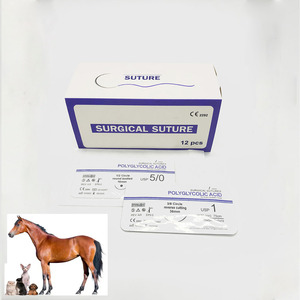
The global expansion of veterinary medicine has triggered exponential demand for veterinary-specific sterile absorbable sutures. Importers are turning to direct China manufacturing hubs to secure cost-competitive PGA, PGLA 910, and Chromic Catgut inventory packaged in high-efficiency, multi-strand clinical packs.

Clear answers to regulatory, technical, and operational sourcing questions from hospital buyers and medical device distributors.
Connect directly with our regulatory specialists and medical device engineering team to request sample kits, technical datasheets, and factory-direct pricing tailored for your regional market.