Global Suture Procurement Landscape: The Strategic Role of Chinese Manufacturing
The global surgical suture market, projected to reach over USD 5.8 billion by 2030, is undergoing a profound structural shift. Driven by expanding surgical volumes, increased hospital investments in emerging markets, and escalating cost pressures in Western healthcare systems, international procurement directors are actively optimizing their vendor matrices. Within this global context, China’s tier-one surgical suture manufacturers have transitioned from low-cost component assembly suppliers into high-precision, vertically integrated medical device powerhouses.
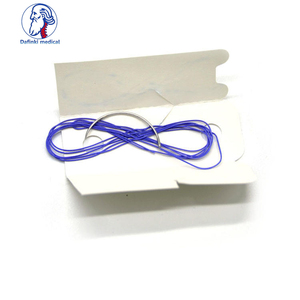
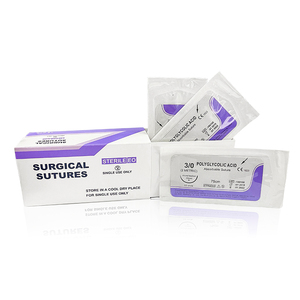
Modern Chinese surgical suture factories operate under strict compliance with ISO 13485:2016 quality management systems and European Union MDR (Medical Device Regulation 2017/745) requirements. By mastering core polymer synthesis—such as high-molecular-weight polyglycolic acid (PGA) extrusion, polyglactin 910 co-polymerization, and polydioxanone (PDO) monofilament processing—China's leading suppliers deliver physical and clinical parity to legacy Tier-1 Western brands at significantly reduced total cost of ownership (TCO).
Information Gain Key Insight: Procurement efficiency in medical devices no longer hinges solely on unit price. Leading hospital networks, tender boards, and OEM brand owners evaluate Chinese factories based on vertical integration—tracing the supply chain from raw polymer resin to micro-swaged stainless steel needle alignment and validated ethylene oxide (EO) sterilization.
Detailed Material Architecture: Absorbable vs. Non-Absorbable Sutures
Understanding the molecular dynamics and mechanical properties of surgical sutures is paramount for procurement officers and clinical evaluation teams. Sutures are categorized primarily by their absorption profile and physical filament structure (monofilament vs. braided).
1. Synthetic Absorbable Sutures
Synthetic absorbable polymers are engineered to maintain critical wound support during the essential tissue-healing phase, followed by predictable hydrolytic degradation that minimizes foreign-body tissue reactions.
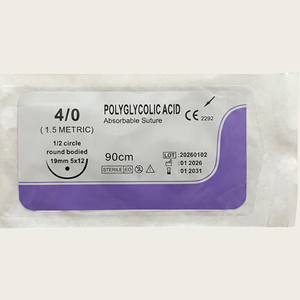
- Polyglycolic Acid (PGA): A braided, coated synthetic absorbable suture featuring high initial tensile strength. PGA hydrolyzes into glycolic acid, offering predictable strength retention (approx. 65-75% at 14 days) and complete mass absorption within 60 to 90 days. Ideal for general soft tissue approximation and gynecology.
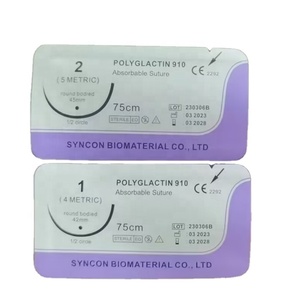
- Polyglactin 910 (PGLA 910): Composed of a copolymer of 90% glycolide and 10% L-lactide, coated with calcium stearate and polycaprolactone. PGLA 910 provides smooth knot passage and precise knot placement. Tensile strength retention averages 75% at 14 days and 50% at 21 days, with absorption complete between 56 and 70 days.
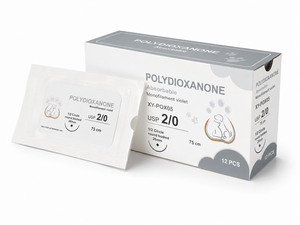
- Polydioxanone (PDO / PDS): A monofilament synthetic absorbable suture formulated for extended wound support. PDO undergoes slow hydrolysis, retaining approximately 70% of tensile strength at 4 weeks and 50% at 6 weeks, making it the gold standard for fascial closure, orthopedics, and pediatric cardiovascular applications.
- Poliglecaprone 25 (PGCL): A monofilament copolymer of glycolide and epsilon-caprolactone. It exhibits low tissue drag and rapid absorption, ideal for subcuticular plastic surgery and intradermal closures.
2. Natural Absorbable Sutures
- Chromic & Plain Catgut: Derived from purified animal collagen (bovine or ovine submucosa). Chromic catgut is treated with trivalent chromium salts to delay enzymatic digestion by tissue macrophages. While catgut remains popular in veterinary medicine and specific mucosal procedures, global human medicine continues to shift toward synthetic polymers due to superior tensile consistency and reduced immunogenicity.
3. Non-Absorbable Sutures
- Polypropylene (Proline equivalent): An isotactic polypropylene monofilament providing permanent strength, minimal tissue friction, and extreme resistance to infection propagation. Widely specified for vascular anastomosis, hernia repair, and ophthalmics.
- Nylon / Polyamide: Available in monofilament and braided forms. Nylon exhibits smooth tissue passage and high elasticity, making it ideal for cutaneous skin closure.
- Braided Silk: Natural silk coated with silicone or wax, offering unmatched surgeon handling characteristics and tactile knot security, primarily used in dental, ophthalmic, and general ligation procedures.
| Material Family |
Filament Structure |
Tensile Strength Retention Profile |
Complete Absorption Window |
Primary Clinical Indications |
| PGA (Polyglycolic Acid) |
Braided & Coated |
~75% at 14 days; ~50% at 21 days |
60 – 90 Days |
General Surgery, GI, OB/GYN, Vet |
| PGLA 910 (Polyglactin) |
Braided & Coated |
~75% at 14 days; ~50% at 21 days |
56 – 70 Days |
Soft Tissue Ligation, Ophthalmic, Vet |
| PDO (Polydioxanone) |
Monofilament |
~70% at 28 days; ~50% at 42 days |
180 – 210 Days |
Fascial Closure, Orthopedics, Vascular |
| Polypropylene |
Monofilament |
Permanent (Non-Absorbable) |
N/A (Permanent) |
Cardiovascular, Hernia Fixation, Cutaneous |
| Chromic Catgut |
Twisted Strand |
Variable (~14–21 days support) |
90 Days (Enzymatic) |
Veterinary Surgery, Mucosal Closure |
Enterprise Advantage: Why Source from Premier Chinese Factories
When selecting a Chinese manufacturing partner, medical device importers and private-label distributors must evaluate four critical technological pillars that define operational authority and supply chain reliability.
ISO 13485 & CE MDR Compliance
Full regulatory documentation including Design Master Files (DMF), Technical Dossiers, Biocompatibility Evaluation (ISO 10993 series), and Clinical Evaluation Reports (CER) ready for registration.
In-House EO Sterilization
State-of-the-art Ethylene Oxide (EO) sterilization chambers validated to ISO 11135 standards, guaranteeing a Sterility Assurance Level (SAL) of 10⁻⁶ with strictly monitored residual levels below USP/EP limits.
Micro-Swaging Precision
Advanced automatic needle-swaging technology utilizing 300-series stainless steel (AISI 302/304/420) premium surgical needles, preventing attachment separation and reducing needle-to-thread diameter ratios.
Future Trends in Surgical Suture Procurement & Technology (2026-2030)
As surgical techniques shift progressively toward Minimally Invasive Surgery (MIS), robotic procedures, and outpatient surgery centers, the requirements for wound closure devices are rapidly evolving. Procurement leaders must anticipate the following macro technological trends:
1. Knotless Barbed Sutures
Barbed sutures feature unidirectional or bidirectional microscopic barbs cut into monofilament threads (PDO or PGCL). These barbs anchor securely into tissues, distributing tension evenly along the incision line without requiring manual knot tying. Clinical trials demonstrate a 30% to 50% reduction in suture closure time during laparoscopic hysterectomies, arthroscopic joint surgeries, and deep fascial reapproximations. Chinese OEM factories are aggressively scaling multi-axis laser cutting machinery to manufacture high-precision barbed platforms for global brand owners.
2. Antimicrobial & Bio-Active Coatings
Surgical Site Infections (SSIs) represent a multi-billion-dollar burden on healthcare systems globally. Sutures coated with active antibacterial agents—such as Triclosan (TC) or ionic silver nano-complexes—create a zone of inhibition around the wound, preventing colonization by Staphylococcus aureus, Staphylococcus epidermidis, and MRSA. Leading Chinese facilities have perfected controlled-release polymer dipping processes that meet strict international pharmacological monograph standards.
3. Veterinary Surgery Market Surge
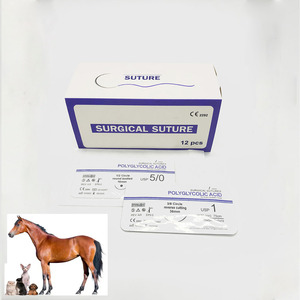
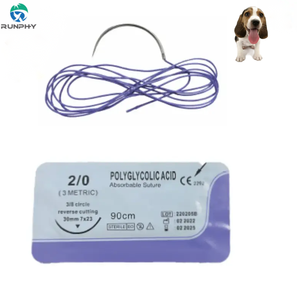
As pet humanization drives explosive growth in veterinary hospitals worldwide, demand for specialized veterinary suture kits, animal-specific needle geometries, and cost-effective absorbable PGA/PGLA packs has skyrocketed. Chinese factories offer specialized OEM customized packaging, short-lead production runs, and multi-language foil pouches explicitly tailored for global veterinary distributors.
Surgical Suture Procurement & Technical FAQs
What certifications are required to import surgical sutures from China into the EU or US?
To import surgical sutures into the European Union, products must comply with the EU MDR (2017/745), supported by an ISO 13485:2016 Quality Management System certificate and a formal Declaration of Conformity issued by a Notified Body. For the US market, suppliers must hold FDA 510(k) clearance for Class II medical devices and maintain device establishment registration with compliance to 21 CFR Part 820 (cGMP). Top Chinese manufacturers maintain complete technical files, biocompatibility reports (ISO 10993), and packaging validation data to facilitate smooth customs clearance and local health authority registration.
How do Chinese factories ensure consistent needle attachment pull-out strength?
High-tier Chinese suture factories utilize automated micro-swaging machines equipped with real-time optical sensors and digital force transducers. Every production batch undergoes rigorous destructive pull-out testing in compliance with United States Pharmacopeia (USP) and European Pharmacopoeia (EP) monographs. These tests ensure the needle-to-thread crimp junction exceeds the minimum pull-off force thresholds specified by international medical standards, preventing intra-operative needle detachment.
What are the lead times and Minimum Order Quantities (MOQs) for OEM private-label suture packaging?
For standard catalog configurations (stock needles and threads), production lead times typically range from 2 to 4 weeks. For custom OEM/private-label programs requiring customized primary aluminum foil packaging, branded inner boxes, and translated Instructions for Use (IFU), initial batch production requires approximately 4 to 6 weeks following artwork approval. MOQs for custom foil printing generally start at 5,000 to 10,000 individual pouches per SKU variant.
What is the shelf-life and storage protocol for synthetic absorbable sutures like PGA and PGLA 910?
Synthetic absorbable sutures carry a validated shelf life of 3 to 5 years when stored in their original unopened, hermetically sealed aluminum foil pouches. Because materials like PGA and PGLA degrade via hydrolysis, moisture exposure must be strictly avoided. Pouches are flushed with inert dry nitrogen gas prior to heat-sealing. Recommended storage conditions require temperatures maintained below 25°C (77°F) away from direct thermal sources and elevated humidity.
How does veterinary suture manufacturing differ from human-grade medical suture manufacturing?
While veterinary sutures utilize identical polymer materials (such as PGA, PGLA 910, and PDO) and sterile manufacturing processes as human sutures, their regulatory classification, packaging layouts, and needle selection are tailored specifically for animal anatomy. Veterinary lines frequently emphasize higher tensile strength gauges (e.g., USP 2 to 2-0) for canine/feline abdominal walls and cost-effective multi-pack boxes to suit veterinary clinical workflows. Top Chinese suppliers produce vet sutures in the exact same ISO-certified cleanrooms as human medical devices.
Connect directly with Tier-1 Chinese Suture Manufacturers
Streamline your medical procurement, request sample evaluation kits, or receive custom private-label OEM quotes within 24 business hours.
Get a Quote
 Suture PlanetSurgical Wound Closure