Global Procurement Whitepaper: Advanced Hemostatic Bone Waxes, Bio-Absorbable Polymer Matrices & ISO 13485 Compliant Wound Closure Systems
Medical Grade Portfolio
Featured Surgical Wax & Wound Closure Solutions
Precision-manufactured medical consumables produced under stringent cleanroom environments, compliant with USP/EP standards for international clinical distribution.
Why healthcare authorities, hospital procurement boards, and international distributors select our surgical wax and wound-closure manufacturing platform.
Single-Site Full Traceability
From raw polymer synthesis and wax refining to automated needle swaging, ethylene-oxide (EO) sterilization, and final packaging—every stage is housed within a single ISO 13485:2016 certified manufacturing cleanroom complex.
Turnkey Technical Dossiers
We provide complete regulatory filings, including CE Declaration of Conformity under EU MDR 2017/745, Free Sale Certificates (FSC), ISO 10993 biocompatibility testing matrices, and real-time 5-year stability validation reports.
Global Tender & OEM Readiness
Supplying public health agencies and private brands across 50+ countries in the Middle East, Europe, Asia-Pacific, Africa, and Latin America with customized packaging, UDI/GS1 barcodes, and multi-language IFU inserts.
Rigorous Hemostatic Integrity
Our surgical bone wax formulas utilize high-purity pharmaceutical grade beeswax and isopropyl palmitate/soft paraffin blends, delivering immediate mechanical tamponade for intraoperative osseous bleeding control.
Validated Sterilization Assurance
100% of production lots undergo validated Ethylene Oxide sterilization cycles according to ISO 11135 standards, guaranteeing a Sterility Assurance Level (SAL) of 10⁻⁶ with strictly controlled EO residuals.
High Cost-Efficiency Ratio
Leveraging advanced automated extrusion and precision swaging technologies in China to provide competitive tier-1 hospital grade consumables with fast dispatch turnarounds (2–4 weeks standard, 5–7 weeks OEM).
Technical Whitepaper: Material Science of Surgical Bone Wax & Hemostatic Matrices
In modern surgical procedures involving orthopedic resections, sternotomies during cardiothoracic interventions, neurosurgical craniotomies, and maxillo-facial operations, effective intraoperative hemostasis at cancellous bone surfaces is vital to prevent blood loss and reduce surgical duration. Surgical Wax (commonly designated as Bone Wax) remains the primary mechanical hemostatic barrier utilized globally by surgeons.
Information Gain Insight: Unlike systemic chemical coagulants, medical-grade bone wax works by creating an immediate physical barrier (tamponade) over the bleeding Haversian canals in cut bone surfaces, halting capillary oozing without interfering with systemic coagulation pathways.
1. Chemical Formulation & Biocompatibility Parameters
Medical-grade surgical wax manufactured by top Chinese exporters traditionally consists of a precise blend of refined pharmaceutical-grade Beeswax (USP) (70–80% w/w) combined with Soft Paraffin or Isopropyl Palmitate (20–30% w/w) to act as a plasticizing softening agent. The formulation is engineered to achieve specific viscoelastic properties:
Tactile Malleability: Softens rapidly under body temperature or manual friction between gloved fingers without flaking or fragmentation.
Adhesive Tenacity: Adheres firmly to wet, bleeding cancellous bone edges without adhering excessively to surgical gloves or instruments.
Chemical Inundation & Inertness: Formulated to minimize local tissue response (ISO 10993-6 evaluation for local effects after implantation).
2. Performance Comparison: Non-Absorbable vs. Water-Soluble Synthetic Waxes
While traditional beeswax-based surgical wax is inert and non-absorbable, advancements led by leading Chinese biomedical laboratories have introduced synthetic, water-soluble, absorbable bone wax formulations (composed of polyalkylene glycols and block copolymers) to eliminate long-term foreign-body retention risks.
3. Integrated Wound Closure Systems: Synergy with Absorbable Sutures
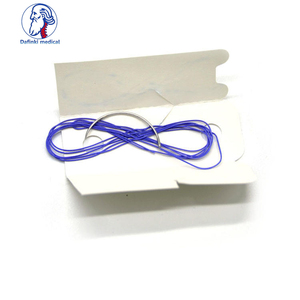
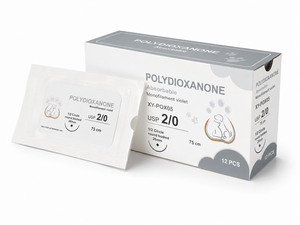
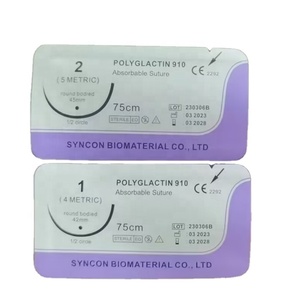
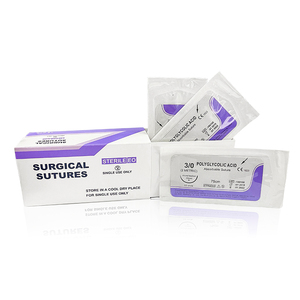
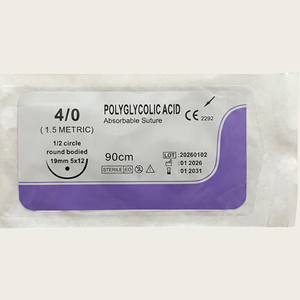
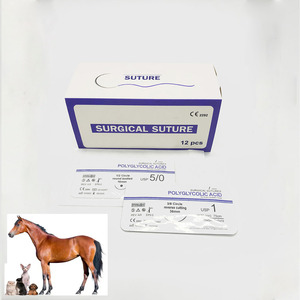
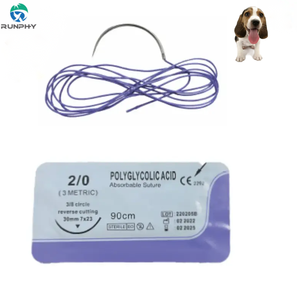
A complete surgical closure solution pairs bone hemostasis with high-tensile synthetic absorbable sutures. Chinese manufacturing hubs have scaled production of Polyglactin 910 (PGLA 910) and Polyglycolic Acid (PGA) sutures featuring superior knot security, low tissue drag, and precise hydrolytic degradation profiles. When combined with sterile bone wax foils in orthopedic surgical packs, healthcare institutions optimize procurement costs while enforcing clinical standards.
Industry Horizon
Future Industry & Product Development Trends
Strategic shifts shaping the global surgical consumables market through 2030, driven by material innovation, regulatory tightening, and localized supply resilience.
While traditional bone wax remains the budget-friendly gold standard for high-volume surgeries, global surgical guidelines are increasingly favoring fully absorbable, water-soluble synthetic polymers. Manufacturers in China are investing heavily in polyalkylene glycol technologies to produce soft, moldable bone waxes that clear from osseous tissues within 48 hours, eliminating risks of impaired bone healing or infection foci.
Post-operative surgical site infections (SSIs) represent a major healthcare burden. Emerging product pipelines include surgical waxes impregnated with micro-concentrations of triclosan or silver nanoparticles, as well as antibacterial barbed sutures. These functionalized matrices act as localized antimicrobial barriers, drastically lowering bacterial colonization around orthopedic bone cut edges.
3. Automated Cleanroom Production & Needle Swaging Precision
Leading Chinese factories are transitioning from manual assembly to fully automated robotic braiding, automated wax foil dispensing, and vision-guided laser needle swaging. This ensures 100% compliance with USP needle attachment pull-out tension limits and eliminates batch-to-batch physical variance in export shipments.
Strategic Sourcing
Future Procurement Trends for Medical Distributors & Tender Boards
Navigating supply chain dynamics, regulatory shifts under EU MDR 2017/745, and total cost of ownership (TCO) optimization.
Single-Vendor Suture & Hemostat Consolidation
Global healthcare procurement desks are abandoning fragmented purchasing models in favor of consolidated sourcing agreements. By partnering with China-based manufacturers capable of supplying surgical wax, absorbable PGA/PGLA/PDO sutures, non-absorbable polypropylene/silk sutures, and hernia meshes under a single ISO 13485 umbrella, importers achieve:
30–45% Shipping ReductionConsolidated sea-freight containerization from Ningbo/Shanghai ports.
With the European Union enforcement of MDR 2017/745, importers in Europe and regions aligning with CE marks (such as Latin America and Southeast Asia) require manufacturers to supply extensive Clinical Evaluation Reports (CER), Periodic Safety Update Reports (PSUR), and UDI-DI system registration. Chinese tier-1 exporters with established EU Authorized Representatives (EC REP) provide an indispensable competitive buffer against market access disruption.
Procurement Intelligence
Frequently Asked Questions (FAQ)
Essential answers for B2B buyers, regulatory officers, and hospital tender managers sourcing surgical wax and suture consumables from China.
Q1: What is the primary chemical composition of your surgical wax (bone wax)?
Our standard surgical bone wax is formulated using high-purity USP Grade Beeswax (approx. 75%) combined with Isopropyl Palmitate or Soft Paraffin (approx. 25%) to ensure optimal malleability, firm adhesion to cancellous bone, and immediate mechanical hemostasis. We also manufacture synthetic water-soluble polyalkylene glycol absorbable bone waxes upon buyer specification.
Q2: How is surgical wax packaged and sterilized to ensure a 5-year shelf life?
Each surgical wax slab (typically 2.5g or 3.0g) is individually wrapped in a protective sterile foil pack, enclosed inside a peelable pouch, and packaged in boxes of 12 or 24 units. Sterilization is performed via validated Ethylene Oxide (EO) gas cycles or Gamma Irradiation according to ISO 11135 / ISO 11137 standards, achieving a Sterility Assurance Level (SAL) of 10⁻⁶ with a validated 5-year shelf life under cool storage conditions.
Q3: Which regulatory certificates are provided with export shipments of surgical wax and sutures?
Every shipment is accompanied by a full regulatory clearance file, including ISO 13485:2016 Quality Management Certification, CE Certificates (MDR 2017/745 / MDD 93/42/EEC), Free Sale Certificates (FSC) issued by government health authorities, Batch Certificates of Analysis (CoA), EO Sterilization Batch Validation Charts, and ISO 10993 Biocompatibility Test Summaries.
Q4: Can we request custom OEM branding, private labeling, and multi-language packaging?
Yes, full OEM and private label customization is available. We handle custom outer box printing, foil seal branding, GS1/UDI barcode generation, and multi-language Instructions for Use (IFUs in English, Spanish, French, Arabic, Russian, Portuguese) tailored to meet your target country's Ministry of Health (MoH) registration rules.
Q5: What are the standard lead times for bulk hospital tender fulfillment?
Standard catalog items dispatch within 2 to 4 weeks from order confirmation. Private-label OEM production orders typically require 5 to 7 weeks for initial batch setup and artwork plate sign-off. Repeat orders run on expedited manufacturing schedules, with options for buffer stock warehousing for recurring tender delivery schedules.
Partner with China’s Leading Surgical Wax & Suture Manufacturer
Connect directly with our export engineering desk to request technical specifications, free evaluation samples, CE/ISO regulatory dossiers, and competitive OEM factory pricing.
 Suture PlanetSurgical Wound Closure