China Wholesale Absorbable Hemostat Factories & Exporters
Global B2B Whitepaper: Material Innovation, Manufacturing Standards, Regulatory Compliance, and Sourcing Strategies for Bioabsorbable Hemostatic Matrices & Surgical Wound Closure
Catalogue Index
Featured Absorbable Hemostatic Solutions & Surgical Sutures
Direct factory supply featuring ISO 13485:2016 audited, CE certified bioabsorbable materials engineered for rapid clinical hemostasis and minimal tissue trauma.
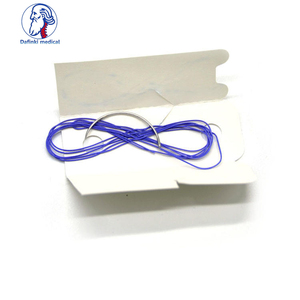
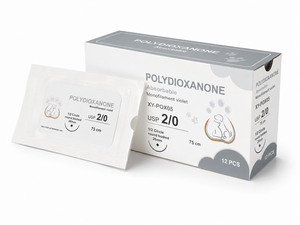
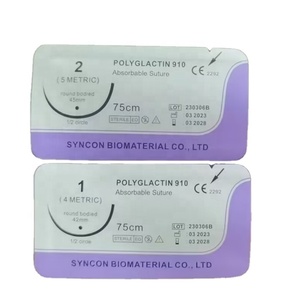
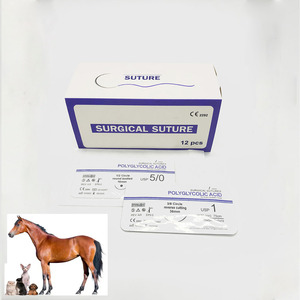
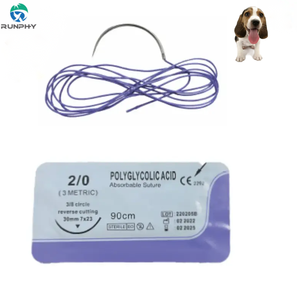
Veterinary Surgical Suture Absorbable PGA PGLA 910 Sterile Animal Suture for Dog Cat Pet Surgery
Executive Overview: China’s Role in Global Absorbable Hemostat Manufacturing
The global medical device landscape is undergoing a structural transition as surgical teams across cardiovascular, orthopedic, gynecological, and general surgeries demand increasingly sophisticated intraoperative wound closure solutions. At the epicenter of this market expansion lies the manufacturing ecosystem of China—specifically specialized factories and export hubs that produce advanced Absorbable Hemostats and high-tensile synthetic bioabsorbable sutures. Historically dominated by western conglomerates, the supply chain for biomaterials such as Oxidized Regenerated Cellulose (ORC), Microfibrillar Collagen, Gelatin Matrices, and Polyglycolic Acid (PGA) has shifted toward certified Chinese OEM/ODM facilities capable of executing complex polymer synthesis, precision swaging, laser micro-drilling, and validated ethylene oxide (EO) sterilization under cleanroom protocols.
This industry white paper serves as a comprehensive buyer guide for medical procurement directors, healthcare tender agencies, pharmaceutical importers, and OEM distributor brands seeking to evaluate, audit, and partner with top-tier China absorbable hemostat factories and exporters. By integrating strict quality control frameworks (ISO 13485:2016, EU MDR 2017/745, and US FDA 510(k) standards) with robust raw material selection, Chinese exporters offer an unrivaled Information Gain in cost optimization, custom packaging configurations, and rapid batch release velocity without compromising clinical safety or biological efficacy.
Biocompatibility & Safety
Manufactured under strict ISO 10993 cytotoxicity, sensitization, and pyrogenicity compliance. Products exhibit minimal tissue reactivity and smooth degradation pathways in vivo.
Rapid Hemostatic Action
Engineered matrix structure activates immediate physiological coagulation cascades, achieving localized hemostasis within 2 to 6 minutes across capillary, venous, and arteriole oozing.
Full Dossier Support
Complete technical documentation including Declaration of Conformity, FSC, Certificate of Analysis (CoA), validation reports, and multi-language IFU artwork files.
Material Science & Mechanisms of Hemostatic Action
Absorbable hemostatic agents function through distinct chemical, physical, and biological mechanisms designed to control capillary, venous, and small arteriole intraoperative bleeding when conventional ligation or electrocautery is impractical or ineffective. B2B buyers must understand the primary biomaterial categories produced by leading Chinese exporters:
Oxidized Regenerated Cellulose (ORC)
ORC is a plant-derived polysaccharide matrix subjected to controlled oxidation. Upon contact with whole blood, ORC absorbs fluid, swells into a dark gelatinous mass, and aids in clot formation. Its low pH exerts an inherent bactericidal effect against gram-positive and gram-negative pathogens, including MRSA. Full tissue absorption generally occurs within 7 to 14 days via enzymatic hydrolysis without leaving inert residues.
Synthetic Polyesters (PGA / PGLA 910)
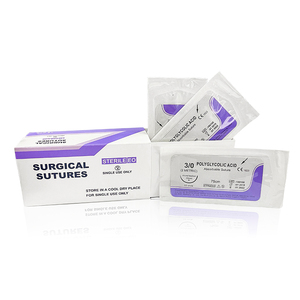
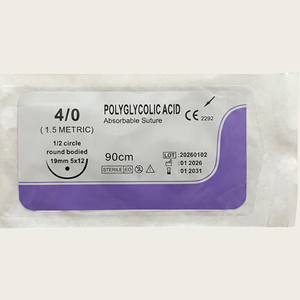
Polyglycolic Acid (PGA) and Polyglactin 910 (PGLA) represent high-molecular-weight synthetic polymers widely used in both braided absorbable sutures and structured hemostatic felts. Degrading via predictable ester hydrolysis into non-toxic glycolic and lactic acid monomers, these polymers preserve critical tensile holding strength during initial wound healing before complete biological clearance within 54 to 70 days.
Gelatin & Collagen Matrices
Purified animal-derived collagen and cross-linked porcine gelatin sponges absorb up to 45 times their weight in blood. The porous matrix entraps thrombocytes, triggering platelet aggregation and factor release. Absorbed fully within 4 to 6 weeks, gelatin sponges provide an economical, highly pliable substrate for general, dental, and neurosurgical procedures.
Technical Specification Matrix: Material Comparison
The table below provides a rigorous technical comparison of bioabsorbable materials commonly sourced from China wholesale exporters for surgical wound care and intraoperative hemostasis.
Material Class
Primary Structure
Hemostasis Time
Absorption Period
Bactericidal Action
Primary Clinical Indications
Oxidized Regenerated Cellulose (ORC)
Woven / Non-Woven Gauze
2 – 5 minutes
7 – 14 days
Yes (Low pH effect)
General surgery, cardiovascular, neurosurgery, OB/GYN
Polyglycolic Acid (PGA)
Braided Thread / Non-woven micro-felt
3 – 6 minutes
60 – 90 days
Optional (Triclosan coating)
Soft tissue approximation, ligation, veterinary surgery
Dental extraction sites, orthopedic bone bleeding, trauma
Purified Gelatin Matrix
Porous Resorbable Sponge
3 – 8 minutes
3 – 5 weeks
No
E.N.T., vascular surgery, plastic & reconstructive surgery
Global Procurement & Future Trends in Absorbable Hemostats (2026–2030)
As international healthcare purchasing organizations, national ministry of health tenders, and private hospital networks seek cost resilience against global inflationary pressures, the sourcing paradigm for absorbable hemostatic agents is shifting rapidly. Decision-makers must evaluate five core trends shaping the future of medical device procurement:
1. Transition to Advanced Synthetic Bio-Polymers
While animal-derived gelatin and collagen remain widely utilized, clinical preferences are moving toward synthetic polymers like PGA, PGLA, and synthetic ORC due to absolute zero risk of Transmissible Spongiform Encephalopathies (TSE/BSE) and reduced batch-to-batch biological variability. Chinese manufacturers are investing heavily in pure polymer synthesis technology, guaranteeing strict chemical homogeneity and extended shelf lives exceeding 5 years under standard storage.
2. Demand for Private-Label & OEM turn-key Customization
Global medical distributors increasingly seek contract manufacturers willing to supply fully branded product ecosystems. Leading Chinese factories provide end-to-end OEM services: from custom matrix sizes (1x1 cm micro-pads to 10x20 cm surgical sheets), tailored foil pouch configurations, UDI/GS1 compliant barcoding, and localized multi-language Instructions for Use (IFU) designed specifically for local registration authorities.
3. Regulatory Harmonization & EU MDR Compliance
The implementation of the European Union Medical Device Regulation (EU MDR 2017/745) elevated certification benchmarks globally. Premier Chinese exporters have successfully transitioned their technical files, incorporating comprehensive Post-Market Clinical Follow-up (PMCF) studies, validated Sterility Assurance Levels (SAL 10⁻⁶ per ISO 11135), and rigorous bioburden assessments, providing international buyers with plug-and-play regulatory dossiers.
4. Integration of Antibacterial & Active Biological Agents
Future technological iterations focus on active hemostasis—combining traditional physical scaffolds with therapeutic agents such as thrombin, fibrinogen, or antimicrobial agents (e.g., chlorhexidine or silver nanoparticles). These hybrid materials simultaneously stop arterial bleeding while creating an active antibacterial zone to prevent Surgical Site Infections (SSIs).
Collaborating with established Chinese export factories delivers structural advantages across production scalability, quality assurance, and supply continuity. Facilities operated by market leaders embody the following operational pillars:
Class 100,000 Cleanrooms
Primary shaping, inner foil sealing, and inner packaging are conducted inside ISO Class 7 (Class 100,000) cleanrooms with continuous airborne particle monitoring and positive pressure controls.
In-House Sterilization
Fully automated industrial Ethylene Oxide (EO) sterilization chambers execute validated cycles, ensuring SAL 10⁻⁶ while minimizing EO residual levels well below ISO 10993-7 thresholds.
Full Lot Traceability
Every sterile pouch features unique batch codes linking back to raw polymer synthesis lots, needle swage pull-out test records, cleanroom environmental logs, and sterilization charts.
Buyer Knowledge Base
Frequently Asked Questions (FAQ) for B2B Sourcing
Clear answers to common questions regarding regulatory files, factory audits, OEM customization, and shipment logistics.
What certifications are required to import absorbable hemostats from China?
To import surgical absorbable hemostats and sutures smoothly, your manufacturer must hold ISO 13485:2016 certification for medical device quality management. Depending on your destination market, you will need a CE Mark (under EU MDR 2017/745 or MDD transition), a Free Sale Certificate (FSC) issued by the national health authority, and a complete Certificate of Analysis (CoA) per production lot. For South America, Middle East, and Southeast Asia, legalizing dossiers via your local embassy in China is routinely provided.
How does Oxidized Regenerated Cellulose (ORC) compare to PGA absorbable sutures?
ORC is designed primarily as a planar matrix or non-woven pad applied directly onto diffuse bleeding surfaces to achieve rapid hemostasis. It degrades quickly (7-14 days). In contrast, PGA (Polyglycolic Acid) is engineered as high-tensile braided threads optimized for mechanical tissue approximation and ligation, maintaining structural support for several weeks. Both materials degrade via hydrolysis, leaving no permanent foreign bodies.
What are the minimum order quantities (MOQs) and lead times for OEM private-label orders?
Standard catalog items usually carry low MOQs (e.g., 500 to 1,000 boxes per specification) with delivery lead times of 2 to 4 weeks. For custom OEM packaging involving customized foil plates, unique box dimensions, localized IFUs, and specific UDI barcode printing, initial production cycles typically require 4 to 6 weeks. Subsequent repeat orders ship faster once packaging artworks are finalized on file.
How are sterility assurance and product shelf-life validated?
Products are sealed in medical-grade aluminum foil primary packaging backed by peelable sterile pouches. Sterilization is executed via Ethylene Oxide (EO) validated to a Sterility Assurance Level (SAL) of 10⁻⁶ according to ISO 11135. Accelerated and real-time stability testing under controlled temperature and humidity conditions validate a standard 3-year to 5-year shelf life when stored away from direct light and moisture.
Can I request sample kits for evaluation and biological testing?
Yes. Qualified medical device distributors, hospital purchasing committees, and regulatory agents can request sterile evaluation samples. Sample shipments include complete lot documentation, product technical datasheets, and material safety profiles for laboratory evaluation and clinical trial review.
Partner with China's Premier Absorbable Hemostat Exporters
Streamline your medical device supply chain with certified, high-grade absorbable hemostatic matrices, PGA/PGLA sutures, and custom OEM manufacturing solutions.
 Suture PlanetSurgical Wound Closure