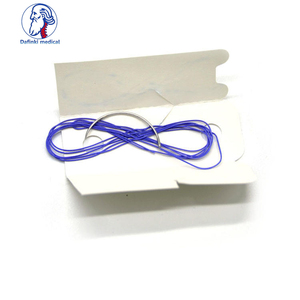
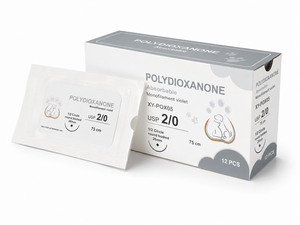
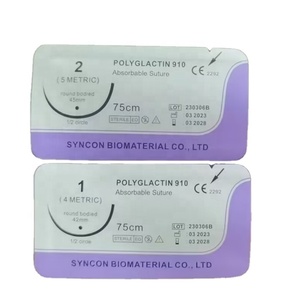
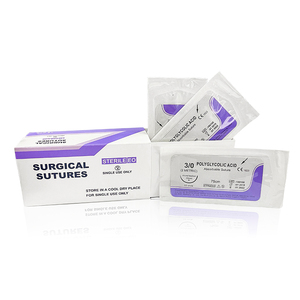
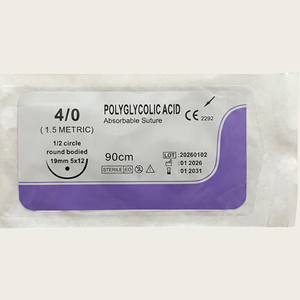
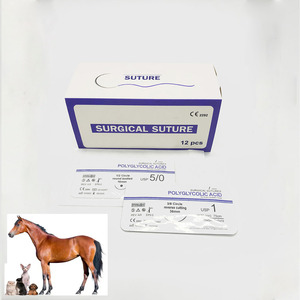
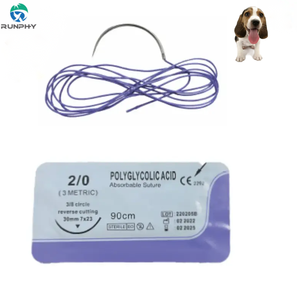
Extrusion, braiding, swaging & packaging under ISO 13485:2016 control.
Industry Whitepaper: Macromolecular Engineering of Bioabsorbable Meshes & Sutures
An authoritative analysis of polymer degradation kinetics, mechanical performance curves, warp-knitting textile physics, and bio-reabsorption dynamics for medical contract manufacturing.
In contemporary soft-tissue reconstruction, abdominal wall repair, and complex surgical closures, bioabsorbable synthetic polymers—specifically Polyglycolic Acid (PGA), Polyglactin 910 (PGLA), Polydioxanone (PDO), and Poliglecaprone 25 (PGCL)—represent the pinnacle of biomedical engineering. Unlike non-absorbable permanent implants (such as heavy-weight polypropylene or PTFE), bioabsorbable structures are designed to provide transient biomechanical support while gradually transferring physical loads back to native tissue as healing occurs.
The degradation profile of synthetic absorbable meshes and sutures is dictated by non-enzymatic bulk hydrolysis. Water molecules penetrate the amorphous regions of the crystalline polymer matrix, cleaving ester bonds within the macromolecular chain:
Polyglycolic Acid (PGA): Homopolymer of glycolic acid exhibiting dense crystallinity. Hydrolysis degrades the polymer into glycolic acid monomers, which enter the citric acid cycle (Krebs cycle) to be metabolized into carbon dioxide and water. PGA maintains approximately 65–75% breaking strength retention (BSR) at 14 days post-implantation, with complete bio-absorption occurring within 60 to 90 days.
Polyglactin 910 (PGLA 90/10): Copolymer comprised of 90% glycolide and 10% L-lactide. The introduction of hydrophobic methyl groups from the lactide component slightly delays hydrolytic attack, providing a predictable strength retention profile (75% BSR at 14 days; 50% BSR at 21 days) and total absorption between 56 and 70 days.
Polydioxanone (PDO / PDS): Polyester monofilament structure offering extended mechanical support. PDO retains roughly 70% BSR at 14 days and 50% BSR at 28 days, rendering it the gold standard for high-tension fascial closures requiring up to 6 months of complete absorption.
The biological response to surgical implants is heavily governed by mesh porosity, areal weight ($g/m^2$), and filament construction. When contract manufacturing absorbable surgical meshes via custom OEM/ODM protocols, mechanical properties must be tuned to match anatomical compliance.
Polymer Class
Fabric Construction
Pore Size Range
Breaking Strength Retention (BSR)
Complete Absorption Time
Primary Surgical Indication
PGA (Polyglycolic Acid)
Braided / Warp-Knitted
1.2 mm – 2.4 mm (Macroporous)
~75% at 14 Days
60 – 90 Days
General soft tissue approximation, temporary reinforcement
PGLA 910
Multifilament Knitted
1.0 mm – 2.0 mm
~75% at 14 Days / ~50% at 21 Days
56 – 70 Days
Urological, OB/GYN, veterinary abdominal closure
Rapid PGLA
Irradiated Braided
Sub-millimeter Micro-mesh
~50% at 5 Days
40 – 45 Days
Mucosal closure, superficial skin, pediatric surgery
Pore sizes exceeding 1.0 mm are critical for preventing macrophage trapping, encouraging rapid fibroblastic tissue ingrowth, and minimizing scar tissue encapsulation. By deploying high-precision multi-bar warp knitting technology, OEM manufacturers can produce light-weight absorbable fabrics with burst strengths exceeding 100 kPa while reducing chronic foreign body reaction (FBR).
Future Global Procurement Trends in Absorbable Surgical Implants
Strategic insights for hospital procurement officers, tender bidders, and OEM medical device distributors navigating evolving regulatory landscapes and technological advancements.
1. Shift Toward Synthetic Hybrid & Antimicrobial-Coated Implants: Modern surgical protocols increasingly reject animal-derived materials like collagen or chromic catgut due to variable absorption rates and immunogenicity. Global healthcare systems are rapidly migrating toward 100% synthetic polymers (PGA/PGLA) coated with broad-spectrum antimicrobial agents like Triclosan to drastically lower Surgical Site Infection (SSI) incidence rates in clean-contaminated procedures.
2. Rigorous EU MDR (2017/745) & Global Regulatory Harmonization: The enforcement of the European Union Medical Device Regulation (EU MDR 2017/745) has elevated Class III device data requirements. Distributors can no longer rely on unverified white-label suppliers. Procurement leads are prioritizing contract manufacturing partners who offer fully documented technical files, including ISO 10993 cytotoxicity, sensitization, systemic toxicity data, and comprehensive clinical evaluation reports (CER).
3. 3D Pre-shaped & Anatomical OEM Customization: Traditional flat rectangular mesh sheets require intraoperative trimming, increasing theater times. Next-generation OEM/ODM demands center on pre-formed 3D anatomical meshes, laser-cut contours, and self-fixating barbed mesh structures designed specifically for laparoscopic (TAPP/TEP) hernia repairs.
4. Supply Chain Consolidation via Single-Site Manufacturing: Post-pandemic supply disruptions have forced brand owners to seek vertical integrated contract manufacturers. Single-site facilities that execute polymer extrusion, precision braiding, ultrasonic cleaning, needle swaging, primary foil pouching, and Ethylene Oxide (EO) sterilization under one quality management umbrella guarantee total chain-of-custody control and shorter batch lead times.
Leveraging vertically integrated ISO 13485:2016 production facilities to deliver high-precision wound closure devices for global healthcare markets.
Why Global Brands & Government Agencies Partner With Us
Integrated Chain of Custody: Raw polymer resin inspection, multifilament extrusion, micro-braiding, protective coating (Calcium Stearate / Polycaprolactone), and high-tensile swaging are conducted entirely in ISO Class 7 and Class 8 cleanrooms.
Full Batch Traceability: Every individual sterile pouch carries a unique UDI/GS1 compliant barcode linking directly to raw material lot numbers, laser-drilled needle attachment pull-out test logs, and automated EO chamber cycle graphs.
Custom Packaging & Labeling Capabilities: Comprehensive private-label solutions including multi-language IFUs (Instructions for Use), primary peelable aluminum foil packaging, custom box design, and country-specific regulatory labeling for over 50 export regions.
Comprehensive Regulatory Dossier Support: We supply full technical documentation—including Declaration of Conformity (DoC), ISO 13485:2016 certificates, CE marks, WHO-GMP certification, Free Sale Certificates (FSC), and ISO 10993 biocompatibility test suites—to ensure smooth registration with local Ministries of Health.
Frequently Asked Questions (FAQ) for Sourcing Officers
What is the primary difference between PGA and PGLA 910 absorbable matrices?
Polyglycolic Acid (PGA) is a pure homopolymer providing fast strength degradation (approx. 60-90 days complete absorption), whereas Polyglactin 910 (PGLA) is a copolymer of glycolide and lactide (90:10). The inclusion of lactide increases hydrophobicity, offering slightly longer mechanical support and a smoother braid profile when coated. Both polymers hydrolyze into non-toxic metabolites and are widely used across general surgery and veterinary medicine.
Can your factory produce custom-sized OEM absorbable mesh sheets and 3D shapes?
Yes. As a dedicated OEM/ODM contract manufacturer, we offer custom warp-knitting, ultrasonic laser-cutting, and thermoforming capabilities. We can tailor pore sizes (from 0.8mm to 3.5mm), areal weights (lightweight to heavy-weight), pre-cut dimensions (e.g., 6x11cm, 10x15cm, 15x15cm), and pre-shaped 3D contours tailored to your proprietary brand specifications.
How do you validate Ethylene Oxide (EO) sterilization for absorbable materials?
Our sterilization cycles are validated in compliance with ISO 11135:2014 standards, achieving a verified Sterility Assurance Level (SAL) of 10⁻⁶. Because synthetic absorbable polymers are hydrolytically sensitive, gas concentration, humidity, temperature, and residual aeration are strictly monitored. Residual EO levels are tested per ISO 10993-7 to guarantee total bio-safety.
What regulatory documents are provided to support market registration in my country?
We provide a complete technical file package including ISO 13485:2016 certification, CE / EU MDR technical file documentation, WHO-GMP certificate, Certificate of Analysis (CoA) for each lot, Certificate of Free Sale (CFS), real-time and accelerated shelf-life stability data, and ISO 10993 biocompatibility reports.
What are the typical lead times for custom private-label OEM orders?
Standard catalog products typically ship within 2 to 4 weeks. Initial OEM and private-label programs—which include artwork approval, custom foil printing plates, and box manufacturing—generally require 5 to 7 weeks for the inaugural batch. Repeat private-label production runs dispatch within 3 to 4 weeks.
How is suture needle attachment strength (pull-out force) controlled?
Every production lot undergoes rigorous mechanical testing per USP and EP monographs using automated tensiometers. Needles manufactured from premium 300-series stainless steel are precision laser-drilled or channel-swaged, ensuring pull-out force parameters consistently exceed USP minimum attachment requirements.
Do you offer sample kits for institutional evaluations and laboratory testing?
Yes, we provide complimentary sample kits for qualified medical device distributors, tender agencies, and hospital procurement departments. Samples include sterile packed absorbable sutures, PGA/PGLA meshes, and detailed technical datasheets for comparative quality analysis.
Partner with a Leading OEM/ODM Absorbable Suture & Mesh Manufacturer
Whether you require contract manufacturing for private-label brand expansion, regulatory support for ministry tenders, or custom textile engineering, our technical export team is ready to assist.
 Suture PlanetSurgical Wound Closure