Global Manufacturing Whitepaper & B2B Procurement Strategy

OEM/ODM Chromic Catgut Supplier & Suppliers

Precision-Engineered Absorbable Collagen Sutures, Advanced Chrome-Tanning Chemistry, and ISO 13485 / CE Certified Contract Manufacturing Solutions

100%
In-House Single-Site Manufacturing
SAL 10⁻⁶
Validated Ethylene Oxide Sterilization
50+
Global Export Markets Supported
USP & EP
Fully Compliant Monograph Testing
Featured OEM/ODM Product Catalog

Absorbable Surgical Sutures & Wound-Closure Devices

Explore our high-performance clinical product portfolio engineered for veterinary and human surgical applications. Configurable by USP size, thread length, needle geometry, and customized private-label packaging.

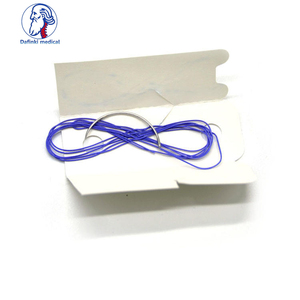
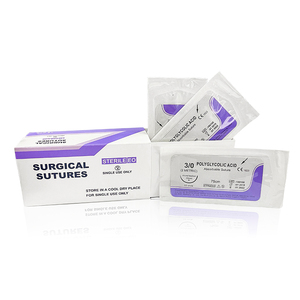
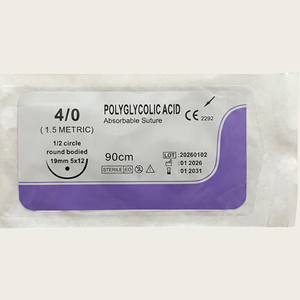
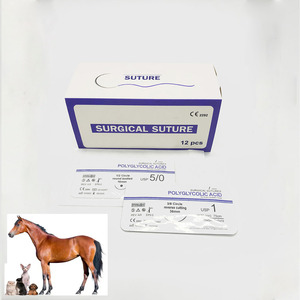
Veterinary Surgical Suture Absorbable PGA PGLA 910 Sterile Animal Suture for Dog Cat Pet Surgery

Veterinary Surgical Suture Absorbable PGA PGLA 910 Sterile Animal Suture for Dog Cat Pet Surgery

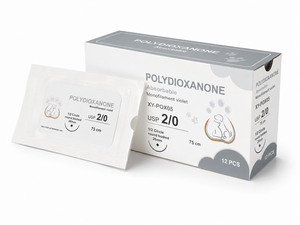
Polyglycolic Acid Absorbable Braided Surgical Suture XY-POX05 EO Sterilized 75cm Animal Veterinary Surgical Supplies

Polyglycolic Acid Absorbable Braided Surgical Suture XY-POX05 EO Sterilized 75cm Animal Veterinary Surgical Supplies

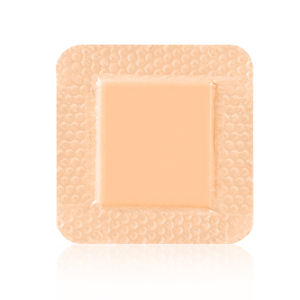
Free Samples Medical Absorbent Wound Suture Waterproof Breathable Waterproof Silicone Foam Wound Dressing

Free Samples Medical Absorbent Wound Suture Waterproof Breathable Waterproof Silicone Foam Wound Dressing

Absorbable 3-0 4-0 75cm Polyglactin 910 Chromic Catgut Surgical Suture with Needle Veterinary

Absorbable 3-0 4-0 75cm Polyglactin 910 Chromic Catgut Surgical Suture with Needle Veterinary

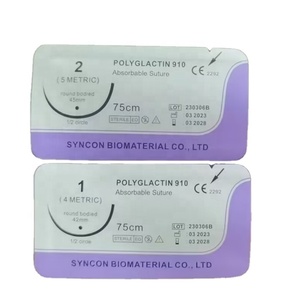
Risenmed Medical Consumables Absorbable Surgical Sutures Kit Threads Polyglactin 910(PGLA910)Sutures

Risenmed Medical Consumables Absorbable Surgical Sutures Kit Threads Polyglactin 910(PGLA910)Sutures

High Tensile Strength Absorbable PGA Suture Thread CE Certified Shelf Life for Veterinary Clinics Sheep Nylon

High Tensile Strength Absorbable PGA Suture Thread CE Certified Shelf Life for Veterinary Clinics Sheep Nylon

China Factory Cheapest Price Medical Absorbable POLYGLYCOLIC ACID PGA Surgical Suture with Needle for Veterinary Vet Pet Animal

China Factory Cheapest Price Medical Absorbable POLYGLYCOLIC ACID PGA Surgical Suture with Needle for Veterinary Vet Pet Animal

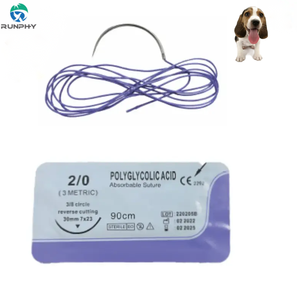
RUNPHY HC002 Medical Veterinary Suture Absorbable Polyglycolic Acid PGA Surgical Suture Needle Disposable

RUNPHY HC002 Medical Veterinary Suture Absorbable Polyglycolic Acid PGA Surgical Suture Needle Disposable

Biomaterial Science & Chemical Engineering

Chromic Catgut Mechanics, Tanning Kinetics & Absorption Profiles

An in-depth analysis of collagen crosslinking chemistry, tensile strength retention, and tissue degradation dynamics for clinical procurement specialists.

Purified Collagen Submucosa Sourcing

Chromic Catgut is derived from the submucosal layer of sheep (ovine) intestines or the serosal layer of cattle (bovine) intestines. Consisting predominantly of pure Type-I collagen, the raw biological ribbons undergo rigorous enzymatic purification to remove non-collagenous proteins, immunogenic lipids, and cellular debris, yielding a biocompatible matrix with minimal tissue reactivity.

Chromium Salt Crosslinking Dynamics

Plain catgut absorbs rapidly due to swift endogenous enzymatic proteolysis. To extend wound support, the collagen strands are treated with trivalent chromium salts (Cr³⁺). Tanning creates stable coordination complexes between chromium ions and carboxyl groups on neighboring collagen triple-helixes, dramatically slowing enzymatic breakdown while boosting initial knot-pull tensile strength.

In-Vivo Absorption Kinetics

Unlike synthetic absorbable polymers (such as PGA or PGLA 910) which degrade predictably via hydrolytic cleavage, Chromic Catgut is broken down via phagocytosis and tissue enzymes (cathepsins and collagenases). Chromic treatment maintains effective wound support for 21 to 28 days, with complete tissue absorption typically occurring within 90 days.

Material Variant Origin / Construction Tensile Strength Retention Absorption Timeframe Tissue Reactivity Primary Clinical Applications
Chromic Catgut Ovine Submucosa / Bovine Serosa (Tanned) 21 – 28 Days Support approx. 90 Days (Enzymatic) Moderate (Natural Collagen) General Closure, GYN/OB, Urology, Veterinary Surgery
Plain Catgut Ovine Submucosa / Bovine Serosa (Untanned) 7 – 14 Days Support approx. 60 Days (Enzymatic) Moderate-High Rapidly Healing Mucosa, Ophthalmic, Dental, Subcuticular
PGA (Polyglycolic Acid) Synthetic Braided Polymer (Coated) 60% - 70% @ 14 Days 60 – 90 Days (Hydrolysis) Low / Minimal Soft Tissue Approximation, Gastrointestinal, Orthopedics
PGLA 910 (Polyglactin 910) Synthetic Braided Co-polymer 75% @ 14d / 50% @ 21d 56 – 70 Days (Hydrolysis) Very Low General Surgery, Ligation, Pediatric & Ophthalmic Closure
PDO / PDS (Polydioxanone) Synthetic Monofilament 70% @ 14d / 50% @ 28d 180 – 210 Days (Hydrolysis) Negligible Fascia Closure, Abdominal Wall, Pediatric Cardiovascular
Strategic Sourcing Intelligence

Future Procurement Trends & Suture Industry Evolution (2025–2030)

Market dynamics, regulatory transformations, and technological shifts governing global medical device procurement for healthcare systems and B2B distributors.

1. Surge in Veterinary Surgical Demand

While human clinical practice in certain Western markets has gradually expanded the use of synthetic absorbables, global veterinary surgical markets are experiencing exponential growth in Chromic Catgut demand. Veterinary clinics value Chromic Catgut for its exceptional knot security, pliable hand-feel, cost-effectiveness, and self-absorbing properties in canine, feline, and livestock spay/neuter procedures.

2. Stringent EU MDR & Global Regulatory Compliance

The implementation of EU MDR 2017/745 and updated FDA regulatory pathways has elevated technical barrier requirements for animal-origin medical devices. Overseas buyers are consolidating orders around single-site manufacturers capable of providing complete biological safety evaluation (ISO 10993-18/19), BSE/TSE risk assessments, viral inactivation validation, and comprehensive technical files.

3. OEM Consolidation & Dual-Sourcing Strategies

Supply chain vulnerabilities exposed over recent years have driven healthcare procurement networks to move away from sole-source OEM arrangements. Global brands are appointing certified contract manufacturers with flexible OEM/ODM capabilities, private-label packaging options, localized UDI/GS1 barcoding, and rapid batch dispatch readiness.

4. Advanced Micro-Swaging & Needle Precision

Procurement teams increasingly evaluate suture lines by needle-to-thread attachment strength and needle sharpness durability. Modern automated laser-drilled micro-swaging minimizes tissue trauma by creating a smooth transition between the stainless steel needle (AISI 300 or 400 series) and the catgut strand, satisfying strict USP pull-out specifications.

Why Sourcing Partners Select Our Manufacturing Facilities

Combining state-of-the-art chemical processing cleanrooms, automated needle swaging, and stringent ISO 13485:2016 quality assurance to deliver world-class surgical wound closure products.

  • Integrated Single-Site Operation: Ribbons processing, chrome tanning, polishing, swaging, and EO sterilization executed under one roof.
  • Full Regulatory Registration Support: Technical files, Free Sale Certificates (FSC), ISO 13485:2016, and CE documentation ready for rapid authority submission.
  • 100% Pull-Out Testing Rigor: Every batch undergoes pull-out retention testing and USP tensile limit verification before release.
  • Tailored OEM / Private Label Solutions: Customized foil packs, inner envelopes, outer boxes, UDI barcodes, and multi-language IFUs.
  • Needle Library of 120+ Geometries: Taper point, reverse cutting, conventional cutting, micro-spatula, and premium taper-cut options.
  • Complete Batch Traceability: Final sterile cartons resolve directly to raw collagen lots, needle batches, and EO cycle logs.
Quality Assurance Protocol

End-to-End Quality Control & Chain of Custody

From raw submucosa ribbon inspection to sterile barrier packaging, our multi-stage quality system ensures total compliance with international medical device standards.

Step 1: Raw Material Validation & Washing

Ovine or bovine intestinal ribbons undergo rigorous biochemical screening for pyrogenicity, bioburden, and viral safety. Ribbons are processed through automated washing and alkaline degreasing stages to remove fat and non-collagenous proteins while preserving the structural integrity of the collagen fibrils.

Step 2: Controlled Tanning & Spinning

Cleaned collagen ribbons are submerged in standardized chromium salt baths where pH, temperature, and immersion duration are precisely regulated. Tanned ribbons are then twisted under uniform mechanical tension to form smooth, cylindrical strands of specified USP diameters before electronic micrometer polishing.

Step 3: Precision Swaging & EO Sterilization

Suture strands are swaged into precision stainless steel needles using automated micro-drilling and crimping technologies. Swaged sutures are sealed inside hermetic aluminum foil primary packs and sterilized via validated Ethylene Oxide (EO) cycles achieving a Sterility Assurance Level (SAL) of 10⁻⁶.

Frequently Asked Questions

OEM/ODM Chromic Catgut Sourcing & Technical Procurement FAQs

Expert guidance addressing critical technical, regulatory, and commercial inquiries from medical procurement managers and international distributors.

What are the primary chemical differences between Plain Catgut and Chromic Catgut?

Plain Catgut consists of untreated, purified collagen strands that undergo rapid enzymatic breakdown by host tissue proteases, offering effective tensile strength retention for approximately 7 to 14 days. Chromic Catgut is treated with trivalent chromium salts during manufacturing. Tanning forms chemical crosslinks between collagen triple-helixes, delaying enzymatic degradation and extending effective wound support to 21–28 days while reducing immediate tissue fluid absorption.

What regulatory dossiers and quality certificates are supplied with OEM shipments?

Standard regulatory registration packs include ISO 13485:2016 Certification, CE / EU MDR Technical Files, WHO-GMP Certificates, Certificates of Free Sale (FSC), Certificates of Analysis (CoA) per lot, ISO 10993 Biocompatibility Validation Reports, and Sterility Assurance Validation Documents (EN 556 / ISO 11135). Ministry of Health legalization and embassy notarization services are available upon request.

Can Chromic Catgut sutures be customized for private label packaging and specific needle combinations?

Yes. As a dedicated OEM/ODM manufacturer, we offer complete configuration options across the full USP size spectrum (USP 6-0 through USP 2). Clients can specify thread lengths (e.g., 45 cm, 75 cm, 90 cm, 150 cm), needle geometries (taper point, reverse cutting, taper-cut, micro-spatula), primary foil artwork, outer carton design, multi-language Instructions for Use (IFUs), and UDI/GS1 compliant barcodes.

What are the standard lead times for initial private-label orders versus repeat production runs?

Standard catalog items ship within 2 to 4 weeks. First-time private label or OEM orders typically require 5 to 7 weeks to allow for packaging proofing, printing plate setup, and regulatory artwork sign-off. Repeat orders dispatch significantly faster (typically 3 to 4 weeks) as packaging components are maintained in buffer stock.

How is sterility maintained and what is the validated shelf life of Chromic Catgut?

Chromic Catgut sutures are packed in protective fluid-tubes or primary hermetic foil pouches with isopropyl alcohol solutions to maintain strand pliability, sealed inside secondary peelable pouches, and sterilized by Ethylene Oxide gas to a Sterility Assurance Level (SAL) of 10⁻⁶. Supported by accelerated and real-time stability testing, products carry a validated 5-year shelf life when stored below 25°C in dry conditions.

Why is Chromic Catgut preferred in veterinary surgery despite synthetic options?

Chromic Catgut remains highly favored in veterinary medicine due to its unique combination of soft hand-feel, superb knot security (knots flatten and grip firmly without slipping), predictable enzymatic absorption without requiring post-operative suture removal, and excellent cost efficiency for high-volume procedures like canine and feline spay/neuter operations.

What quality controls ensure needle attachment pull-out strength meets USP standards?

Each swaging machine utilizes micro-drilled laser needles and precision die-crimping. During every production shift, lot samples undergo destructive pull-out force testing using calibrated digital tensiometers. Production lots are released only when 100% of tested samples exceed the minimum needle attachment force required by USP and EP monographs.

Partner with a Direct ISO 13485 Certified Suture Manufacturer

Request custom product samples, technical dossiers, or OEM pricing quotes for Chromic Catgut, PGA, PGLA 910, and polypropylene sutures. Our international export team responds within 24 hours.