Global OEM/ODM Contract Manufacturing

OEM/ODM Nonabsorbable Sutures Manufacturer & Exporter

ISO 13485:2016 & CE MDR 2017/745 Certified Medical Grade Surgical Wound Closure Devices Engineered for High Tensile Precision and Minimal Tissue Drag

Medical Device Portfolio

Featured Nonabsorbable & Specialized Surgical Sutures

Full USP size spectrum, precision needle swaging, and customized packaging compliant with global hospital standards and tender specifications.

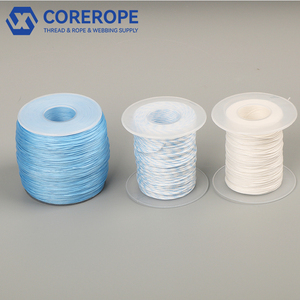
Ultra High Strength UHMWPE Woven Ultra High Strength Nonabsorbable Surgical Suture

Non-allergenic Multi-color UHMWPE Woven Ultra-high Strength Sutures

Material: UHMWPE Braided | USP: 2-0 to 5

Engineered for high-load orthopedic procedures, joint reconstruction, and sports medicine. Provides unmatched tensile strength, pliability, and zero knot slippage.

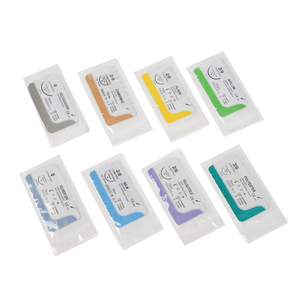
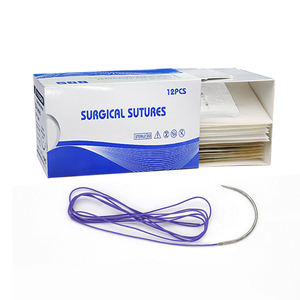
Hospital Standard Medical Sterile Disposable Surgical Suture with Needle

Medical Sterile Disposable Surgical Suture with Needle

Material: Polypropylene / Nylon / Silk | USP: 10-0 to 2

Sterile disposable wound closure packages fitted with AISI 302/304 stainless steel needles for general surgery, OB/GYN, and clinical outpatient use.

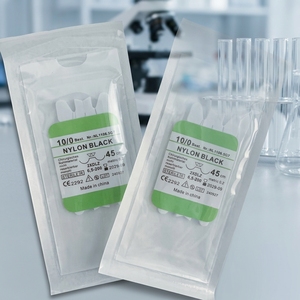
Micro-Surgery Monofilament Surgical Suture Thread Micro Nylon Polyamide 10/0

Nonabsorbable Monofilament Micro Nylon Polyamide 10/0 Suture

Material: Polyamide 6/6.6 | Size: 75cm, 26mm Blue 10/0

Ultra-fine monofilament nylon designed for microsurgery, ophthalmic procedures, and plastic surgery requiring smooth passage and zero tissue reaction.

Consumable Kit Disposable Medical Consumables Silk Nylon Non Absorbable Surgical Suture

Disposable Medical Consumables Silk & Nylon Sutures with Needle

Material: Braided Silk & Monofilament Nylon

Cost-effective hospital consumable packages featuring high knot security black silk and friction-free nylon with pre-attached reverse cutting needles.

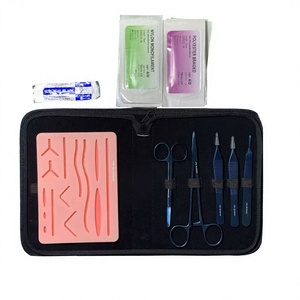
Orthopedic Kit Surgical Suture Kit Blue Titanium Coated Suture Kit Orthopedic Instrument

Surgical Suture Kit Titanium Coated Suture & Anchor System

Material: Titanium Alloy Anchor + Nonabsorbable Thread

Specialized orthopedic fixation kit integrated with titanium alloy suture anchors and high-strength nonabsorbable sutures for tendon-to-bone repair.

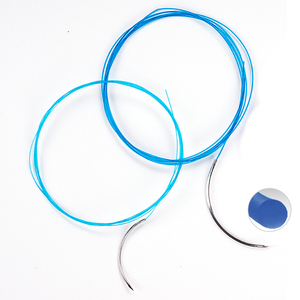
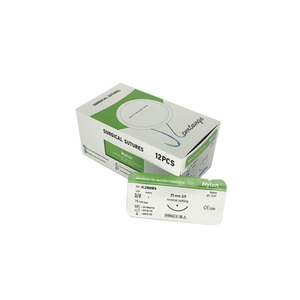
Medical Grade Medical Surgical Nylon Nonabsorbable Suture Materials

Surgical Nylon Non-absorbable Suture Materials with Needles

Material: Monofilament Polyamide | Color: Blue / Black

Non-capillary, smooth-surface monofilament sutures ensuring easy removal without tissue adhesion. Ideal for skin closure, plastics, and micro-vascular surgery.

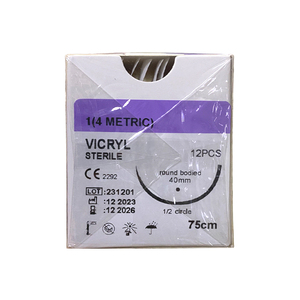
PGA & Nylon Range Medical Nylon & Polyglycolic Acid Violet PGA Surgical Suture

Medical Nylon Nonabsorbable & Polyglycolic Acid (PGA) Sutures

Material: Monofilament Nylon / Braided PGA

Comprehensive hospital clinical supply line offering both nonabsorbable monofilaments and polyglycolic acid bio-absorbable violet surgical threads.

CE Certified CE 90cm Nylon Monofilament 3-0 Blue Non Absorbable Sutures

CE Certified 90cm Nylon Monofilament 3-0 Blue Non-Absorbable Suture

Specification: 90cm Thread | 3-0 Blue | Minimal Reaction

Long-term tensile retention monofilament with ultra-sharp cutting needle. Formulated for cardiovascular and general tissue approximation under EU MDR protocols.

50+
Global Export Markets
120+
Needle Geometry Variants
SAL 10⁻⁶
EtO Sterilization Standard
100%
In-House Batch Traceability

Regulatory Compliance Commitment: All nonabsorbable suture products manufactured under our OEM/ODM programs comply fully with USP (United States Pharmacopeia) and EP (European Pharmacopoeia) standards. Technical files are maintained under ISO 13485:2016 and CE MDR 2017/745, backed by WHO-GMP audited cleanroom infrastructure.

Technical Engineering Whitepaper

Materials Science & Performance Dynamics of Nonabsorbable Sutures

An authoritative breakdown of polymer chemistry, mechanical tensile profiles, and tissue interaction dynamics for hospital procurement officers and OEM brand directors.

Nonabsorbable surgical sutures represent the cornerstone of critical tissue approximation where permanent structural support or prolonged tensile strength retention is non-negotiable. Unlike absorbable polymers (such as Polyglactin 910 or Polyglycolic Acid) that undergo hydrolytic degradation, nonabsorbable polymers maintain structural integrity indefinitely or degrade at extremely slow biological rates spanning years. For medical device distributors, hospital purchasing syndicates, and OEM brand owners, selecting the appropriate nonabsorbable suture material requires a rigorous analysis of polymer chemistry, surface friction coefficients, viscoelastic relaxation, and needle swage pull-out forces.

1. Polypropylene Monofilament (Netlene Series)

Polypropylene is an isotactic crystalline polymer synthesized from propylene monomer polymerization. In surgical applications, monofilament polypropylene exhibits remarkable biochemical inertness, rendering it virtually immune to enzymatic breakdown or tissue degradation. Key technical characteristics include:

  • Minimal Tissue Reaction: Due to its non-polar hydrocarbon backbone, polypropylene elicits negligible inflammatory response, making it the gold standard material for cardiovascular, vascular, and hernia repair procedures.
  • Controlled Elongation & Pliability: The polymer possesses an intrinsic dynamic stretch capability (typically 15% to 30% yield elongation), allowing the suture to accommodate postoperative tissue edema without cutting through delicate vascular walls or fascial structures.
  • Non-Capillarity: Being a solid monofilament strand, polypropylene prevents bacterial passage and biofilm formation along the suture track, significantly reducing surgical site infection (SSI) risks.

2. Polyamide / Nylon Monofilament & Braided (Netplast Series)

Surgical nylon sutures are constructed from long-chain aliphatic polymers (Polyamide 6 or Polyamide 6/6). While classified as nonabsorbable, nylon undergoes gradual progressive hydrolysis in vivo at an approximate rate of 15% to 20% tensile loss per year due to amide bond cleavage. Surgical utility highlights include:

  • Ultra-Smooth Surface Pass-Through: Monofilament nylon passes through dense dermal layers and delicate ophthalmic structures with minimal drag, preventing tissue trauma during skin subcuticular closure.
  • Elastic Memory & Handling: Nylon possesses a high level of physical memory. Advanced thermal stress-relieving during production enhances knot pliable seating, requiring proper surgeon knot-tying techniques (typically square knots with extra throws).
  • Microsurgical Precision: Available in micro-sizes down to USP 10/0 and 11/0 with laser-drilled 302 stainless steel needles for corneal transplantation and micro-neurovascular repair.

3. Black Braided Silk Sutures (Netsilk Series)

Braided silk is derived from natural organic protein fibers produced by the Bombyx mori silkworm. The raw silk filaments undergo degumming to remove natural sericin, followed by precision braiding and coating with medical-grade silicone or wax mixture.

  • Unmatched Tactile Handling: Silk provides superior hand-feel, knot security, and knot-sliding characteristics preferred by surgeons in oral/dental, mucosal, and general ligation operations.
  • Capillarity Reduction: Silicone coating encapsulating the braided micro-fibers seals inter-filament voids, drastically reducing fluid absorption and bacterial colonization.

4. Ultra-High Molecular Weight Polyethylene (UHMWPE) & Polyester

In high-load orthopedic applications such as rotator cuff repair, ACL reconstruction, and sternal closure, standard nonabsorbable polymers are superseded by UHMWPE woven construct fibers. With a molecular weight exceeding 3 to 6 million g/mol, UHMWPE braided structures exhibit tensile strengths up to 10 times higher than structural steel per unit weight, combining zero creep deformation with soft, non-abrasive tissue interaction.

Comparative Technical Matrix of Nonabsorbable Suture Materials

Material Family Structure / Construction In Vivo Tensile Retention Tissue Drag Coefficient USP Size Range Primary Clinical Indications
Polypropylene Monofilament (Blue / Clear) Permanent (0% loss over time) Extremely Low (0.08 - 0.12) 10/0 to 2 Cardiovascular, Vascular, Hernia Mesh Fixation
Polyamide (Nylon) Monofilament / Braided ≈80% at 1 Year (Slow Hydrolysis) Very Low (0.10 - 0.15) 11/0 to 2 Skin Subcuticular, Plastics, Ophthalmic, Micro-Vascular
Braided Silk Braided Protein (Silicone Coated) Gradual Loss (50% at 1 Year) Moderate (Silicone Modified) 9/0 to 3 Dental, Oral Surgery, Mucosa Approximation, Ligation
Polyester (PET) Braided (PTFE / Silicone Coated) Permanent (Indefinite Support) Low to Moderate 6/0 to 5 Valve Replacement, Orthopedics, Tendon Repair
UHMWPE Woven Ultra-High Strand Braid Permanent (Zero Creep Loss) Low (Soft Weave) 2-0 to 5 Sports Medicine, Joint Reconstruction, Suture Anchors
Strategic Market Intelligence

Future Procurement & Product Development Trends

Anticipating regulatory shifts, technology integration, and global supply chain re-engineering for medical device procurement directors.

1. High-Strength Fiber Dominance

Orthopedic and sports medicine procedures are rapidly shifting from conventional polyester (PET) sutures to UHMWPE and hybrid UHMWPE/polyester composite braids. Procurement departments are prioritizing suppliers capable of extruding high-tenacity fibers that prevent suture cutting through bone anchors.

2. Antibacterial Coating Integration

Hospital-acquired infections (HAIs) drive stringent surgical site infection protocol demands. The market is experiencing accelerated demand for nonabsorbable monofilaments coated with non-leaching antimicrobial agents (such as Chlorhexidine, Silver-ion matrices, or Triclosan) to suppress bacterial adhesion.

3. Precision Laser-Drilled Needles

Conventional channel-swaged needles are being replaced by 300-series stainless steel needles featuring laser-drilled insertion holes. This technology achieves a 1:1 needle-to-thread ratio, drastically reducing tissue tearing and bleeding at the puncture site during vascular anastomosis.

4. Strict EU MDR & UDI Compliance

Regulatory barriers are heightening globally. Public tenders in Europe, Latin America, and the Middle East require comprehensive Clinical Evaluation Reports (CER), GS1 DataMatrix Unique Device Identification (UDI), and full material biocompatibility dossier alignment (ISO 10993 series).

5. Eco-Conscious EO Sterilization

Modern OEM manufacturers are adopting optimized Ethylene Oxide (EtO) cycles with low gas concentration profiles and extended aeration cells. This ensures residual EtO levels well below ISO 10993-7 thresholds while fulfilling global ESG sustainability imperatives.

Enterprise Advantage

Why Global Healthcare Brands Partner With Our OEM Platform

From raw polymer extrusion to sterile primary foil sealing, our single-site production facility delivers end-to-end quality assurance.

Single-Site Integrated Production

Extrusion, precision braiding, silicone coating, automatic needle attachment, EtO sterilization, and packaging operate under one centralized ISO Class 7 cleanroom facility. Zero sub-contracting guarantees 100% batch integrity.

Turnkey Registration Dossiers

We supply complete technical documentation with every private-label order: Declaration of Conformity, CE & ISO Certificates, Free Sale Certificate (FSC), Certificate of Analysis (CoA), and biocompatibility validation packs.

Custom Branding & Private Label

Full OEM customization across aluminum foil primary pouches, outer boxes, inner dispenser trays, multi-language Instructions for Use (IFU), and customer-specific GS1-128/DataMatrix barcodes.

Procurement Knowledge Base

Frequently Asked Questions (FAQ) for B2B Buyers

Detailed technical and commercial answers regarding suture procurement, regulatory registration, OEM logistics, and quality assurance protocols.

What nonabsorbable suture materials do you manufacture under OEM/ODM contracts?
We manufacture a complete range of nonabsorbable sutures, including Monofilament Polypropylene (Netlene), Monofilament and Braided Nylon/Polyamide (Netplast), Braided Black Silk with silicone coating (Netsilk), Braided Polyester (Netbond), Ultra-High Molecular Weight Polyethylene (UHMWPE woven sutures), and specialized PTFE monofilaments. All products are available with customizable needle geometries and thread lengths ranging from 45cm to 150cm.
What international quality management certifications govern your manufacturing plant?
Our manufacturing facility operates under strict compliance with ISO 13485:2016 (Medical Devices Quality Management System), ISO 9001:2015, WHO-GMP (Good Manufacturing Practices), and European CE MDR 2017/745 standards. Our products are routine-tested according to USP and EP monographs for tensile strength, needle attachment security, and sterility.
How do you validate the sterilization process and determine shelf life?
All sutures undergo ethylene oxide (EtO) sterilization validated according to ISO 11135, achieving a certified Sterility Assurance Level (SAL) of 10⁻⁶. Residual EtO and Ethylene Chlorohydrin (ECH) levels are tested via gas chromatography in compliance with ISO 10993-7. Accelerated and real-time stability testing supports a validated 5-year shelf life when stored under recommended conditions below 25°C.
Can you configure custom needle-and-thread combinations for government tenders?
Yes. We maintain a needle library featuring over 120 needle geometries constructed from 300-series surgical stainless steel (including 302, 304, and 455 alloy variants). Curvatures include 1/4, 3/8, 1/2, and 5/8 circle, with point styles encompassing Taper Point, Reverse Cutting, Conventional Cutting, Diamond/Precision Point, Blunt Point, and Micro-point geometries. Double-armed configurations and custom thread lengths are routinely provided for specialized hospital tenders.
What documentation is supplied for health authority product registration?
For distributor market registration, our regulatory team provides a complete Technical Dossier. This includes the Declaration of Conformity (DoC), CE Certificate, ISO 13485 Certificate, Free Sale Certificate (FSC) issued by competent government authorities, Certificate of Analysis (CoA) per production lot, ISO 10993 biocompatibility test reports, EtO sterilization validation summaries, and print-ready multi-language artwork templates.
What are your standard minimum order quantities (MOQ) and production lead times?
For standard catalog items under our brand, order dispatch typically takes 2 to 4 weeks. For private-label (OEM) programs, initial orders require 5 to 7 weeks to allow for packaging proofing, printing plate generation, and custom UDI setup. Repeat OEM orders are processed within 3 to 4 weeks. Flexible minimum order quantities (MOQ) are structured per USP size family to accommodate regional market launches.
How is batch traceability maintained across the supply chain?
Every box of finished sutures bears a unique Batch Lot Number linked directly to our internal ERP system. This batch record tracks the raw polymer resin lot, thread extrusion/braiding parameters, needle wire batch, swage pull-out test records, cleanroom packaging shift logs, and EtO sterilizer chamber graph data. Records are securely archived for 11 years to support post-market surveillance (PMS).

Partner with a Documented Suture Manufacturer

Request technical dossiers, factory audits, or private-label price quotations from our dedicated global export engineering desk.