Polyglycolic Acid (PGA) Polymer Architecture & Hydrolytic Degradation Kinetics
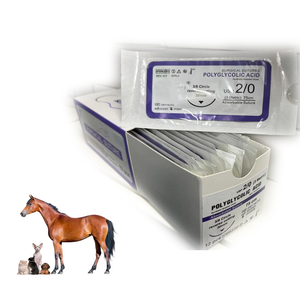
Polyglycolic Acid (PGA) represents the foundational standard for synthetic bioabsorbable polymer sutures. Synthesized via the ring-opening polymerization of glycolide, PGA exhibits a highly crystalline structure (45% to 55%) with a high melting point ($225^\circ\text{C} - 230^\circ\text{C}$) and excellent tensile strength properties. As an OEM/ODM supplier serving international healthcare markets, our manufacturing process maintains stringent control over polymer intrinsic viscosity (IV) and molecular weight distribution to ensure predictable in-vivo behavior.
Information Gain Insight: Unlike chromic catgut which relies on enzymatic digestion (often causing unpredictable tissue reactions and variable absorption rates), PGA undergoes predictable, non-enzymatic hydrolytic degradation via cleavage of its ester backbone. The breakdown product, glycolic acid, is non-toxic and naturally metabolized via the Krebs cycle into carbon dioxide ($CO_2$) and water ($H_2O$).
In-Vivo Tensile Retention & Absorption Profiles
Precision control during yarn extrusion, braiding, and annealing yields a suture braid with minimal tissue drag and superior knot-holding capacity. Contract buyers must evaluate tensile degradation charts to align product offerings with surgical requirements:
| Days Post-Implantation |
Tensile Strength Retention (%) |
Clinical Application Alignment |
| 7 Days |
85% – 90% |
Initial wound adaptation & high stress closure |
| 14 Days |
65% – 75% |
Critical fascial & soft tissue approximation |
| 21 Days |
40% – 50% |
Subcuticular & gastrointestinal healing support |
| 28 Days |
15% – 25% |
Transition phase to full hydrolytic breakdown |
| 60 – 90 Days |
0% (Complete Mass Absorption) |
Full tissue remodeling with zero residual foreign body mass |
To overcome the inherent stiffness of dense polyglycolic acid fibers, our state-of-the-art cleanroom braiding lines coat the PGA thread matrix with a proprietary ratio of Polycaprolactone and Calcium Stearate (PCL/CS). This micro-thin lubricant layer drastically reduces tissue drag coefficients, prevents saw-tooth tissue trauma, and facilitates precise knot slide-down without compromising knot security.
Custom OEM/ODM Manufacturing Capabilities for Hospital Brands & Distributors
As a specialized OEM/ODM contract manufacturer based in Bengaluru, India operating under ISO 13485:2016 and CE / EU MDR standards, we provide turnkey solution manufacturing for global medical device brands, private labels, and tender suppliers. Every parameter of the suture assembly can be customized to exact distributor specifications.
Thread Geometry & USP Sizes
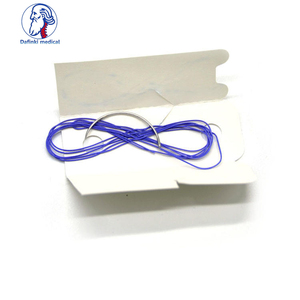
Configurable from ultra-fine USP 8-0 (micro-surgery and ophthalmic) up to heavy-duty USP 2 (orthopedics and abdominal wall closure). Available in D&C Violet No. 2 dyed or undyed natural beige options.
Needle Craftsmanship & Alloys
Over 120 needle geometries manufactured from premium AISI 302, 304, or 420-grade surgical stainless steel. Curvatures include 1/2 circle, 3/8 circle, 1/4 circle, 5/8 circle, and straight needles with taper-point, reverse-cutting, micro-spatula, or diamond-cut points.
Primary Foil & Packaging
Hermetically sealed in ultra-pure medical-grade aluminum foil blisters filled with inert nitrogen gas to maintain moisture levels below 0.05% RH. Prevents premature degradation during long-term storage across diverse climate zones.
Needle Attachment Integrity (USP Monograph <871>)
Needle-to-thread attachment represents a critical safety point in surgical wound closure. Our automated laser-drilled needle swaging machinery performs micro-calibration on every production batch. Pull-out tests are conducted to ensure swage retention force exceeds USP and European Pharmacopoeia (EP) normative thresholds by at least 20%, eliminating needle un-swaging risks during deep fascial tensioning.
Future Trends in Bioabsorbable Suture Sourcing & Manufacturing (2025–2035)
Procurement teams in the medical device sector face evolving regulatory demands, shifting sustainability requirements, and technological upgrades. When sourcing PGA sutures, contract managers should prepare for the following industry trends:
1. Shift toward Antimicrobial & Bioactive Coatings
Surgical site infections (SSIs) cost healthcare systems billions annually. The market demand for antibacterial-coated PGA sutures—incorporating Chlorhexidine or non-antibiotic peptide coatings as alternatives to traditional Triclosan—is expanding rapidly across European and North American hospital tenders. OEM/ODM buyers are increasingly requiring contract facilities to offer validated antimicrobial dipping lines.
2. Stringent EU MDR 2017/745 Technical File Compliance
The transition from the legacy MDD to EU MDR has elevated absorbable implants to Class III medical devices requiring comprehensive Clinical Evaluation Reports (CER), Post-Market Clinical Follow-up (PMCF) protocols, and total substance disclosure (e.g., CMR substances and endocrine disruptors). Modern PGA suture suppliers must provide full technical documentation to shorten distributor registration cycles.
3. Automated Cleanroom Packaging & UDI Traceability
Global health authorities (US FDA, EU EUDAMED, NMPA) now mandate Unique Device Identification (UDI) GS1 DataMatrix barcodes printed directly onto individual sterile primary foils and outer boxes. Modern manufacturing lines integrate high-resolution inline thermal transfer printing to guarantee lot-level data capture from resin pellets to final surgical trays.
Single-Site Manufacturing Infrastructure & Quality Management Systems
Suture Planet operates a fully integrated, single-site manufacturing plant in Bengaluru, Karnataka, India. By concentrating synthetic extrusion, precision micro-braiding, PCL coating, automated needle swaging, primary packaging, ethylene oxide (EO) sterilization, and analytical laboratory release within one campus, we provide end-to-end audit transparency.
E-E-A-T Guarantee: Every production batch of PGA sutures is issued a comprehensive Certificate of Analysis (CoA) referencing USP monograph testing, sterility assurance validation (SAL $10^{-6}$), EO residual analysis per ISO 10993-7 (ethylene oxide residue < 10 ppm, ethylene chlorohydrin < 9 ppm), and pyrogen-free endotoxin testing (< 0.25 EU/mL).
Regulatory Documentation Supplied with Private-Label Orders
- ISO 13485:2016 Certification: Audited medical device quality management system for design, manufacture, and global distribution.
- CE MDR Technical Files: Full General Safety and Performance Requirements (GSPR) documentation and Declaration of Conformity.
- Free Sale Certificate (FSC) & WHO-GMP: Official government documentation supporting rapid drug and device registration in Asia-Pacific, Latin America, Africa, and the Middle East.
- Biocompatibility Dossier: Complete ISO 10993 testing series including cytotoxicity, systemic toxicity, sensitization, intracutaneous reactivity, and muscle implantation studies.
Frequently Asked Questions (FAQ) for B2B Suture Sourcing
Common questions from regulatory specialists, medical device importers, OEM brand managers, and hospital procurement departments.
What are the typical Minimum Order Quantities (MOQs) for custom OEM PGA sutures?
Standard catalog codes maintain low initial trial thresholds (typically 50–100 boxes per SKU). Private-label OEM packaging programs requiring custom printed aluminum foils, branded box artwork, and multi-language IFUs usually require a minimum order volume of 1,000 to 3,000 boxes per specification run, with plate charges waived on repeat annual contracts.
How are shelf life and sterility verified for export orders?
Our PGA sutures undergo validated Ethylene Oxide (EO) sterilization cycles reaching a minimum Sterility Assurance Level (SAL) of 10-6. Shelf-life stability is established via real-time and accelerated thermal aging studies (storing products at 45°C/75% RH to simulate 5-year stability). Products carry a 5-year expiration guarantee when stored under recommended conditions below 25°C.
What is the difference between Polyglycolic Acid (PGA) and Polyglactin 910 (PGLA)?
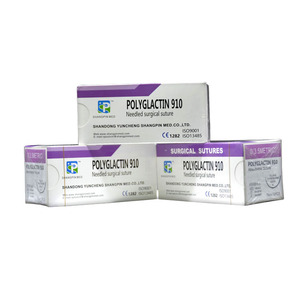
PGA is composed of 100% polyglycolic acid homo-polymer fibers, offering slightly higher initial tensile strength. Polyglactin 910 (PGLA) is a copolymer comprised of 90% glycolide and 10% L-lactide. Both materials exhibit similar degradation timelines, but PGLA offers slightly modified mass absorption rates. We manufacture both PGA and PGLA lines under OEM private label.
Can you assist with local Ministry of Health registration dossiers?
Yes. Our regulatory affairs department provides ready-to-submit technical registration dossiers (STED / CSDT formats) including Certificates of Free Sale (CFS), legalised certificates, physical test reports, artwork templates, and clinical evaluation summaries tailored for health authorities across Latin America, Southeast Asia, Africa, and the Middle East.
What lead times should we expect for OEM contract orders?
Standard catalogue codes ship within 2 to 4 weeks. First-time private-label programs typically require 5 to 7 weeks to complete custom artwork sign-off, packaging printing plate setup, EO cycle scheduling, and batch release testing. Repeat OEM orders process rapidly within 3 to 4 weeks under rolling forecast agreements.
 Suture PlanetSurgical Wound Closure