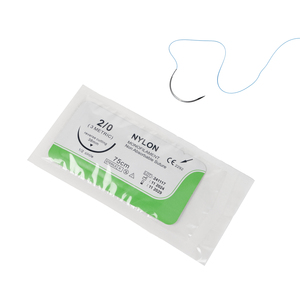
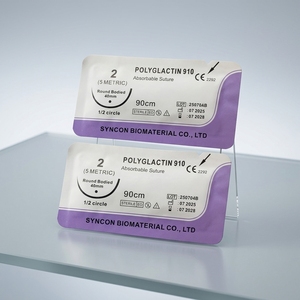
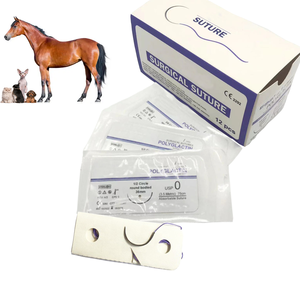
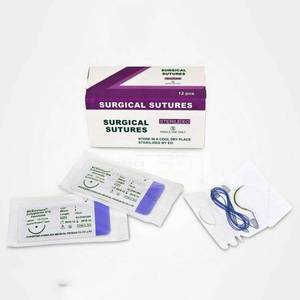
Featured OEM/ODM Surgical Suture Catalog
High-precision absorbable & non-absorbable wound closure devices manufactured under cleanroom environments with full USP monograph compliance and custom contract packaging.
Enterprise OEM/ODM Infrastructure & Technical Capabilities
Directly integrated manufacturing eliminates intermediary quality risks. From raw polymer extrusion to cleanroom foil sealing and ethylene oxide sterilization, our single-site ecosystem guarantees batch-level traceability.
Integrated Polymer Processing
In-house extrusion, precision micro-braiding, and proprietary polycaprolate/calcium stearate surface coating ensure zero strand fraying and predictable smooth knot sliding.
ISO 13485 & CE EU MDR 2017/745
Full compliance with international medical device regulations. Technical Documentation Dossiers (STED), GSPR checklists, and clinical evaluation summaries prepared for instant registration.
Automated Laser Swaging
State-of-the-art laser drilling and automated needle swaging ensure consistent pull-out forces exceeding USP and European Pharmacopoeia (EP) monograph thresholds.
Full Technical File Dossiers
Complete regulatory support including Free Sale Certificates (FSC), Certificates of Analysis (CoA), ISO 10993 biocompatibility testing, and EtO sterilizer validation logs.
Validated EtO Sterilization
In-house industrial Ethylene Oxide gas sterilization chamber cycles calibrated to achieve an absolute Sterility Assurance Level (SAL) of 10⁻⁶ with low residual EO limits.
Private Label & Packaging
Comprehensive contract manufacturing: aluminum primary foil sealing, inner tray designs, multi-language medical paper outer cartons, and 2D GS1 DataMatrix printing.
Executive B2B Guide: Polyglactin 910 Polymer Chemistry & Mechanical Dynamics
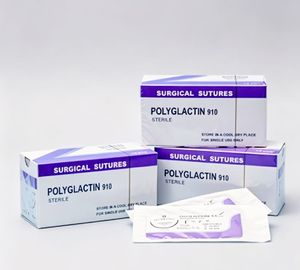
Polyglactin 910 (commonly identified as PGLA 910) represents the gold standard in synthetic absorbable surgical wound closure. Composed of a copolymer synthesized from 90% glycolide and 10% L-lactide, this material achieves an exceptional balance between high initial tensile strength, tissue-friendly bio-inertness, and predictable hydrolytic breakdown. For medical device distributors, tender agents, and brand owners seeking high-yield OEM/ODM factory partnerships, understanding the chemical and mechanical parameters of Polyglactin 910 is essential for competitive positioning.
1. Degradation Kinetics & Hydrolytic Degradation Profile
Unlike traditional chromic or plain catgut sutures which break down via unpredictable enzymatic digestion (often causing pronounced local tissue reactivity and variable absorption rates), Polyglactin 910 degrades purely through non-enzymatic bulk hydrolysis. Water molecules within body tissue penetrate the amorphous regions of the polymer matrix, systematically cleaving the ester linkages in the copolymer chain into glycolic acid and lactic acid metabolites.
- Initial Tensile Strength: Exceptional knot-pull tensile strength exceeding USP requirements by up to 35-50%, minimizing intraoperative breakage during high-tension fascial closure.
- 14-Day Tensile Strength Retention: Approximately 75% of original breaking strength is retained, ensuring robust wound support during the critical early healing phase.
- 21-Day Tensile Strength Retention: Maintains approximately 50% of initial breaking strength, providing extended support for slow-healing tissue beds.
- 28-Day Tensile Strength Retention: Retains approximately 25% breaking strength.
- Complete Absorption Mass Duration: Complete absorption of the polymer mass is accomplished via macrophage phagocytosis within 56 to 70 days, leaving negligible cellular debris.
2. Surface Coating Engineering: Polycaprolate & Calcium Stearate
Uncoated braided sutures often suffer from a high friction coefficient ("sawing effect" or tissue drag) which can cut delicate parenchymal tissue during placement. To solve this, our advanced OEM manufacturing facility applies a specialized synthetic coating mixture of Polycaprolate (copolymer of glycolide and epsilon-caprolactone) and Calcium Stearate. This non-absorbable coating layer adheres tightly to the braided filaments without flaking off under mechanical tension.
The biological and mechanical benefits of this proprietary coating process include:
- Atraumatic Passage: Dramatically reduced surface roughness permits smooth, effortless passage through dense soft tissues, liver parenchyma, and subcutaneous layers.
- Precise Knot Placement: Allows surgeons to slide knots down smoothly into precise anatomic position without premature lock-up or friction-induced knot chatter.
- Superior Knot Security: Once the knot is fully throw-tightened, the micro-braided structure locks securely, avoiding slippage even under dynamic tissue expansion.
Future Procurement Trends in Surgical Sutures (2025–2030)
The global market for surgical wound closure devices is undergoing a structural paradigm shift driven by stringent regulatory overhauls, shifting healthcare economics, and material innovation. Procurement executives and healthcare brand importers must align their global sourcing strategies with the following key industry developments:
A. EU MDR 2017/745 Regulatory Rigor & Vendor Consolidation
The transition from the legacy Medical Device Directive (MDD) to the European Union Medical Device Regulation (EU MDR 2017/745) has elevated regulatory compliance barriers worldwide. Uncertified, small-scale factories lacking comprehensive clinical data, PMS (Post-Market Surveillance) systems, and validated sterilizer logs are rapidly being excluded from international tenders. Forward-thinking OEM buyers are consolidating their vendor bases with audited factories operating certified ISO 13485 quality management systems and comprehensive STED technical files.
B. Antimicrobial Integration (Triclosan-Coated PGLA)
Surgical Site Infections (SSIs) cost hospital networks billions annually. Global health authorities, including the World Health Organization (WHO) and the Centers for Disease Control and Prevention (CDC), explicitly recommend the use of antimicrobial-coated absorbable sutures in surgical procedures to mitigate SSI risks. Modern OEM factories are expanding PGLA manufacturing lines to incorporate Triclosan (an effective broad-spectrum antibacterial agent), creating a zone of inhibition around the suture line to suppress bacterial colonization by *Staphylococcus aureus* and *Staphylococcus epidermidis*.
C. Knotless Barbed Suture Formats
Operating room efficiency and reduced surgical time are driving rapid adoption of unidirectional and bidirectional barbed knotless sutures. By machining micro-barbs directly into the monofilament core (such as Polydioxanone or Polyglactin derivatives), barbed sutures distribute tensile loads evenly along the wound line without requiring knot tying. This evolution decreases surgical closure times by 30-50% in laparoscopic, robotic, and gynecological procedures.
D. Supply Chain Resilience & Single-Site Quality Assurance
Global healthcare procurement managers are actively mitigating geopolitical and logistics risks by partnering with fully integrated suppliers. Subcontracted supply chains—where polymer extrusion occurs at facility A, needle swaging at facility B, and sterilization at facility C—introduce unacceptably high risks of batch contamination, documentation loss, and lead-time volatility. Single-site integrated facilities in established medical device hubs guarantee absolute chain-of-custody control.
Absorbable Surgical Suture Material Comparison Matrix
The technical reference table below provides procurement managers with essential mechanical properties, bio-absorption timelines, and recommended clinical applications across major absorbable polymer classifications:
| Material / Copolymer |
Strand Structure |
Initial Tensile Support |
50% Strength Retention |
Mass Absorption |
Primary Clinical Indications |
| Polyglactin 910 (PGLA 910) |
Braided & Coated |
Very High |
21 Days |
56 – 70 Days |
General Soft Tissue, OB/GYN, Gastrointestinal, Ophthalmic |
| PGLA Rapid (Fast Absorbable) |
Braided & Coated (Irradiated) |
Moderate |
5 – 7 Days |
42 – 45 Days |
Subcuticular Skin Closure, Episiotomy, Dental Oral Mucosa |
| Polyglycolic Acid (PGA) |
Braided & Coated |
High |
14 – 18 Days |
60 – 90 Days |
General Ligation, Urological, Orthopedic Muscle Repair |
| Poliglecaprone 25 (PGCL) |
Monofilament |
High (Low Friction) |
7 – 14 Days |
90 – 120 Days |
Cosmetics, Plastic Surgery, Subcuticular Closure |
| Polydioxanone (PDO / PDS) |
Monofilament |
Extremely High |
28 – 30 Days |
180 – 210 Days |
Fascia Closure, Abdominal Wall, Pediatric Cardiovascular |
| Chromic Catgut |
Twisted Natural Collagen |
Variable |
14 – 21 Days |
90 Days (Enzymatic) |
Veterinary Medicine, Fast Healing Mucosal Tissue |
Frequently Asked Questions (FAQ) for OEM Buyers
Clear, direct answers regarding custom manufacturing, regulatory registrations, batch traceability, and private label ordering workflows.
What full product portfolio does your OEM/ODM factory manufacture?
Our plant specializes in a comprehensive wound closure product spectrum: Synthetic Absorbable Sutures (Polyglactin 910, Polyglycolic Acid PGA, Poliglecaprone 25, Polydioxanone PDO), Natural Absorbable Sutures (Chromic & Plain Catgut), Non-Absorbable Sutures (Polypropylene, Nylon/Polyamide, Black Braided Silk, Polyester, UHMWPE, PTFE), Barbed Knotless Sutures, Antibacterial Sutures, Polypropylene Hernia Mesh, Disposable Skin Staplers, Absorbable Hemostats (Oxidized Regenerated Cellulose), Bone Wax, and Surgical Ligation Clips.
Where is your manufacturing plant located and how is quality chain-of-custody maintained?
All manufacturing operations are centralized within our high-tech facility in Bengaluru, Karnataka, India. Polymer extrusion, precision braiding, chemical coating, automated laser needle swaging, primary cleanroom foil packing, Ethylene Oxide sterilization, and secondary packaging are performed under one roof. Every batch is traceable from raw polymer lot numbers down to individual sterilizer chart logs and final USP pull-out test records.
What technical documentation is provided to support international product registration?
We provide complete, turn-key technical registration files for Ministry of Health (MoH) submissions. Registration packs include: ISO 13485:2016 Certificate, CE Certificate / Declaration of Conformity under EU MDR 2017/745, Free Sale Certificate (FSC), Certificate of Analysis (CoA), ISO 10993 Biocompatibility Validation Data (cytotoxicity, sensitization, irritation), Sterilization Validation Reports (ISO 11135), and multilingual Instructions for Use (IFU).
Can we customize needle dimensions, thread lengths, and packaging graphics?
Yes. Our contract manufacturing team supports total customization. You can configure thread USP size (from 10-0 up to 2), thread lengths (from 45cm to 150cm pre-cut or non-needled spools), needle alloys (AISI 300 or 400 series stainless steel), needle shapes (1/4, 3/8, 1/2, 5/8 circle or straight), point geometries (taper point, reverse cutting, tapercut, micro-point spatulated), foil branding, outer box graphics, and 2D GS1 UDI barcodes.
What are the standard lead times for OEM private label orders?
Standard catalog inventory orders ship within 2 to 4 weeks. First-time private label OEM orders typically require 5 to 7 weeks for custom printing plate creation, packaging box die-cutting setup, artwork verification, and sterilizer validation. Repeat OEM orders are executed on expedited 3 to 4 week cycles with buffer safety stocks maintained upon request.
How are suture sterility and shelf-life validated?
Sutures are hermetically sealed inside high-barrier aluminum foil primary packs enclosed within secondary peelable medical pouch packaging. Sterilization is conducted via validated Ethylene Oxide gas cycles achieving a Sterility Assurance Level (SAL) of 10⁻⁶ in accordance with ISO 11135. Accelerated and real-time stability testing supports a certified 5-year shelf-life when stored under recommended ambient conditions.
What are the key clinical selection parameters for PGLA 910 vs. PDO sutures?
Polyglactin 910 (PGLA 910) is recommended for tissue requiring short-to-medium tension support (14-21 days) with fast hydrolytic mass absorption (56-70 days), such as gastrointestinal anastomosis, gynecological suturing, and subcutaneous soft tissue closure. Polydioxanone (PDO) monofilament is selected for tissues requiring extended wound support up to 6 weeks, such as fascial abdominal wall closure, pediatric cardiovascular procedures, and orthopedic tissue repair.
 Suture PlanetSurgical Wound Closure