What material formulations are available for absorbable and non-absorbable surgical sutures?
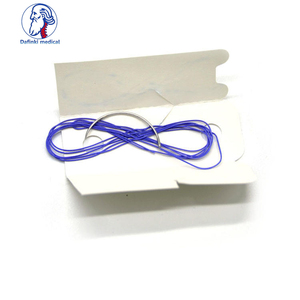
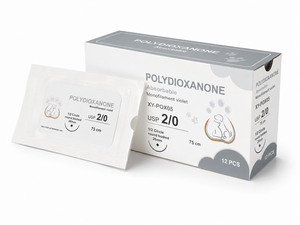
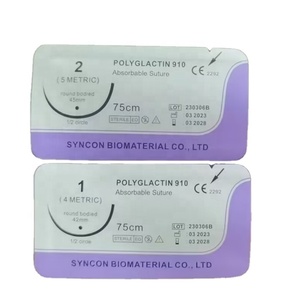
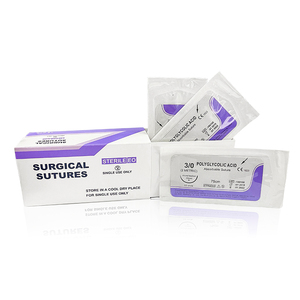
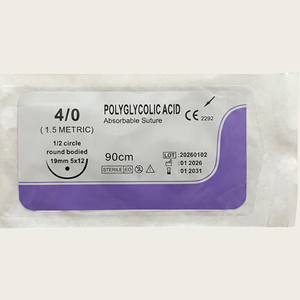
Our surgical product portfolio includes absorbable materials such as Polyglactin 910 (PGLA), Polyglycolic Acid (PGA), Poliglecaprone 25 (PGCL), Polydioxanone (PDO/PDS), and Chromic/Plain Catgut. Non-absorbable lines include Polypropylene monofilament, Polyamide/Nylon, Black Braided Silk, Ultra-High Molecular Weight Polyethylene (UHMWPE), and Polyester braids.
How is single-site batch traceability maintained throughout the production cycle?
Every finished box carries a unique batch number that maps directly back to the raw polymer extrusion lot, needle wire heat-treatment batch, coating formulation log, swage pull-out test data, and validated Ethylene Oxide (EO) sterilisation cycle report. Documentation is archived for 11 years to support post-market audit requirements.
What documentation is provided to support national Ministry of Health registrations?
We provide full technical dossiers containing the ISO 13485:2016 Certificate, CE / EU MDR Declaration of Conformity, WHO-GMP Certificate, Free Sale Certificate (FSC), Certificate of Analysis (CoA), packaging artwork, multi-language IFUs, and ISO 10993 biocompatibility testing reports (cytotoxicity, irritation, systemic toxicity).
Can products be customized for private label and distributor brands?
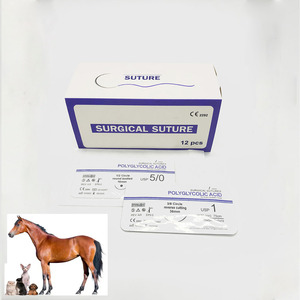
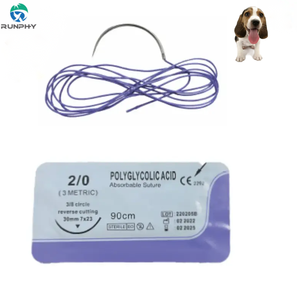
Yes. We offer end-to-end OEM and private-label manufacturing services. Customers can specify exact thread lengths (45cm to 150cm), USP sizes (8-0 through 2), needle geometries (1/4, 3/8, 1/2, 5/8 circle taper cutting, reverse cutting, spatula), primary foil branding, box printing, UDI barcodes, and custom IFUs.
What are the standard lead times for catalogue versus private-label OEM orders?
Standard catalogue orders typically ship within 2 to 4 weeks. First-time private-label orders require 5 to 7 weeks to finalize artwork, print tooling, and box production. Repeat OEM batches follow shortened turnaround schedules due to pre-approved plates on file.
How is product sterility and long-term shelf life validated?
Sutures are hermetically sealed in heavy-duty aluminum foil inner packs housed in peelable medical envelopes. Products undergo Ethylene Oxide gas sterilisation validated to a Sterility Assurance Level (SAL) of 10⁻⁶. Accelerated and real-time stability studies validate a 5-year shelf life when stored under recommended conditions (<25°C).
 Suture PlanetSurgical Wound Closure