Executive Whitepaper: The Global Surgical Ligation Clips Market Ecosystem
Surgical ligation clips represent an indispensable cornerstone of modern minimally invasive surgery (MIS), laparoscopic interventions, and cardiovascular operations. As operating rooms worldwide transition from traditional suture-based vessel ties toward rapid mechanical hemostasis, the demand for high-grade polymer and titanium ligation clips has surged exponentially. Hospital procurement teams, OEM brand managers, and government tender agencies face a complex landscape defined by stringent regulatory hurdles, strict biocompatibility standards (ISO 10993 series), and evolving material science innovations.
This industry whitepaper evaluates the top 10 ligation clips suppliers and exporters worldwide, analyzing technical specifications, manufacturing processes, clinical security profiles, and global supply chain reliability. By highlighting essential key performance indicators—such as vessel occlusive pressure resistance, radiolucency, tactile locking feedback, and clip-applier jaw retention—this document serves as an authoritative procurement reference for hospital supply chain directors and medical device importers.
Information Gain Insight: The critical evolutionary metric in modern ligation clips is the transition from malleable metal clips (Titanium Grade 1) to non-absorbable radiolucent polymers (such as Poly-PBT or Polyetheretherketone derivatives). Polymer clips eliminate artifacts during post-operative CT and MRI diagnostic imaging while incorporating active latching mechanisms that prevent axial slippage along tissue structures.
Market Dynamics & Material Engineering: Polymer vs. Titanium Clips
Selecting the optimal ligation system requires a thorough technical understanding of material composition and structural mechanics. Modern surgical suites rely on two primary clip categories:
1. Non-Absorbable Polymer Ligation Clips (Hem-o-Lok Type)
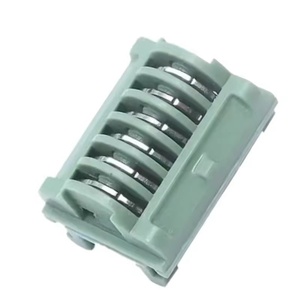
Polymer clips are fabricated from advanced bio-inert plastic materials. Their structural design features a flexible hinge joint, a distal locking latch, and integrated teeth along the inner surface. Key technical attributes include:
- Radiolucency: Zero distortion on post-operative X-ray, Computed Tomography (CT), or Magnetic Resonance Imaging (MRI) scans.
- Tactile Latching: Surgeons feel and hear an audible "click" confirming positive clip closure over vessel lumens ranging from 2 mm to 16 mm.
- Vessel Security: Bosses on the clip legs prevent lateral slipping off the tissue pedicle, even during high intra-arterial pressure spikes.
2. Titanium Surgical Ligating Clips (LT Series & Small/Medium/Large)
Titanium clips remain the worldwide workhorse for general open surgery and standard laparoscopic procedures. Crafted from ultra-pure Annealed Titanium (Grade 1), these clips offer:
- Malleability & Zero Memory: Deformation occurs smoothly inside the applier jaw without rebound elasticity.
- Heart-Shaped & Chevron Grooving: Cross-hatched internal grooves grip vascular adventitia tightly, distributing occlusive forces evenly.
- Cost Efficiency: Ideal for high-volume public tenders and standardized surgical settings where radiolucency is not strict.
Comprehensive Evaluation: Top 10 Ligation Clips Suppliers & Exporters
Below is an in-depth analysis of the leading manufacturers and exporters currently shaping the global surgical ligation market.
Headquarters: USA
Primary Product: Hem-o-lok® Polymer Ligation System
Certifications: US FDA 510(k), CE MDR, ISO 13485
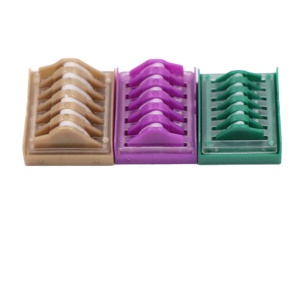
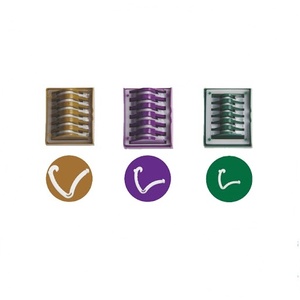
Teleflex remains the original innovator of the polymer ligation clip segment. The Hem-o-lok system is recognized globally for its distinctive color-coded sizing (Medium, Medium-Large, Large, Extra-Large) and high mechanical retention. While offering pristine clinical performance, Teleflex products occupy the highest price tier, leading many healthcare systems to seek ISO-certified OEM alternatives for tender fulfillment.
Headquarters: Bengaluru, India
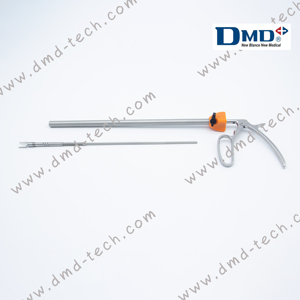
Primary Product: Titanium LT300 Clips, Polymer Hemoloks & Appliers
Certifications: ISO 13485:2016, CE / EU MDR 2017/745, WHO-GMP
Suture Planet (3R Medical) has established itself as an premier single-site manufacturer of wound closure and vascular ligation products. Operating cleanrooms compliant with ISO Class 7/8 standards, Suture Planet produces full lines of titanium hemoclips, polymer ligature clips, and endoscopic appliers exported to 50+ countries. With comprehensive technical documentation, batch-level raw material traceability, and robust OEM/private-label capabilities, Suture Planet provides an unmatched balance of clinical security and competitive export pricing.
Headquarters: USA
Primary Product: Ligaclip® Titanium Clips & Endosurg Clips
Certifications: US FDA, CE MDR, PMDA Japan
Ethicon’s Ligaclip® line has served operating rooms for decades. Known for proprietary mechanical feeding systems in automatic multi-fire clip appliers, Ethicon sets benchmarks for clip delivery. However, high single-use cartridge costs have prompted hospital procurement boards to integrate manual reloadable titanium systems alongside Ethicon lines to optimize budgetary expenditure.
Headquarters: Ireland / USA
Primary Product: Endo Clip™ & Surgiclip™ Automatic Systems
Certifications: US FDA, CE MDR, ISO 13485
Medtronic offers an extensive catalog of automated laparoscopic clip appliers under the Covidien legacy umbrella. Featuring rotating shaft assemblies and multi-clip storage mechanisms, Medtronic systems excel in high-speed minimally invasive procedures, though distributor margins remain tightly controlled by corporate supply contracts.
Headquarters: Germany
Primary Product: Challenger® Pneumatic & Titanium Clip Systems
Certifications: CE MDR 2017/745, ISO 13485, TÜV SÜD
B. Braun Aesculap is synonymous with German surgical instrument engineering. The Challenger® reusable pneumatic clip applier and premium titanium clip line offer exceptional ergonomic stability. German manufacturing ensures strict metallurgical purity, making them a preferred supplier across European hospital networks.
Headquarters: United Kingdom / Poland
Primary Product: LigaV.1® Polymer & Click'a V® Systems
Certifications: CE Mark, ISO 13485
Grena Ltd focus heavily on laparoscopic ligation systems, manufacturing the Click'a V® polymer clip featuring an angled latch structure. Grena supplies international markets through localized surgical distributors, offering viable alternatives to primary multi-national conglomerates.
Headquarters: USA
Primary Product: Horizon™ Titanium Clip System
Certifications: US FDA, CE Mark, ISO 13485
Microline Surgical specializes in reusable handpieces paired with disposable titanium clip cartridges (Horizon™ system). This hybrid eco-friendly approach reduces clinical waste and per-case cost, earning strong adoption in cost-conscious surgical facilities.
Headquarters: France
Primary Product: Clips-Vital Titanium & Hemostatic Devices
Certifications: CE MDR, ISO 13485
Peters Surgical is a prominent European provider of surgical sutures, temporary vascular clamps, and permanent ligation clips. Their titanium lines are widely specified in Francophone Africa, Western Europe, and Latin America through structured healthcare tenders.
Headquarters: China
Primary Product: Disposable Polymer & Titanium Clips
Certifications: NMPA China, CE Mark, ISO 13485
Kangji Medical operates massive production lines catering to the domestic Chinese market and cost-sensitive international import distributors. Their polymer clip models replicate standard sizes, offering low unit costs for basic laparoscopic procedures.
Headquarters: China
Primary Product: Manual Clip Appliers & Titanium Clips
Certifications: ISO 13485, CE Mark
Tonglu Wanhe produces extensive ranges of rigid endoscopic instruments, clip appliers, and titanium clip cartridges. Serving primarily as an OEM contract manufacturer, Wanhe supplies white-label products for emerging regional medical brands globally.
Engineering Matrix & Technical Benchmark Comparison
To assist technical evaluation committees and procurement auditors, the matrix below details key performance metrics across the leading clip material formats available in the global market.
| Performance Parameter |
Polymer Ligation Clip (Hem-o-lok type) |
Pure Titanium Clip (LT Series) |
Absorbable Synthetic Clip (PGA/PDS) |
| Material Composition |
Non-Absorbable Polymer (Poly-PBT / PEEK) |
Pure Titanium Grade 1 (ASTM F67) |
Polyglycolic Acid / Polydioxanone |
| Radiolucency (CT/MRI) |
100% Radiolucent (Zero artifact) |
Metallic Artifact Present |
100% Radiolucent |
| Closure Mechanism |
Active Mechanical Latch & Hinge |
Passive Malleable Deformation |
Active Latch / Self-Locking |
| Vessel Diameter Range |
2 mm to 16 mm (M, ML, L, XL) |
1 mm to 6 mm (Small, Medium, Large) |
2 mm to 8 mm |
| Burst Pressure Retention |
> 500 mmHg (Exceeds physiological limit) |
> 350 mmHg |
> 300 mmHg (Degrades over time) |
| Biocompatibility Standard |
ISO 10993 Full Validation |
ISO 10993 Full Validation |
ISO 10993 Full Validation |
| Sterilization Validation |
Ethylene Oxide (EO), SAL 10⁻⁶ |
Ethylene Oxide (EO) / Gamma |
Ethylene Oxide (EO) |
Future Procurement & Technological Trends (2025–2035)
The surgical ligation sector is undergoing transformative changes driven by robotic-assisted surgery (RAS), sustainability initiatives, and heightened supply-chain transparency requirements. Procurement decision-makers should monitor four major trends over the coming decade:
1. Compatibility with Robotic-Assisted Surgery (RAS) Platforms
As da Vinci®, Hugo™, and Versius® robotic platforms expand across global hospitals, ligation clip appliers are being engineered with articulated distal wrists. Polymer clips designed with ultra-low insertion force profile reduce mechanical strain on robotic instrument arms while providing visual verification via 3D high-definition endoscopes.
2. Bio-Absorbable Polymer Innovations
Next-generation research focuses on bioabsorbable polymer clips that maintain structural integrity during the critical 14-to-28-day vascular healing phase, followed by complete enzymatic or hydrolytic breakdown in 180 days. This eliminates permanent foreign body retention while retaining polymer latch security.
3. Eco-Packaging & Sustainable Sterile Processing
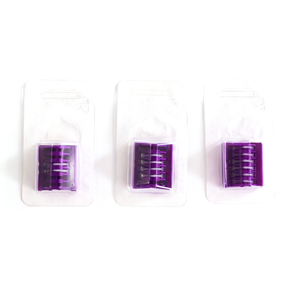
Medical device exporters face growing regulatory pressure to minimize single-use plastic waste. Leading manufacturers like Suture Planet are transitioning to recyclable aluminum foil primary pouches, unbleached FSC-certified outer cartons, and consolidated multi-unit blister trays that cut total packaging mass by up to 30% without compromising sterility assurance levels (SAL 10⁻⁶).
4. Strict EU MDR 2017/745 Technical Documentation
The European Union Medical Device Regulation (EU MDR) has drastically elevated requirements for Class IIa and IIb implantable clips. Suppliers lacking full clinical evaluation reports (CER), post-market clinical follow-up (PMCF) plans, and rigorous biocompatibility testing will be phased out of tier-one hospital registries, favoring fully integrated manufacturers with in-house quality management systems.
Manufacturer Profile: Single-Site Quality Assurance at Suture Planet
Suture Planet operates as a integrated manufacturer and global exporter of surgical wound closure solutions from its headquarters in Bengaluru, India. By consolidating extrusion, precision swaging, laser drilling, cleanroom assembly, packaging, and Ethylene Oxide (EO) sterilization within a single facility, Suture Planet eliminates third-party outsourcing risks and ensures total chain-of-custody control.
Single-Site Traceability
Every lot of ligation clips links directly back to raw polymer lot numbers, applier calibration records, and EO sterilizer cycle charts.
Regulatory Dossiers
Complete technical files including ISO 13485:2016, CE Declaration of Conformity, WHO-GMP, FSC, and CoA issued with initial shipments.
OEM & Private Labeling
Tailored branding, custom size color-coding, multi-language IFUs, and UDI/GS1 barcode integration managed in-house for global partners.
Enterprise Sourcing & Clinical FAQ
Below are authoritative answers to common technical, clinical, and regulatory questions submitted by medical device buyers and surgical procurement managers.
Q: What materials are used in Suture Planet ligation clips?
Suture Planet manufactures titanium ligation clips from medical-grade pure titanium (Grade 1) matching ASTM F67 specifications, and polymer ligation clips from bio-inert non-absorbable acetyl/PBT synthetic resins validated per ISO 10993 biocompatibility requirements.
Q: How do polymer clips compare with titanium clips regarding vessel security?
Polymer clips feature an active locking latch that mechanically snaps over the vessel, offering high resistance to axial slipping. Titanium clips rely on passive malleable deformation; while highly effective, they require precise jaw calibration to prevent over-crimping or under-closing.
Q: Are Suture Planet ligation clips compatible with standard appliers?
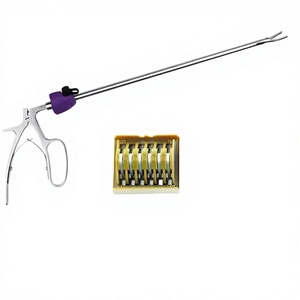
Yes. Suture Planet titanium clips (LT100, LT200, LT300, LT400 series) and polymer clips (M, ML, L, XL sizes) are dimensionally standardized to fit industry-standard open and laparoscopic clip appliers seamlessly.
Q: What certifications are available for market registration?
Full regulatory dossiers are provided, including ISO 13485:2016 Quality Management System certification, CE MDR 2017/745 technical documentation, WHO-GMP compliance, Free Sale Certificates (FSC), and Certificate of Analysis (CoA) for each batch.
Q: What is the validated shelf life and sterilization method?
Ligation clips are sterilized using validated Ethylene Oxide (EO) cycles achieving a Sterility Assurance Level (SAL) of 10⁻⁶. Packed in primary aluminum foil barrier pouches, products carry a validated 5-year shelf life under standard storage conditions.
Q: Can Suture Planet handle private-label OEM manufacturing for tenders?
Yes. Suture Planet specializes in complete OEM/ODM programs, providing custom-branded primary foil pouches, printed unit boxes, localized multi-language Instructions for Use (IFU), and regulatory file support for tender bidding.
Q: What vessel lumen sizes do the polymer clips accommodate?
Polymer clip size ranges cover: Medium (2–7 mm vessels), Medium-Large (3–10 mm vessels), Large (5–13 mm vessels), and Extra-Large (7–16 mm vessels and tissue pedicles).
Q: What are typical export production lead times?
Standard catalog items dispatch in 2 to 4 weeks. First-run OEM and private-label programs typically require 5 to 7 weeks for packaging artwork approval, plate production, and EO sterilization validation.
 Suture PlanetSurgical Wound Closure