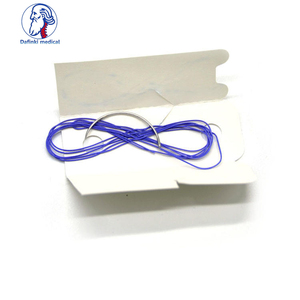
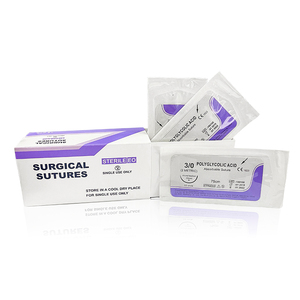
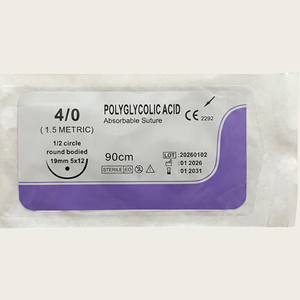
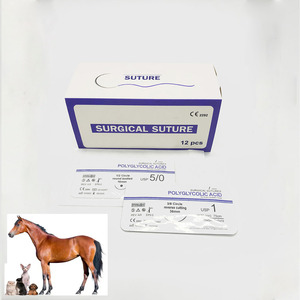
Veterinary Surgical Suture Absorbable PGA PGLA 910 Sterile Animal Suture for Dog Cat Pet Surgery
Precision-engineered bioabsorbable braided suture offering robust initial knot security and controlled hydrolytic degradation for veterinary soft-tissue reconstruction.
Inquire Now
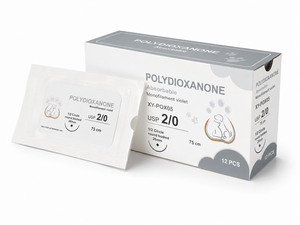
Polyglycolic Acid Absorbable Braided Surgical Suture XY-POX05 EO Sterilized 75cm Animal Veterinary Surgical Supplies
EO sterilized 100% polyglycolic acid suture with smooth polycaprolactone coating to reduce tissue drag and prevent bacterial colonization.
Inquire Now
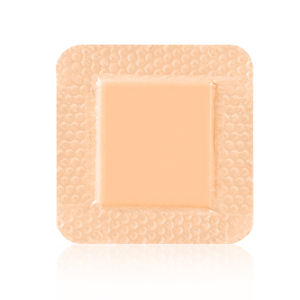
Free Samples Medical Absorbent Wound Suture Waterproof Breathable Waterproof Silicone Foam Wound Dressing
Advanced post-operative wound management dressing featuring gentle silicone border contact layer and ultra-absorbent core for abdominal incision protection.
Inquire Now
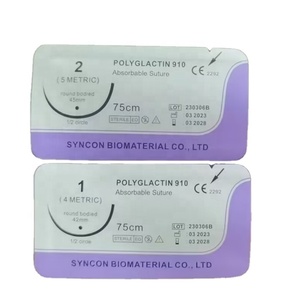
Absorbable 3-0 4-0 75cm Polyglactin 910 Chromic Catgut Surgical Suture with Needle Veterinary
Sterile absorbable surgical thread attached to 300-series stainless steel needle, optimized for fascial closure and veterinary abdominal repair.
Inquire Now
Risenmed Medical Consumables Absorbable Surgical Sutures Kit Threads Polyglactin 910(PGLA910)Sutures
Complete hospital-grade surgical suture kit containing USP compliant synthetic absorbable PGLA 910 strands for multi-layer surgical wound closure.
Inquire Now
High Tensile Strength Absorbable PGA Suture Thread CE Certified Shelf Life for Veterinary Clinics Sheep Nylon
CE-marked synthetic absorbable monofilament and braided filaments offering extended 28-day tensile support during critical collagen synthesis phases.
Inquire Now
China Factory Cheapest Price Medical Absorbable POLYGLYCOLIC ACID PGA Surgical Suture with Needle for Veterinary Vet Pet Animal
OEM factory-direct PGA medical suture with ultra-sharp reverse cutting needle, tailored for budget-conscious hospital networks and animal healthcare systems.
Inquire Now
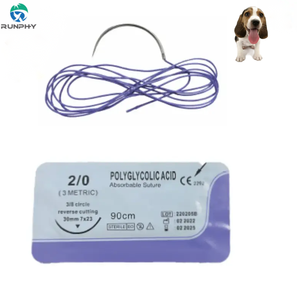
RUNPHY HC002 Medical Veterinary Suture Absorbable Polyglycolic Acid PGA Surgical Suture Needle Disposable
Single-use sterile surgical suture code HC002 engineered under ISO 13485 cleanroom parameters, delivering superior knot security and tissue compliance.
Inquire Now
50+
Global Export Markets
100%
In-House Production & Traceability
SAL 10⁻⁶
Validated EO Sterilization
ISO 13485
EU MDR & CE Compliant Systems
Single-Site Chain of Custody
From polymer resin extrusions and warp-knitting to precision laser cutting and primary foil packing, all processes take place in unified ISO Class 7 cleanrooms to guarantee zero cross-contamination.
Turnkey Dossier & Regulatory Files
Complete technical documentation packages including Declarations of Conformity, CE MDR 2017/745 technical files, ISO 10993 biocompatibility test suites, and Free Sale Certificates (FSC) for expedited local MOH registration.
OEM & Private Label Versatility
Tailored mesh dimensions, weight variations (lightweight to heavy), pore architectures, custom box art, multi-lingual Instructions for Use (IFU), and GS1/UDI compliant barcoding systems for brand owners.
Comprehensive Whitepaper: Sourcing Abdominal Mesh & Surgical Matrix Devices from China
The global demand for abdominal wall reconstruction, ventral hernia repairs, and laparoscopic inguinal procedures has led to significant advancements in prosthetic mesh manufacturing. When sourcing from Top China Abdominal Mesh Manufacturers, global hospital groups, medical device distributors, and private-label brand owners must navigate complex material dynamics, biomechanical parameters, and international quality management standards.
1. Polymer Architecture: Polypropylene vs. Composite Absorbable Meshes
Modern surgical repair meshes are fundamentally engineered from high-grade synthetic polymers. The choice of material directly affects foreign-body response, tissue integration, bursting strength, and long-term patient comfort:
- Non-Absorbable Polypropylene (PP) Mesh: Monofilament polypropylene remains the gold standard for permanent abdominal wall repair. Produced through controlled melt spinning processes, surgical PP meshes maintain high tensile yield strength and inert physical properties, preventing enzymatic degradation in vivo.
- Absorbable & Composite Meshes (PGA / PGLA): Synthetic absorbable polymers such as Polyglycolic Acid (PGA) and Polyglactin 910 (PGLA 910) are frequently integrated into temporary bridging meshes or dual-sided anti-adhesion composite barriers. These materials degrade hydrolytically over a predictable period (typically 56 to 90 days), leaving behind native collagenous tissue.
- Titanized Polypropylene Mesh: Advanced Chinese manufacturing facilities now utilize plasma-assisted vapor deposition to coat monofilament PP with a nanometer-thin layer of titanium. This hybrid structure combines the mechanical strength of polypropylene with exceptional biocompatibility, significantly reducing inflammation and shrinkage rates.
2. Biomechanical Metrics & Porosity Dynamics
Surgical success depends on selecting a mesh that mirrors the elasticity of the abdominal wall (approx. 20–30% elongation at 16 kPa). Traditional heavyweight meshes with small pore sizes (< 1 mm) often triggered intense fibrotic reactions, creating stiff "bridging plaques" that caused chronic pain. Top manufacturers in China have transitioned to macroporous lightweight designs:
| Mesh Category |
Areal Density (g/m²) |
Pore Size (mm) |
Bursting Strength (kPa) |
Primary Clinical Indication |
| Heavyweight Standard PP |
80 – 110 g/m² |
0.5 – 1.0 mm |
> 220 kPa |
Large open incisional hernias, heavy strain repair |
| Medium-Weight Monofilament |
45 – 65 g/m² |
1.2 – 2.0 mm |
> 180 kPa |
Standard Lichtenstein repair, TAPP / TEP laparoscopic |
| Lightweight Macroporous |
28 – 35 g/m² |
2.5 – 4.0 mm |
> 140 kPa |
Anatomic inguinal hernia repair, dynamic flexibility |
| PGA/PGLA Composite Absorbable |
50 – 75 g/m² |
Micro / Macroporous Hybrid |
Temporary Support |
Contaminated surgical fields, anti-visceral adhesion |
3. Cleanroom Quality Infrastructure & Quality Assurance Standards
Top-tier Chinese medical manufacturers operate under strict international regulatory frameworks. To guarantee patient safety and zero infection risk, facilities employ full-scale quality management protocols:
- ISO 13485:2016 Certification: Mandates audit-level control over every stage of manufacture, design verification, cleanroom environmental monitoring (ISO Class 7 and Class 8 zones), and post-market surveillance workflows.
- Ethylene Oxide (EO) Sterilization Validation: Sterilization processes must conform to ISO 11135, ensuring a Sterility Assurance Level (SAL) of 10⁻⁶ while minimizing residual ethylene oxide gas per ISO 10993-7 thresholds.
- USP & EP Monograph Compliance: Every batch undergoes rigorous physical testing, including ball-bursting force measurements, suture pull-out strength tests, pore-geometry optical verification, and endotoxin assay evaluations.
3D Pre-Shaped & Anatomical Meshes
Demand is moving rapidly away from flat sheets toward thermoformed 3D contour meshes designed specifically for inguinal canals, eliminating the need for excessive fixation tacks and reducing operative time.
Antibacterial & Active Drug Elution
Integration of antimicrobial agents (such as Chlorhexidine, Triclosan, or Silver Nanoparticles) into the polymer matrix helps prevent Surgical Site Infections (SSI) and biofilm formation on permanent implants.
Bio-Resorbable Barrier Coatings
Dual-position meshes featuring an absorbable hydrogel or oxidized regenerated cellulose (ORC) layer on the visceral side are becoming standard for intraperitoneal placement (IPOM), preventing bowel adherence.
Rigorous Regulatory Audits (EU MDR)
The transition to EU MDR 2017/745 requires manufacturers to provide robust Clinical Evaluation Reports (CER) and Post-Market Clinical Follow-up (PMCF) data, positioning top-tier audited factories as clear market leaders.
What parameters should be prioritized when selecting an abdominal mesh manufacturer in China?
Procurement officers should verify: 1) Medical-grade raw material traceability (e.g., pure monofilament polypropylene resin source); 2) Validated ISO 13485 quality systems and cleanroom classifications (ISO Class 7/8); 3) Available technical documentation, including ISO 10993 biocompatibility test reports, EO sterilization validation per ISO 11135, and CE/FDA registration status; and 4) Mechanical testing data (bursting strength, tensile strain, and pore size uniformity).
What is the difference between heavyweight, medium-weight, and lightweight polypropylene meshes?
Heavyweight meshes (>80 g/m²) feature smaller pores and higher burst strength, but can induce rigid scar tissue formation. Medium-weight (45–65 g/m²) and lightweight (<35 g/m²) macroporous meshes feature larger pores (>1.5 mm), promoting healthy vascularized tissue ingrowth, reducing foreign body reaction, minimizing mesh shrinkage, and improving long-term abdominal wall compliance.
Can Chinese manufacturers accommodate custom mesh dimensions, shapes, and private labeling?
Yes. Leading manufacturers offer comprehensive OEM/ODM services. This includes custom laser-cut dimensions (e.g., 6x11cm, 10x15cm, 15x15cm, 30x30cm), pre-shaped keyhole shapes for groin/trocar sites, custom areal density knits, and customized branding on primary sterile foil pouches, inner boxes, and multi-language Instructions for Use (IFU).
How is sterility and shelf-life validated for export shipments?
Surgical meshes are sealed in medical-grade double-layer primary packaging (peelable aluminium foil or Tyvek pouches). They undergo validated Ethylene Oxide (EO) gas sterilization cycles to achieve a Sterility Assurance Level (SAL) of 10⁻⁶. Accelerated and real-time stability testing supports a standard 5-year shelf-life under recommended storage conditions (<25°C, protected from light and moisture).
What registration documents are supplied for national Ministry of Health (MOH) tenders?
Standard export regulatory dossiers include the ISO 13485:2016 Certificate, CE Certificate / EU MDR Declaration of Conformity, Free Sale Certificate (FSC) issued by national health authorities, Certificate of Analysis (CoA) for each production lot, ISO 10993 Biocompatibility Test Reports, Sterility Validation Reports, and factory audit summary reports.
What are typical production lead times and minimum order quantities (MOQ)?
Standard catalogue polypropylene mesh items typically ship within 2 to 4 weeks. Customized OEM packaging or specialized composite designs require 4 to 6 weeks for initial production cycles to complete artwork approval, tooling setup, and EO sterilization cycles. MOQs vary depending on custom specifications, but consolidated mixed-SKU shipments are widely supported.
Partner with China's Premier Medical Device Manufacturer
Request Technical Data Sheets, Free Evaluation Samples, and Detailed Factory-Direct Quotes for Your Hospital Network or Distribution Brand.
 Suture PlanetSurgical Wound Closure