Q1: What medical device quality management standards and certificates do your surgical sutures meet?
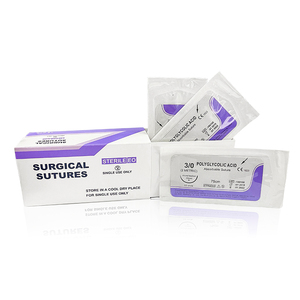
All our surgical threads and wound closure devices are manufactured under strict ISO 13485:2016 quality management systems. Our products hold CE mark certification under EU MDR 2017/745 guidelines, WHO-GMP compliance, and ISO 9001:2015. We maintain exhaustive technical dossiers (STED), biocompatibility reports per ISO 10993, real-time 5-year shelf-life stability data, and issue Free Sale Certificates (FSC) to facilitate seamless registration with national health authorities worldwide.
Q2: Can your facility support custom OEM / Private Label manufacturing for regional hospital brands?
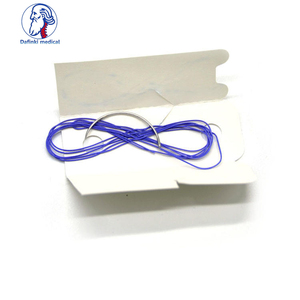
Yes, we offer complete turn-key OEM/ODM solutions. We customize every component based on client specification files: needle chord length, needle curvature (1/2, 3/8, 1/4, 5/8 circle), needle point geometry (taper cut, reverse cutting, blunt point, micro-spatula), thread length (45cm to 150cm), thread color (violet, green, blue, undyed), primary foil packaging artwork, inner boxes, GS1-compliant UDI barcoding, and multi-language Instructions for Use (IFU).
Q3: How do you guarantee the needle-attachment tensile strength (pull-out force) on your sutures?
Every production batch undergoes automated inline and offline pull-out testing according to both United States Pharmacopeia (USP) and European Pharmacopoeia (EP) monographs. Our automated laser-drilled swaging systems maintain pull-out tolerances up to 20% higher than standard USP thresholds, eliminating needle detaching risks during rigorous surgical knotting and tissue passage.
Q4: What are the standard lead times for bulk OEM orders and government tender supply?
Standard catalog product codes ship within 2 to 4 weeks upon order confirmation. For private label OEM programs, initial batches require 4 to 6 weeks to allow final artwork confirmation, plate printing, and sterile packaging configuration. Repeat private-label production orders typically dispatch within 3 weeks. Buffer stock programs can be established for multi-year public health tender contracts.
Q5: What is the primary difference in tissue handling between PGA and PGLA 910 sutures?
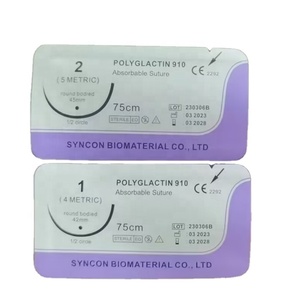
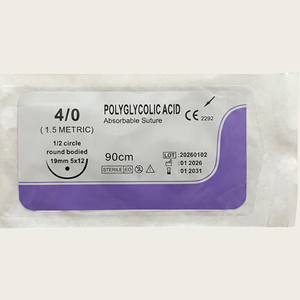
Both are synthetic braided absorbable sutures; however, PGA is a 100% polyglycolic acid homopolymer, while PGLA 910 is a copolymer composed of 90% glycolide and 10% L-lactide. PGLA 910 offers slightly higher flexibility, smoother knot snug-down, and a marginally faster absorption curve (56–70 days) compared to PGA (60–90 days). Both feature specialized micro-coatings to prevent saw-tooth tissue drag.
Q6: Do you supply specialized surgical sutures for veterinary and animal healthcare procedures?
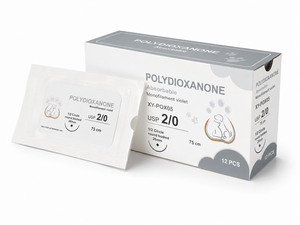
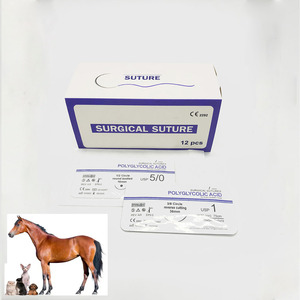
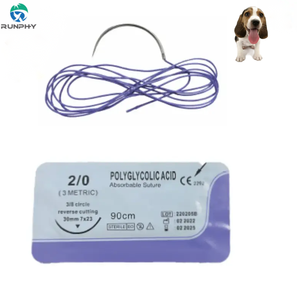
Yes, we manufacture dedicated veterinary suture ranges specifically designed for small animal, equine, livestock, and exotic pet surgeries. Our veterinary product lines include cost-effective absorbable PGA/PGLA cassettes, chromic catgut, monofilament nylon, and pre-cut sterile suture kits with needle configurations tailored for companion animal neutering, skin closure, and soft-tissue reconstruction.
Q7: How are sterility assurance levels maintained during shipping and long-term storage?
Our sutures are packed in hermetically sealed medical-grade aluminium foil inner packaging surrounded by a protective secondary peel pouch, creating an impenetrable moisture and micro-organism barrier. Sterilized via validated Ethylene Oxide (EO) gas cycles reaching SAL 10⁻⁶, the packages maintain absolute sterility and physical thread integrity over a 5-year shelf life when stored in dry conditions below 25°C.
 Suture PlanetSurgical Wound Closure