Surgical Wound Closure & Hemostasis Portfolio
Featured Surgical Products & Absorbable Solutions
Engineered for maximum efficacy, low tissue drag, superior tensile strength, and rapid intraoperative absorption.
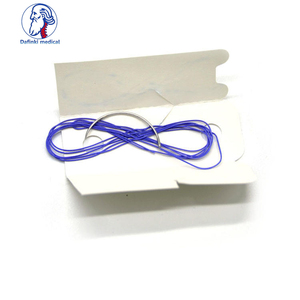
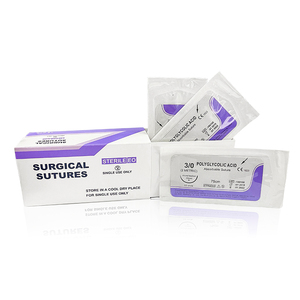
Veterinary Surgical Suture Absorbable PGA PGLA 910 Sterile Animal Suture for Dog Cat Pet Surgery
- Polyglactin 910 / PGA Composition
- EO Sterilized, SAL 10⁻⁶ Assurance
- Smooth passage with minimal tissue drag
Send an Inquiry
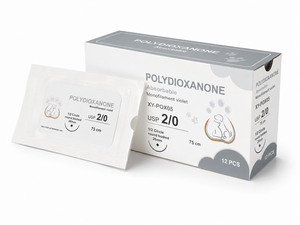
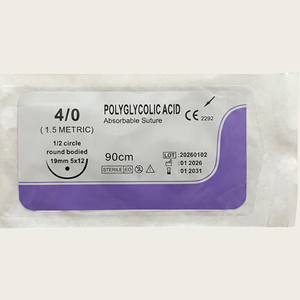
Polyglycolic Acid Absorbable Braided Surgical Suture XY-POX05 EO Sterilized 75cm Veterinary Supplies
- Braided Synthetic Polyglycolic Acid
- 75cm Length with Precision Needle
- Predictable Hydrolytic Degradation
Send an Inquiry
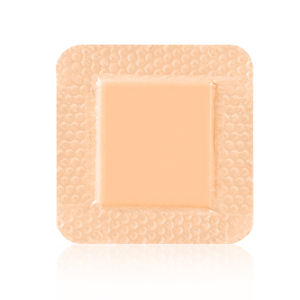
Free Samples Medical Absorbent Wound Suture Waterproof Breathable Silicone Foam Wound Dressing
- Waterproof & Breathable Barrier
- Silicone Adhesive Foam Core
- Exudate Management & Hemostasis
Send an Inquiry
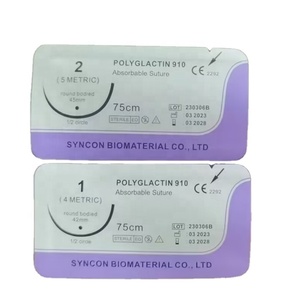
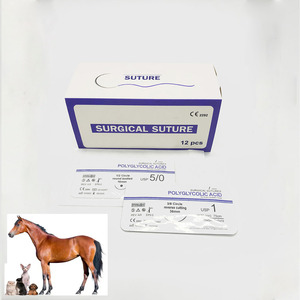
Absorbable 3-0 4-0 75cm Polyglactin 910 Chromic Catgut Surgical Suture with Needle Veterinary
- Chromic Catgut & PGLA 910 Available
- High Initial Tensile Strength
- Secure Knot Security & Pliability
Send an Inquiry
Risenmed Medical Consumables Absorbable Surgical Sutures Kit Threads Polyglactin 910(PGLA910)Sutures
- Complete Surgical Suture Kit
- Coated PGLA 910 Synthetics
- Full Batch-Level Traceability
Send an Inquiry
High Tensile Strength Absorbable PGA Suture Thread CE Certified Shelf Life for Veterinary Clinics Sheep Nylon
- CE & ISO 13485 Certified
- Extended 5-Year Shelf Life
- Ultra-Sharp Stainless Steel Needle
Send an Inquiry
China Factory Cheapest Price Medical Absorbable POLYGLYCOLIC ACID PGA Surgical Suture with Needle for Veterinary
- Direct Manufacturing Cost Structure
- High Purity Polyglycolic Acid Polymer
- Multi-Language OEM Packaging
Send an Inquiry
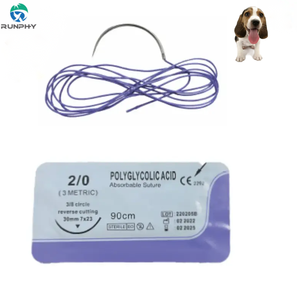
RUNPHY HC002 Medical Veterinary Suture Absorbable Polyglycolic Acid PGA Surgical Suture Needle Disposable
- Disposable Sterile Foil Packaging
- Precision Swaged Needle Technology
- Biocompatible & Non-Pyrogenic
Send an Inquiry
50+
Export Markets Served
< 2 Min
Hemostasis Onset Time
100%
Bio-Absorbable Matrix
ISO 13485
Single-Site Traceability
Advanced Surgical Hemostatic Powders: Comprehensive Technical Whitepaper
In modern surgical environments—ranging from complex cardiovascular and orthopedic procedures to high-volume trauma and veterinary surgeries—rapid and reliable intraoperative bleeding control is paramount. Surgical hemostatic powders have emerged as an indispensable class of passive and active topically applied hemostatic agents. Unlike traditional mechanical measures (such as sutures, ligatures, or manual pressure) which can be challenging to apply across broad, irregular, or friability-prone tissue beds, absorbable hemostatic powders deliver comprehensive flowable coverage that rapidly arrests capillary, venous, and arteriolar bleeding.
As a globally recognized manufacturer and exporter of absorbable surgical consumables, our facility integrates advanced polymer chemistry, micro-particle engineering, and validated sterilisation systems to produce medical-grade hemostatic powders that satisfy international pharmacopeial standards (USP & EP). This technical document outlines the biochemical mechanism of action, material classification, global procurement dynamics, regulatory compliance, and future technological trajectories governing surgical hemostats.
Key Information Gain: Advanced Microporous Polysaccharide Hemospheres (MPH) absorb the fluid component of whole blood within seconds, concentrating erythrocytes, platelets, and endogenous clotting factors (thrombin & fibrinogen) at the particle surface to accelerate natural clot formation without causing exothermia or foreign-body granulomas.
Biochemical Mechanism of Action: Dual-Phase Hemostasis
The clinical performance of high-efficiency hemostatic powders relies on a sophisticated dual-action physical-biochemical cascade:
- Rapid Dehydration & Hydrophilic Fluid Absorption: Upon contact with blood, the porous micro-particles instantly act as a molecular sieve. By selectively absorbing blood's aqueous phase (plasma fluid), the powder dramatically increases the local concentration of cellular elements (erythrocytes and platelets) and endogenous coagulation proteins (fibrinogen, Factor VIII, Factor X, and prothrombin) by up to 400%.
- Mechanical Matrix & Fibrin Scaffold Polymerization: Simultaneously, the hydrated powder particles swell to create a sticky, cohesive gel matrix. This matrix acts as a physical barrier against vascular pressure while serving as a structural scaffold for rapid platelet adhesion and aggregation. The concentrated clotting factors accelerate the conversion of fibrinogen into cross-linked fibrin networks, completing robust clot formation within 60 to 120 seconds.
Because the hemostatic process is driven primarily through physical dehydration and mechanical scaffold formation, top-tier polysaccharide hemostatic powders operate independently of the patient's systemic clotting mechanism, maintaining high efficacy even in heparinized or mildly coagulopathic surgical candidates.
Why Global Procurement Teams Partner With Us
Manufacturing Excellence & Supply Chain Security
From raw polymer processing to single-site cleanroom packaging, our operations eliminate supply risks for international distributors, tender agencies, and OEM brand owners.
Single-Site Traceability
Polymer extrusion, particle size milling, sterilisation, and primary foil sealing take place under one roof in our Bengaluru facility. Every batch links directly to raw lot numbers and EO sterilisation records.
Complete Dossier Support
We supply full technical documentation including CE / EU MDR Class III files, ISO 13485:2016 certificates, Free Sale Certificates (FSC), ISO 10993 biocompatibility data, and stability reports for rapid country registration.
Flexible OEM & Private Label
Configure custom delivery applicators, powder particle weight (1g, 3g, 5g bellows), outer packaging artwork, multi-language IFUs, and GS1/UDI barcodes for your distributor network.
Comparative Technical Matrix: Hemostatic Technologies
Selecting the appropriate hemostatic technology requires balancing absorption rates, thermal safety, tissue reactivity, and application versatility. The technical comparison below highlights how plant-derived absorbable hemostatic powders compare to traditional surgical hemostats.
| Hemostatic Technology |
Base Material |
Hemostasis Onset |
Absorption Time |
Exothermic Risk |
Primary Clinical Application |
| Absorbable Hemostatic Powder (MPH) |
Plant Polysaccharide / Starch |
60 – 120 Seconds |
5 – 7 Days |
Zero (Isothermal) |
Diffuse bleeding, surgical cavities, oozing surfaces |
| Oxidized Regenerated Cellulose (ORC) |
Alpha Cellulose / Rayon |
2 – 4 Minutes |
7 – 14 Days |
Zero |
Ligation beds, tumor resection, arterial suture lines |
| Gelatin Matrix / Sponge |
Porcine / Bovine Collagen |
3 – 5 Minutes |
4 – 6 Weeks |
Zero |
Parenchymal organ bleeding, orthopedic packing |
| Thrombin-Based Active Sealant |
Human / Bovine Thrombin |
30 – 60 Seconds |
Variable (Weeks) |
Low |
High-pressure vascular anastomoses |
| Surgical Bone Wax |
Beeswax & Isopropyl Palmitate |
Immediate (Mechanical) |
Non-Absorbable |
Zero |
Cancellous bone bleeding (sternotomy, cranial) |
Future Procurement & Strategic Market Trends (2025 – 2030)
The global market for surgical hemostatic powders is undergoing a structural paradigm shift driven by technological advances, evolving regulatory expectations, and procurement risk mitigation. Medical device importers and hospital group buyers must align their sourcing strategies with the following four micro- and macro-trends:
1. Migration Toward Plant-Derived, Non-Animal Bio-Absorbables
Historically, animal-derived products (such as bovine thrombin, equine collagen, and porcine gelatin) dominated topical hemostasis. However, concerns regarding Bovine Spongiform Encephalopathy (BSE), Transmissible Spongiform Encephalopathy (TSE), immunogenic reactions, and religious/cultural dietary restrictions have accelerated the global adoption of plant-based Microporous Polysaccharide Hemospheres (MPH) and chitosan powders. Plant-derived polymers eliminate viral transmission risks and offer superior biocompatibility profiles, achieving 100% absorption without residual granuloma formation.
2. Stringent Regulatory Compliance: EU MDR (2017/745) & EUDAMED Integration
The transition from the European Medical Device Directive (MDD) to the rigorous Medical Device Regulation (MDR 2017/745) has reshaped the supplier landscape. Class III absorbable implants and topical hemostats require extensive clinical evaluation reports (CER), post-market clinical follow-up (PMCF), and precise Unique Device Identification (UDI) implementation. Manufacturers maintaining fully audited ISO 13485:2016 quality systems with complete technical documentation provide importers with uncompromised market access and registration stability.
3. Bellows Applicators & Minimally Invasive Surgery (MIS) Delivery
With the rapid growth of laparoscopic, robotic, and endoscopic surgeries, traditional powder dusting techniques are being replaced by ergonomic, targeted delivery systems. Modern procurement requests increasingly demand extended-reach flexible applicators, pressurized delivery bellows, and narrow-gauge cannula attachments capable of delivering uniform hemostatic powder coats into deep laparoscopic cavities without clogging under high humidity.
4. Resilience in Supply Chain & OEM Localization
Recent global logistics disruptions have exposed vulnerabilities in multi-tiered, outsourced medical supply chains. Leading procurement teams are shifting toward single-site manufacturers capable of handling raw material processing, precision packaging, sterilisation, and batch release testing in-house. Furthermore, contract manufacturing partners offering tailored OEM private-label branding, customized pack counts, and flexible MOQs enable regional distributors to capture local tender opportunities effectively.
Procurement & Clinical Insights
Frequently Asked Questions (FAQ)
Essential guidance for medical buyers, regulatory officers, and surgical procurement specialists.
What is the composition and degradation profile of your absorbable hemostatic powder?
Our absorbable hemostatic powder is manufactured from 100% purified plant-based polysaccharide micro-particles (MPH). Upon application to the bleeding site, the powder absorbs fluid and undergoes enzymatically driven hydrolysis by endogenous amylases and glucoamylases. It degrades completely into glucose monomers and oligosaccharides within 5 to 7 days, leaving zero toxic residue, tissue adhesion, or foreign-body encapsulation.
Is the hemostatic powder effective in patients receiving anticoagulant therapy?
Yes. Because our polysaccharide hemostatic powder operates primarily via physical ultra-dehydration and mechanical fibrin matrix scaffold formation—rather than relying solely on the enzymatic cascade activation—it functions effectively even in patients under systemic heparinization, antiplatelet therapy, or mild coagulopathy.
What international certifications and registration dossiers are provided?
Products are manufactured under an audited ISO 13485:2016 Quality Management System with WHO-GMP compliance. We furnish full registration dossiers containing the Declaration of Conformity (DoC), CE certification files, Free Sale Certificates (FSC), ISO 10993 biocompatibility testing, Ethylene Oxide (EO) residual validation per ISO 10993-7, and real-time 5-year stability data.
Can you accommodate private label OEM packaging and custom applicator configurations?
Absolute flexibility is supported for OEM and private-label partners. We offer customizable powder weights (e.g., 1g, 3g, 5g squeeze bellows), custom tube applicator lengths for open and laparoscopic procedures, multi-language IFUs, primary foil tray sealing, custom box branding, and GS1-compliant UDI barcodes.
What are the recommended storage conditions and validated shelf life?
The hemostatic powder is double-packaged in a primary sterile barrier pouch inside a protective aluminium foil envelope. It is validated for a 5-year shelf life when stored between 15°C to 30°C in a dry environment away from direct sunlight. No refrigeration or cold-chain logistics are required.
How does single-site manufacturing in Bengaluru ensure batch quality?
All production stages—including polymer refinement, particle sizing, cleanroom filling (ISO Class 7/8), EO sterilisation cycles, and microbiological release testing—take place inside our single-site facility in Bengaluru, India. This eliminates multi-vendor handoffs, guaranteeing 100% batch-level traceability from raw material to finished sterile carton.
What are the typical order lead times for international shipments?
Standard catalog inventory orders typically dispatch within 2 to 4 weeks. Custom OEM and private-label orders take approximately 5 to 7 weeks for initial batch production to allow for artwork approval and tooling setup, with significantly reduced lead times for recurring schedule agreements.
Partner With a Documented Global Hemostat Manufacturer
Accelerate your regional market entry, tender win rate, and hospital brand presence with certified hemostatic powders and absorbable wound closure devices.
Send an Inquiry
 Suture PlanetSurgical Wound Closure