ISO 13485:2016 · CE / EU MDR Certified · OEM Sourcing

Top Trusted Ophthalmic Sutures Factories & Exporter

Precision Microsurgical Sutures (10-0 to 4-0 PGA, PGLA 910, Nylon & Silk) Manufactured for Global Hospitals, OEM Brands & Public Tenders

Medical Device Portfolio

Precision Ophthalmic & Veterinary Microsurgical Sutures

Explore our export-grade sterile absorbable and non-absorbable sutures equipped with micro-spatulated and reverse cutting needles engineered for anterior and posterior ocular procedures.

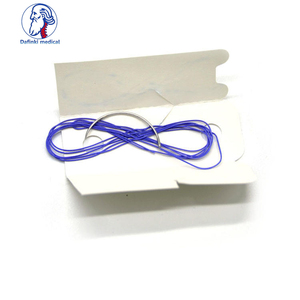
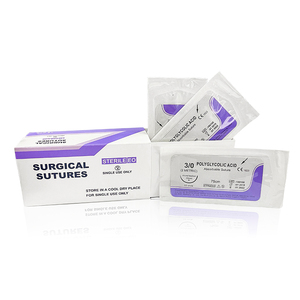
Absorbable Veterinary Surgical Suture Absorbable PGA PGLA 910 Sterile Animal Suture for Dog Cat Pet Surgery

PGA / PGLA 910 Micro Absorbable Sutures

Polyglactin 910 / PGA braided & coated thread. Exceptional tensile strength for canine, feline, and ophthalmic soft tissue approximation.
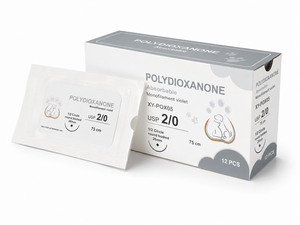
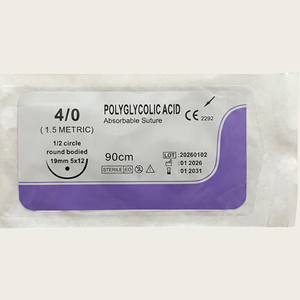
Braided PGA Polyglycolic Acid Absorbable Braided Surgical Suture XY-POX05 EO Sterilized 75cm Animal Veterinary Surgical Supplies

Polyglycolic Acid (PGA) XY-POX05 Series

Synthetic absorbable 75cm thread with spatulated micro-needle. Hydrolytic absorption profile of 60-90 days with zero tissue drag.
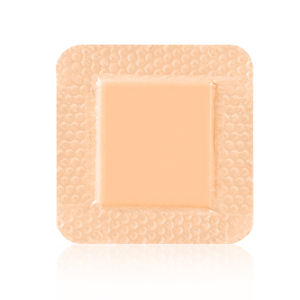
Wound Care Free Samples Medical Absorbent Wound Suture Waterproof Breathable Waterproof Silicone Foam Wound Dressing

Oculoplastic Silicone Foam Wound Care

Waterproof & breathable absorbent silicone matrix for post-op eye tissue protection, skin grafting, and peri-orbital recovery.
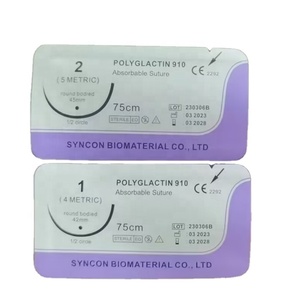
Polyglactin / Catgut Absorbable 3-0 4-0 75cm Polyglactin 910 Chromic Catgut Surgical Suture with Needle Veterinary

Polyglactin 910 & Chromic Catgut Series

Precision 3-0 4-0 absorbable threads with high knot security. Engineered for ophthalmic muscle attachment and conjunctival closure.
Surgical Kit Risenmed Medical Consumables Absorbable Surgical Sutures Kit Threads Polyglactin 910(PGLA910)Sutures

Ophthalmic Microsurgery PGLA 910 Kits

Pre-configured sterile microsurgical kit with multi-needle combinations. Ideal for corneal transplant & cataract incision closure.
High Tensile High Tensile Strength Absorbable PGA Suture Thread CE Certified Shelf Life for Veterinary Clinics Sheep Nylon

Ultra-Fine Monofilament Nylon & PGA Threads

CE certified high-tensile 10-0, 9-0 monofilament nylon and PGA suture thread. Minimal tissue memory and smooth knot displacement.
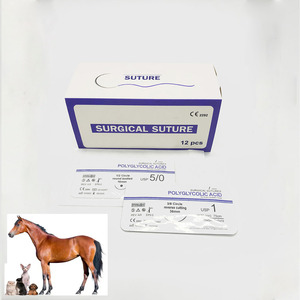
Factory Direct China Factory Cheapest Price Medical Absorbable POLYGLYCOLIC ACID PGA Surgical Suture with Needle for Veterinary Vet Pet Animal

OEM PGA Ophthalmic Suture with Spatula Needle

Factory-direct supply of micro-point swaged PGA sutures. Fully certified for distributor private label programs and tender bids.
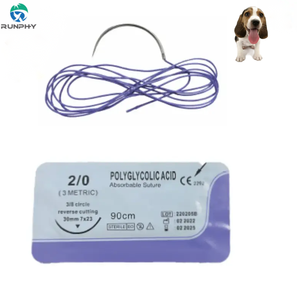
HC002 Series RUNPHY HC002 Medical Veterinary Suture Absorbable Polyglycolic Acid PGA Surgical Suture Needle Disposable

Disposable PGA Microsurgical Suture HC002

Medical-grade absorbable PGA with ultra-sharp stainless steel needles (AISI 300 / 400 series). Validated SAL 10⁻⁶ EO sterilization.
Manufacturing Metrics & Technical Scale

Why Leading Hospital Procurement Networks Trust Our Factories

Operating under ISO 13485:2016 and CE / EU MDR guidelines, our single-site integrated cleanroom infrastructure guarantees 100% batch-level traceability for every ophthalmic needle-thread assembly.

50+
Export Markets
Serving EU, APAC, LATAM & MEA
10-0
Microsuture USP
Precision 10-0 to 4-0 Range
10⁻⁶
Sterility Assurance
Validated ETO Sterilization
120+
Needle Geometries
Micro-Spatula, Taper & Cutting
Industry Whitepaper & Technical Analysis

Ophthalmic Sutures Manufacturing: Technical Engineering, Polymer Physics & Global Procurement Standards

An in-depth technical analysis for hospital procurement committees, OEM medical device brands, and surgical importers regarding material selection, needle swaging physics, and quality compliance.

1. Introduction: The Critical Role of Precision Engineering in Ophthalmic Microsurgery

Ophthalmic surgery represents one of the most demanding subspecialties in modern medical device manufacturing. Unlike general soft-tissue closure, ocular procedures—such as penetrating keratoplasty (corneal transplant), cataract scleral tunnel fixation, trabeculectomy for glaucoma, and strabismus muscle reattachment—require surgical sutures engineered at micron-level tolerances. A single unit of USP 10-0 monofilament polyamide (Nylon) thread possesses a diameter ranging between 20 to 29 micrometers, which is significantly thinner than a single strand of human hair.

Consequently, sourcing ophthalmic sutures requires evaluated trust in factories that possess advanced micro-extrusion, continuous micro-braiding, and precision laser-drilled needle swaging technologies. As a top trusted ophthalmic sutures manufacturer and global exporter, our production facilities combine state-of-the-art cleanroom manufacturing (ISO Class 7 / Class 10,000) with stringent metallurgical pull-out testing to ensure zero failure during critical intraocular maneuvers.

Key Information Gain Benchmark: In microsurgical ophthalmic applications, needle-to-thread attachment integrity (swage strength) must exceed United States Pharmacopeia (USP) tensile requirements by at least 25% to eliminate accidental needle detachment inside the anterior chamber.

2. Polymer Chemistry & Material Classification for Ocular Surgeries

Selecting the optimal suture polymer chemistry directly impacts tissue biocompatibility, inflammation control, tissue drag, and long-term astigmatism management. Ophthalmic sutures are classified into synthetic absorbable, non-absorbable synthetic monofilaments, and natural organic structures:

2.1 Synthetic Absorbable Polymers: PGA and Polyglactin 910 (PGLA)

Synthetic absorbable sutures such as Polyglycolic Acid (PGA) and Polyglactin 910 (PGLA 910) degrade primarily via non-enzymatic hydrolytic cleavage. This biochemical mechanism guarantees predictable tensile strength retention independent of regional ocular inflammatory variations. In pediatric strabismus surgery and scleral buckling procedures, coated PGLA 910 provides smooth passage through the sclera with minimal tissue drag, offering approximately 75% tensile retention at 14 days and full absorption within 56 to 70 days.

2.2 Non-Absorbable Monofilaments: Polyamide 6/6.6 (Nylon) & Polypropylene

For corneal transplantation and cataract incision closure, USP 10-0 and 9-0 Monofilament Nylon remains the clinical gold standard. Manufactured from high-tensile Polyamide 6 or 6.6 polymer chains, monofilament nylon exhibits minimal tissue reactivity and smooth knot displacement. For permanent intraocular fixation, such as securing intraocular lenses (IOLs) or hernia/ocular mesh constructs, Polypropylene monofilament offers zero hydrolytic degradation and lifelong structural stability.

2.3 Virgin Silk & Braided Materials

Virgin Silk (USP 8-0, 7-0, 6-0), treated with silicone or wax coating, remains widely favored for temporary scleral retraction, lid positioning, and conjunctival suturing due to its exceptional knot security and ease of handling in high-magnification environments.

Suture Material Polymer Composition USP Sizes Tensile Retention Profile Absorption Duration Primary Clinical Indication
Nylon Monofilament Polyamide 6 / 6.6 10-0 to 5-0 85% at 1 Year (Gradual loss) Non-Absorbable Corneal Graft, Cataract Incisions
PGLA 910 (Coated) Poly(glycolide-co-lactide) 90/10 8-0 to 2-0 75% at 14 Days / 50% at 21 Days 56 – 70 Days Strabismus, Conjunctiva, Oculoplastics
PGA Braided 100% Polyglycolic Acid 8-0 to 2-0 70% at 14 Days / 40% at 21 Days 60 – 90 Days Ophthalmic & Veterinary Microsurgery
Polypropylene Isotactic Polypropylene 10-0 to 4-0 100% Retained (Indefinite) Non-Absorbable IOL Fixation, Scleral Buckling
Virgin Silk Natural Protein (Fibroin) 8-0 to 4-0 Progressive loss over 3-6 months Slow Bio-Absorption Scleral Retraction, Lid Suturing

3. Needle Engineering: Micro-Spatula & Micro-Point Technologies

The performance of an ophthalmic suture relies heavily on the design of its swaged needle. Because the human cornea has an average central thickness of only 540 micrometers, a needle that tears corneal collagen fibrils can induce post-operative astigmatism, aqueous humor leakage, or corneal scarring.

Our OEM manufacturing facilities utilize premium 300-series and 400-series surgical stainless steel alloys equipped with micro-spatulated cutting edges. Spatula needles feature flat top and bottom cutting surfaces designed to glide laterally between corneal or scleral lamellae without penetrating deeper intraocular structures.

  • 3/8 Circle Double-Arm Spatula Needles: Engineered specifically for corneal graft placement, allowing surgeons to pass sutures with symmetrical depth control.
  • 1/4 Circle Side-Cutting Needles: Preferred for shallow scleral pass during glaucoma filtration surgery.
  • Laser-Drilled Micro-Swaging: Thread ends are inserted into micro-drilled laser cavities on the needle shank and crimped, resulting in a smooth needle-to-thread transition that minimizes tissue drag.

4. Future Sourcing & Procurement Trends for Ophthalmic Sutures (2026–2030)

As global health systems demand enhanced surgical outcomes and lower post-operative complication rates, healthcare procurement agencies and medical device distributors must adapt to several emerging technological trends:

4.1 Automated Precision Laser Swaging & 100% Optical Inspection

Traditional manual swaging of fine 10-0 microsutures introduces human variability in pull-out strength. Top-tier factories are shifting toward fully automated laser-drilling and automated vision-guided crimping systems. Every single production lot undergoes automated high-resolution optical inspection to verify needle point sharpness and shank concentricity.

4.2 Expansion of Bio-Interactive & Antimicrobial Coatings

Post-operative endophthalmitis is a catastrophic complication in eye surgery. Suture factories are investing heavily in anti-bacterial and anti-inflammatory drug-eluting coatings (such as triclosan and micro-silver complexes) formulated specifically for ophthalmic absorbable sutures to reduce bio-film formation around scleral tunnels.

4.3 Regulatory Dossier Standardization under EU MDR 2017/745

Regulatory frameworks across Europe, Asia, and Latin America have tightened significantly. Importers can no longer rely on simple CE certificates under legacy directives (MDD). Leading exporters now supply comprehensive EU MDR Technical Documentation, including Clinical Evaluation Reports (CER), Post-Market Surveillance (PMS) plans, and ISO 10993 biocompatibility testing (cytotoxicity, systemic toxicity, sensitization, and intracutaneous reactivity).

Enterprise Manufacturing Core Strengths

Why International Buyers Partner with Our Manufacturing Hub

Refined over decades of specialized medical device manufacturing, our integrated supply chain offers unparalleled security, quality compliance, and customization for global partners.

Full Regulatory Dossier Support

We provide full technical documentation for country-specific registrations, including ISO 13485:2016, CE / EU MDR certificates, Free Sale Certificates (FSC), WHO-GMP, and Certificate of Analysis (CoA) with every batch.

OEM & Private Label Packaging

Customizable foil primary packaging, multi-language outer box printing, UDI / GS1 compliant barcode labeling, and customized IFUs tailored to your brand’s regional market specifications.

Agile Lead Times & Tender Buffers

Standard catalog codes ship in 2-4 weeks. Dedicated production buffer stock allows rapid dispatch for urgent government tenders and large distributor procurement cycles.

100% In-House Needle-Thread Swaging

From raw polymer extrusion and micro-braiding to precision laser drilling, swaging, and validated ethylene-oxide (EO) sterilization—all operations run on a single unified production site.

Rigorous Quality Control Laboratory

Every lot undergoes 100% tensile strength verification, knot security testing, optical needle sharpness audit, and EO residual limit testing (per ISO 10993-7) prior to final batch release.

Global Export Reach (50+ Nations)

Extensive export experience delivering sterile medical devices across Europe, the Middle East, Southeast Asia, Africa, and Latin America with certified logistics compliance.

Procurement & Technical FAQ

Ophthalmic Sourcing Questions Answered by Industry Experts

Addressing key technical, regulatory, and commercial inquiries frequently raised by hospital buyers, tender managers, and OEM partners.

What technical certifications do your ophthalmic sutures carry for registration?
Our manufacturing facilities operate strictly under ISO 13485:2016 and ISO 9001:2015 quality management systems. All product lines carry CE certification under EU MDR 2017/745 technical standards, WHO-GMP approval, and full compliance with USP/EP monographs. Full regulatory registration dossiers—including Certificate of Free Sale (FSC), Declaration of Conformity (DoC), Certificate of Analysis (CoA), and ISO 10993 biocompatibility test data—are provided with OEM order agreements.
What USP sizes and needle geometries are available for ophthalmic microsurgery?
We manufacture fine microsurgical sutures spanning USP sizes 10-0, 9-0, 8-0, 7-0 down to 4-0. Available needle geometries include 3/8 circle double-armed micro-spatulas, 1/4 circle side-cutting spatula needles, 3/8 circle reverse cutting micro-points, and taper-cut needles. Thread materials include Monofilament Nylon (Polyamide), Polyglycolic Acid (PGA), Polyglactin 910 (PGLA), Polypropylene, and Virgin Silk.
How do you ensure needle attachment (swage) integrity on 10-0 microsutures?
Our plant utilizes automated precision laser drilling and vision-guided mechanical crimping technology. Every batch is sampled and tested on digital tensile testing equipment to ensure needle attachment pull-out force significantly exceeds United States Pharmacopeia (USP) minimum standards. We guarantee zero thread-needle separation during intraocular suturing.
What is the validated shelf life and sterilization method for your suture packs?
All surgical sutures are sealed in double-barrier medical-grade aluminum foil primary packaging with peelable Tyvek/film outer pouches. Products undergo validated Ethylene Oxide (EO) sterilization achieving a Sterility Assurance Level (SAL) of 10⁻⁶ with ethylene oxide residuals held strictly within ISO 10993-7 limits. Real-time and accelerated stability studies support a certified 5-year shelf life when stored under standard warehouse conditions.
What are the minimum order quantities (MOQ) and lead times for OEM private label orders?
For standard factory brand catalogue items, dispatch typically occurs within 2 to 4 weeks. For private-label OEM orders, initial production requires approximately 4 to 6 weeks to finalize foil printing plates, box artwork, and regulatory labeling sign-offs. Repeat private-label batches run on compressed 2 to 3-week cycles. Flexible MOQs are available tailored to regional distributor market sizes.
Can you manufacture custom needle-thread combinations not listed in standard catalogs?
Yes. Our custom engineering program allows distributors to specify custom thread lengths (ranging from 10 cm to 90 cm), specialized double-armed needle spacing, unique needle curvature angles, or specific dye configurations (e.g., undyed vs. black/blue monofilaments) to match specific surgical preferences in your target market.

Partner with a Certified Ophthalmic Suture Exporter

Request our complete medical device catalog, technical datasheets, sample kits, and OEM pricing directly from our export sales desk.

Get Catalog