Industry Whitepaper: The Evolution of Silk & Synthetic Suture Systems in Modern Surgery
In modern surgical practice, selecting the correct wound closure material directly impacts tensile integrity, tissue reactivity, and patient recovery timelines. As a premier silk sutures factory and supplier, our manufacturing facility merges biopolymer engineering with micro-swaging technologies to supply hospital networks, government tender agencies, and OEM distributors globally.
While natural black braided silk sutures remain an essential gold standard for cardiovascular ligation, neurosurgery, ophthalmic procedures, and dental surgery due to their unmatched knot security and tactile handling, synthetic absorbables like Polyglycolic Acid (PGA) and Polyglactin 910 (PGLA) have revolutionized internal soft tissue approximation. This technical analysis provides an in-depth exploration of material specifications, degumming chemical processes, and future global procurement trends for medical procurement managers and regulatory officers.
1. Natural Silk Fibroin Chemistry & Degumming Standardizations
Natural silk is derived from the cocoon of the Bombyx mori silkworm, consisting of two primary proteins: structural fibroin (70–80%) and sticky surrounding sericin (20–30%). Sericin is the primary cause of immunogenic tissue reaction in untreated silk threads. Modern medical silk manufacturing mandates an intensive degumming extraction process that removes sericin content down to less than 0.5% without degrading the natural tensile strength of the parallel fibroin filaments.
Following sericin extraction, raw fibroin fibers undergo precision braiding to eliminate thread fraying and ensure a smooth, uniform outer diameter compliant with United States Pharmacopeia (USP) and European Pharmacopoeia (EP) monographs. To minimize tissue drag and capillarity, the braided silk core is coated with an inert, non-reactive compound—typically medical-grade silicone or refined beeswax. This wax/silicone coating fills microscopic voids between braids, preventing bacterial colonization and fluid absorption while retaining superior knot holding capability.
2. Material Science Breakdown: Natural Silk vs. Synthetic Absorbables
When comparing non-absorbable silk to absorbable materials like PGA, PGLA 910, or Monofilament Polydioxanone (PDO), procurement officers must evaluate tensile retention profiles against tissue healing speed:
- Black Braided Silk (Non-Absorbable): Gradually encapsulated by fibrous connective tissue in vivo. While technically classified as non-absorbable by USP standards, silk undergoes slow enzymatic breakdown over 1–2 years. It delivers immediate maximum tactile feedback, zero memory effect, and exceptional knot security for micro-ligation.
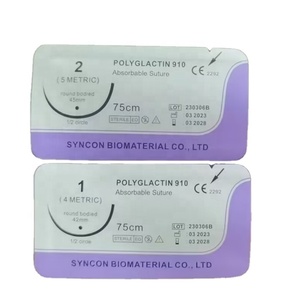
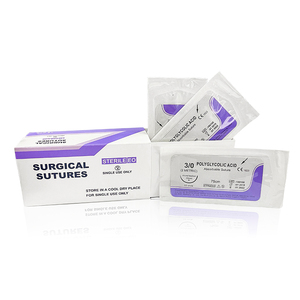
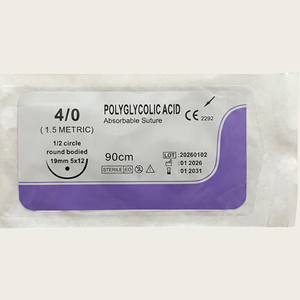
- Polyglycolic Acid (PGA) & Polyglactin 910 (PGLA): Synthetic braided absorbables that undergo hydrolytic degradation. PGA retains approximately 65–75% of initial tensile strength at 14 days post-implantation, achieving complete absorption in 56 to 70 days. Coating with Polycaprolactone and Calcium Stearate guarantees low tissue drag.
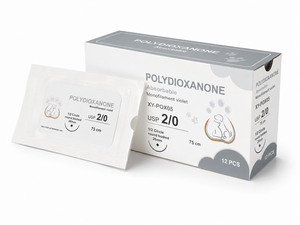
- Monofilament Polydioxanone (PDO / PDS): Provides extended wound support (50% strength retention at 28 days, full hydrolysis in 180–210 days). Essential for slow-healing fascia, pediatric cardiovascular surgery, and orthopedic reconstructions.
Why leading global medical distributors and healthcare tender organizations partner with our manufacturing plant for OEM wound closure devices.
Single-Site Vertical Integration
From raw silk filament degumming and polymer extrusion to precision braiding, micro-needle swaging, and final ethylene oxide (EO) sterilization—every step occurs under one roof in our Bengaluru facility, guaranteeing absolute batch chain of custody.
Regulatory Dossier Readiness
We supply comprehensive technical files compliant with EU MDR 2017/745, CE declarations of conformity, ISO 13485:2016 certificates, Free Sale Certificates (FSC), and ISO 10993 biocompatibility testing to expedite ministry of health registrations.
Micro-Swaging & Needle Alloys
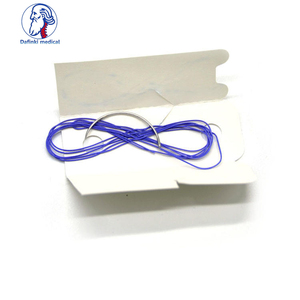
Our needles are forged from AISI 300 and AISI 400 series stainless steel. Utilizing laser-drilled end-hole swaging technology, we provide seamless thread-to-needle attachment that exceeds USP pull-out retention benchmarks by over 30%.
OEM & Private Label Packaging
Complete customization of primary foil pouches, secondary inner boxes, GS1/UDI barcodes, and multi-lingual Instructions for Use (IFU) in English, Spanish, French, Arabic, and Portuguese for direct market placement.
Validated EO Sterilization Cycle
Sterilization processes are strictly validated to ISO 11135 guidelines, guaranteeing a Sterility Assurance Level (SAL) of 10-6 with residual Ethylene Oxide and Ethylene Chlorohydrin levels well below ISO 10993-7 thresholds.
5-Year Accelerated Shelf Life
High-barrier primary aluminum foil packaging protects moisture-sensitive polymers and silk integrity, maintaining validated sterility and physical pull strength over a guaranteed 5-year storage span.
 Suture PlanetSurgical Wound Closure