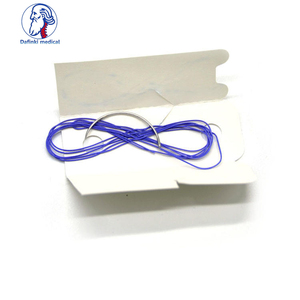
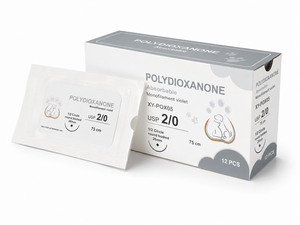
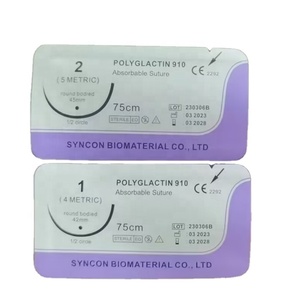
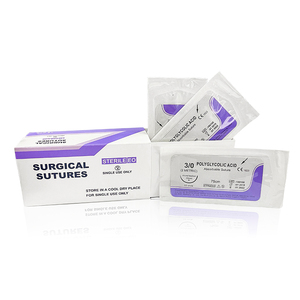
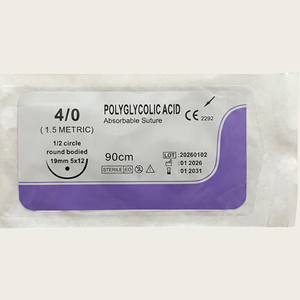
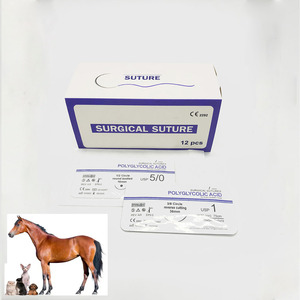
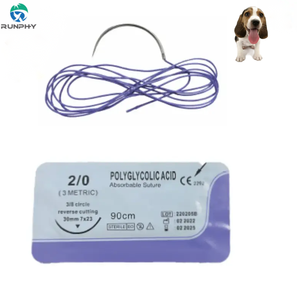
Explore our ISO 13485 & CE-certified absorbable and non-absorbable surgical sutures engineered with high-tensile 300/400-series stainless steel needles for clinical excellence.
A comprehensive analysis of raw material selection, micro-siliconization, geometry configuration, and swage pull-out security in modern wound closure device manufacturing.
In surgical wound closure, the surgical needle serves as the critical vector delivering thread through calcified tissue, delicate vascular walls, and dense fascial layers. Sourcing directors and hospital procurement managers must evaluate surgical needles based on three primary engineering criteria: Initial Penetration Force, Bending Resistance (Yield Moment), and Suture-to-Needle Swage Pull-Out Strength.
Top-tier surgical needle factories utilize specialized 300-series (e.g., 302, 304, 316) and 400-series (e.g., 420, 455) martensitic and austenitic stainless steel alloys. High-tensile stainless steel undergoes precision cold working to yield exceptional ductability and ultimate tensile strength, preventing needle fracture during arduous orthopedic or sternal re-alignment procedures.

Key technological advancements driving global OEM demand, regulatory changes, and material innovations over the next decade.
Modern micro-surgical and ophthalmic procedures demand specialized matte-black and non-reflective electro-coatings. These advanced surface treatments eliminate glare under high-intensity operating room lighting and surgical microscopes, improving depth perception for cardiovascular and plastic surgeons.
Procurement agencies are shifting toward knotless barbed monofilaments (PDO and PGLA). Engineered with precision micro-barbs cut into the suture body, these devices distribute tension evenly along the incision, reducing operative closure time by up to 50% and eliminating knot-related tissue reactions.
Surgical Site Infections (SSIs) represent a multi-billion dollar burden on hospital networks worldwide. Global buyers increasingly mandate antibacterial braided polyglactin 910 sutures coated with purified Triclosan, creating a zone of inhibition that deters bacterial colonization (Staphylococcus aureus, MRSA).
To avoid supply chain vulnerabilities highlighted during global trade disruptions, leading OEM brands favor vertically integrated factories. Facilities housing polymer synthesis, extrusion, braiding, needle swaging, and Ethylene Oxide (EO) sterilization under one roof deliver superior batch traceability.
Environmental standards are driving factories to optimize Ethylene Oxide (EO) cycles using low-residual aeration chambers and adopting Electron-Beam (E-Beam) sterilization. This ensures zero chemical residue while maintaining strict Sterility Assurance Levels (SAL 10⁻⁶).
Comparative physical characteristics, tensile strength retention curves, and absorption kinetics for clinical procurement planning.
| Material Code / Composition | Filament Structure | Tensile Strength Retention Profile | Absorption / Permanence Rate | USP Size Availability | Primary Surgical Specialty |
|---|---|---|---|---|---|
| Polyglactin 910 (PGLA 910) Co-polymer 90/10 Glycolide/L-lactide |
Braided & Coated | 75% at 14 days 50% at 21 days |
56 – 70 Days (Hydrolysis) | USP 8-0 to Size 2 | General Soft Tissue, OB/GYN, Gastrointestinal |
| Polyglycolic Acid (PGA) 100% Polyglycolic Acid |
Braided & Polycaprolactone Coated | 60% - 70% at 14 days 35% at 21 days |
60 – 90 Days (Hydrolysis) | USP 7-0 to Size 2 | General Surgery, Urology, Veterinary |
| Polydioxanone (PDO / PDS) Polymner of p-dioxanone |
Monofilament | 70% at 14 days 50% at 28 days |
180 – 210 Days (Extended) | USP 7-0 to Size 2 | Orthopedics, Fascial Closure, Pediatric Cardiac |
| Poliglecaprone 25 (PGCL) Glycolide & epsilon-Caprolactone |
Monofilament | 50% - 60% at 7 days 20% - 30% at 14 days |
91 – 119 Days | USP 6-0 to Size 1 | Plastic Surgery, Subcuticular Closure, Skin |
| Polypropylene (PP) Isotactic Polypropylene |
Monofilament | 100% Retained (Non-Absorbable) | Permanent Implant | USP 10-0 to Size 2 | Cardiovascular, Hernia Mesh Fixation, Vascular |
| Black Braided Silk Natural Organic Protein (Fibroin) |
Braided & Waxed / Silicone Coated | Gradual loss over time | Non-Absorbable (Encapsulated) | USP 7-0 to Size 2 | Dental, Ophthalmic, General Ligation |
Delivering end-to-end medical device manufacturing, strict quality management systems, and complete regulatory submission support.
We issue complete technical files including Declarations of Conformity, CE / EU MDR 2017/745 certificates, ISO 13485:2016 certifications, Free Sale Certificates (FSC), WHO-GMP, and ISO 10993 biocompatibility test protocols to ensure fast Ministry of Health approval.
Full customization across needle curvatures (1/4, 3/8, 1/2, 5/8 circle), needle point profiles, thread lengths (45cm to 150cm), foil artwork, multi-language Instructions for Use (IFUs), and GS1-compliant UDI barcode tracking systems.
Every manufactured batch undergoes rigorous USP and European Pharmacopoeia (EP) monograph testing. Pull-out force attachment testing, diameter variance checks, and knot tensile testing are recorded and stored for 11 years to support post-market surveillance.
Standard catalog configurations ship within 2 to 4 weeks. OEM and private-label orders dispatch within 5 to 7 weeks following artwork confirmation, with buffer stock programs maintained for high-volume tender commitments across 50+ countries.
Direct answers to critical technical, regulatory, and logistics questions submitted by hospital tender agents, distributors, and OEM buyers.
Our facility utilizes high-tensile 300-series (e.g., 302, 304, 316) and 400-series (e.g., 420, 455) medical-grade stainless steel wire. These alloys undergo proprietary heat-treatment and cold-drawing processes to provide optimal ductility and high resistance to bending or snapping when penetrating tough fibrous tissues like fascia, cartilage, or calcified vessels.
We deploy automated laser drilling and mechanical precision swaging equipment. Every single production lot is subjected to destructive pull-out force testing in accordance with USP and EP standards. This guarantees that needle attachment strength significantly exceeds international minimum threshold requirements, preventing intra-operative separation.
Every shipment is backed by a complete regulatory approval dossier. This package includes ISO 13485:2016 quality management system certification, CE Marks under EU MDR 2017/745, WHO-GMP certificate, Certificate of Analysis (CoA), Free Sale Certificate (FSC), ISO 10993 biocompatibility test data, and Ethylene Oxide (EO) sterilization validation reports (SAL 10⁻⁶).
Yes. We offer complete OEM customization. You can configure any combination of USP thread sizes (from 10-0 up to Size 2), thread lengths (45 cm to 150 cm), needle curvatures (1/4, 3/8, 1/2, 5/8 circle, or straight), and tip geometries (Taper Point, Cutting Edge, Reverse Cutting, Premium Precision Cut, Spatulated, Blunt Point) with custom foil branding and multi-language IFUs.
Sutures are sealed in primary medical-grade aluminum foil packs housed inside peelable secondary blister envelopes to prevent moisture degradation and gas penetration. Sterilized via validated Ethylene Oxide gas cycles, our products carry a validated 5-year shelf life when stored below 25°C away from direct sunlight.
Standard catalog items ship within 2 to 4 weeks. Custom OEM and private-label orders require 5 to 7 weeks for initial batch production due to custom foil printing and packaging plate setup. Repeat orders ship on an accelerated schedule, and container-level consolidation is supported for large-scale government healthcare tenders.
Whether expanding your distribution portfolio, submitting a government tender bid, or establishing a private-label OEM suture line, our engineering team provides complete technical files, free sample kits, and direct factory pricing.
Contact Us