ISO 13485:2016CE / EU MDR 2017/745WHO-GMPUSP & EP Standard
Top Trusted Suture Thread Manufacturer & Suppliers
Global B2B OEM & Tender Supplier of Bio-Absorbable, Non-Absorbable Medical Sutures & Precision Wound Closure Technology. Fully Documented Traceability for Human & Veterinary Surgical Markets.
Full Traceability
Polymer batch to EO sterilisation log verification.
Certified Integrity
ISO 13485 & CE MDR compliant cleanrooms.
Global Logistics
Exporting to 50+ countries with full registration dossiers.
Engineered to strict USP and EP monographs. Manufactured in sterile ISO Class 7 facilities with ultra-sharp stainless steel needles and consistent pull-out retention strength.
Absorbable PGA / PGLA
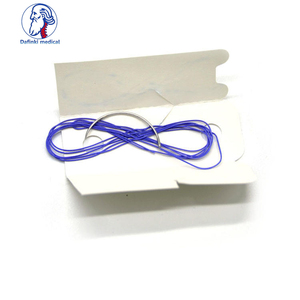
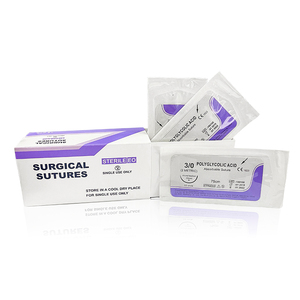
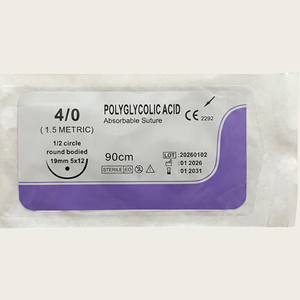
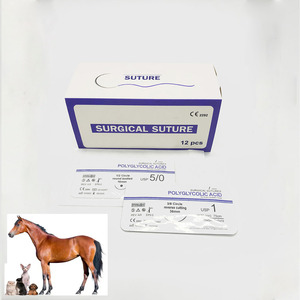
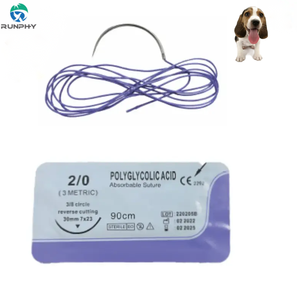
Veterinary Surgical Suture Absorbable PGA PGLA 910 Sterile Animal Suture for Dog Cat Pet Surgery
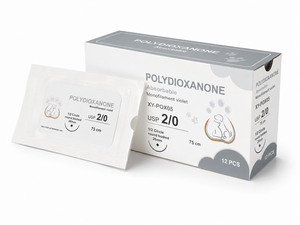
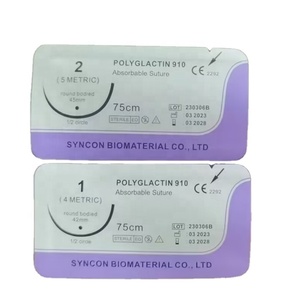
Synthetic absorbable polymers—primarily Polyglycolic Acid (PGA), Polyglactin 910 (PGLA), and Polydioxanone (PDO)—degrade via predictable non-enzymatic hydrolysis. Braided structures offer superior knot security and pliability for general tissue ligation, whereas smooth monofilaments (e.g., Poliglecaprone 25) minimize drag and bacterial harboring in delicate subcuticular closures.
Non-Absorbable Inert Polymers
For permanent structural support (such as cardiovascular, hernia mesh fixation, and orthopedic repair), monofilament Polypropylene, Polyamide (Nylon), and braided Polyester provide non-capillary inertness. Polypropylene retains permanent tensile strength without undergoing hydrolytic softening or enzymatic degradation over time.
Needle Swaging & Tensile Integrity
All surgical sutures undergo rigorous 100% mechanical pull-out testing to surpass USP pull-out requirements. Needles are micro-machined from 300-series and 400-series surgical stainless steel, featuring laser-drilled attachment holes that ensure a smooth needle-to-thread transition zone, significantly reducing tissue trauma.
Key shifts impacting global hospital purchasing, regulatory compliance dynamics, and OEM supply chain risk management for the next decade.
1. Tightening Regulatory Barriers & EU MDR Re-certification
Global medical device importers are facing intense pressure under EU MDR (2017/745) and updated FDA 510(k) mandates. Procurement leads are actively consolidating vendor lists, choosing manufacturers with ready Class III technical files, Clinical Evaluation Reports (CER), and validated ISO 10993 cytotoxicity and ISO 11135 EO sterilization reports to avoid market exclusion.
Supply chain shocks have highlighted the vulnerabilities of fragmented OEM sourcing. Procurement tenders now heavily favor integrated manufacturers that control extrusion, braiding, coating, needle swaging, and sterilisation within a single manufacturing facility. Single-site control eliminates batch variability and guarantees lot-for-lot consistency.
3. Growth in Veterinary & Specialized OEM Private-Labeling
The global companion animal surgical market is expanding rapidly alongside human healthcare demand. Suture distributors increasingly seek custom private-label solutions—tailoring foil artwork, barcode UDI formats, needle curvature combinations, and packaging configurations for specific regional veterinary tenders and private hospital networks.
50+
Global Export Markets
100%
In-House Manufacturing
10⁻⁶
Validated SAL Sterility
5 Years
Validated Foil Shelf Life
R&D Innovation Pipeline
Next-Generation Suture Technology Trends
From knotless tissue control to active infection prevention, advanced material science is redefining surgical wound closure performance.
Antibacterial & Antimicrobial Suture Threads
Surgical Site Infections (SSIs) represent a significant challenge in modern operating rooms. The incorporation of purified Triclosan coatings onto braided Polyglactin 910 and PGA thread surfaces creates a protective zone of inhibition, preventing bacterial colonization by Staphylococcus aureus and Staphylococcus epidermidis without compromising bio-absorption kinetics.
Barbed Knotless Tissue Control Devices
Barbed sutures utilize unidirectional or bidirectional microscopic barbs cut into monofilament PDO or Poliglecaprone cores. This design distributes tension uniformly across wound margins, eliminating the need to tie knots, reducing operative procedure time by up to 30%, and eliminating knot-related foreign body reactions.
Micro-Precision Geometry Needles
Developments in silicone-coated, ultra-sharp taper cutting and reverse cutting needles enable effortless penetration through tough, calcified, or fragile tissues. Micro-honed needle tips remain sharp even after repeated passes, preserving tissue architecture and minimizing post-operative scarring.
Enterprise Manufacturing Capabilities
Why Global Procurement Partners Choose Our Suture Platform
Operating from our modern facility in Bengaluru, India, we offer complete end-to-end wound closure manufacturing under strict ISO 13485:2016 and WHO-GMP compliance.
Integrated Single-Site Manufacturing
Polymer extrusion, fiber braiding, chemical coating, automatic needle swaging, 100% EO sterilisation, and blister packaging are performed in one controlled plant. This integrated approach ensures complete chain of custody and lot traceability.
Registration Dossiers & Regulatory Support
We provide complete product registration packages, including Declaration of Conformity, CE certificates, ISO 13485 credentials, Free Sale Certificates (FSC), Certificate of Analysis (CoA), and comprehensive biocompatibility test data for smooth Ministry of Health approvals worldwide.
Flexible OEM & Private-Label Solutions
Customized packaging options allow distributors to specify USP thread sizes, lengths, needle points, inner foil branding, box artwork, GS1-compliant barcodes, and multi-language IFUs matched precisely to local market demands.
Buyer Knowledge Base
Frequently Asked Questions (FAQ)
Direct technical and commercial guidance for hospital procurement teams, regulatory managers, and medical device importers.
What surgical suture materials are included in your product line?
We manufacture a comprehensive range of surgical wound-closure devices. Our absorbable suture portfolio includes Polyglactin 910 (PGLA), Polyglycolic Acid (PGA), Poliglecaprone 25 (PGCL), Polydioxanone (PDS/PDO), and Chromic/Plain Catgut. Our non-absorbable line features Monofilament Polypropylene, Nylon/Polyamide, Black Braided Silk, and Polyester. We also produce barbed knotless sutures, antibacterial triclosan sutures, polypropylene hernia mesh, and skin staplers.
Where are your sutures produced, and how is batch traceability maintained?
All products are manufactured at our integrated facility in Bengaluru, Karnataka, India. Production steps—including polymer extrusion, braiding, coating, needle swaging, Ethylene Oxide (EO) sterilization, and packaging—are managed under one quality system. Every box features a unique batch number that links directly to polymer lot certificates, needle wire heat numbers, and sterilisation cycle validation charts.
Which regulatory certifications and registration technical files do you supply?
Our facility operates under ISO 13485:2016, ISO 9001:2015, and WHO-GMP standards. Product technical dossiers conform to CE / EU MDR 2017/745 guidelines. For country-specific market registrations, we provide the Declaration of Conformity, Free Sale Certificate (FSC), Certificate of Analysis (CoA), ISO 10993 biocompatibility testing, EO sterilisation validation, and localized artwork files.
Can we request OEM private-label packaging and customized needle configurations?
Yes. We provide complete OEM and private-label manufacturing. Partners can configure USP size ranges (10-0 through 2), thread lengths (45cm to 150cm), needle geometry profiles (taper point, cutting, reverse cutting, tapercut, micro-point), primary inner foil designs, secondary cartons, UDI/GS1 barcodes, and multi-language Instructions for Use (IFUs).
What are the lead times and shipping terms for international tender orders?
Standard catalogue orders ship within 2 to 4 weeks. Custom OEM and private-label orders typically ship in 5 to 7 weeks for initial runs to allow for artwork approval and packaging tooling, with shorter lead times on repeat orders. We support FOB, CIF, CFR, and EXW shipping terms, consolidating shipments fromNhava Sheva or Chennai ports.
How is product sterility and shelf life verified?
Sutures are sealed in primary medical-grade aluminum foil pouches, placed within protective outer envelopes, and sterilized with Ethylene Oxide (EO) to achieve a Sterility Assurance Level (SAL) of 10⁻⁶ per ISO 11135. Accelerated and real-time stability testing confirms a 5-year shelf life when stored below 25°C away from direct moisture and heat.
Partner with a Certified Suture Manufacturer
Contact our export department for technical specifications, product registration files, or OEM private-label pricing. Our team responds within 24 hours.
 Suture PlanetSurgical Wound Closure