2026 Industry Benchmark Report

Top Trusted Titanium Mesh Manufacturers & Factories

Global Engineering Excellence in Surgical Titanium Mesh, Biomaterial Innovation & ISO 13485 Manufacturing Standards

Featured Surgical Sutures & Wound Closure Mesh Catalog

Direct supply from ISO 13485 and CE MDR-certified manufacturing lines. Select your required specification for hospital tenders, OEM private labelling, or direct medical importation.

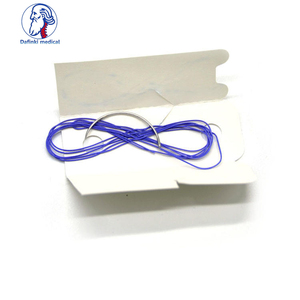
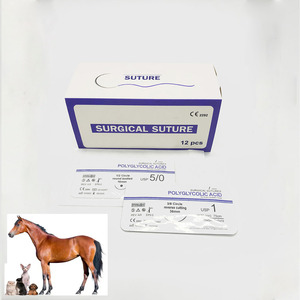
Absorbable Veterinary Surgical Suture Absorbable PGA PGLA 910

Veterinary Surgical Suture Absorbable PGA PGLA 910 Sterile Animal Suture

  • Grade: Synthetic Braided Polyglycolic
  • Retention: 75% at 14 Days
  • Sterilization: Ethylene Oxide (EO)
Inquire Now
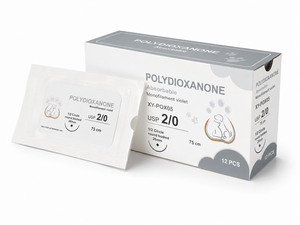
Braided PGA Polyglycolic Acid Absorbable Braided Surgical Suture

Polyglycolic Acid Absorbable Braided Surgical Suture XY-POX05 75cm

  • Coating: Polycaprolactone & Stearate
  • USP Range: 6/0 to 2
  • Hydrolytic Degradation: 60-90 Days
Inquire Now
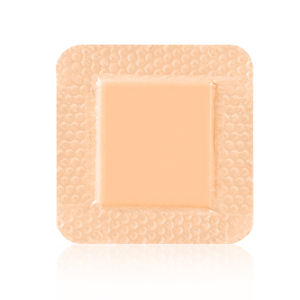
Wound Care Medical Absorbent Wound Suture Silicone Foam Dressing

Medical Absorbent Suture Matrix & Breathable Silicone Foam Dressing

  • Feature: Waterproof & Breathable
  • Application: Exudate Management
  • Biocompatibility: ISO 10993 Tested
Inquire Now
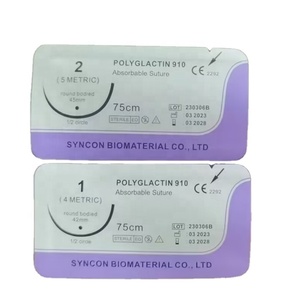
Catgut & PGLA Absorbable Polyglactin 910 Chromic Catgut Suture

Absorbable 3-0 4-0 Polyglactin 910 Chromic Catgut Surgical Suture

  • Needle: 300-Series Stainless Steel
  • Structure: Braided & Treated Collagen
  • Certificate: CE / WHO-GMP Compliance
Inquire Now
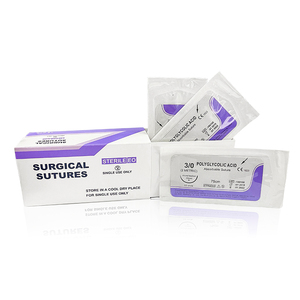
Surgical Kit Medical Consumables Absorbable Surgical Sutures Kit

Medical Consumables Absorbable Surgical Sutures Kit Polyglactin 910

  • Format: Sterile Multi-Pack Box
  • Standard: USP & EP Monograph
  • Custom OEM Branding Available
Inquire Now
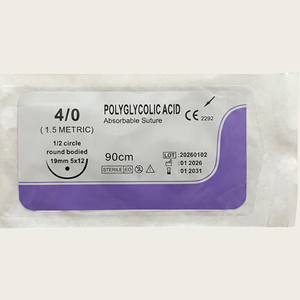
High Tensile High Tensile Strength Absorbable PGA Suture Thread

High Tensile Strength Absorbable PGA Suture Thread CE Certified

  • Shelf Life: 5-Year Validated
  • Material: 100% Polyglycolic Acid
  • Knot Security: Exceptional Grip
Inquire Now
Direct Factory Medical Absorbable POLYGLYCOLIC ACID PGA Surgical Suture

Factory Direct Medical Absorbable PGA Surgical Suture with Needle

  • Needle Geometry: Taper Cutting / Reverse
  • Packaging: Sealed Foil Primary Envelope
  • Quality: ISO 13485 Controlled Batch
Inquire Now
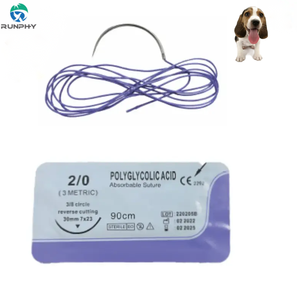
Sterile Disposable RUNPHY HC002 Medical Veterinary Suture Absorbable PGA

RUNPHY HC002 Medical Suture Absorbable Polyglycolic Acid Suture

  • SAL Level: 10⁻⁶ Sterility Rating
  • Pull-Out Strength: USP Exceeded
  • Export: Shipped to 50+ Global Markets
Inquire Now
50+
Global Export Markets
100%
In-House Quality Traceability
ISO 13485
Cleanroom Manufacturing
CE MDR
European Regulatory Compliance

State of the Art in Titanium Mesh & Surgical Biomaterials Manufacturing

Surgical reconstruction and soft-tissue reinforcement have entered a paradigm shift toward metallurgically optimized, highly bio-compatible mesh solutions. When evaluating Top Trusted Titanium Mesh Manufacturers & Factories, hospital procurement committees, biomedical engineers, and tier-1 distributors must look beyond baseline dimensions and assess micro-structural stability, fatigue resistance, and osteointegrative bio-reactivity.

“Information Gain Insight: Modern clinical outcomes depend not merely on raw tensile strength, but on the precise modulus match between the titanium lattice matrix and human bone or soft tissue structure, preventing stress shielding and accelerating vascular infiltration.”

Titanium mesh represents the pinnacle of implantable tissue repair technologies. Manufactured primarily from commercially pure titanium (CP Grade 1 through Grade 4 per ASTM F67) or surgical titanium alloys (Ti-6Al-4V ELI per ASTM F136), these meshes provide an unyielding structural framework for craniomaxillofacial (CMF) reconstruction, complex hernia repair, guided bone regeneration (GBR) in dental implantology, and spinal stabilization constructs.

Comparative Analysis: Pure Titanium Mesh vs. Titanised Mesh vs. Polymeric Synthetics

Understanding the mechanical and biological tradeoffs among surgical meshes is essential for risk-mitigated procurement. Below is a comprehensive engineering matrix evaluating key performance metrics across surgical mesh classes:

Performance Criterion Commercially Pure Titanium Mesh (CP Ti) Titanised Polypropylene Mesh (Ti-PP) Standard Synthetic Polypropylene (PP) Resorbable Synthetic (PGA / PGLA)
Metallurgical Standard ASTM F67 Grade 1-4 / ISO 5832-2 Titanium Coated Monofilament PP Polypropylene Polymer Monofilament Polyglycolic Acid Braided Matrix
Ultimate Tensile Strength 240 - 550 MPa 80 - 120 N/cm 40 - 70 N/cm 150 - 250 MPa (Initial)
Biocompatibility / Inflammatory Response Ultra-Low (Passive TiO₂ Oxide Film) Low (Covered Polymer Core) Moderate (Foreign-Body Granuloma Risk) Transient Hydrolytic Absorption
In-Vivo Permanent Support Permanent Structural Scaffold Permanent Tissue Integration Permanent Flexible Reinforcement Temporary (56-90 Days Support)
Vascular Ingrowth Porosity 65% - 85% Micro/Macro Pore Ratio High Pore Size (>1.5 mm) Medium to High Pore Size Dense Micro-Braided Lattice
Primary Clinical Scope CMF, Dental GBR, Trauma, Spine Abdominal Hernia, Pelvic Reconstruction Standard Inguinal/Ventral Hernia Veterinary, Soft Tissue Ligation

Enterprise Supply Infrastructure: From Raw Polymer & Metal to Sterile Packaging

Building upon a decades-long legacy of precision wound closure manufacturing—including ISO 13485:2016, ISO 9001:2015, WHO-GMP, and CE / EU MDR compliance—our integrated single-site production hub ensures complete vertical chain of custody.

ISO Class 7 Cleanroom Manufacturing

Every titanium lattice cutting, laser-profiling, needle swaging, and pouching cycle takes place within strictly controlled cleanrooms meeting ISO 14644-1 parameters to guarantee undetectable bioburden prior to final sterilization.

Validated EO & Gamma Sterilization

Sterilization processes are validated to a stringent Sterility Assurance Level (SAL) of 10⁻⁶ in full compliance with ISO 11135 and ISO 11137 standards, backed by real-time chemical indicator verification and parametric batch release protocols.

Turnkey Regulatory Dossiers

We supply complete Technical Files for EU MDR 2017/745, FDA 510(k) cross-reference data, Certificate of Analysis (CoA), Free Sale Certificates (FSC), and ISO 10993 biocompatibility testing packages for accelerated market entry.

Future Procurement Trends in Titanium Mesh & Surgical Implants (2026–2030)

As healthcare purchasing organizations (HPOs) and tender agencies modernize their procurement specifications, the global titanium mesh market is transitioning toward customizable, bio-interactive, and hybrid constructs. Key shifts shaping factory investments include:

1. Patient-Specific 3D Printed Titanium Mesh

Selective Laser Melting (SLM) and Direct Metal Laser Sintering (DMLS) enable factories to manufacture custom CMF meshes directly from CT scan DICOM data, reducing intraoperative bending time by up to 60%.

2. Titanised Synthetic Composites

Combining the light weight of polypropylene with a plasma-deposited titanium surface layer (Ti-PP) mitigates the shrinkage and chronic pain profiles traditional heavy synthetic meshes often induce.

3. Bioactive Surface Functionalization

Next-generation titanium meshes feature micro-anodized surfaces enriched with Hydroxyapatite (HA) or antimicrobial silver nanoparticles, promoting active osteoconduction while combating surgical site infections (SSIs).

Frequently Asked Questions by Surgical Device Importers & Hospital Buyers

Q1: What are the primary raw material grade requirements for medical titanium mesh?
Titanium meshes designed for permanent human implantation must adhere strictly to ASTM F67 (Unalloyed Commercially Pure Titanium Grades 1 through 4) or ASTM F136 (Ti-6Al-4V ELI - Extra Low Interstitial Alloy). CP Grade 1 offers the highest ductility for easy manual contouring in CMF procedures, whereas Grade 4 and Ti-6Al-4V offer superior yield strength for load-bearing cranial or orthopedic applications.
Q2: How do you verify the biocompatibility and non-cytotoxicity of manufactured mesh lots?
Every production lot undergoes full biological safety evaluations per ISO 10993 standards. This includes in-vitro cytotoxicity (ISO 10993-5), systemic toxicity (ISO 10993-11), intracutaneous reactivity (ISO 10993-10), and chemical characterization (ISO 10993-18). Certificates of Analysis documenting compliance are issued with every shipment batch.
Q3: Does your facility support OEM private labelling and custom packaging specifications?
Yes. We offer complete OEM/ODM solutions including customized mesh geometry laser cutting, specialized pore configuration, private label primary aluminum foil pouching, custom carton printing with GS1-128 / UDI barcoding, and multi-language Instructions for Use (IFU) translated for target regulatory jurisdictions.
Q4: What is the typical shelf life and storage protocol for sterile surgical mesh & sutures?
Our EO-sterilized surgical sutures, hernia meshes, and titanium products possess a validated 5-year shelf life when kept in original sealed moisture-barrier packaging under dry conditions below 25°C (77°F) away from direct sunlight.
Q5: What standard lead times apply for high-volume tender shipments?
Standard catalog products typically dispatch within 2 to 4 weeks upon order confirmation. OEM private-label programs involving new print plate tooling take 5 to 7 weeks for initial batch manufacturing, with shortened replenishment cycles for recurring contractual volumes.

Partner with a Documented Surgical Device Manufacturer

Elevate your hospital supply network or brand portfolio with certified wound closure devices, titanium surgical meshes, and custom regulatory support. Speak with our global export engineers today.