Industry Whitepaper
1. The 3D Mesh Manufacturing Landscape & The Polish Healthcare Market
The European surgical implants market is experiencing a profound paradigm shift. Driven by clinical demands for reduced post-operative pain, lowered recurrence rates, and faster recovery cycles, surgical procedures across Poland—ranging from inguinal hernia repair to complex abdominal wall reconstruction—have rapidly transitioned from traditional 2D flat meshes to anatomically pre-formed 3D spatial meshes. This whitepaper presents a rigorous analysis of 3D mesh factory capabilities, polymer engineering standards, and direct commercial procurement pathways tailored specifically for medical device distributors, public hospital purchasing groups (SPZOZ), and private healthcare networks operating in Poland.
In Poland, surgical care modernization overseen by the Narodowy Fundusz Zdrowia (NFZ) has prioritized minimally invasive techniques, such as Transabdominal Preperitoneal (TAPP) and Totally Extraperitoneal (TEP) laparoscopic procedures. Traditional two-dimensional flat sheets require manual intra-operative shaping, extensive tacks, or intricate suturing, which increases operative duration and elevates the risk of nerve entrapment. Conversely, 3D anatomical meshes engineered with precise 3D keyholes, pre-curved inguinal contours, and adaptive mechanical response align perfectly with human anatomical structures. For Polish clinical procurement directors, sourcing from certified 3D mesh factories that integrate warp-knitting, heat-setting, micro-drilling, and cleanroom packaging within a single facility offers a massive operational and clinical advantage.
Strategic Sourcing Insight for Polish Importers
Under the European Union Medical Device Regulation (EU MDR 2017/745), sourcing class IIb implants such as 3D hernia meshes demands absolute regulatory traceability. Factory-direct procurement that combines automated extrusion of monofilament polypropylene with in-house ethylene oxide (EO) sterilization guarantees that every lot landed at logistics hubs like Gdańsk, Warsaw, or Katowice arrives complete with valid CE certificates, ISO 13485:2016 audit compliance, and multi-language Instructions for Use (IFUs).
Single-Site Integrated Production
Polymer pellet extrusion, precision warp knitting, thermo-forming, cleanroom swaging, and validated EO sterilization run under a single roof in Bengaluru, India, eliminating third-party quality risks.
EU MDR & ISO 13485 Compliance
Full technical documentation dossiers, including Clinical Evaluation Reports (CER), GSPR checklists, and biocompatibility studies per ISO 10993, specifically tailored for Polish URPL registration.
USP Monograph Quality Assurance
100% batch release testing verifying needle attachment pull-out force, suture tensile retention, hydrolytic degradation profiles, and strict bioburden limits prior to export.
OEM & Private Label Packaging
Custom foil pouch printing, multi-language IFUs (including Polish, English, German), UDI/GS1 barcode integration, and tailored shelf box designs engineered for immediate EU distribution.
Competitive Direct Factory Pricing
Bypassing intermediate broker markups allows Polish importers and hospital supply chains to reduce consumable acquisition costs by 25-40% while raising clinical standards.
End-to-End Batch Traceability
Every box shipped contains a unique lot code linking directly to raw medical-grade polymer batches, needle stainless steel heats, and validated 10⁻⁶ SAL sterilization logs.
Local Clinical Integration
2. Application Scenarios Across Poland's Healthcare Ecosystem
The Polish healthcare market operates via a dual-track structure: public hospitals governed by regional NFZ contracts and rapidly expanding private clinical chains (e.g., in Warsaw, Kraków, Wrocław, Poznań, and Łódź). Understanding how 3D mesh products and specialized synthetic sutures integrate into local clinical protocols is key for commercial success.
Public Hospital Networks (SPZOZ & Academic Medical Centers)
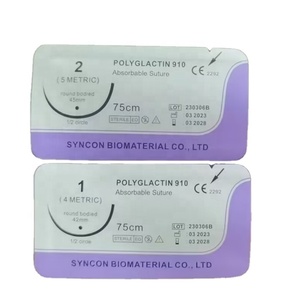
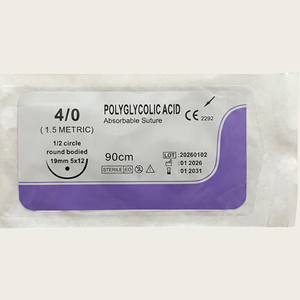
In large public surgical departments, high surgical volume mandates standardized, ultra-reliable consumables. 3D contoured meshes engineered from lightweight monofilament polypropylene are increasingly specified in public tenders. By reducing surgical duration per hernia procedure by an average of 12 to 18 minutes, operating rooms increase daily throughput while lowering anesthesia exposure for patients. Concurrently, high-tensile absorbable sutures such as Polyglactin 910 (PGLA) and Polyglycolic Acid (PGA) are standard consumables for fascial and subcuticular closure across emergency and elective surgical suites.
Private Day-Surgery Clinics & Specialized Hernia Centers
Poland's private medical sector places an immense premium on patient satisfaction and rapid post-operative rehabilitation. Private clinics heavily market tension-free, tack-free 3D mesh repair techniques that allow patients to return to work within days. Sourcing 3D pre-shaped meshes with self-gripping micro-structures or combining them with absorbable barbed knotless sutures gives private surgeons unmatched handling characteristics and cosmetically superior wound outcomes.
Veterinary Surgical Hospitals & Regional Animal Clinics
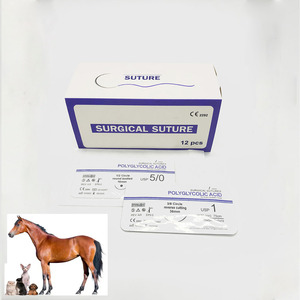
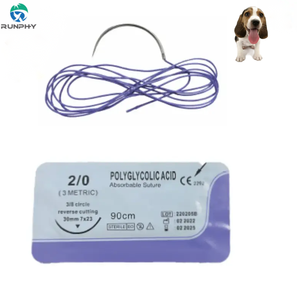
Beyond human healthcare, Poland's veterinary care market has expanded rapidly. Veterinary surgical practices in regions such as Mazowieckie, Wielkopolskie, and Śląskie require reliable absorbable sutures (PGA, PGLA 910, Chromic Catgut) for small animal abdominal surgeries, canine orthopedic repairs, and feline soft tissue procedures. Direct factory supply of sterile veterinary sutures provides Polish veterinary distributors with premium-grade surgical tools at highly competitive price points.
Strategic Market Evolution
3. Polish Market Trends & Regulatory Dynamics (2026-2030)
Navigating the Polish medical device supply chain requires a deep understanding of evolving regulatory frameworks, public procurement policies, and clinical preference shifts:
- Strict EU MDR 2017/745 Compliance: The grace periods for legacy CE certifications under MDD are expiring. Polish health authorities and URPL strictly audit medical device registrations. Foreign factories must provide robust Notified Body certificates, UDI-DI tracking, and comprehensive risk management documentation.
- Shift Toward Partially Absorbable & Composite 3D Meshes: Surgeons are moving away from permanent heavyweight implants toward composite meshes constructed from fast-absorbing PGA/PGLA fibers combined with lightweight polypropylene. This leaves minimal permanent prosthetic material post-healing.
- Growth of Laparoscopic & Robotic Hernia Procedures: Robotic-assisted surgery is expanding in major Polish urban medical centers. Pre-shaped 3D meshes designed specifically for robotic trocar placement and easy unrolling within the preperitoneal space are seeing surges in demand.
- Demand for Consolidated Supply Chain Partners: Hospital procurement desks are consolidating vendor lists. Sourcing 3D meshes, surgical sutures, silicone foam dressings, and skin staplers from a single ISO 13485-certified manufacturer drastically streamlines quality audits and logistics management.
 Suture PlanetSurgical Wound Closure