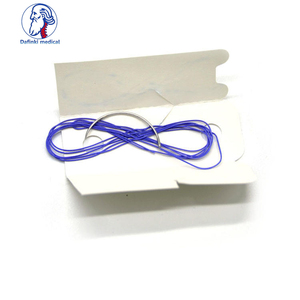
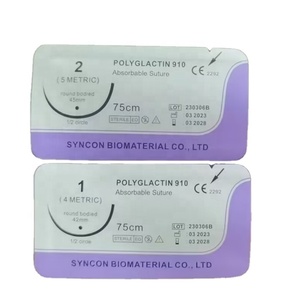
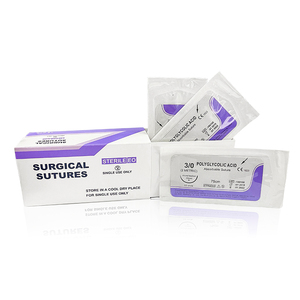
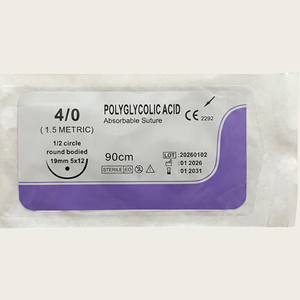
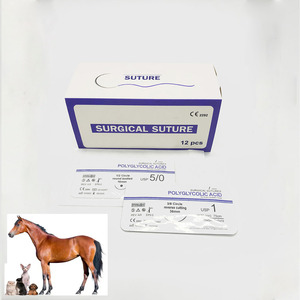
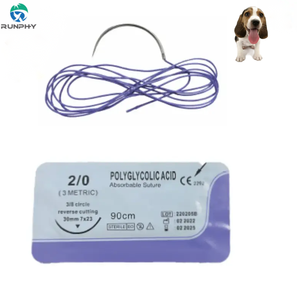
Veterinary Surgical Suture Absorbable PGA PGLA 910 Sterile Animal Suture for Dog Cat Pet Surgery
PGLA 910
EO Sterilized
Absorbable
Get a Quote
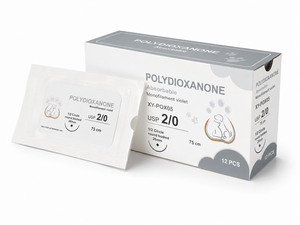
Polyglycolic Acid Absorbable Braided Surgical Suture XY-POX05 EO Sterilized 75cm Animal Veterinary Surgical Supplies
PGA Braided
75cm Length
High Tensile
Get a Quote
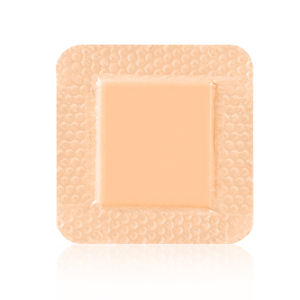
Free Samples Medical Absorbent Wound Suture Waterproof Breathable Waterproof Silicone Foam Wound Dressing
Wound Care
Silicone Foam
Waterproof
Get a Quote
Absorbable 3-0 4-0 75cm Polyglactin 910 Chromic Catgut Surgical Suture with Needle Veterinary
USP 3-0 / 4-0
Chromic Catgut
Precision Needle
Get a Quote
Risenmed Medical Consumables Absorbable Surgical Sutures Kit Threads Polyglactin 910(PGLA910)Sutures
PGLA Kit
Surgical Grade
Multi-Pack
Get a Quote
High Tensile Strength Absorbable PGA Suture Thread CE Certified Shelf Life for Veterinary Clinics Sheep Nylon
CE Certified
PGA / Nylon
Extended Shelf-Life
Get a Quote
China Factory Cheapest Price Medical Absorbable POLYGLYCOLIC ACID PGA Surgical Suture with Needle for Veterinary Vet Pet Animal
Factory Direct
PGA Absorbable
Vet Approved
Get a Quote
RUNPHY HC002 Medical Veterinary Suture Absorbable Polyglycolic Acid PGA Surgical Suture Needle Disposable
Disposable
Single-Use
PGA Wound Closure
Get a Quote
50+
Global Export Markets
10⁻⁶
Sterility Assurance Level (SAL)
100%
Single-Site Traceability
Technical Whitepaper: Next-Generation Antibacterial Barbed Sutures in Modern Surgical Protocols
In high-volume surgical centers across the Midwestern United States—most notably within the dense medical ecosystems of Cook County and the Greater Chicago area—the prevention of Surgical Site Infections (SSIs) and the reduction of Intraoperative Operating Room (OR) time have emerged as vital clinical metrics. Antibacterial barbed sutures represent a paradigm shift in mechanical wound closure, synthesizing bi-directional micro-barb geometric profiling with broad-spectrum antimicrobial agent impregnation.
Traditional surgical closure relies heavily on manual knot tying, which creates localized tension spikes, ischemia, and potential bacterial colonization points within knot nests. Knotless barbed sutures eliminate these friction points by distributing tensile strength uniformly along the entire length of the incisional wound. When impregnated with broad-spectrum antimicrobial agents like Triclosan (TCX) or chlorhexidine formulations, these sutures create a sustained zone of inhibition that prevents pathogen adherence—specifically targeting common hospital-acquired pathogens such as Staphylococcus aureus, Staphylococcus epidermidis, and methicillin-resistant strains (MRSA).
Information Gain Clinical Benchmark: Comparative biomechanical analysis demonstrates that knotless barbed sutures reduce fascial and dermal closure duration by 35% to 50% compared to traditional interrupted knot techniques, while providing equivalent or superior burst-pressure resistance in laparoscopic, orthopedic, and soft-tissue resections.
Mechanics of Barbed Micro-Architecture & Antimicrobial Elution
The structural integrity of our antibacterial barbed sutures relies on precision micro-machining or continuous mono-filament extrusion processes. Micro-barbs are cut at mathematically optimized angles (typically 12° to 28° relative to the longitudinal axis) and helical spacing configurations. As the needle traverses the fascial or subcuticular tissue, the barbs collapse against the core filament to minimize insertion force and tissue drag. Upon tension application in the reverse direction, the barbs fan outward, anchoring securely into the surrounding collagen fibers.
The antibacterial mechanism operates via controlled molecular elution. As biological fluids interact with the polymer matrix (whether Polydioxanone [PDO], Polyglactin 910 [PGLA], or Polyglycolic Acid [PGA]), the integrated antimicrobial agent is gradually released at concentrations exceeding the Minimum Inhibitory Concentration (MIC) required for clinical pathogen suppression over a critical 14 to 28-day post-operative window.
Zero-Knot Ischemia Mitigation
Eliminates localized pressure necrosis caused by traditional knots, promoting microvascular perfusion and rapid tissue healing.
Active Zone of Inhibition
Impregnated with purity-verified Triclosan, establishing a bacterial defense zone around the suture line for up to 30 days.
Uniform Tension Distribution
Helical micro-barb array locks into tissue matrices evenly, preventing wound dehiscence during post-operative patient movement.
Localized Surgical Application Scenarios Serving the Chicago & Midwest Ecosystem
Chicago stands as a premier medical hub in North America, encompassing world-class academic health systems (such as Rush University Medical Center, Northwestern Medicine, The University of Chicago Medicine, and Cook County Health), extensive outpatient surgical centers (ASCs), and highly specialized veterinary trauma networks across Chicagoland. Each of these care environments demands tailored wound closure solutions aligned with strict regulatory standards and local clinical requirements.
1. High-Volume Academic Medical Centers & Hospital Networks
Within major Chicago teaching hospitals, surgical departments perform thousands of complex abdominal, gynaecologic, orthopedic, and plastic reconstruction procedures monthly. The adoption of antibacterial barbed sutures in deep fascial layers and subcuticular closures has directly contributed to lowering 30-day post-operative SSI rates. Our supply chain supports hospital inventory managers with pre-configured sterile kits that meet U.S. Pharmacopeia (USP) monographs and FDA quality expectations, minimizing backorders for critical surgical runs.
2. Outpatient Ambulatory Surgery Centers (ASCs) across Cook, DuPage, & Lake Counties
The rapid shift toward outpatient surgical procedures in suburban Chicago centers requires materials that optimize surgical efficiency while guaranteeing home-recovery safety. Knotless antibacterial sutures allow surgeons to accelerate closure times in arthroscopic joint repairs, hernia mesh fixations, and cosmetic procedures. Faster OR turnover translates directly to increased surgical throughput and reduced overhead for ambulatory management groups.
3. Veterinary Hospitals & Emergency Referral Centers
Chicagoland is home to leading veterinary referral centers (including MedVet Chicago, Premier Veterinary Group, and regional emergency animal hospitals) specializing in canine TPLO (Tibial Plateau Leveling Osteotomy), soft tissue resection, and feline abdominal surgery. Veterinary surgeons require high-tensile absorbable materials like PGLA 910 and PGA with robust needle attachment strength to withstand dynamic tension caused by uncooperative animal patients post-surgery.
Midwest Seasonal Considerations: Chicago's extreme seasonal temperature swings—from freezing winter sub-zero blasts to high humidity summer conditions—demand robust primary foil packaging. Our dual-layer aluminum foil primary packs with desiccant protection guarantee an uncompromised 5-year shelf life under varying environmental storage conditions.
Technical Specifications & Performance Matrix
Review the mechanical and chemical parameters of our primary absorbable and non-absorbable surgical suture lines exported to North American procurement partners.
| Material Family |
Filament Structure |
Antimicrobial Coating |
Tensile Retention Rate |
Complete Absorption |
Primary Clinical Indications |
| PGLA 910 (Polyglactin) |
Braided & Coated |
Optional Triclosan (TCX) |
75% at 14 days / 50% at 21 days |
56 – 70 Days |
Soft tissue approximation, OB/GYN, General Surgery |
| PGA (Polyglycolic Acid) |
Braided & Coated |
Broad-Spectrum Agent |
70% at 14 days / 40% at 21 days |
60 – 90 Days |
Veterinary surgery, Gastrointestinal closure |
| Polydioxanone (PDO / PDS) |
Monofilament / Barbed |
Surface-Impregnated |
70% at 14 days / 50% at 28 days |
180 – 210 Days |
Fascial closure, Orthopedics, Paediatric surgery |
| Poliglecaprone 25 |
Monofilament |
Available on Request |
50% – 60% at 7 days |
91 – 119 Days |
Subcuticular closure, Cosmetic & Plastic Surgery |
| Polypropylene |
Monofilament |
Non-Absorbable Inert |
Permanent (0% Loss) |
Non-Absorbable |
Cardiovascular, Hernia Mesh Fixation, Vascular |
Midwest Procurement & Healthcare Growth Trends
Healthcare procurement strategies in the U.S. Midwest have undergone significant transformation. Hospitals and group purchasing organizations (GPOs) are moving away from sole-source supply monopolies toward resilient multi-tiered sourcing models. Key market trends driving antibacterial barbed suture adoption serving Chicago include:
- CMS Value-Based Purchasing Compliance: The Centers for Medicare & Medicaid Services (CMS) impose financial penalties on healthcare networks with high 30-day hospital-acquired condition rates. Investing in antibacterial wound closure devices directly mitigates SSI risk penalties.
- OR Cost Optimization: With operating room costs estimated between $62 and $100 per minute in major U.S. hospitals, saving 10 to 15 minutes per deep closure procedure using knotless barbed platforms yields thousands of dollars in direct intraoperative savings.
- Demand for OEM & Private Label Solutions: Regional medical distributors in Illinois are increasingly launching proprietary private-label suture lines to offer cost-effective alternatives to Tier-1 brand names while maintaining identical regulatory standards.
Enterprise Manufacturing Excellence & Global Export Infrastructure
As a leading surgical suture manufacturer operating under ISO 13485:2016, CE / EU MDR 2017/745, ISO 9001:2015, and WHO-GMP certifications, our single-site manufacturing facility in Bengaluru, India delivers end-to-end quality control from raw polymer extrusion to sterile packaged delivery.
Single-Site Integrated Production
Extrusion, precision braiding, chemical coating, laser drilling, needle swaging, and ethylene-oxide (EO) sterilization take place within one unified cleanroom facility, preventing supply chain fragmentation.
Full Batch Traceability
Every single box shipped to Chicago contains a unique batch identifier tracking back to raw polymer lots, needle pull-out test records, coating logs, and EO sterilisation cycle data retained for 11 years.
OEM & Customized Swaging
Complete customization across 120+ stainless-steel needle geometries (300 series and 400 series alloy), custom thread lengths (45cm to 150cm), UDI/GS1 barcodes, and multi-language packaging.
Frequently Asked Questions for Chicago Sourcing Managers & Distributors
Find direct technical and commercial answers regarding local regulatory compliance, shipping logistics to Illinois, and product customization.
Do your antibacterial barbed sutures meet USP and U.S. FDA technical benchmarks?
Yes. All absorbable and non-absorbable sutures are manufactured strictly in accordance with United States Pharmacopeia (USP) monographs for tensile strength, needle attachment integrity, and diameter tolerances. Full technical documentation, Declaration of Conformity, ISO 13485:2016 certificates, and biocompatibility validation reports (ISO 10993 series) are provided with every shipment.
What is the typical shipping lead time to O'Hare International Airport (ORD) or Chicago logistics hubs?
Standard catalogue product codes ship within 2 to 4 weeks via direct air freight to Chicago O'Hare (ORD) or regional logistics centers. For custom OEM or private-label projects requiring specialized packaging artwork sign-off, initial lead times range from 5 to 7 weeks, with expedited buffer stock schedules available for recurring contractual orders.
How does Triclosan coating prevent Surgical Site Infections in surgical settings?
Triclosan acts by inhibiting the bacterial enzyme ENR (estrogen-like carrier protein reductase), blocking fatty acid synthesis essential for bacterial cell wall integrity. By incorporating high-purity Triclosan into the suture coating, a localized barrier is maintained that prevents bacterial colonization (biofilm formation) on the suture strand without impairing systemic wound healing.
Can medical distributors in Illinois order custom needle-and-thread combinations?
Absolutely. We specialize in custom needle swaging. Buyers can select from over 120 needle configurations (taper point, reverse cutting, precision spatula, tapercut) paired with specific thread diameters (USP 8-0 through Size 2), custom length cuts, and private-label box artwork with GS1 UDI compliance.
What is the shelf-life and sterility assurance level (SAL) of shipped packages?
Our sutures undergo validated Ethylene Oxide (EO) sterilization cycles achieving a Sterility Assurance Level (SAL) of 10⁻⁶. Packed in high-barrier hermetically sealed aluminum foil envelopes inside secondary peel-open pouches, products carry a validated 5-year shelf life when stored under standard warehouse conditions.
Partner with a Global Leader in Antibacterial & Barbed Suture Manufacturing
Request comprehensive technical dossiers, physical sample kits, or private-label pricing tailored for Chicago health systems, distributors, and veterinary networks.
 Suture PlanetSurgical Wound Closure