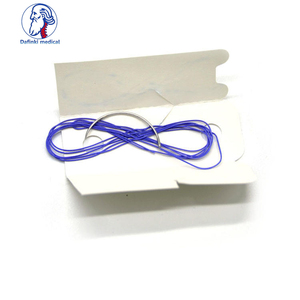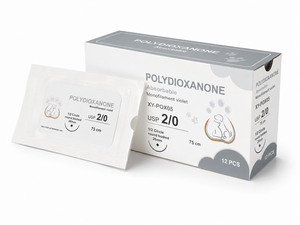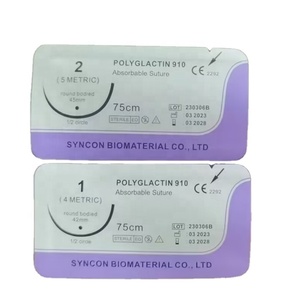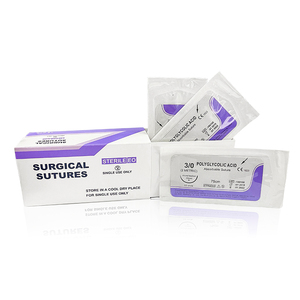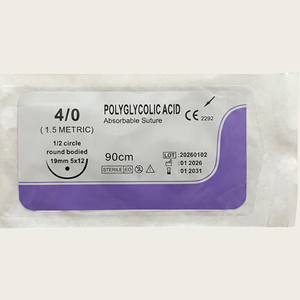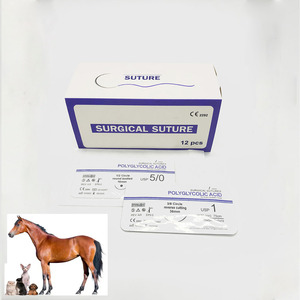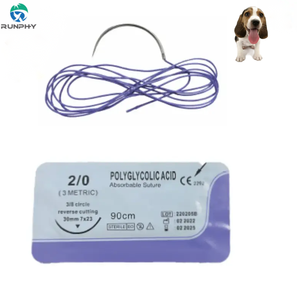
Engineered to meet the stringent demands of New Zealand operating theatres, private day-surgeries, and pastoral veterinary clinics. Every lot features validated 10⁻⁶ sterility and complete USP monograph compliance.
Understanding tissue tension distribution, knotless mechanics, and material degradation profiles in modern clinical and veterinary procedures.
Traditional surgical closure relies on manual knots, which create localized stress points, ischemic tissue zones, and potential points of failure. Barbed suture technology utilizes micromechanical helical barbs engineered directly into the monofilament core. These tiny anchors grip the surrounding fascia or subcutaneous tissue, evenly distributing tension across the entire length of the incision line. In laparoscopic procedures performed throughout New Zealand hospitals, knotless sutures eliminate the technical challenge of intra-corporeal knot tying, reducing closure times by up to 50%.
Surgical outcomes depend fundamentally on polymer chemistry. Our barbed and conventional suture lines utilize medical-grade Polydioxanone (PDO/PDS), Polyglactin 910 (PGLA), and Polyglycolic Acid (PGA). PDO monofilaments provide extended wound support (retaining ~50% tensile strength at 28 days) via slow hydrolytic ester degradation into monomeric hydroxyethoxyacetic acid. PGLA 910 and PGA offer accelerated absorption kinetics ideal for high-vascularity soft tissue repair where rapid healing renders permanent retention unnecessary.
Knot bulk represents the primary source of foreign-body reaction, suture granuloma formation, and surgical site infection (SSI). By eliminating knots, barbed knotless sutures minimize foreign material volume within the wound bed. Furthermore, un-barbed smooth monofilaments like Poliglecaprone-25 and PDS reduce tissue drag to zero, preventing micro-tearing during subcuticular skin closure in cosmetic, reconstructive, and high-motion joint stabilization surgeries.
Recent health-economic evaluations within public and private surgical networks across Auckland, Canterbury, and Wellington indicate that incorporating knotless barbed sutures in total hip/knee arthroplasty capsule closures and laparoscopic hysterectomies saves an average of 9 to 14 minutes of surgical time per operation. This reduction directly lowers operating room burn-rates while decreasing anesthesia duration for patients.
| Suture Material | Structure Type | In-Vivo Tensile Retention | Complete Absorption Time | Primary Surgical Indications |
|---|---|---|---|---|
| Polydioxanone (PDO / PDS) | Knotless Barbed / Monofilament | 70% at 14 days · 50% at 28 days | 180 – 210 Days | Abdominal wall fascia, orthopaedic capsule, laparoscopic surgery |
| Polyglactin 910 (PGLA) | Braided & Coated / Barbed | 75% at 14 days · 50% at 21 days | 56 – 70 Days | General soft tissue approximation, OB/GYN, bowel anastomosis |
| Polyglycolic Acid (PGA) | Braided & Coated Synthetic | 65% at 14 days · 40% at 21 days | 60 – 90 Days | Subcuticular closure, veterinary soft tissue, mucosal closure |
| Poliglecaprone-25 | Ultra-Smooth Monofilament | 50% – 60% at 7 days | 91 – 119 Days | Plastic & reconstructive surgery, cosmetic skin closure |
| Chromic Catgut | Treated Natural Collagen | Tension retention 14 – 21 days | 90 Days (Variable) | Veterinary mucosal repair, fast-healing visceral tissues |
Tailored wound closure technologies adapted to the unique clinical environments of the North and South Islands.
In major metropolitan health hubs such as Auckland City Hospital, Middlemore, Wellington Hospital, and Christchurch Hospital, demand for high-efficiency, sterile wound closure is paramount. Our barbed knotless PDS and PGLA sutures are heavily deployed in laparoscopic urology, deep pelvic reconstruction, and cosmetic plastic surgery. The self-anchoring mechanism ensures leak-tight parenchymal closures without requiring assistant tensioning.
New Zealand’s agricultural backbone—spanning the Waikato, Taranaki, Canterbury, and Southland pastoral regions—requires ultra-durable veterinary sutures. Our high-tensile PGA braided threads and non-absorbable heavy nylon lines are heavily utilized for field procedures including bovine caesarean sections, left displaced abomasum (LDA) omentopexy, and sheep abdominal repairs. These sutures withstand harsh paddock environments, moisture, and high animal mobility.
Equine surgical facilities in Cambridge and Christchurch, alongside companion animal veterinary practices nationwide, rely on precise absorbable sutures for canine/feline spays, tendon repairs, and equine soft-tissue surgery. Smooth monofilaments like Poliglecaprone-25 prevent post-operative licking and tissue irritation, ensuring clean healing and minimal scarring.
Navigating Medsafe WAND notifications, PHARMAC tender criteria, and sustainable green logistics in the South Pacific.
Medical devices supplied into New Zealand must strictly comply with Medsafe regulations (Medicines and Medical Devices Safety Authority) and be registered on the WAND (Web Assisted Notification of Devices) database. Our manufacturing plant operates under full ISO 13485:2016 certification with CE / EU MDR technical dossiers ready to support seamless distributor notification and compliance audits.
With PHARMAC managing public sector medical device procurement for Te Whatu Ora, healthcare providers demand clear cost-containment without compromising clinical outcomes. Our direct-factory supply model eliminates intermediary markups, offering New Zealand hospital procurement managers premium barbed knotless and conventional absorbable sutures at 25% to 40% cost reductions compared to legacy multinational brands.
In alignment with New Zealand’s commitment to environmental sustainability, our sterile packaging utilizes recyclable outer cardboard cartons, non-toxic soy-based printing inks, and optimized aluminum foil blister pouch configurations that reduce packaging waste mass by up to 18% per 36-pack carton without compromising moisture barrier integrity.
Complete single-site production control, batch traceability, and custom OEM manufacturing.
Unlike suppliers who outsource needle attachment or sterilization, every stage of our production runs under one roof: polymer extrusion, high-precision micro-braiding, protective coating, mechanical barbing, laser-drilled needle swaging, validated Ethylene Oxide (EO) sterilization, and sterile barrier pouch sealing. This guarantees complete chain-of-custody oversight.
Every single box dispatched to Auckland, Tauranga, Lyttelton, or Wellington carries a distinct batch matrix code linking directly to raw polymer lot certificates, stainless-steel needle pull-out test data, coating application logs, and EO sterilization cycle charts. Data is retained for 11 years to ensure effortless post-market surveillance.
We empower local New Zealand medical distributors and veterinary wholesalers to build proprietary brands. From custom thread lengths (45cm to 150cm), specialized needle radii (1/4, 3/8, 1/2, 5/8 circle taper/cutting), to multi-language foil printing and custom UDI/GS1 barcoding, our engineering team manages the complete artwork-to-box workflow.
Everything you need to know regarding regulatory compliance, shipping logistics, and product specifications.
Yes. Our manufacturing facilities are certified under ISO 13485:2016 and WHO-GMP. All products carry CE certification (under EU MDR standards) and complete technical files, allowing New Zealand distributors to easily complete Web Assisted Notification of Devices (WAND) registration with Medsafe prior to commercial distribution.
Standard catalog items ship within 2 to 3 weeks from order confirmation. Air freight delivery to Auckland Airport (AKL) or Christchurch Airport (CHC) typically takes 4 to 7 business days. Sea freight shipments to Ports of Auckland, Tauranga, or Lyttelton generally take 18 to 25 days depending on vessel routing.
Our barbed sutures feature mathematically spaced, helical anchor cuts designed to preserve the tensile strength of the solid monofilament core. Dynamic pull testing demonstrates that our barbed PDO and PGLA lines hold tension equal to or exceeding conventional knotted sutures, while preventing the point-load tissue tear-through associated with traditional knotting.
Absolutely. For pastoral livestock surgery in New Zealand, we regularly produce heavy-gauge USP 1, 2, and 0 sutures fitted with extra-strong, siliconized 40mm to 65mm heavy reverse-cutting needles designed to pierce tough bovine and ovine hide without bending or detaching from the swage.
All absorbable sutures are sealed inside moisture-impermeable aluminum primary foil pouches containing desiccants. Supported by real-time and accelerated aging data, our sutures feature a validated 5-year shelf life when stored below 25°C in dry conditions, away from direct sunlight.
Yes. We offer turnkey OEM/private-label services. We can print your company branding, logo, local contact information, and GS1 UDI compliant barcodes directly onto primary foil pouches, inner boxes, and outer shipping cartons, with artwork sign-off completed prior to production.
Request controlled technical datasheets, CE regulatory dossiers, evaluation samples, or direct wholesale quotations tailored for New Zealand healthcare networks and veterinary distributors.