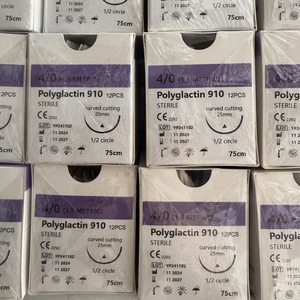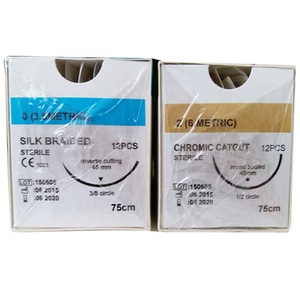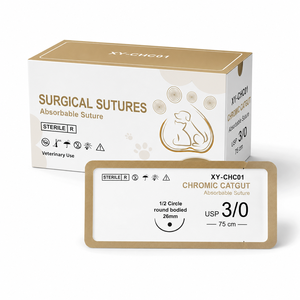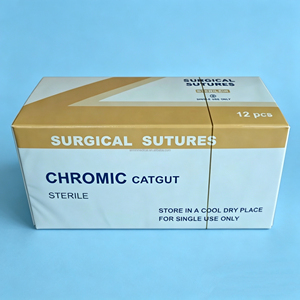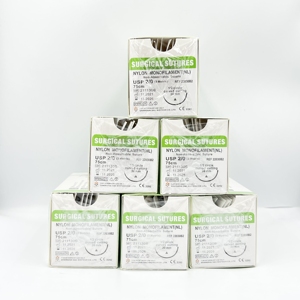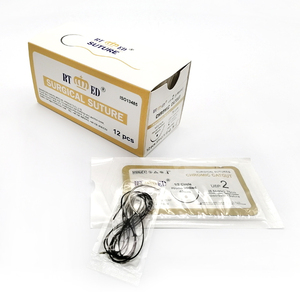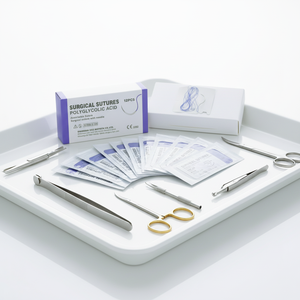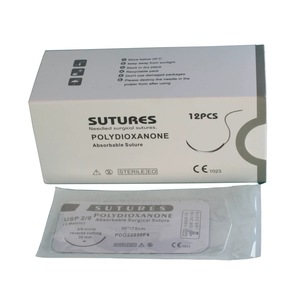
Explore our top export-grade surgical suture formulations manufactured under single-site ISO 13485:2016 control, offering precise absorption profiles and high knot security.
Catgut sutures remain a foundational column of organic absorbable wound closure technology, serving a specialized and persistent role across London’s clinical ecosystem—spanning private surgical clinics on Harley Street, academic research institutions, oral surgery suites, and high-volume veterinary surgical networks across Greater London. Extracted from the purified submucosal layer of bovine or ovine intestines, catgut is predominantly composed of pure fibrous collagen strands processed to stringent international pharmacopeial monographs (USP & EP).
Unlike synthetic absorbable polymers such as Polyglactin 910 (PGLA) or Polyglycolic Acid (PGA)—which undergo hydrolytic cleavage via water molecule absorption—catgut sutures are absorbed in vivo through enzymatic digestion. Tissue proteases and lysosomal enzymes secreted by local macrophages actively breakdown the collagen structure. This biological degradation mechanism makes catgut uniquely suitable for tissues characterized by rapid healing kinetics where long-term foreign body presence is undesirable.
Plain Catgut retains natural collagen untreated by metallic salts, maintaining tensile strength for 7 to 10 days with total enzymatic absorption completed within 70 days. In contrast, Chromic Catgut is treated with trivalent chromium salts (chromic acid solution) during ribbon processing. This tanning treatment cross-links the collagen fibers, significantly delaying enzymatic breakdown to extend tissue support for 21 to 28 days and full bio-absorption to 90–100 days.
London surgeons across dental and veterinary specialties value catgut for its natural pliability once hydrated. Wet-packaged in alcohol-water preserving solution, catgut strands demonstrate immediate handling softeness, minimal strand memory, and exceptional knot seating strength. The friction coefficient of natural collagen allows knots to lock firmly under lower throw counts compared to stiff monofilament synthetics.
Our surgical needles are forged from 300-series corrosion-resistant stainless steel, utilizing precision laser drilling and automated swaging. Pull-out force values strictly exceed USP requirements, eliminating needle-strand detachment during tough fascial or mucosal penetration in high-stress surgical maneuvers.
In accordance with UK Medicines and Healthcare products Regulatory Agency (MHRA) protocols and post-Brexit UKCA guidelines, imported biological sutures must verify complete BSE/TSE (Bovine Spongiform Encephalopathy) clearance. Suture Planet sources raw collagen exclusively from verified EDQM-certified herds in disease-free geographical regions, accompanied by comprehensive TSE risk evaluation certificates, ISO 13485:2016 audit logs, and validated Ethylene Oxide (EO) sterilization validation reports.
From premier Harley Street surgical suites to public NHS Trust facilities and busy veterinary referral practices across the Home Counties, our suture solutions are optimized for localized demands.
In London’s private dental and cosmetic clinics, Chromic Catgut USP 3/0 and 4/0 swaged onto 3/8 circle reverse cutting needles are heavily specified for gingival flap closure, tooth extraction socket approximation, and minor oral mucosal repairs. The gradual enzymatic absorption eliminates the physical and psychological trauma of suture removal for private patients, while the soft knot ends prevent tongue irritation.
Veterinary practice chains and equine surgery centers throughout Outer London (Surrey, Essex, Hertfordshire borders) rely on Chromic Catgut USP 2/0, 0, and 1 for routine feline/canine gonadectomy (spay and neuter), visceral soft-tissue ligation, and subcutaneous tissue closure. High knot security ensures sutures remain locked even during active post-operative animal movements.
In NHS emergency departments and surgical training centers across Greater London (such as Guy’s & St Thomas’, King’s College Hospital, and Royal Free London), bulk sterile suture lines supply internal mucosal re-approximation and emergency repair protocols requiring reliable USP tensile metrics and complete lot traceability.
With the UK transition toward UKCA marking alongside recognized CE certification under EU MDR 2017/745, London medical buyers are restructuring vendor qualified supplier lists (QSL). Procurement managers require dual-compliant documentation—including Free Sale Certificates, ISO 13485 verification, and full technical dossiers—to navigate customs clearance seamlessly at London Gateway, Tilbury, and Heathrow cargo ports.
Under the NHS Net Zero Roadmap target for 2045, healthcare procurement desks across London favor manufacturers optimizing sterile barrier packaging. By reducing outer box volumes and using 100% recyclable foil laminates without compromising Ethylene Oxide (EO) sterile barrier integrity (SAL 10⁻⁶), exporters significantly reduce scope 3 supply chain carbon footprints.
Recent years saw significant lead-time inflation and price markups from traditional UK distribution intermediaries. Suture Planet’s direct manufacturer-to-importer model bridges London buyers straight to single-site manufacturing in Bengaluru, slashing lead times to 2–4 weeks for catalogue codes and eliminating multi-tiered broker margins.
Compare physical characteristics, in-vivo tensile strength retention, absorption rates, and primary surgical indications across our complete absorbable portfolio.
| Material Type | Composition / Structure | Tensile Retention Profile | Full Absorption Time | USP Size Availability | Primary Clinical Indications |
|---|---|---|---|---|---|
| Plain Catgut | Natural purified collagen (twisted monofilament) | 50% at 7–10 days | 60–70 days (Enzymatic) | USP 6-0 to 2 | Mucosa, rapid healing tissue, ophthalmic, dental |
| Chromic Catgut | Collagen treated with chromic salt cross-linking | 50% at 21–28 days | 90–100 days (Enzymatic) | USP 6-0 to 2 | Gynaecology, oral surgery, veterinary spay/ligation |
| Polyglactin 910 (PGLA) | Copolymer 90% Glycolide & 10% L-lactide (Braided) | 75% at 14d, 50% at 21d | 56–70 days (Hydrolysis) | USP 8-0 to 2 | General closure, gastrointestinal, OB/GYN, pediatrics |
| Polyglycolic Acid (PGA) | Homopolymer of Polyglycolic acid (Braided, coated) | 65% at 14d, 35% at 21d | 60–90 days (Hydrolysis) | USP 7-0 to 2 | Soft tissue approximation, muscle layer, general surgery |
| Polydioxanone (PDO/PDS) | Polyester monofilament polymer | 75% at 14d, 50% at 28d | 180–210 days (Hydrolysis) | USP 7-0 to 2 | Fascia, abdominal wall closure, pediatric cardiology |
Every single batch produced in our Bengaluru facility includes a batch-specific Certificate of Analysis (CoA), physical tensile test report, needle pull-out verification data, and Ethylene Oxide (EO) sterilization release records retained for 11 years.
We provide complete OEM contract manufacturing for UK medical brands and distributors—customizing foil artwork, inner boxes, multi-language Instructions for Use (IFUs), GS1/UDI barcodes, and needle-thread combinations per client specification.
Standard catalogue orders dispatch within 2 to 4 weeks, with express air cargo options direct into London Heathrow (LHR) or sea freight container consolidation through London Gateway for high-volume tender shipments.
Direct technical answers addressing common questions from London hospital procurement managers, clinic administrators, and veterinary directors.
Catgut sutures should be stored in their original unopened primary aluminium foil packaging at temperatures below 25°C, away from direct moisture and thermal radiation. The alcohol-water tubing fluid inside the packet preserves strand softness and elasticity. When stored correctly, products maintain a validated 5-year shelf life.
Yes. Our manufacturing facilities operate under strict ISO 13485:2016 and WHO-GMP standards. Products are certified under CE / EU MDR 2017/745, backed by complete technical construction files, Free Sale Certificates (FSC), BSE/TSE risk assessments, and biocompatibility studies per ISO 10993 series required for UK customs and MHRA registration.
While both are absorbable, Chromic Catgut absorbs via natural enzymatic digestion without generating acidic breakdown products, whereas PGLA breaks down hydrolytically into glycolic and lactic acids. Many oral surgeons in Harley Street prefer Chromic Catgut for oral mucosa because wet-packaged collagen provides superior immediate pliability and knot comfort against sensitive oral tissues.
Absolutly. We specialize in OEM and private-label production. You can configure suture USP size, strand length (45cm to 150cm), needle geometry (over 120 needle profiles available), foil pouch design, outer cartoning, and GS1-compliant UDI barcode labeling to meet UK distribution requirements.
Standard catalogue stock dispatches within 2 to 4 weeks. Air freight transit from India to London Heathrow (LHR) typically takes 3 to 5 business days, ensuring emergency stock replenishment can be executed rapidly. OEM orders require 5 to 7 weeks for initial tooling and artwork sign-off.
Whether you require tender supply for regional NHS networks, private label branding for a medical distribution business, or direct veterinary clinic shipments in Greater London—our export desk is ready to assist.