CE Certified Barbed Sutures Factories & Supplier in the Argentina Market
Technical Industry Whitepaper: Biomechanical Innovations, ANMAT Regulatory Pathways, and Localized Clinical Solutions for Argentina Healthcare & Veterinary Sectors.
Product Catalog
Featured Medical & Veterinary Wound Closure Solutions
High-tensile knotless barbed sutures, absorbable polymer threads, and clinical wound dressing systems manufactured under WHO-GMP and CE compliance.
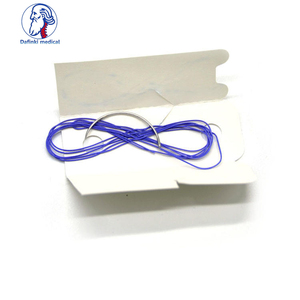
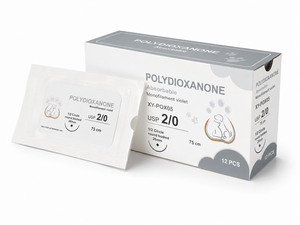
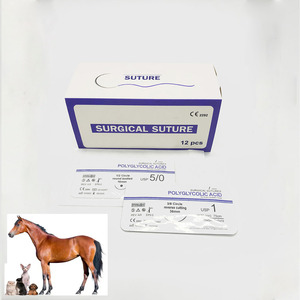
Precision-braided synthetic absorbable suture with minimal tissue friction, designed for canine, feline, and equine surgeries across Argentina veterinary networks.
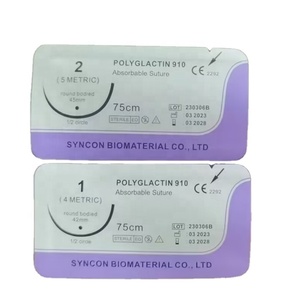
Polycaprolactone-co-glycolide coated suture sets minimizing tissue drag; engineered for fast intra-operative handling and knot security.
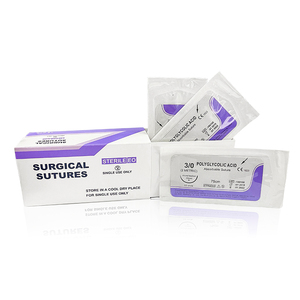
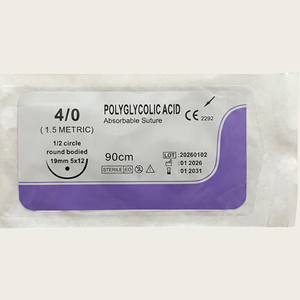
High Tensile Strength Absorbable PGA Suture Thread
CE certified long shelf-life absorbable threads formulated for severe abdominal fascia closure and veterinary livestock surgery.
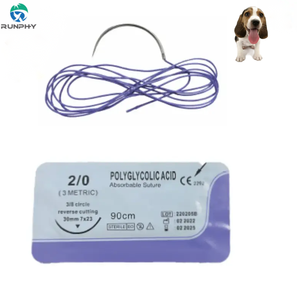
Medical Grade PGA Sutures with Eyeless Needles
Direct OEM factory pricing for large-scale clinic supply, featuring 300-series stainless steel reverse cutting and taper point needles.
Barbed & Monofilament Knotless Wound Closure System
Advanced bi-directional barbed structure for uniform tension distribution, eliminating surgical knot tying in laparoscopic and plastic procedures.
50+
Global Export Markets
35%
OR Time Reduction
10⁻⁶
EO Sterility SAL Level
100%
ANMAT & CE Technical Rationale
Executive Whitepaper
1. Biomechanical Dynamics of Barbed Sutures in Modern Surgery
Surgical wound closure in Latin America, particularly within Argentina’s tier-1 healthcare centers in Buenos Aires, Córdoba, and Rosario, has undergone a fundamental technological transition. Traditional interrupted and continuous suture patterns rely heavily on surgical knot integrity. However, clinical literature confirms that up to 88% of suture loop failures originate at the knot site due to stress concentration, micro-slippage, or improper surgeon tensioning.
Barbed sutures—engineered from synthetic absorbable polymers like Polydioxanone (PDO/PDS), Polyglycolic Acid (PGA), or Polyglactin 910 (PGLA)—introduce micro-barbs cut helically into the monofilament shaft. These barbs act as self-anchoring mechanisms that engage surrounding tissue along the entire length of the incision. This biomechanical configuration delivers key clinical benefits:
Elimination of Surgical Knots
By eliminating the need for initial, intermediate, and terminal knot tying, barbed sutures significantly accelerate tissue approximation, shortening intraoperative closure time by 35% to 50% in deep fascial and subcutaneous layers.
Uniform Tensile Distribution
Unlike standard sutures where tension concentrates at discrete knot points, barbed devices distribute mechanical load evenly across the entire length of the wound edge. This minimizes localized tissue ischemia, cutting, and necrosis.
Enhanced Watertight Tissue Seals
In laparoscopic bariatric procedures (such as sleeve gastrectomy and Roux-en-Y gastric bypass) and gynecological myomectomies, continuous barbed closure forms an immediate, leak-resistant tissue barrier.
Information Gain Insight: Bi-directional vs. Uni-directional Barbed Configurations
Uni-directional barbed sutures feature a single fixed retention tab at the end of the strand, anchored at one edge of the incision line before progressive closure. Bi-directional barbed sutures feature opposing barb orientations emanating from a central un-barbed zone with dual needles. Bi-directional platforms allow two surgical teams to close large laparotomy or orthopedic incisions simultaneously from the center outward, doubling efficiency in high-volume trauma settings.
2. Material Selection & Degradation Performance Guide
Selecting the appropriate barbed suture polymer depends on the target tissue's intrinsic healing kinetics and mechanical tension demands. The table below outlines the specifications of our CE-marked absorbable suture portfolio supplied to importers across South America.
Polymer Material
Monofilament / Structure
Tensile Strength Retention Profile
Complete Hydrolytic Absorption
Primary Surgical Indications
Polydioxanone (PDO / PDS)
Monofilament Barbed
75% @ 14 Days | 50% @ 28 Days
180 – 210 Days
Abdominal Fascia, Orthopedics, Paediatric Cardiovascular, Bariatric Surgery
Polyglactin 910 (PGLA 910)
Braided & Coated / Barbed
75% @ 14 Days | 50% @ 21 Days
56 – 70 Days
General Soft Tissue Approximation, Gynecological Closures, Gastrointestinal Tissues
Polyglycolic Acid (PGA)
Synthetic Braided / Barbed
70% @ 14 Days | 40% @ 21 Days
60 – 90 Days
General Surgery, Subcuticular Closure, Veterinary Soft Tissue Ligation
3. Application Scenarios & Supply Chain Trends in Argentina
3.1 Public vs. Private Sector Demand Dynamics
Argentina’s healthcare sector is divided into three distinct segments: the public health system (national and provincial municipal hospitals), the social security sector (Obras Sociales, such as PAMI and IOMA), and the private healthcare system (Prepaga networks like OSDE, Swiss Medical, and Galeno). Sourcing dynamics differ significantly across these tiers:
Private Prepaga Clinics: High demand for premium knotless PDO barbed sutures driven by high laparoscopic and robotic surgery volumes. Key priorities include reducing operating room (OR) time costs, minimizing post-operative complications, and offering superior aesthetic subcuticular cosmetic results.
Public & Social Security Tenders: Tender boards focus on total cost-of-care optimization. While traditional braided PGA and PGLA sutures remain standard, hospital administrators are increasingly evaluating barbed sutures due to their ability to shorten surgical procedure times and increase daily OR throughput.
3.2 Veterinary & Agricultural Sector Applications
Argentina is one of the world's leading livestock producers, with millions of cattle, sheep, and horses maintained across the Pampas region. The agricultural veterinary market requires heavy-duty absorbable suture materials capable of enduring tough field conditions:
Our high-tensile PGA and PGLA 910 veterinary suture range (represented in products 1, 4, 6, and 7 above) is designed specifically for large-animal field surgeries—including bovine cesarean sections, equine laparotomies, and reproductive tract repairs. These sutures combine high knot pull strength with exceptional resistance to premature degradation in moist field environments.
OR Operating Cost ROI
With Argentina operating room time estimated at $15–$25 USD per minute, reducing closure time by 15–20 minutes per complex procedure yields immediate financial savings that outweigh the unit cost of advanced barbed devices.
Reduced Glove Punctures
By eliminating manual knot pushing and needle-rehandling during tension adjustments, barbed knotless sutures lower the incidence of intraoperative glove punctures and sharps injuries among surgical teams.
Logistical Resilience
Our direct containerized shipments from India (via Nhava Sheva to the Port of Buenos Aires) provide Argentine medical distributors with a reliable, cost-effective alternative to traditional North American or European brands.
Factory Strengths
4. Manufacturer Core Competencies & Quality Systems
As a global wound-closure manufacturer operating out of integrated facilities in Bengaluru, India, Suture Planet provides transparent, end-to-end quality control across every production stage.
Single-Site Vertical Manufacturing
From raw polymer granule extrusion and precision braiding to micro-barb laser cutting, stainless steel needle attachment, and Ethylene Oxide (EO) sterilization—all processes are contained within a single ISO 13485:2016-certified facility.
Complete Regulatory Dossiers
We supply full technical registration packages required for local health authority filings, including CE MDR 2017/745 Technical Files, Certificates of Analysis (CoA), Free Sale Certificates (FSC), and ISO 10993 Biocompatibility Test Reports.
Custom OEM & Private Label Services
Full customization available for regional South American brands, including Spanish-language Instructions for Use (IFU), specialized needle-thread combinations, GS1 DataMatrix barcodes, and customized protective aluminum foil packaging.
Procurement FAQ
5. Frequently Asked Questions for Sourcing in Argentina
Key regulatory, commercial, and technical considerations for medical device importers and hospital procurement agents in Argentina.
Q1: How do your CE-certified barbed sutures align with Argentina ANMAT registration requirements?+
ANMAT (Administración Nacional de Medicamentos, Alimentos y Tecnología Médica) classifies surgical sutures as Class III medical devices. Our full CE Mark technical documentation (under EU MDR 2017/745), ISO 13485:2016 quality certificates, WHO-GMP compliance, and ISO 10993 biocompatibility data streamline the fast-track registration process (Disposición ANMAT 3266/2013) for licensed Argentine importers.
Q2: What is the shelf life and storage stability of your absorbable barbed sutures in South American climates?+
Our absorbable sutures (PGA, PGLA 910, PDO) are sealed in hermetic double-wrapped aluminum foil pouches flushed with dry nitrogen gas to prevent ambient hydrolytic degradation. Accelerated and real-time stability testing supports a validated 5-year shelf life when stored below 25°C in warehouse facilities across Argentina.
Q3: What are the minimum order quantities (MOQ) and delivery lead times for shipments to Buenos Aires?+
Standard catalog SKU codes typically ship within 2 to 4 weeks from order confirmation. Custom OEM private-label production (including Spanish packaging artwork and localized UDI coding) requires 5 to 7 weeks for initial manufacturing. Freight shipments dispatched via sea cargo from India arrive at the Port of Buenos Aires in approximately 35 to 45 days.
Q4: Are your veterinary sutures suitable for rural livestock practices in agricultural regions?+
Yes. Our veterinary absorbable series (PGA and Chromic Catgut) features heavy-gauge USP sizes (USP 1, 2, and 3-0) equipped with heavy-duty 300-series stainless steel reverse-cutting needles. These are engineered to maintain high tensile strength and puncture structural tissue without bending during equine or bovine procedures.
Q5: Can you accommodate private label contracts and specialized tender packaging specifications?+
Yes. We provide complete OEM support for Argentine distributors bidding on public provincial health tenders or private hospital contracts. Options include customized box counts (12, 24, or 36 packs per box), custom needle-thread combinations, multi-language IFUs, and private-label foil printing.
Partner with a Certified Barbed Suture Manufacturer
Contact our international regulatory and export management team today for technical files, product samples, and direct factory quotation for the Argentina market.
 Suture PlanetSurgical Wound Closure