ISO 13485 & CE Certified Medical Suture Factory

China Best Polydioxanone PDO Sutures Factories & Suppliers for Japan

White Paper & Sourcing Guide: High-Tensile Monofilament Absorbable Sutures, OEM Technical Dossiers, and PMDA-Compliant Wound Closure Solutions for Japanese Hospitals and Veterinary Clinics.

Medical & Veterinary Portfolio

Featured Absorbable Sutures & Surgical Wound Dressings

Explore China’s top-tier Polydioxanone (PDO), PGA, PGLA 910, and advanced wound management consumables manufactured under strict ISO 13485 cleanroom protocols for direct export to Japan.

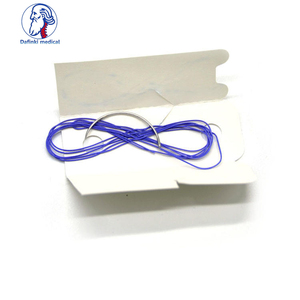
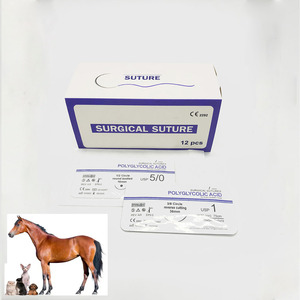
Veterinary / Animal Surgery Veterinary Surgical Suture Absorbable PGA PGLA 910 Sterile Animal Suture for Dog Cat Pet Surgery

Veterinary Surgical Suture Absorbable PGA PGLA 910 Sterile Animal Suture

Material: Coated PGA / Polyglactin 910 Absorption: 56–70 Days (Hydrolytic) Application: Canine, Feline & Pet Surgery
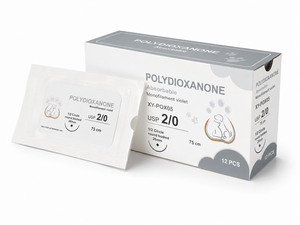
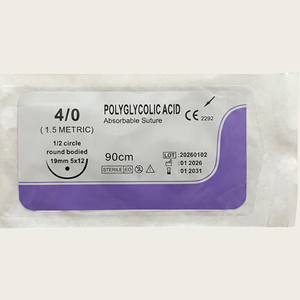
Braided Absorbable Polyglycolic Acid Absorbable Braided Surgical Suture XY-POX05 EO Sterilized 75cm

Polyglycolic Acid Braided Surgical Suture XY-POX05 EO Sterilized (75cm)

Structure: Precision Braided & Coated Sterilization: Ethylene Oxide (SAL 10⁻⁶) Needle: 300-Series Stainless Steel
Wound Management Medical Absorbent Wound Suture Waterproof Breathable Waterproof Silicone Foam Wound Dressing

Medical Absorbent Waterproof Silicone Foam Wound Dressing Series

Feature: Breathable, Exudate Control Barrier: Hydrophobic Waterproof Layer Use: Post-Op Incisions & Trauma Care
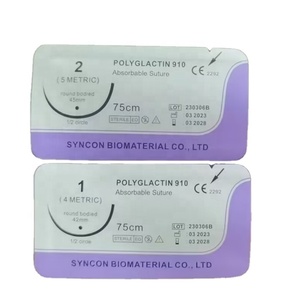
High Tensile Suture Absorbable 3-0 4-0 75cm Polyglactin 910 Chromic Catgut Surgical Suture with Needle

Absorbable 3-0 4-0 Polyglactin 910 & Chromic Catgut Surgical Sutures

USP Sizes: USP 8-0 to USP 2 Variants: PGLA 910 / Chromic Catgut Knot Security: Excellent Flexibility
Surgical Procedure Kit Risenmed Medical Consumables Absorbable Surgical Sutures Kit Threads Polyglactin 910

Risenmed Medical Consumables Surgical Sutures Kit (Polyglactin 910)

Kit Type: Multi-Spec Operating Room Pack Certification: CE / ISO 13485 Compliant Customization: OEM Packaging & Labeling
Clinical Grade High Tensile Strength Absorbable PGA Suture Thread CE Certified

High Tensile Strength Absorbable PGA & Nylon Suture Thread for Vet Clinics

Tensile Profile: Extended 60% @ 14 Days Shelf Life: 5 Years Validated Market: Japanese Veterinary Distributors
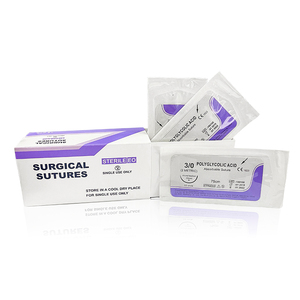
Factory Direct Sourcing China Factory Price Medical Absorbable POLYGLYCOLIC ACID PGA Surgical Suture

China Factory Direct Medical Polyglycolic Acid (PGA) Suture with Needle

Needle Geometry: Taper, Reverse Cut, Spatula Cleanroom: ISO Class 7 Extrusion & Packaging MOQ: Flexible Batch Quantities
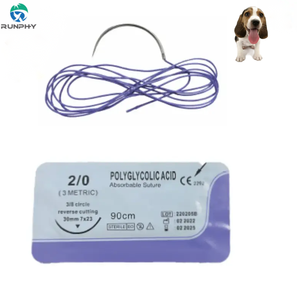
Disposable Surgical Consumable RUNPHY HC002 Medical Veterinary Suture Absorbable Polyglycolic Acid PGA

RUNPHY HC002 Medical Veterinary Absorbable PGA Suture Needle Assembly

Standard: USP / European Pharmacopoeia Package: Double Sterilization Pouch Traceability: Full Polymer Batch Records
100%
In-House Polymer Extrusion
SAL 10⁻⁶
Validated EO Sterilization
50+
Global Export Markets
ISO 13485
Audited Quality System
Industry White Paper · Deep Dive

Polydioxanone (PDO/PDS) Suture Engineering & Hydrolytic Degradation Dynamics

A comprehensive analysis of polymer structure, in-vivo tensile retention profile, and tissue biocompatibility tailored for Japanese medical procurement officers and clinical specialists.

Executive Summary & Information Gain for Japan's Sourcing Directors

Polydioxanone (PDO, chemically known as poly-p-dioxanone) represents the pinnacle of long-term synthetic monofilament absorbable suture technology. In surgical procedures requiring extended wound support—such as fascial closure, pediatric cardiovascular surgery, orthopedic tendon approximation, and high-end aesthetic thread lifting (Aptos/Cog PDO threads in Tokyo and Osaka plastic surgery clinics)—PDO offers an unmatched combination of smooth tissue passage, high initial tensile strength, and minimal inflammatory response.

Unlike traditional short-term braided sutures (such as PGA or PGLA 910) which degrade within 56 to 70 days, synthetic polydioxanone maintains its structural integrity in vivo for up to 6 weeks before undergoing gradual hydrolytic breakdown into non-toxic monomeric 2-hydroxyethoxyacetic acid, which is eventually excreted via urine and respiratory carbon dioxide. For Japanese healthcare buyers navigating PMDA (Pharmaceuticals and Medical Devices Agency) regulatory requirements, sourcing directly from audited Chinese manufacturing hubs offers significant cost optimization without compromising Monograph USP/EP compliance.

Hydrolytic Cleavage Mechanism

PDO degrades non-enzymatically via ester backbone cleavage. Water molecules penetrate the monofilament matrix, converting polymer chains into ether-alcohol monomers. This linear breakdown avoids the sudden strength loss often seen in catgut or animal-derived materials.

Extended Tensile Strength Profile

Retains approximately 75% of initial knot tensile strength at 14 days post-implantation, 60% at 28 days, and 50% at 42 days. Complete mass absorption occurs predictably between 180 and 210 days, matching the tissue healing timeline of slow-healing fascia.

Monofilament Pliability & Low Drag

Extruded via precision temperature-controlled cleanroom lines, Chinese PDO monofilaments feature an ultra-smooth surface profile. This minimizes tissue drag, reduces cell trauma, and eliminates bacterial capillarity intrinsic to braided structures.

Technical Benchmarking

Comparative Performance Matrix: PDO vs. PGA vs. PGLA 910 vs. Catgut

Evaluating chemical properties, handling characteristics, and clinical indications to empower informed procurement decisions for Japanese medical institutions.

Suture Material Polymer Structure Tensile Strength Retention Full Mass Absorption Tissue Reaction Primary Clinical Indications in Japan
Polydioxanone (PDO / PDS) Synthetic Monofilament 75% @ 2 wks · 50% @ 6 wks 180 – 210 Days Minimal / Non-inflammatory Fascia closure, Orthopedics, Aesthetic Thread Lifts, Pediatric Cardiac
Polyglycolic Acid (PGA) Braided & Coated Synthetic 75% @ 2 wks · 50% @ 3 wks 60 – 90 Days Slight to Moderate General Soft Tissue Approximation, Gastrointestinal, OB/GYN
Polyglactin 910 (PGLA) Braided Coated (90/10) 75% @ 2 wks · 50% @ 3 wks 56 – 70 Days Slight Ophthalmic, General Surgery, Veterinary Canine/Feline Procedures
Chromic Catgut Twisted Natural Bovine/Ovine Serosa Variable (Lost within 14–21 Days) 90 Days (Enzymatic) Moderate to High Veterinary Dental, Mucosa Repair (Declining in Human Surgery)
Polypropylene (Monofilament) Non-Absorbable Synthetic Permanent (0% Loss over years) Non-Absorbable Extremely Inert Cardiovascular Suturing, Hernia Mesh Fixation, Vascular Anastomosis
Localized Japan Market Integration

Key Clinical & Commercial Application Scenarios in Japan

How Chinese high-precision PDO sutures and absorbable surgical solutions fulfill niche requirements across Japan’s healthcare, aesthetic, and veterinary sectors.

1. Aesthetic Plastic Surgery & Thread Lifting (Tokyo & Osaka Clinics)

Japan’s cosmetic surgery sector has experienced a surge in non-surgical facial rejuvenation. PDO mono threads, cog threads, and barb configurations are widely used for subcutaneous collagen induction and tissue suspension. Chinese OEM suppliers provide ultra-fine USP 6-0 to 2-0 PDO threads pre-loaded into Japanese-spec sharp or blunt cannulas, supporting high-profit aesthetic clinic chains.

2. Orthopedic Fascia & Abdominal Surgery in Acute Care Hospitals

With Japan’s aging demographic (super-aged society), surgical procedures involving elderly patients require sutures that provide prolonged wound support without inducing tissue inflammation. Polydioxanone sutures (USP sizes 2-0 up to 2) swaged onto heavy-duty reverse-cutting 300-series stainless steel needles are critical for tension-bearing fascial closures.

3. Premium Veterinary Care & Companion Animal Surgery

Pet ownership in Japan emphasizes high-standard veterinary care. Dog and cat abdominal surgeries, spay/neuter procedures, and orthopedic repairs increasingly utilize sterile absorbable PGA and PGLA 910 sutures (such as Risenmed and RUNPHY HC002 series) imported from qualified Chinese manufacturers to reduce post-op complications.

Strategic Sourcing Trends

Japan Market Development Trends & Regulatory (PMDA / MHLW) Compliance

Understanding supply chain shifts, regulatory registration protocols, and OEM cost management for Japanese medical importers.

Shift Towards Diversified OEM Sourcing & Cost Rationalization

Historically, Japanese hospitals relied heavily on Western tier-1 medical brands. However, rising healthcare expenditures under Japan's National Health Insurance (NHI) system have driven medical device distributors in Kanto and Kansai regions to partner directly with audited Chinese factories.

Top Chinese suppliers offer equal mechanical properties (knot pull strength, thread uniformity, needle detachment force) at a 30% to 50% cost advantage, enabling competitive bidding in Japanese municipal hospital tenders.

Navigating PMDA Approval & MHLW Quality Standards

Importing surgical sutures into Japan requires strict compliance with the Pharmaceuticals and Medical Devices Agency (PMDA) under the Ministry of Health, Labour and Welfare (MHLW). Surgical sutures generally fall under Class II or Class III medical device categories.

Leading Chinese exporters support Japanese partners by providing full Technical Master Files, ISO 13485:2016 audit reports, ISO 10993 Biocompatibility testing (cytotoxicity, sensitization, systemic toxicity), and EO Sterilization Validation per ISO 11135.

Manufacturing Authority & E-E-A-T Excellence

State-of-the-Art Production Capabilities & Chain-of-Custody Traceability

Refining medical device manufacturing standards through single-site cleanroom production, automated needle-swaging technology, and rigorous lot-release testing.

ISO 7 Cleanroom Production

Extrusion, precision braiding, silicone coating, and primary pouch sealing take place inside certified ISO Class 7 (Class 10,000) cleanrooms to minimize bioburden.

Automated Needle Swaging

Utilizing high-speed laser drilling and automated swaging machines to ensure seamless needle-to-thread attachment that exceeds USP/EP pull-out strength minimums.

Batch-Level Traceability

Every box carries a unique batch tracking code linking directly to raw polymer lot records, needle manufacturing logs, and EO sterilization cycle charts.

Comprehensive Dossiers

Free Sale Certificates (FSC), Certificates of Analysis (CoA), CE Certificates, and Japanese-language IFU template artwork provided for distributor registration.

Buyer Knowledge Base

Frequently Asked Questions by Japanese Medical Buyers & Distributors

Addressing regulatory, technical, packaging, and commercial questions regarding Chinese Polydioxanone and absorbable suture sourcing.

Q1: Why choose Polydioxanone (PDO) monofilament sutures over braided PGA or PGLA 910?
PDO monofilament is engineered for extended tissue support (retaining ~50% tensile strength at 6 weeks vs. PGA/PGLA which lose most strength by week 3). Furthermore, its smooth monofilament surface eliminates bacterial wick effect (capillarity) and reduces tissue drag, making it ideal for fascia closure, orthopedic reconstructive surgery, and aesthetic cannula thread lifting in Japan.
Q2: What documentation is provided to support PMDA registration and MHLW regulatory filing in Japan?
We provide full regulatory technical files including ISO 13485:2016 certificate, CE Declaration of Conformity, Free Sale Certificate (FSC), Certificate of Analysis (CoA) per batch, ISO 10993 complete biocompatibility test reports, Ethylene Oxide (EO) sterilization validation per ISO 11135 (achieving SAL 10⁻⁶), and accelerated/real-time shelf-life stability data.
Q3: Do you offer custom OEM / Private-Label packaging for Japanese medical distributors?
Yes. We provide complete OEM/ODM services including customized foil primary packaging, inner peelable envelopes, outer boxes, Japanese-language Instructions for Use (IFU), UDI / GS1 barcode integration, and tailored needle-thread combinations across USP sizes 10-0 to 2.
Q4: What is the typical shelf life and storage requirement for PDO and PGA absorbable sutures?
Sutures are sealed in ultra-barrier aluminum foil pouches filled with inert gas to prevent pre-mature hydrolytic degradation caused by ambient moisture. When stored below 25°C away from direct sunlight, our PDO, PGA, and PGLA sutures carry a validated 5-year sterile shelf life.
Q5: What are the standard lead times and shipping arrangements for Japan orders?
Standard catalogue product lines ship within 2 to 4 weeks. OEM/Private-label initial orders take approximately 4 to 6 weeks for packaging artwork layout approval and print cylinder setup. Shipments to major Japanese ports (Tokyo, Yokohama, Osaka, Kobe, Nagoya) can be dispatched via sea freight or express air cargo (DDP/FOB/CIF terms).
Q6: Are veterinary-grade absorbable sutures available with lower MOQs for Japanese pet clinic suppliers?
Yes, our veterinary product line (including PGA, PGLA 910, Chromic Catgut, and Nylon sutures for small animal/pet surgery) features flexible batch MOQs and multi-suture procedure packs tailored for Japanese veterinary clinics and animal hospital networks.

Partner with China's Premier PDO & Absorbable Suture Manufacturer

Elevate your medical device distribution network in Japan with ISO 13485 certified quality, factory-direct OEM pricing, and complete PMDA regulatory dossier support.

Inquire Now