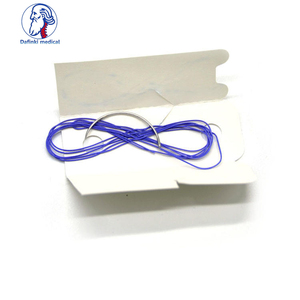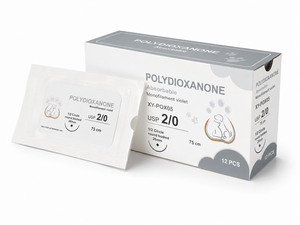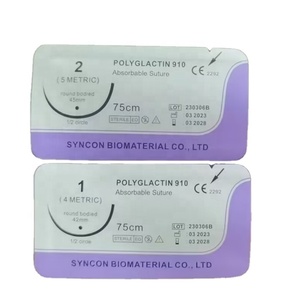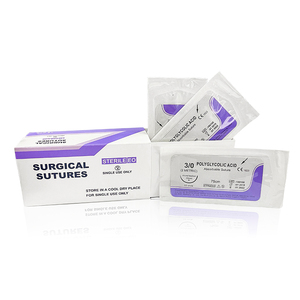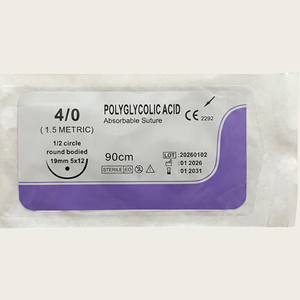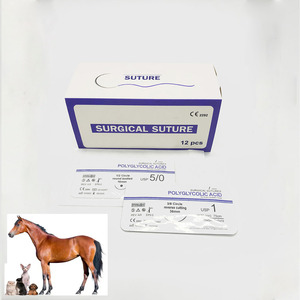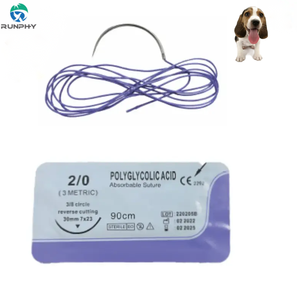
Manufactured under strict ISO 13485:2016 standardized cleanroom environments with automated needle-swaging technology. Fully compliant with Hungarian health authority standards and EU MDR guidelines.
Precision-engineered synthetic absorbable sutures tailored for canine, feline, and small animal soft tissue surgeries in clinical Hungarian vet practices.
Get Catalog
Extremely smooth monofilament pass-through with predictable 75-day hydrolytic degradation, reducing tissue reaction in delicate Hungarian hospital procedures.
Get Catalog
Integrated sterile wound closure bundles containing high-purity Poliglecaprone 25 monofilaments and micro-porous breathable surgical dressings.
Get Catalog
Direct factory Monocryl equivalent providing optimum tissue approximation for gastrointestinal, plastic, and gynecological surgical applications.
Get Catalog
Bulk institutional supply packs engineered for central procurement agency tenders (OKFŐ) and private hospital chains across Hungary.
Get Catalog
Superior initial tensile holding strength combined with minimal memory effect for exceptional knot knotting security during intricate skin closure.
Get Catalog
Competitive tier-1 B2B pricing model empowering Hungarian medical distributors and hospital tender bidders with superior profit margins.
Get Catalog
Single-use double foil sterile suture units created specifically for surgical emergency centers, trauma clinics, and veterinary hospital chains.
Get CatalogUnderstanding the material characteristics, degradation kinetics, and mechanical superiority of synthetic monofilament sutures over traditional catgut and braided alternatives.
Poliglecaprone 25 (PGCL) is a block copolymer composed of 75% glycolide and 25% ε-caprolactone. This unique chemical structure yields a soft, highly pliable monofilament that eliminates the drag and sawing effect inherent in braided materials, significantly minimizing wound trauma during passage through delicate subcutaneous tissues.
Unlike chromic catgut which relies on enzymatic digestion (inducing variable inflammatory reactions), Poliglecaprone 25 degrades predictably via non-enzymatic ester hydrolysis into glycolic and caproic acid metabolites. This mechanism delivers minimal tissue response and consistent strength loss profiles ideal for aesthetic skin closure.
Initial straight-pull strength exceeds USP limits significantly. In vivo profile: retains 60% to 70% of original tensile strength at Day 7, dropping to 20% to 30% by Day 14. Residual tensile strength reaches zero by Day 21 to 28. Complete mass absorption occurs smoothly between Day 90 and Day 120 post-implantation.
Empirical data comparison for procurement officers, surgical directors, and regulatory affairs specialists in Hungary.
| Polymer Profile | Suture Structure | Tensile Strength Retention | Complete Absorption | Tissue Reaction | Primary Surgical Indication |
|---|---|---|---|---|---|
| Poliglecaprone 25 (PGCL) | Monofilament | 60–70% at 7 Days / 20–30% at 14 Days | 90 – 120 Days | Extremely Low | Subcuticular skin, GYN, Urology, Plastic Surgery |
| Polyglycolic Acid (PGA) | Braided & Coated | 75% at 14 Days / 50% at 21 Days | 60 – 90 Days | Low / Moderate | General soft tissue ligation, muscle closure |
| Polyglactin 910 (PGLA) | Braided & Coated | 75% at 14 Days / 50% at 21 Days | 56 – 70 Days | Low | Ophthalmic, general surgery, intestinal anastomosis |
| Polydioxanone (PDO / PDS) | Monofilament | 70% at 14 Days / 50% at 28 Days | 180 – 210 Days | Minimal | Abdominal wall closure, orthopedics, pediatric CV |
| Chromic Catgut | Twisted Organic Collagen | Unpredictable (10–14 Days support) | Enzymatic (Variable) | High / Inflammatory | Legacy veterinary use, mucosal ligation |
Surgical practices in Budapest, Debrecen, Szeged, and Pécs require tailored wound closure solutions meeting European Pharmacopoeia (EP) and Hungarian national healthcare quality mandates.
Private plastic surgery institutes and dermatological trauma centers in Budapest demand invisible, low-scarring wound closure. Poliglecaprone 25 monofilament delivers smooth intradermal passage with zero suture-track marks.
In Hungarian public university clinics (e.g., Semmelweis University, University of Debrecen), fast-healing mucosal tissue in OB/GYN and urology requires strong initial approximation that degrades rapidly as tissues regenerate.
Hungary boasts an extensive veterinary network (such as Alpha-Vet distributors and regional Budapest clinics). Veterinarians are shifting rapidly from traditional catgut to Poliglecaprone 25 for companion animal surgeries.
National hospital central procurement agencies in Hungary require dependable batch-to-batch consistency, full technical registration files, and reliable shipping times to central distribution hubs in Pest County.
Strategic analysis of procurement shifts, regulatory demands, and supply chain dynamics within the Central & Eastern European (CEE) medical device market.
Hungarian medical distributors are increasingly bypassing intermediary European brokers to partner directly with audited Chinese manufacturing hubs. This direct sourcing strategy reduces procurement costs by 30% to 45% while maintaining strict compliance with CE and ISO 13485 mandates.
With the implementation of EU MDR 2017/745, the National Institute of Pharmacy and Nutrition (OGYÉI) in Hungary requires extensive clinical evaluation reports (CER), biocompatibility data per ISO 10993, and validated ETO sterilization records for all imported Class III and Class IIb surgical devices.
The rapid growth of private healthcare groups in Hungary (e.g., Medicover, Doctor Rose, TritonLife) has surged demand for premium-tier monofilament absorbable sutures like Poliglecaprone 25. These centers prioritize patient satisfaction and zero-scar skin cosmesis above basic procurement cost.
Combining world-class cleanroom automation, 100% in-house production control, and international regulatory support for healthcare importers in Hungary.
From medical-grade monomer polymerization and monofilament extrusion to cleanroom laser drilling, needle swaging, and ethylene oxide (EO) sterilization—every single step is executed inside our ISO Class 7 cleanroom facility without outsourcing.
Our sutures are attached to high-tensile 300-series stainless steel needles engineered with silicone coating for minimal tissue resistance. Needles feature micro-sharp taper point, cutting edge, or reverse cutting geometry designed to retain sharpness pass after pass.
We provide full technical support for Hungarian distributor registration, including ISO 13485:2016 certificates, CE Declaration of Conformity, Free Sale Certificates (FSC), Certificate of Analysis (CoA) per lot, and biocompatibility validation per ISO 10993 series.
Full customization available for Hungarian brands, including customized foil overwraps, multi-language instruction leaflets (Hungarian/English/German), inner boxes with custom brand graphics, and GS1 UDI barcode generation.
100% of production lots undergo automated tensile testing and needle-attachment pull-out evaluation. Suture attachment strength strictly complies with USP and EP standards, guaranteeing zero needle-suture detachment during critical tissue traction.
Hermetically sealed aluminum foil primary packaging prevents moisture degradation of hydrolytically sensitive Poliglecaprone 25 polymers. Accelerated and real-time stability studies confirm a verified 5-year shelf-life stability.
Addressing key queries regarding regulatory clearance, customs, minimum order quantities (MOQ), and shipping workflows to Hungary.
Elevate your medical product supply chain in Hungary with factory-direct pricing, certified European regulatory compliance, and uncompromised surgical performance.