As West Africa’s largest economy and healthcare market, Nigeria faces unique procurement challenges—from managing humid tropical storage conditions to navigating strict regulatory controls by the National Agency for Food and Drug Administration and Control (NAFDAC). This technical white paper highlights how China’s leading medical device manufacturers deliver certified quality, technical customization, and economic sustainability to Nigerian surgical facilities.
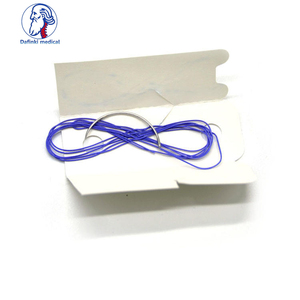
Explore our export-ready surgical threads, engineered with high tensile strength, minimal tissue reaction, and precision-swaged needles.
Selecting the optimal suture polymer is critical for ensuring adequate wound support while minimizing tissue reaction and avoiding premature hydrolytic degradation in humid West African climates.
| Material Profile | Structure & Coating | Tensile Strength Retention | Complete Absorption Time | Optimal Surgical Indications |
|---|---|---|---|---|
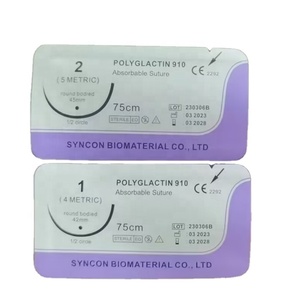
| Polyglactin 910 (PGLA) | Braided; Poly(glycolide-co-lactide) + Calcium Stearate | 75% at 14 days 50% at 21 days |
56 – 70 Days | Soft tissue approximation, OB/GYN C-sections, General Surgery |
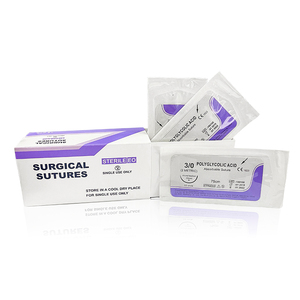
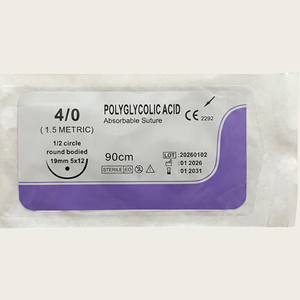
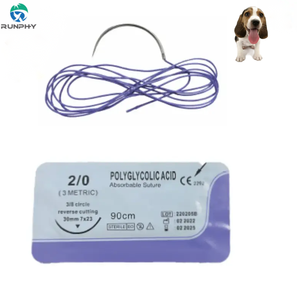
| Polyglycolic Acid (PGA) | Braided; Coated with Polycaprolactone & Calcium Stearate | 70% at 14 days 40% at 21 days |
60 – 90 Days | Gastrointestinal surgery, Ophthalmic, Subcuticular skin closure |
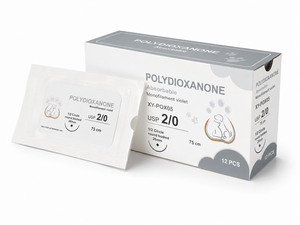
| Polydioxanone (PDO/PDS) | Monofilament; Uncoated polyester polymer | 75% at 14 days 50% at 28 days |
180 – 210 Days | Pediatric cardiovascular surgery, Fascial closure, Orthopedics |
| Chromic Catgut | Twisted natural collagen treated with chromic salt | Maintains support for 14 – 21 days | 90 Days (Enzymatic) | Ophthalmic, Mucosal closure, Veterinary field procedures |
| Monofilament Nylon | Non-absorbable Polyamide 6/66 | Loses 15-20% per year via hydrolysis | Non-Absorbable | Cuticular skin closure, Neurological & Plastic surgery |
*Note: All absorbable suture materials undergo rigorous hydrolytic and enzymatic degradation testing in climate-controlled environmental chambers simulating 40°C and 75% RH to guarantee compliance under tropical West African conditions.
From major federal medical centers in Lagos and Abuja to rural veterinary outreach projects in Northern Nigeria, specialized suture formulations address distinct clinical demands.
In high-volume maternity wards across Nigerian teaching hospitals, fast, secure wound closure during Cesarean sections is vital. Coated Polyglactin 910 (USP 1 and 0) provides the exact balance of knot security, smooth passage through uterine tissue, and rapid absorption without stitch abscesses or tissue drag.
For acute surgical emergencies requiring prolonged fascial wound support, high-tensile Polydioxanone (PDO) monofilament sutures prevent incisional hernias. Non-absorbable Polypropylene and Monofilament Nylon are heavily utilized for vascular repairs and cutaneous laceration closures in municipal trauma units.
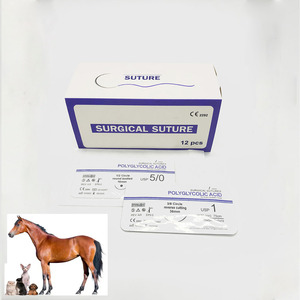
Nigeria’s vast agricultural sector demands heavy-duty veterinary consumables for cattle, goats, and sheep. Heavy-gauge Polyglycolic Acid (PGA) and Chromic Catgut (USP 1, 2, and 3) equipped with heavy reverse-cutting needles handle tough hide closures, ruminant rumenotomy, and spay/neuter operations in field conditions.
Strategic purchasing managers must stay ahead of macroeconomic shifts, currency fluctuations, and stringent regulatory demands when sourcing surgical consumables.
Registering medical devices with NAFDAC requires comprehensive Technical Files, Free Sale Certificates (FSC) legalised by the Nigerian Embassy, ISO 13485:2016 certification, WHO-GMP alignment, and detailed Certificates of Analysis (CoA) for every production batch. We provide complete dossier support to streamline local importer licensing.
High humidity levels in coastal hubs like Lagos and Port Harcourt can degrade synthetic absorbable polymers if packaged in standard paper-plastic blisters. Our export products utilize heavy-gauge multi-layer aluminum foil pouches sealed with medical-grade desiccant, extending intact shelf life up to 5 years without premature hydrolytic breakdown.
Amid foreign exchange volatility in Nigeria, public tenders and private healthcare networks are shifting from expensive Western brands to direct factory OEM partnerships in China. By eliminating intermediary markups, healthcare providers achieve 30% to 50% cost reductions without sacrificing knot security or sterility assurance.
Our state-of-the-art facility features Class 100,000 (ISO 8) cleanrooms, automated high-precision needle swaging equipment, laser micro-drilling, and full-cycle Ethylene Oxide (EO) sterilization chambers. Every single lot undergoes 100% USP tensile testing and needle attachment strength verification before clearance.
Request Technical DatasheetsBuilding long-term B2B partnerships through vertical integration, transparent regulatory support, and dependable logistics execution.
From polymer synthesis, thread braiding, and surface coating to needle micro-machining and final pouch sealing—our integrated manufacturing ensures absolute batch consistency and eliminates third-party quality risks.
We offer bespoke manufacturing tailored to your local market brand: custom needle curvatures (1/2, 3/8, 1/4 circle), needle point profiles (Tapercut, Reverse Cutting, Spatulated), thread lengths, box artwork, and multi-language IFUs.
With extensive export experience to Apapa, Tincan Island, and Port Harcourt ports, we streamline custom clearance documentation, Form M processing, pre-shipment inspections, and sea/air freight booking for seamless delivery.
Direct technical and commercial answers addressing common queries from hospital purchasing agents, medical device distributors, and veterinary suppliers.
Contact our export desk today to request technical samples, factory-direct pricing, and complete NAFDAC dossier assistance for your hospital or distribution business in Nigeria.