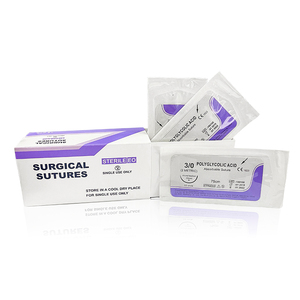
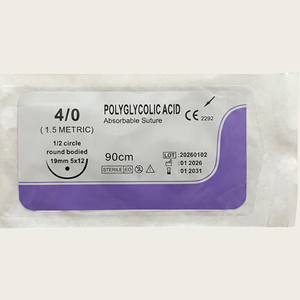
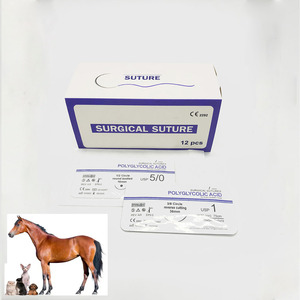
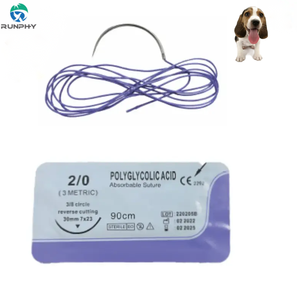
Factory-direct medical-grade absorbable sutures, surgical wound dressings, and high-tensile veterinary closure threads designed for high-performance surgical outcomes.
The South African medical devices market—spanning public sector healthcare networks managed by provincial Departments of Health to private hospital groups such as Netcare, Life Healthcare, and Mediclinic—demands high-integrity absorbable sutures that balance tissue biocompatibility, predictable tensile retention, and structural security. Among absorbable closure materials, Chromic Catgut remains an indispensable, time-tested natural collagen suture utilized across general surgery, obstetrics, gynaecology, and large-animal veterinary procedures.
Chromic Catgut is manufactured from high-purity submucosal collagen strands extracted from bovine intestines. To retard enzymatic degradation within vascularized tissue, the raw collagen filaments undergo a controlled tanning process using trivalent chromium salts. This specialized chromicization creates inter-molecular cross-links within the collagen triple helix structure, extending the tensile strength retention period to 21–28 days and complete enzymatic absorption to approximately 90 days. This makes Chromic Catgut superior to Plain Catgut for tissues requiring extended apposition under moderate mechanical strain.
Procurement directors and veterinary surgeons in South Africa frequently evaluate Chromic Catgut against synthetic absorbables like Polyglactin 910 (PGLA) and Polyglycolic Acid (PGA). While synthetic polymers degrade via predictable chemical hydrolysis, Chromic Catgut absorbs via endogenous enzymatic digestion. This biological profile yields distinct physical advantages:
| Material Specification | Chromic Catgut (Netgut Chromic) | Polyglactin 910 (Netcryl) | Polyglycolic Acid (Netsorb) | Polydioxanone (Netsynth PDO) |
|---|---|---|---|---|
| Material Origin | Bovine Submucosal Collagen | Copolymer (90/10 Glycolide/L-lactide) | 100% Polyglycolic Acid | Poly (p-dioxanone) Polymer |
| Structure | Twisted Monofilament-like Strand | Braided & Coated | Braided & Coated | Monofilament |
| Degradation Mechanism | Proteolytic Enzymatic Digestion | Hydrolytic Degradation | Hydrolytic Degradation | Hydrolytic Degradation |
| Tensile Strength Retention | 50% at 21–28 Days | 75% at 14 Days / 50% at 21 Days | 60–70% at 14 Days | 70% at 14 Days / 50% at 28 Days |
| Mass Absorption Profile | Approximately 90 Days | 56 – 70 Days | 60 – 90 Days | 180 – 210 Days |
| Sterilization Method | Ethylene Oxide (EO) / Gamma Irradiation | Ethylene Oxide (EO) | Ethylene Oxide (EO) | Ethylene Oxide (EO) |
| USP Size Availability | USP 6-0 to USP 2 | USP 8-0 to USP 2 | USP 7-0 to USP 2 | USP 7-0 to USP 2 |
We combine state-of-the-art single-site manufacturing in Bengaluru with full technical registration dossiers required by SAHPRA and international regulatory bodies.
Every shipment comes complete with CE / EU MDR technical documentation, ISO 13485:2016 certificates, WHO-GMP compliance, Free Sale Certificates (FSC), and Certificate of Analysis (CoA) for rapid local registration.
Extrusion, collagen purification, chromic tanning, precision needle swaging, and ethylene-oxide sterilisation occur under one roof, providing 100% batch traceability down to raw material lots.
Custom needle-and-thread combinations tailored for South African tender specifications, featuring custom artwork, multi-language IFUs, and GS1-compliant UDI barcodes.
Integrated micro-point, heavy-duty reverse cutting, taper-cut, and round-bodied needles manufactured from AISI 300 and 400 series stainless steel to withstand tough tissues.
Packed in hermetically sealed medical-grade aluminium foil blister packs with protective conditioning fluid to guarantee zero moisture degradation and maintain full tensile strength over 5 years.
Streamlined export logistics offering consolidated air freight to O.R. Tambo International Airport (JNB) or sea freight via Durban and Cape Town ports with 2–4 week standard dispatch times.
South Africa represents a unique dual market requiring specialized surgical consumables. The coexistence of an advanced private tertiary medical system, an expanding public healthcare framework, and an extensive agricultural/veterinary sector demands versatile suture offerings tailored to regional clinical environments:
South Africa’s agricultural economy across provinces like the Eastern Cape, Free State, and KwaZulu-Natal relies heavily on cattle, sheep, and game farming. Chromic Catgut in heavy USP sizes (USP 1, 2, and 3-0) is the gold standard for field veterinary procedures:
Provincial Departments of Health (such as Gauteng Health and Western Cape Department of Health) require cost-effective, sterile absorbable sutures that comply strictly with SANS (South African National Standards) and SAHPRA regulations. Chromic Catgut and PGA sutures are high-volume line items in public hospital tenders for general soft tissue approximation, episiotomy repair in maternity wards, and emergency trauma ligation.
Private healthcare groups emphasize patient comfort, minimal tissue reaction, and fast healing times. Synthetic absorbable sutures like Polyglactin 910 (Netcryl) and Polydioxanone (Netsynth PDO) are heavily specified in private day clinics for sub-cuticular skin closures, plastic surgery, orthopaedic tendon repairs, and laparoscopic procedures, where low tissue drag and precise absorption curves are paramount.

The South African medical surgical suture landscape is undergoing structural shifts driven by regulatory evolution, supply chain localization, and technological adoption:
The transition under the South African Health Products Regulatory Authority (SAHPRA) has tightened requirements for medical device licensing (Section 21 approvals and SAHPRA Medical Device Establishment Licenses). Importers and wholesalers in South Africa are shifting away from uncertified suppliers toward manufacturers capable of providing complete ISO 13485:2016, CE MDR, and biological safety documentation (ISO 10993 series testing).
While Chromic Catgut retains a dominant share in veterinary medicine and specific mucosal procedures, human surgical trends across South Africa indicate a steady transition toward braided synthetic absorbables (PGA and PGLA 910) and monofilament PDO. Synthetic sutures offer superior predictable tensile degradation independent of patient tissue enzyme fluctuations, reducing the risk of tissue reactions.
Recent global logistics disruptions have led South African medical distributors to seek direct factory partnerships rather than multi-tiered trading agents. By contracting directly with primary single-site manufacturers, local distributors secure stable pricing, custom tender packaging, and guaranteed buffer stocks held at major logistics hubs in Gauteng and Durban.
Key questions answered for procurement managers, medical distributors, and veterinary hospital directors in South Africa.
Expand your medical supply portfolio in South Africa with factory-direct pricing, guaranteed SAL 10⁻⁶ sterility, and complete SAHPRA-compliant technical dossiers.
Contact Us