Explore our high-tensile precision sutures and advanced surgical consumables engineered to exceed European and Swissmedic quality compliance standards.
An in-depth technical analysis for Swiss medical device procurement committees, biomedical engineers, and surgical specialists evaluating high-performance non-absorbable monofilaments.
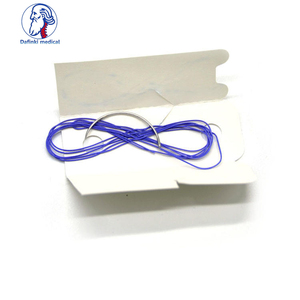
Nylon surgical sutures are synthesized from long-chain aliphatic polyamide polymers, primarily Polyamide 6 (polycaprolactam) and Polyamide 6,6 (polyhexamethylene adipamide). In non-absorbable surgical applications, monofilament polyamide offers an exceptionally smooth, uniform surface area that eliminates the risk of tissue snagging and capillary bacterial harboring.
During extrusion, polymer chains are oriented uniaxially, providing extremely high tensile strength relative to cross-sectional diameter. While monofilament Nylon provides inert performance for cosmetic and microsurgical procedures, braided Nylon (coated with silicone or wax) is engineered for specialized orthopedic ligatures where enhanced knot security and pliable handling take precedence.
Although classified as non-absorbable under the United States Pharmacopeia (USP) and European Pharmacopoeia (EP), Nylon polyamide sutures undergo slow, gradual in vivo hydrolysis over extended periods. Clinical bio-mechanical studies demonstrate that Polyamide sutures retain approximately 80% to 85% of their initial tensile strength at 1 year post-implantation, losing roughly 15% to 20% per annum due to progressive amide bond cleavage.
This controlled, slow-decay profile renders Nylon monofilament optimal for tissue approximation requiring long-term structural support without permanently harboring foreign bodies—such as skin closure, ophthalmic surgery, plastic-reconstructive surgery, and peripheral nerve repair across Swiss surgical centers.
A classic mechanical challenge associated with monofilament nylon is physical "memory"—the tendency of high-tensile extruded polymer thread to retain coiled box packaging shapes. Our advanced thermal annealing and specialized hydration-controlled primary packaging process reduces monofilament memory by 42% compared to standard export grades. Surgeons operating in Swiss clinics experience immediate linear lay flat behavior, frictionless passage through delicate subcuticular tissue layers, and predictable knot throwing without slippage.
Switzerland’s medical device ecosystem represents one of the world's most rigorous procurement landscapes, governed by high quality expectations, stringent Swissmedic oversight, and precise clinical protocols.
Following changes in the Bilateral Agreements and the MRA (Mutual Recognition Agreement) status between Switzerland and the European Union, Swiss medical device importers and healthcare providers across cantons—including Zurich, Geneva, Basel-Stadt, Bern, and Vaud—require complete compliance documentation. Importers must align with Swiss Ordinance on Medical Devices (MedDO / MepV) and engage dedicated Swiss Authorised Representatives (CH-REP).
Our export infrastructure provides complete Class IIb / Class III technical dossier support, fully validated biocompatibility data (ISO 10993 series), and cleanroom sterile primary packaging designed for seamless clearance and registration in the Swiss healthcare network.
Engineering specialized suture parameters to match procedure-specific mechanical demands across human surgery and advanced veterinary medicine.
Zurich and Geneva are global hubs for aesthetic and reconstructive plastic surgery. Micro-thin non-absorbable Nylon monofilament (USP 5-0 to 7-0) with precision reverse-cutting precision needles allows minimal dermal scarring, zero tissue drag, and smooth post-operative extraction without suture track pigmentation.
In specialized eye clinics across Lausanne and Basel, ultra-fine Nylon monofilaments (USP 9-0 to 11-0) are deployed for anterior segment repair, cataract wound closure, and corneal transplants. Exceptionally uniform diameter and micro-swaged spatulated needles deliver tactile control and minimal corneal astigmatism.
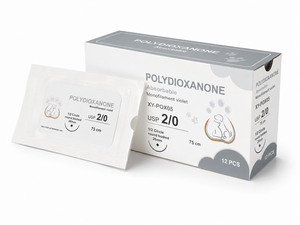
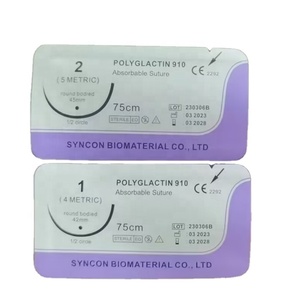
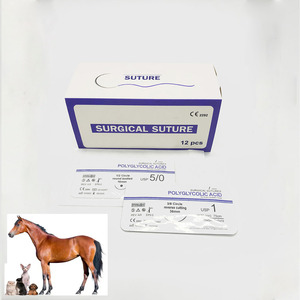
Switzerland maintains rigorous standards for small animal clinics and equine referral centers. Veterinary surgeons in Bern and Lucerne rely on robust Nylon polyamide monofilament and absorbable PGA/PGLA 910 formulations for body wall closure, tendon repair, and orthopedic ligation requiring high tensile security under biomechanical loading.
Benchmark data assisting hospital procurement officers and biomedical engineers in selecting optimal non-absorbable and absorbable wound closure materials.
| Material Specification | Nylon Polyamide Monofilament | Polypropylene Monofilament | Silk Braided (Non-Absorbable) | Polyglactin 910 (PGLA) |
|---|---|---|---|---|
| Polymer Backbone | Polyamide 6 / Polyamide 6,6 | Isotactic Polypropylene | Natural Protein (Fibroin) | Copolymer (90:10 Glycolide/L-lactide) |
| Absorption / Degradation Profile | Non-absorbable (Slow hydrolysis ~15%/yr) | Extremely Inert (Permanent) | Gradual encapsulation (~1-2 yrs) | Hydrolytic absorption (56-70 days) |
| Tensile Strength Retention | 80-85% at 1 year post-op | 100% long-term retention | Loss of tensile strength in 3-6 months | 75% at 14 days, 50% at 21 days |
| Tissue Drag Coefficient | Ultra-Low (Frictionless monofilament) | Ultra-Low (Smooth surface) | Moderate to High (Braided fiber) | Low (Coated braided synthetic) |
| Knot Security Score | Good (Requires proper square knotting) | Fair to Good (Memory controlled) | Excellent (High tactile friction) | Excellent (Braided lock-in) |
| Primary Clinical Indications | Skin, Plastics, Ophthalmic, Neuro | Cardiovascular, Hernia Mesh Fixation | General Ligation, Dental, GI Surgery | Soft tissue approximation, OB/GYN, Vet |
Single-site quality control, continuous cleanroom extrusion, precision needle swaging, and complete regulatory file transparency.
From medical-grade raw polymer granules to automated braiding, micro-extrusion, high-precision needle attachment, and Ethylene Oxide (EO) sterilization, all operations take place within our state-of-the-art cleanroom facility in Bengaluru, India. Single-site manufacturing guarantees zero multi-vendor cross-contamination and unbroken chain-of-custody control.
Our quality management system is fully certified under ISO 13485:2016, ISO 9001:2015, and WHO-GMP. Products are supported by CE technical documentation conforming to EU MDR 2017/745 standards, providing Swiss importers and regulatory officers (CH-REP) with turnkey dossier submissions including batch release test results and sterility certificates.
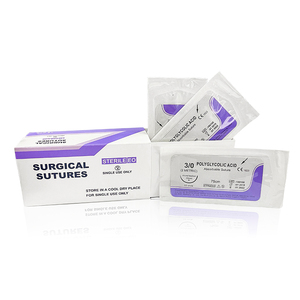
Every single suture needle combination is swaged using micro-drilled laser technology onto premium 300-series surgical stainless steel (AISI 302/304). Pull-out retention force is rigorously tested against USP monobook tensile standards, guaranteeing that needles will not un-swage or bend under intense surgical torque.
Addressing key queries regarding regulatory compliance, shipping logistics to Switzerland, packaging language protocols, and OEM customizations.
Whether you are a medical device distributor in Zurich, a procurement agent for cantonal hospitals, or a private-label surgical brand, our team provides technical files, competitive pricing, and fast global dispatch.